
Champions League Final Budapest: The Night We Worked the City—and Then Let It Break Our Hearts in the Best Way
The first thing I remember is not the goal, not the trophy, not even the roar. It’s that peculiar pre-storm stillness that only arrives when you’ve been sprinting for days and suddenly—somehow—you’re sitting down. For a week leading into the final, our world at VanBudapest.com felt like an air-traffic control tower with a city attached: every vehicle gone, every hour spoken for, every colleague reachable at all times, because the calendar had clicked into one of those rare weekends when Budapest isn’t merely hosting a match—it’s hosting the world.
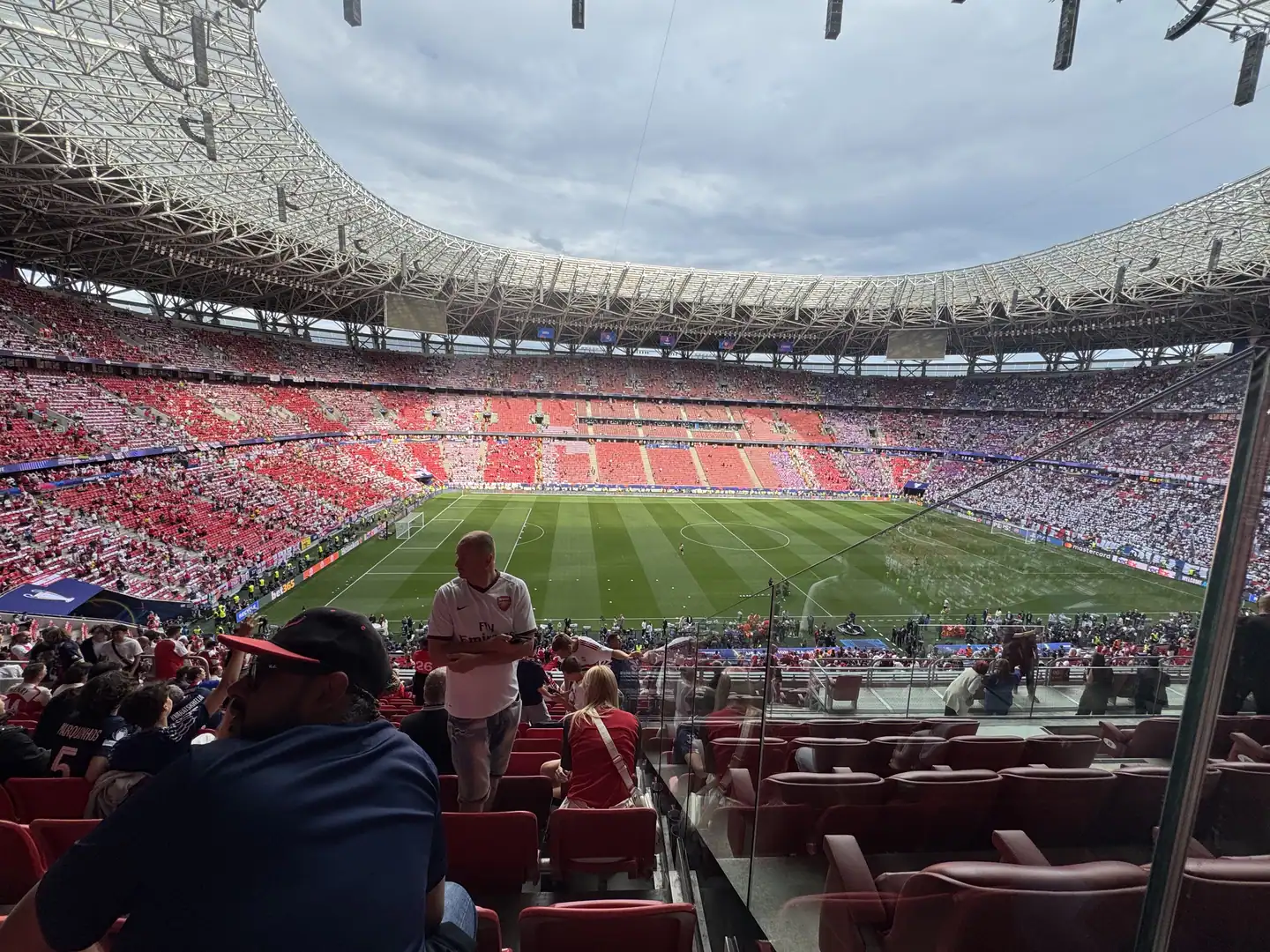
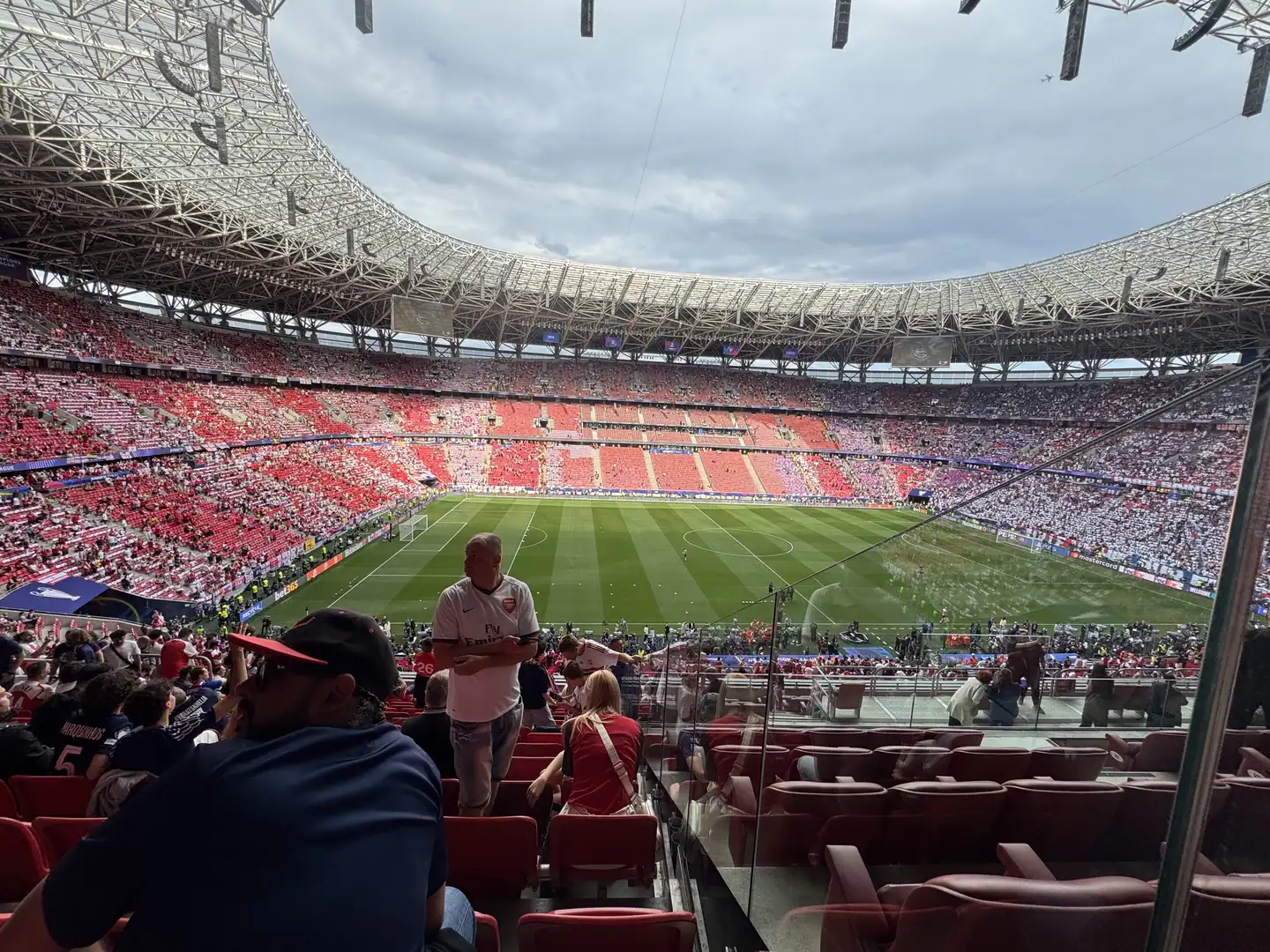
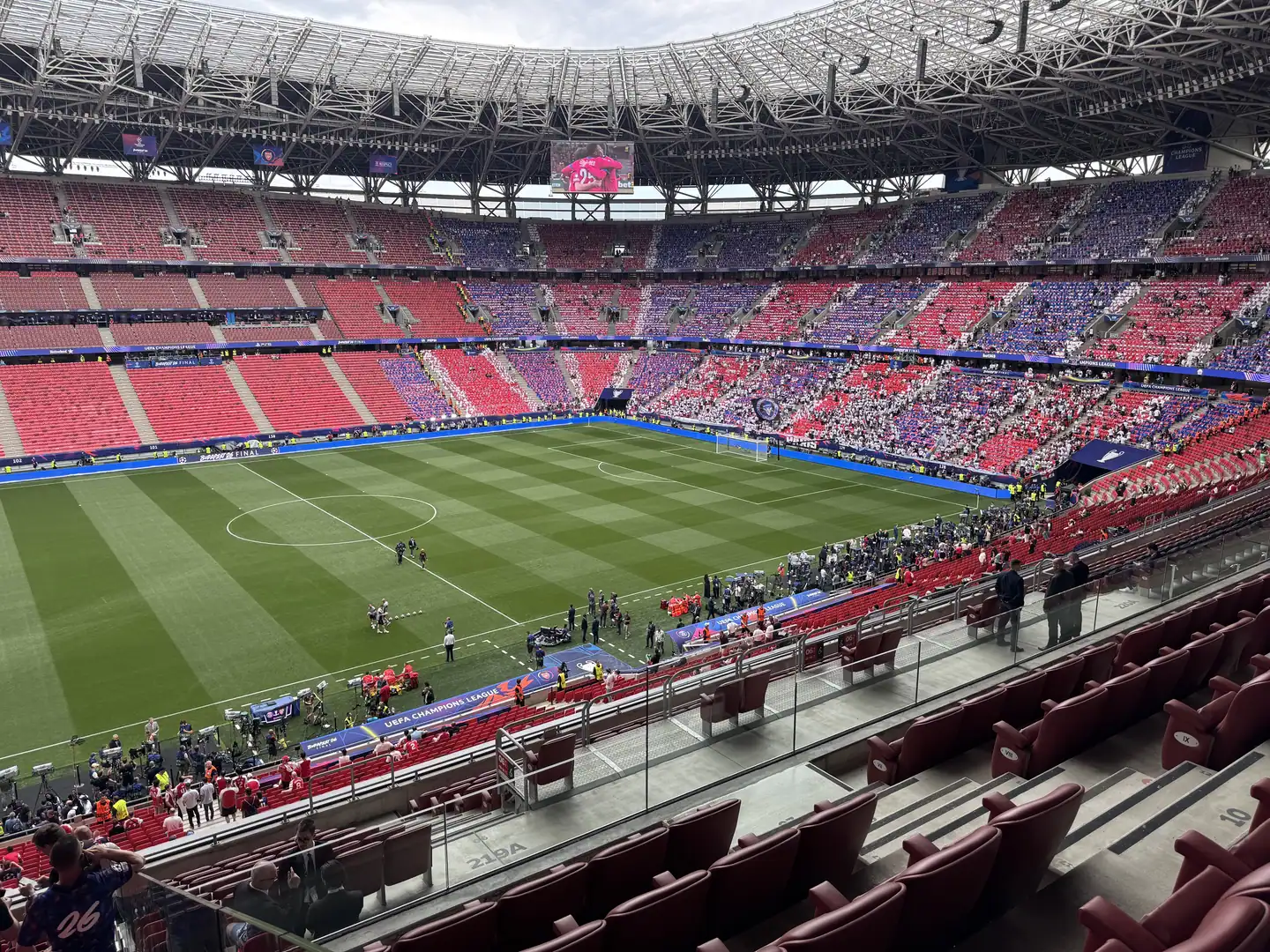
And then, on May 30, 2026, we were on the other side of it. Not behind a phone, not behind a schedule, not behind a convoy route. We were inside Puskás Aréna for the UEFA Champions League final—Paris Saint-Germain vs Arsenal—because luck, paperwork, and a registered UEFA lottery all aligned at once. We entered the draw, one colleague’s name came out, and suddenly we had the privilege to buy two tickets. We sent two Real Madrid supporters.
That detail matters, because football always contains a second story: the one you wear.
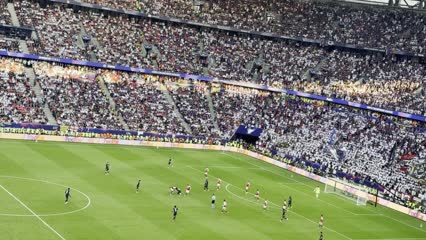
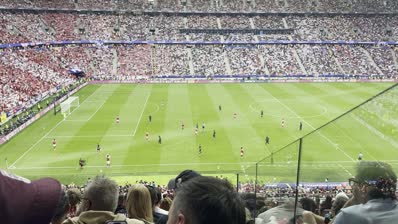
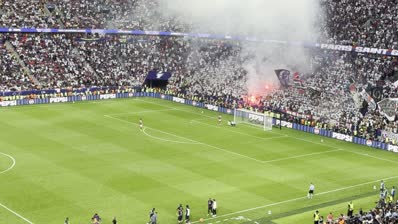
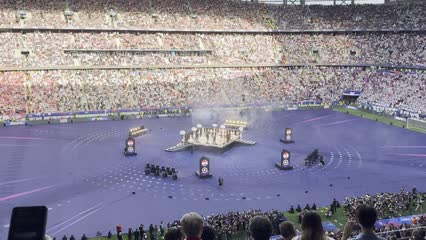
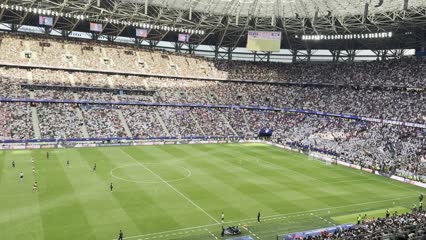
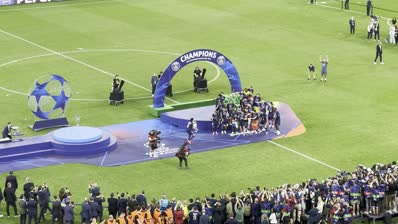
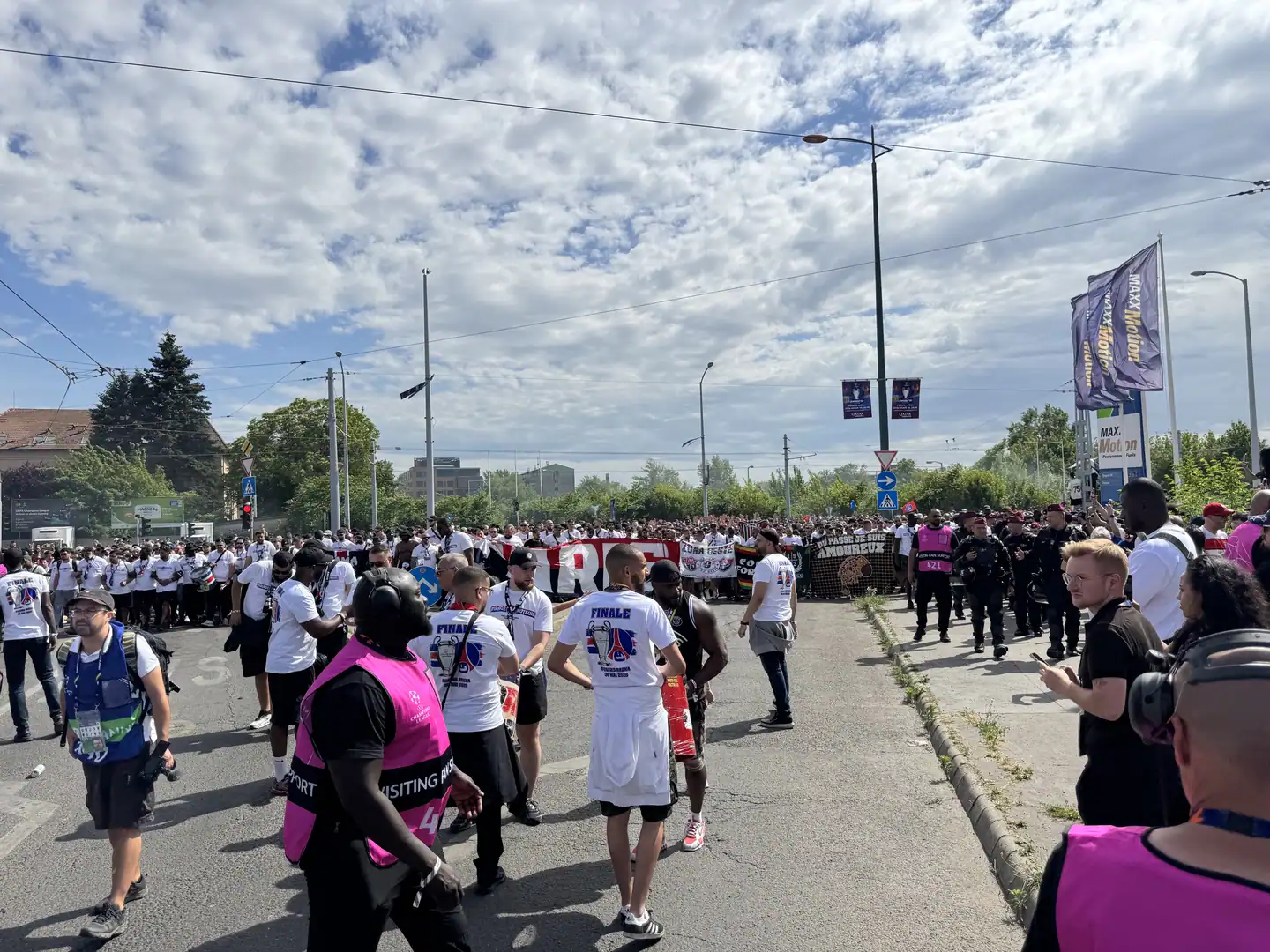
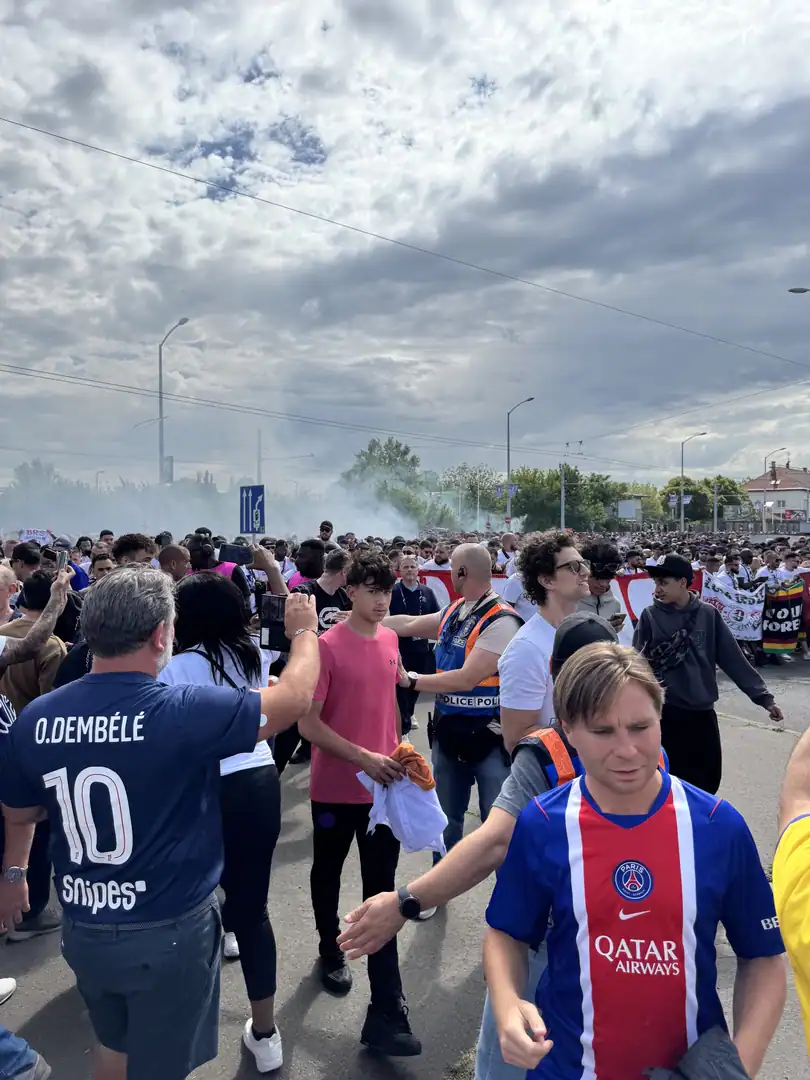
The Ticket That Picked Us—And the Colors We Chose
There is a special kind of mischief that only a Champions League final can produce—harmless, bold, a little theatrical, and full of meaning. Our two “Real Madrid guys” walked into the night dressed in Paris Saint-Germain gear: PSG shirts, PSG scarves, the full statement. Not as betrayal, not as a new allegiance, but as a choice to stand somewhere, to feel the current rather than watch it from the shore.
One of them is genuinely neutral in the way that only a true match-chaser can be: he went for the once-in-a-lifetime sensation of elite football at full volume. The other cared—deeply—and still decided to step into the PSG end emotionally, at least for one evening.
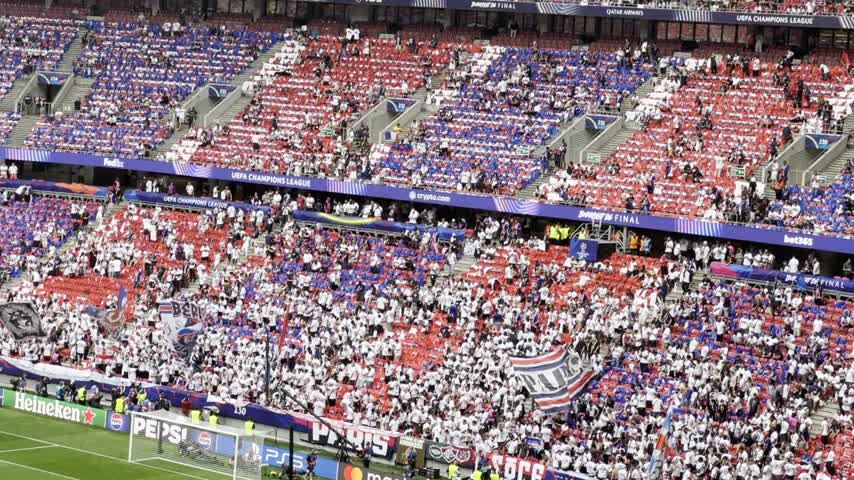
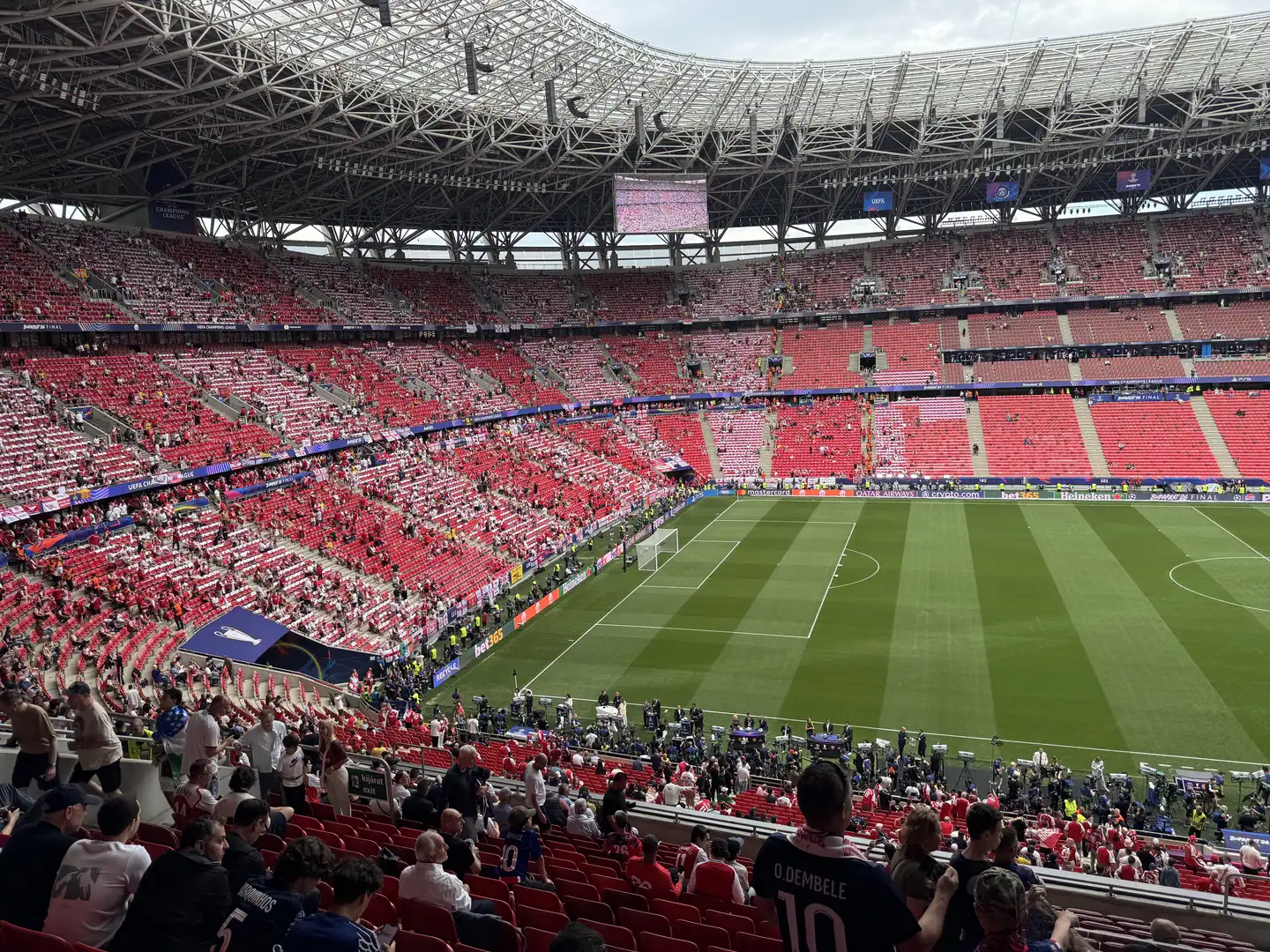
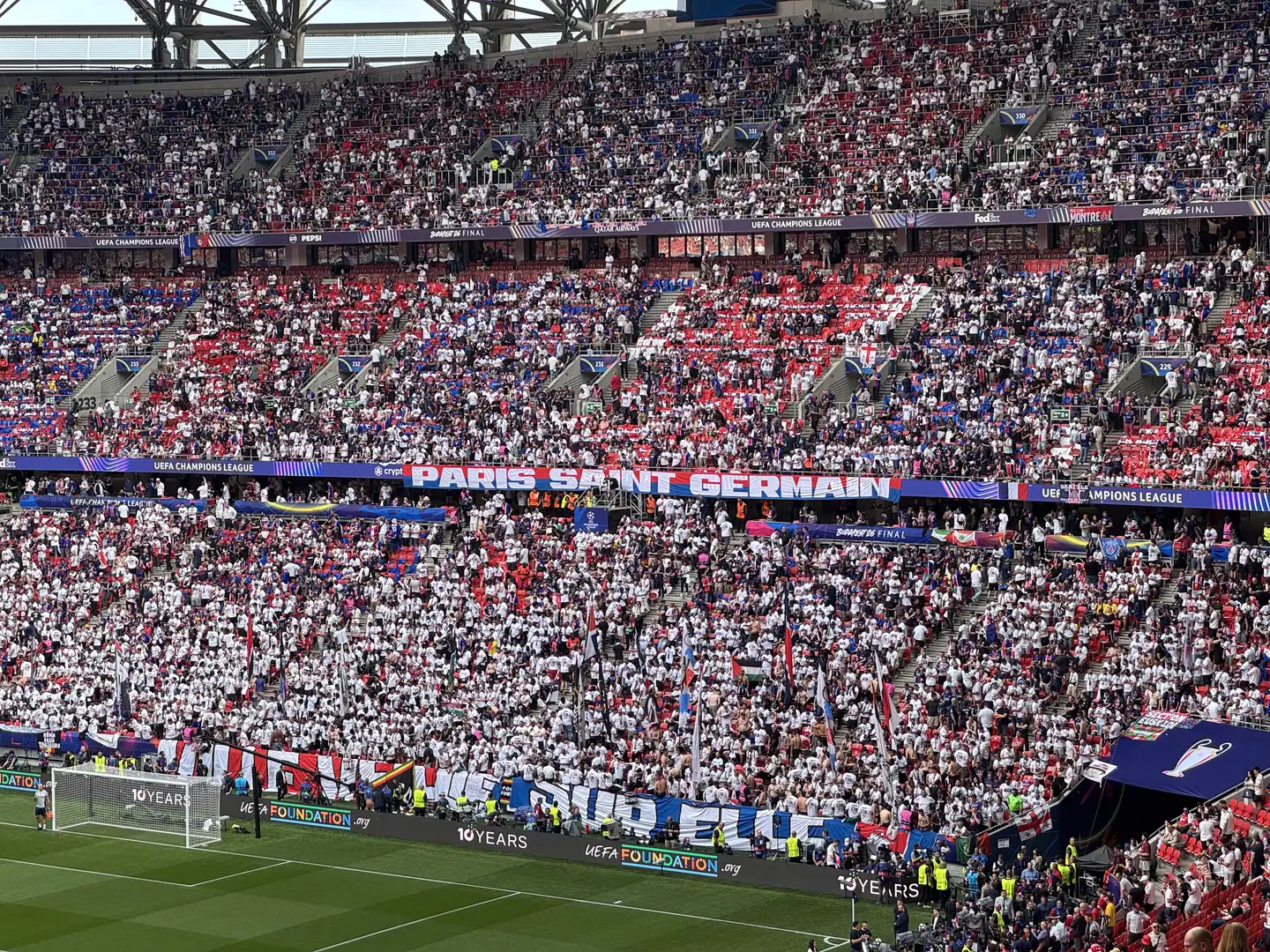
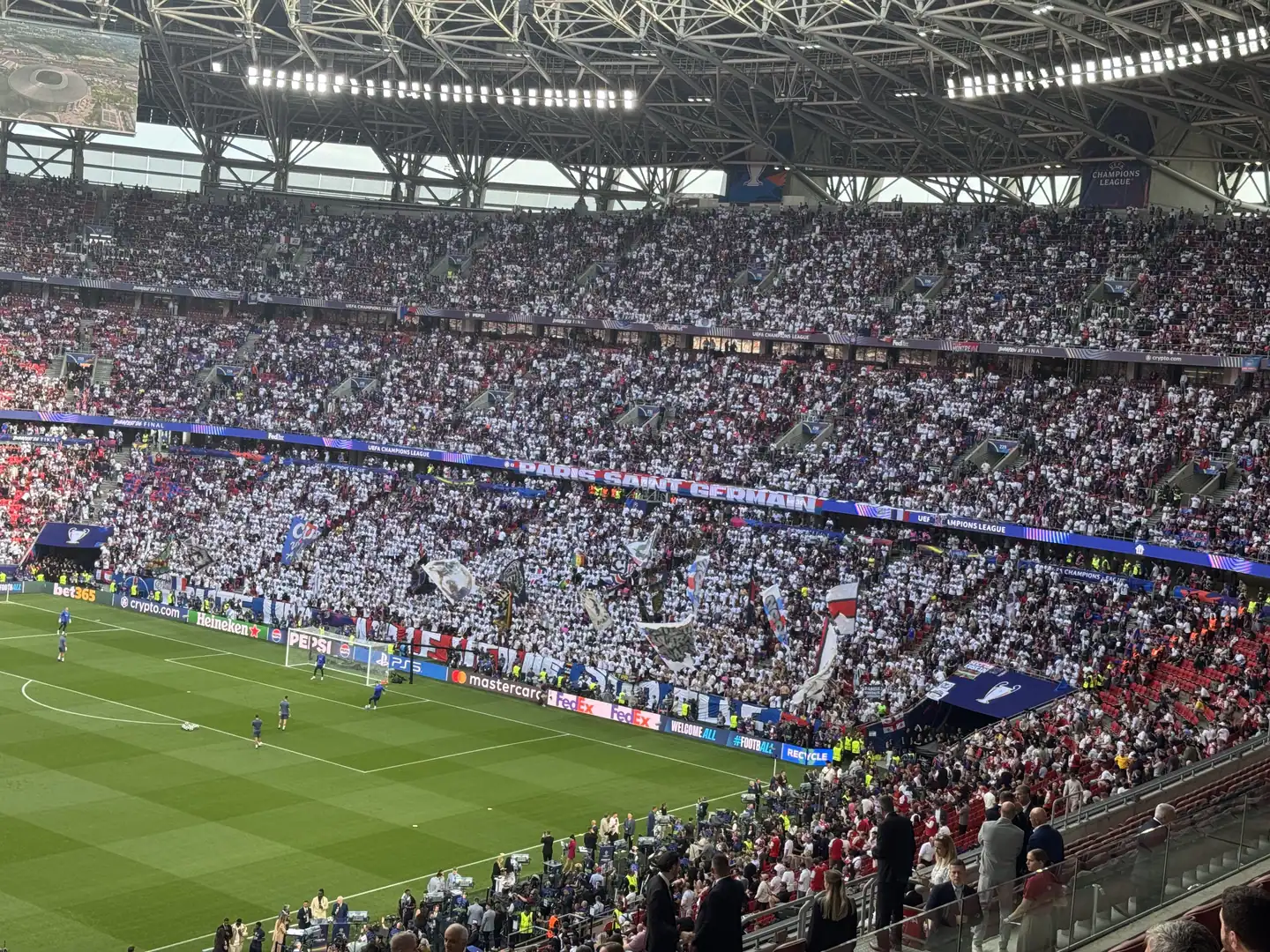
And then the lottery added its own punchline: the seats were assigned on the Arsenal side. Not by preference, not by strategy—by allocation. Which meant two Real Madrid fans in PSG scarves were about to spend the night surrounded by red and white. It could have been tense. It could have been messy. Instead, it became something Budapest does unusually well when the planning is serious and the policing is smart: it turned into a high-stakes party with boundaries.
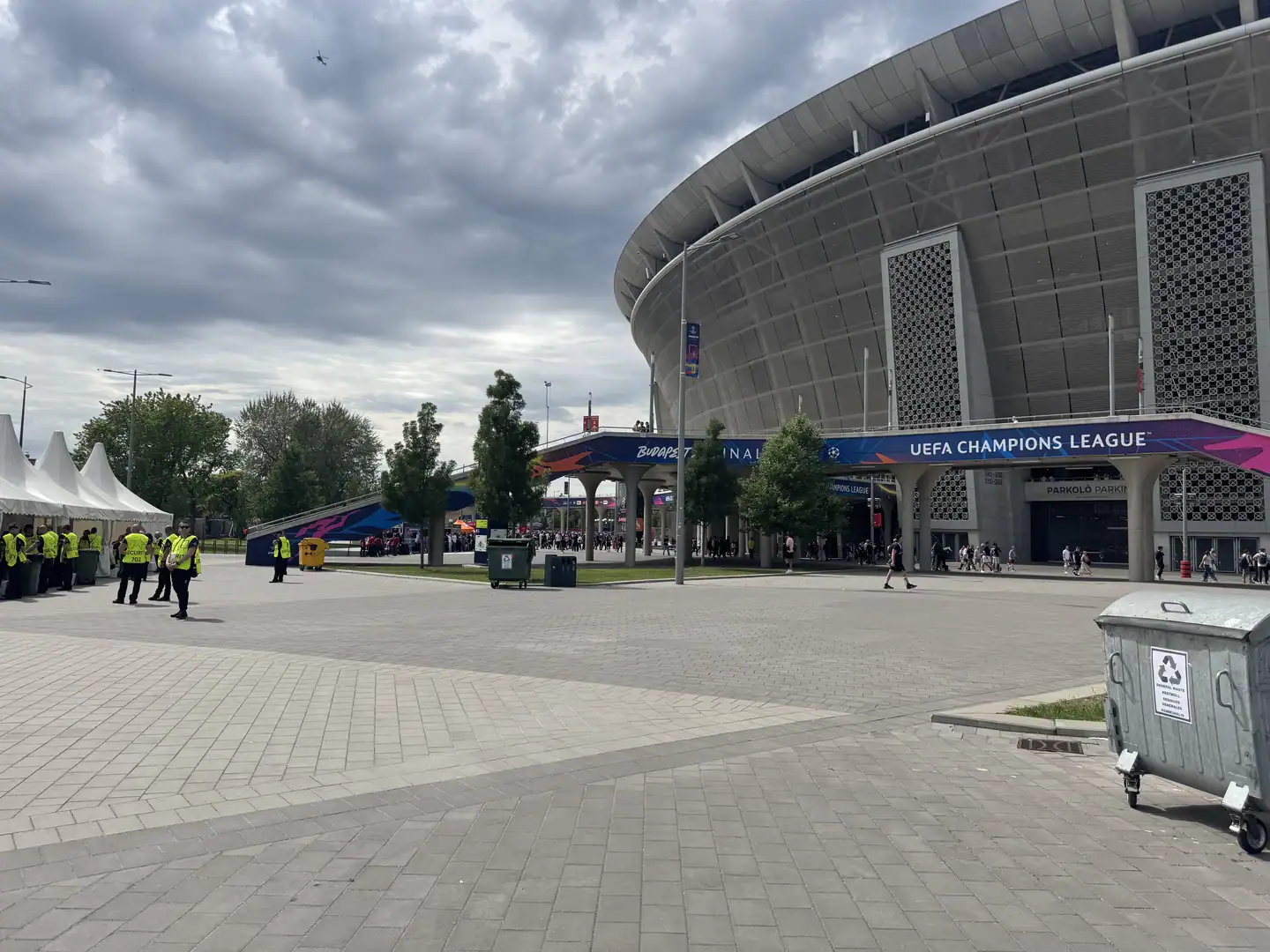
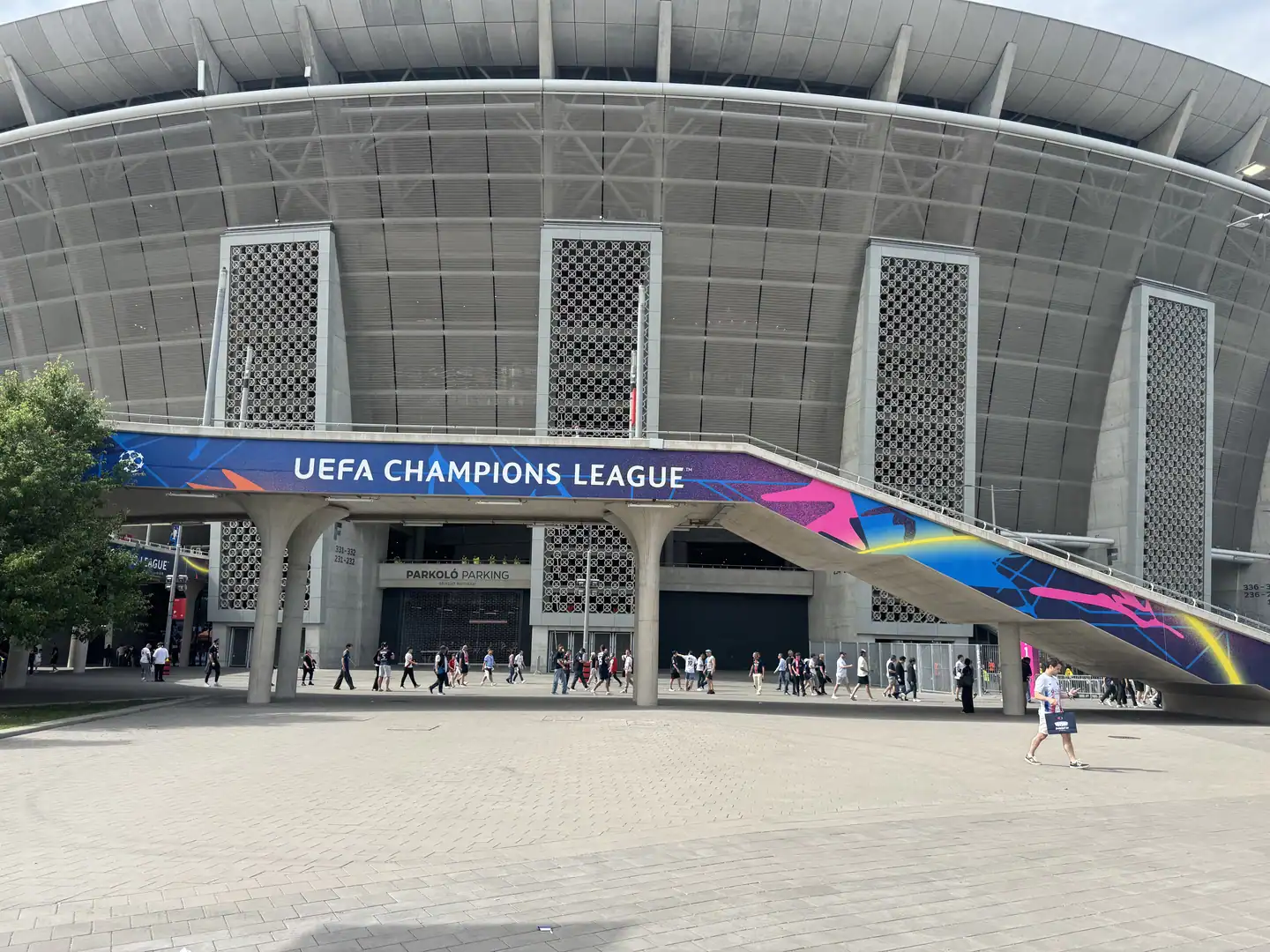
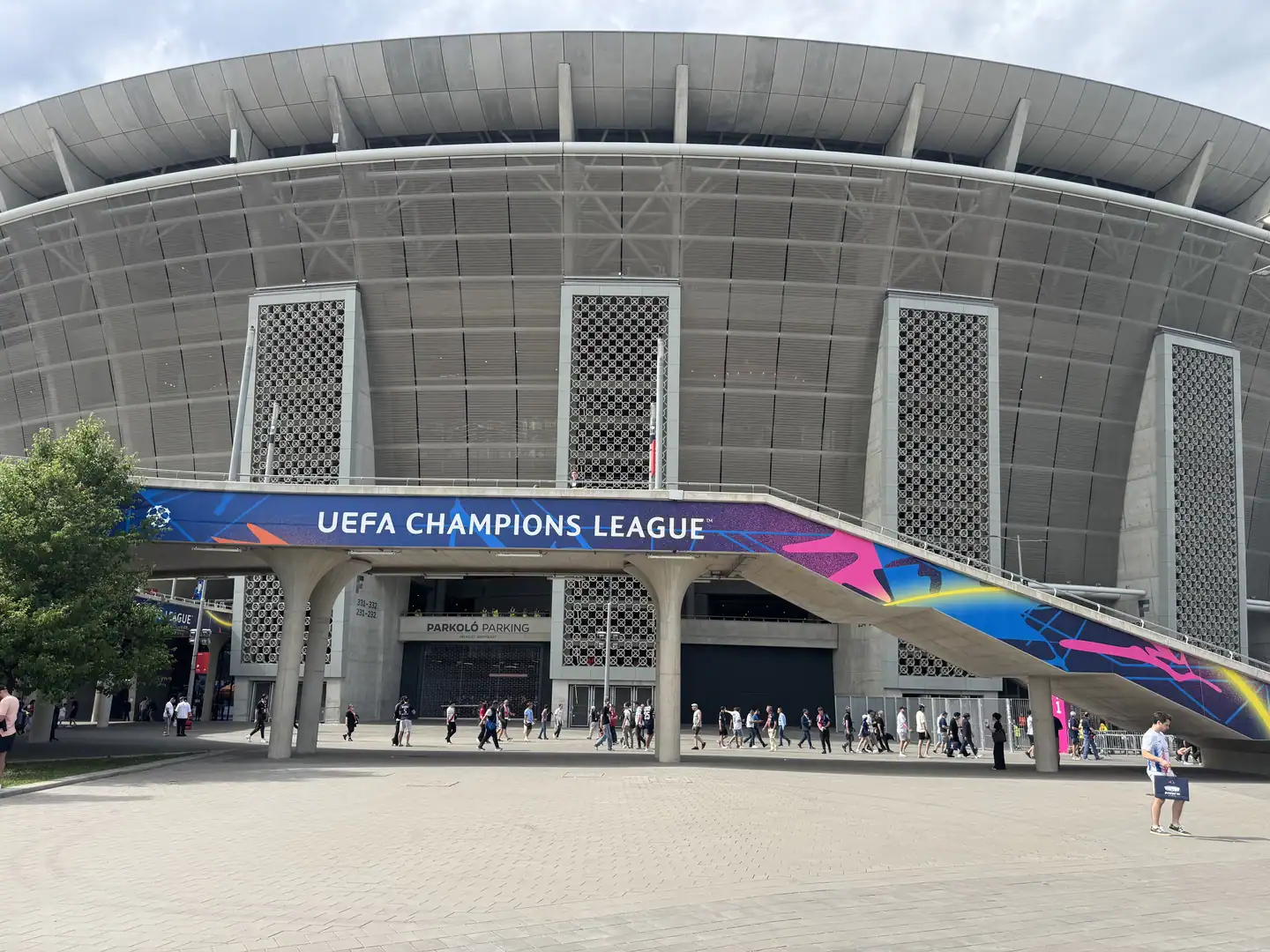
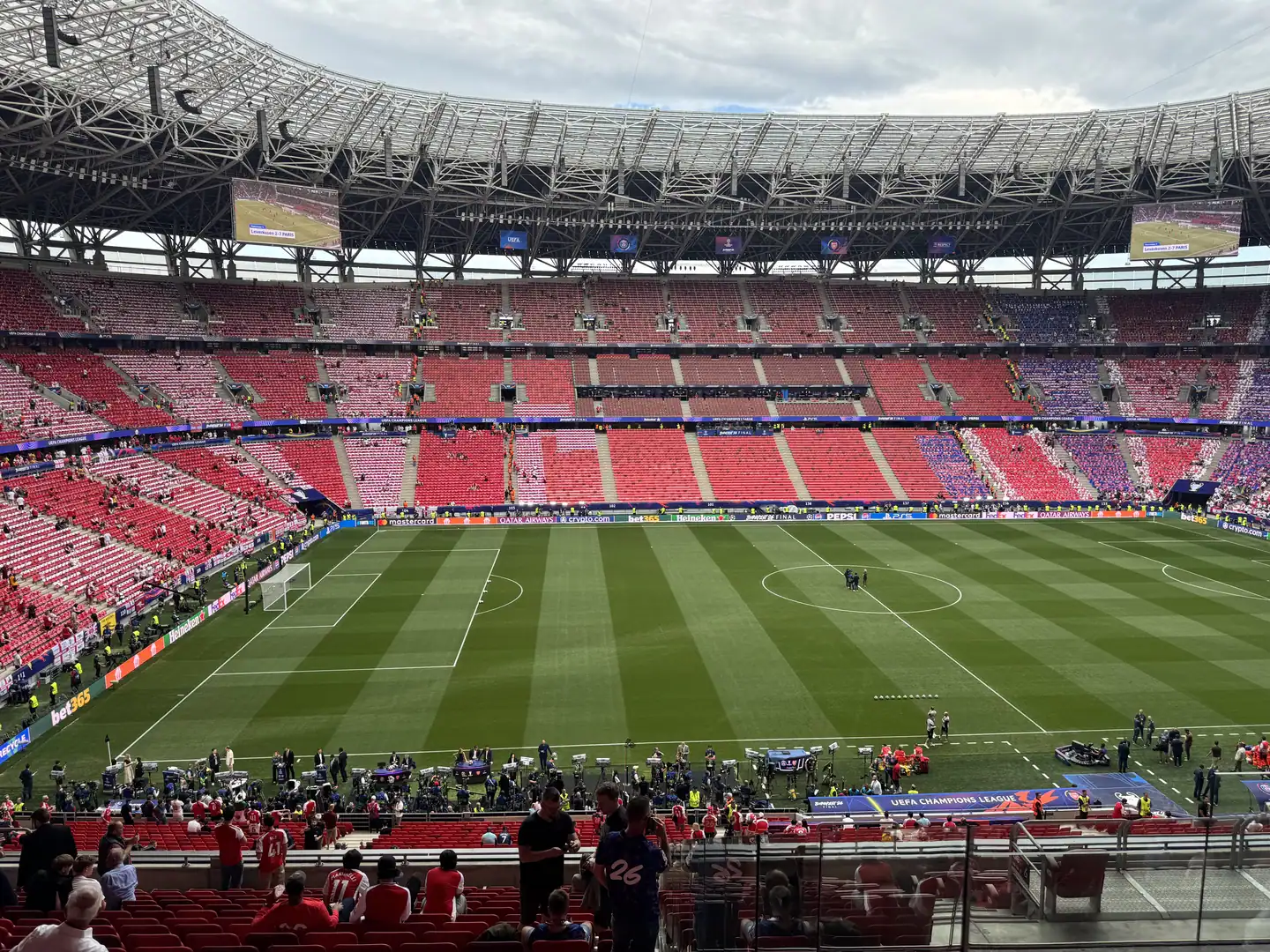
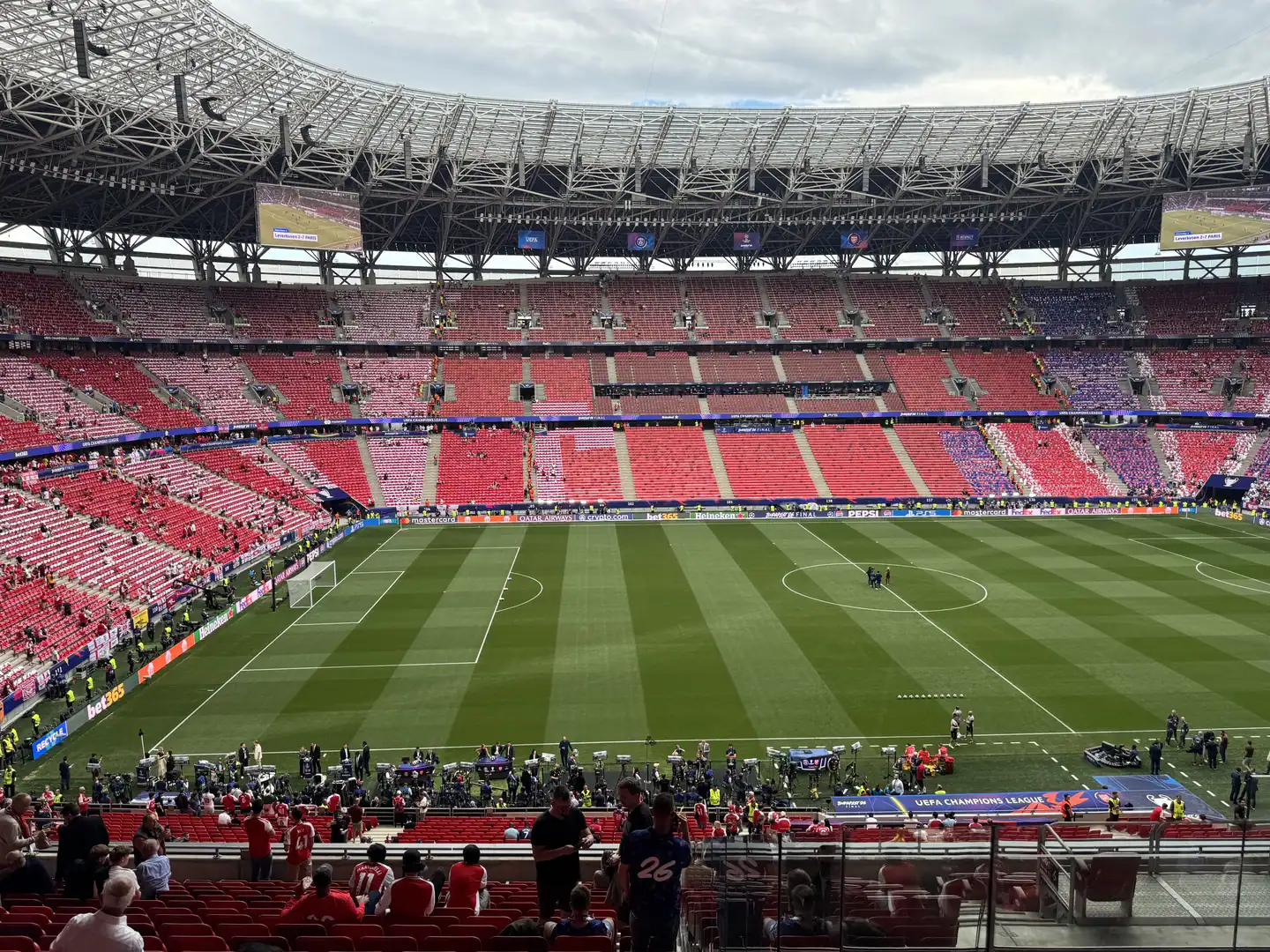
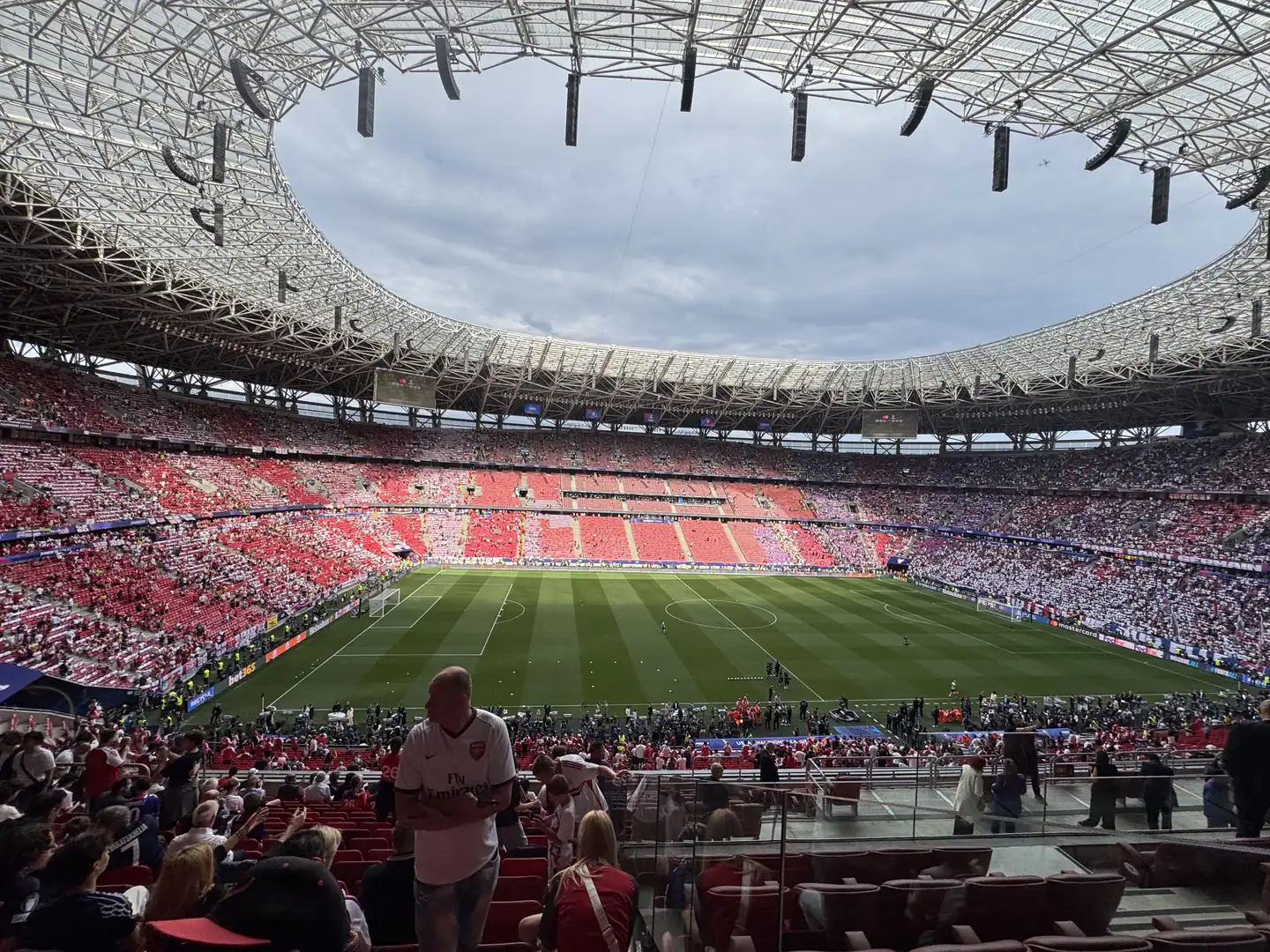
The match itself had its own official scaffolding: Puskás Aréna hosted the Champions League final for the first time, with kickoff set for 18:00 CEST, and an announced attendance of 61,035. What the broadcast never quite captures is how early the stadium begins to breathe. According to event guidance around the final, gates opened at 15:00—three hours before kickoff—and the city’s public viewing on Andrássy út opened at the same time. That early opening wasn’t cosmetic; it was logistics, a deliberate widening of the funnel.
We felt that funnel from the moment we committed to arriving early—two people who are almost never early to anything.
Riding In From Őrs: The Local Advantage on a Global Day
We didn’t come from the tourist core. We came from the other end of the city, from Őrs vezér tere, because that’s where my colleague lives and that’s what locals do: they choose the route that makes sense, not the one that looks cinematic. I took a taxi over in the morning, we took a breath, we handed off the last pieces of company business to the team, and we chose something that felt almost radical after a week of constant motion.
We chose to stop working.
Metro Line 2 carried us toward Puskás Ferenc Stadion the way it has carried Hungarian matchdays for years—efficient, familiar, almost reassuring. When you know the stadium, you know the rhythm: the exits, the flow, the direction the crowd wants to move, the points where you can still make a decision before the mass decides for you.
Outside, the city was layered with official planning. Budapest had set fan meeting points, created spatial separation, and pushed people toward public transport; ticket holders could use public transport for free across May 29–31, 2026, and public communications emphasized that the stadium had no public parking. That detail alone tells you how the day was designed: move thousands quickly, reduce friction, keep the streets from turning into a static sculpture of brake lights.
UEFA volunteers—Hungarian volunteers—stopped us as we talked through our bearings. They heard our language, heard our small uncertainties, and guided us without fuss. They saw that our tickets were for the Arsenal section, but they also saw our bodies angling toward the Paris crowd, and they treated it like what it was: football curiosity, not trouble.
What happened next is one of those scenes you can’t fully compress into words.
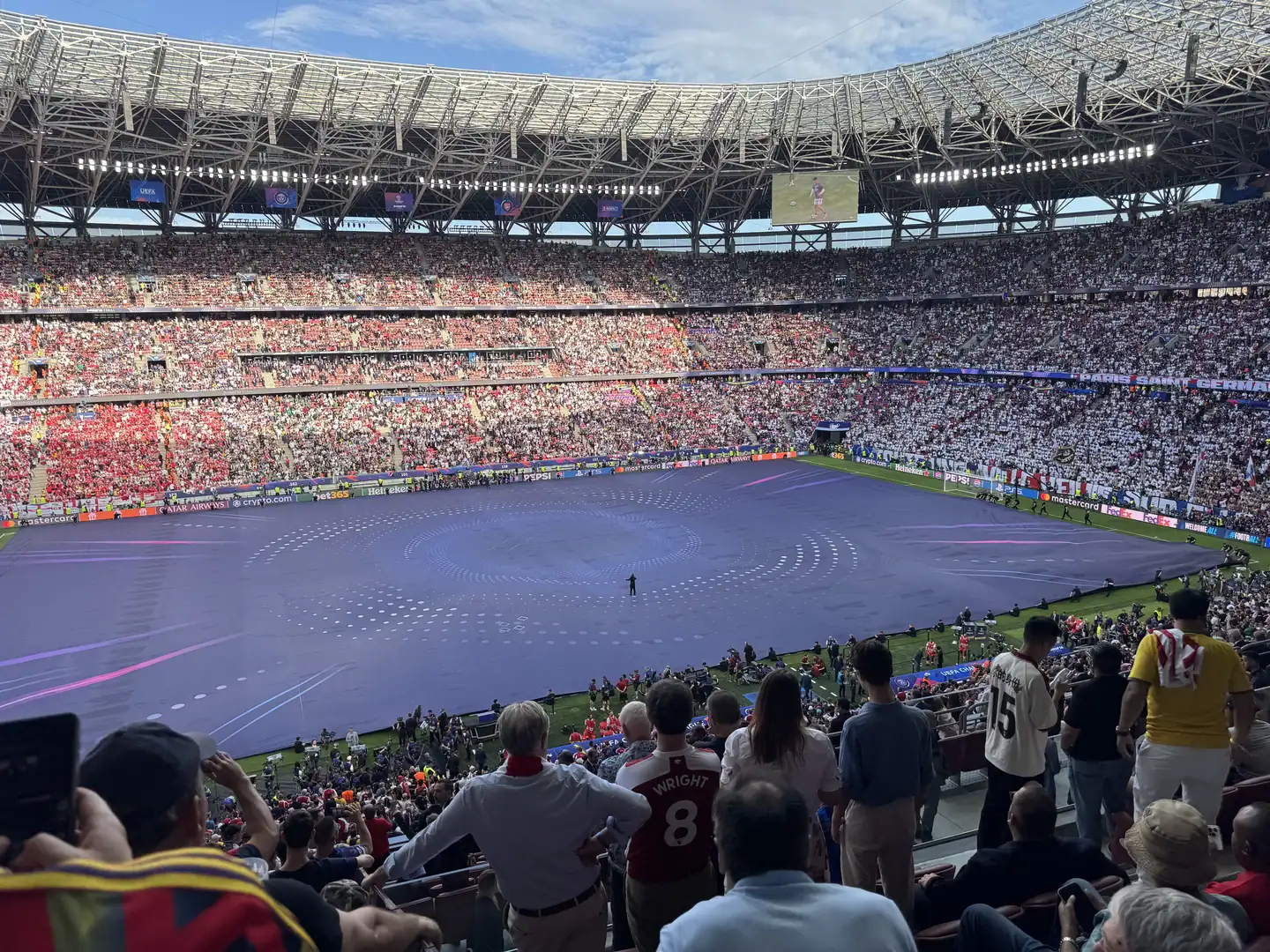
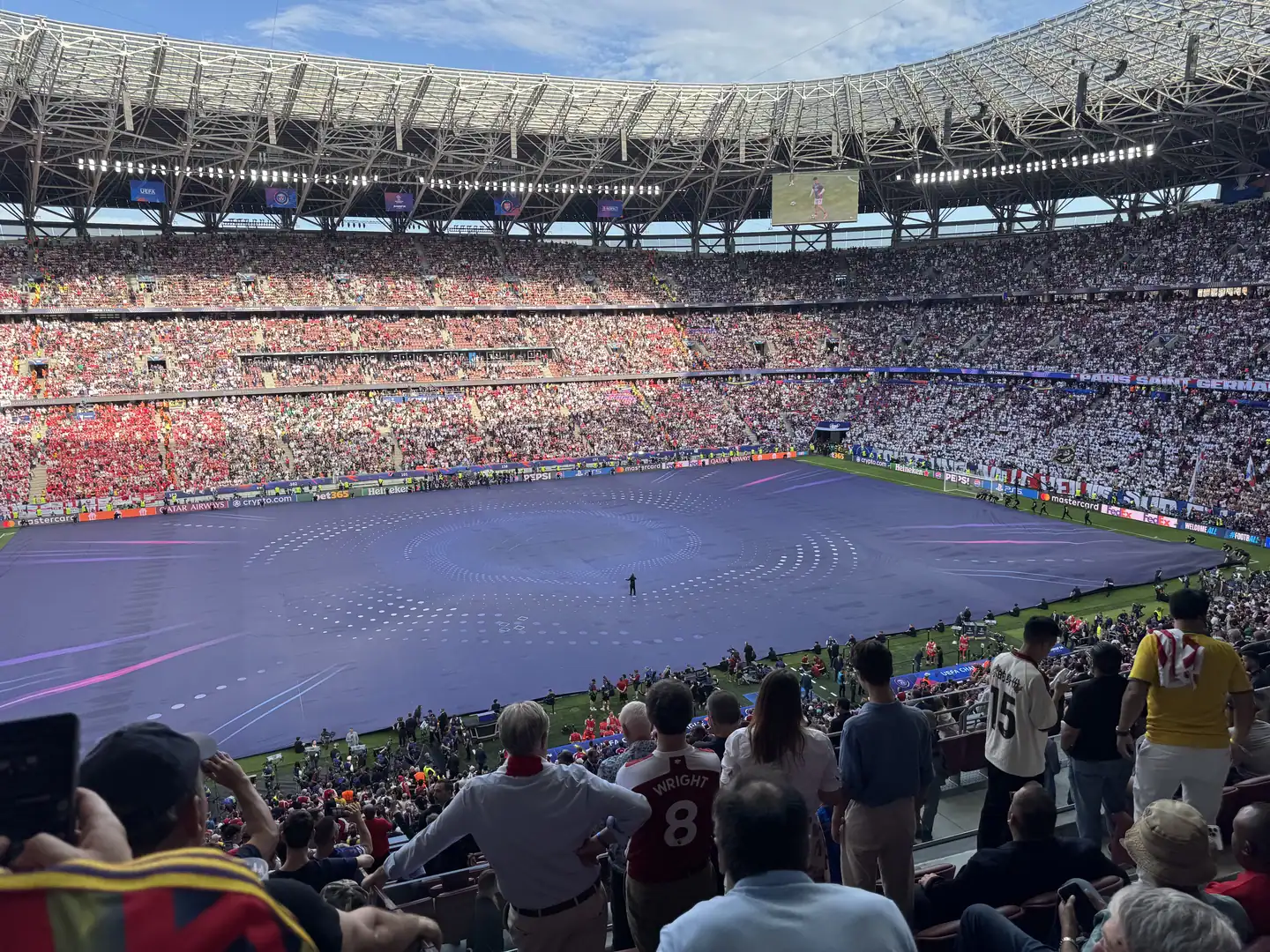
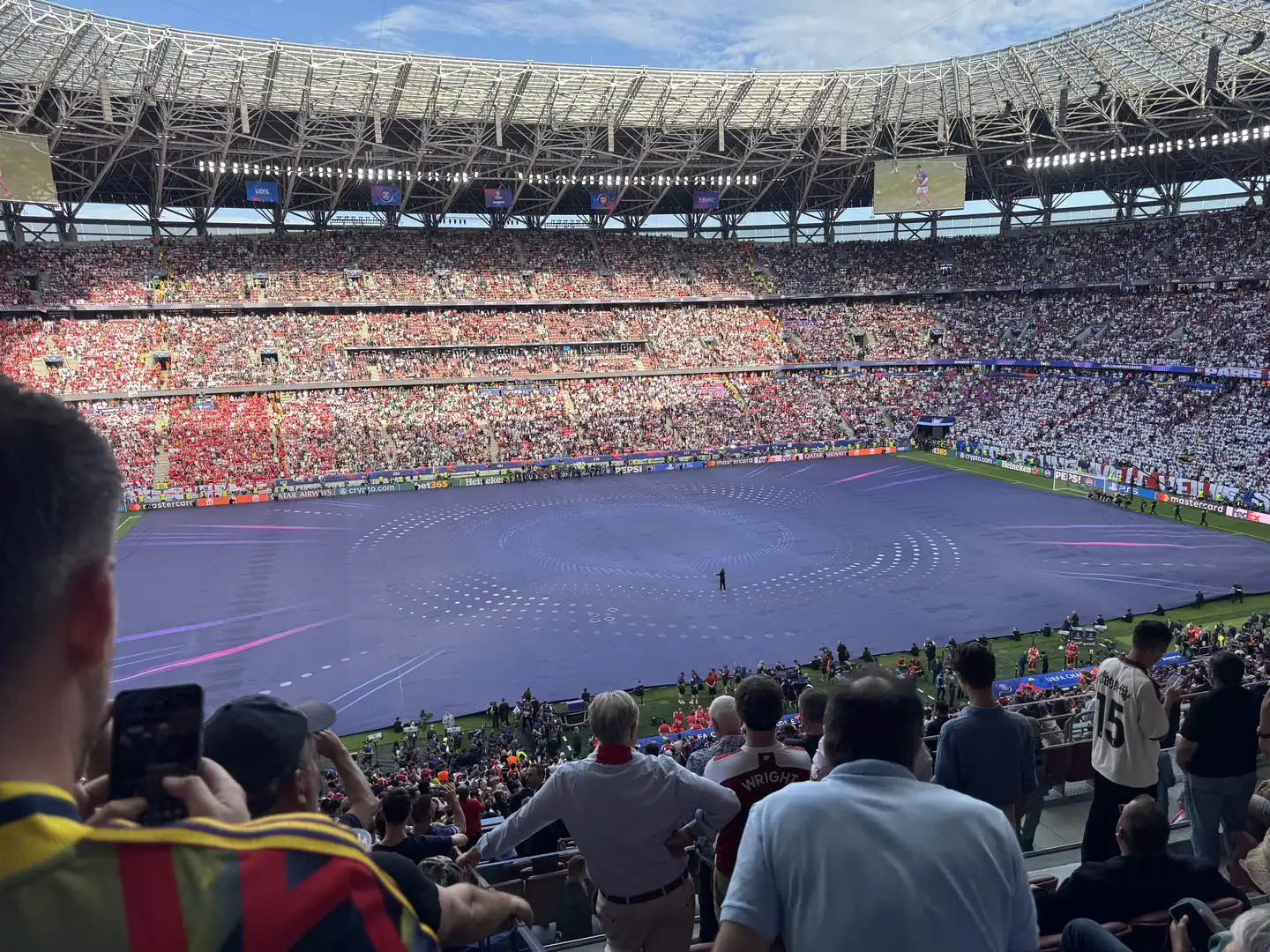
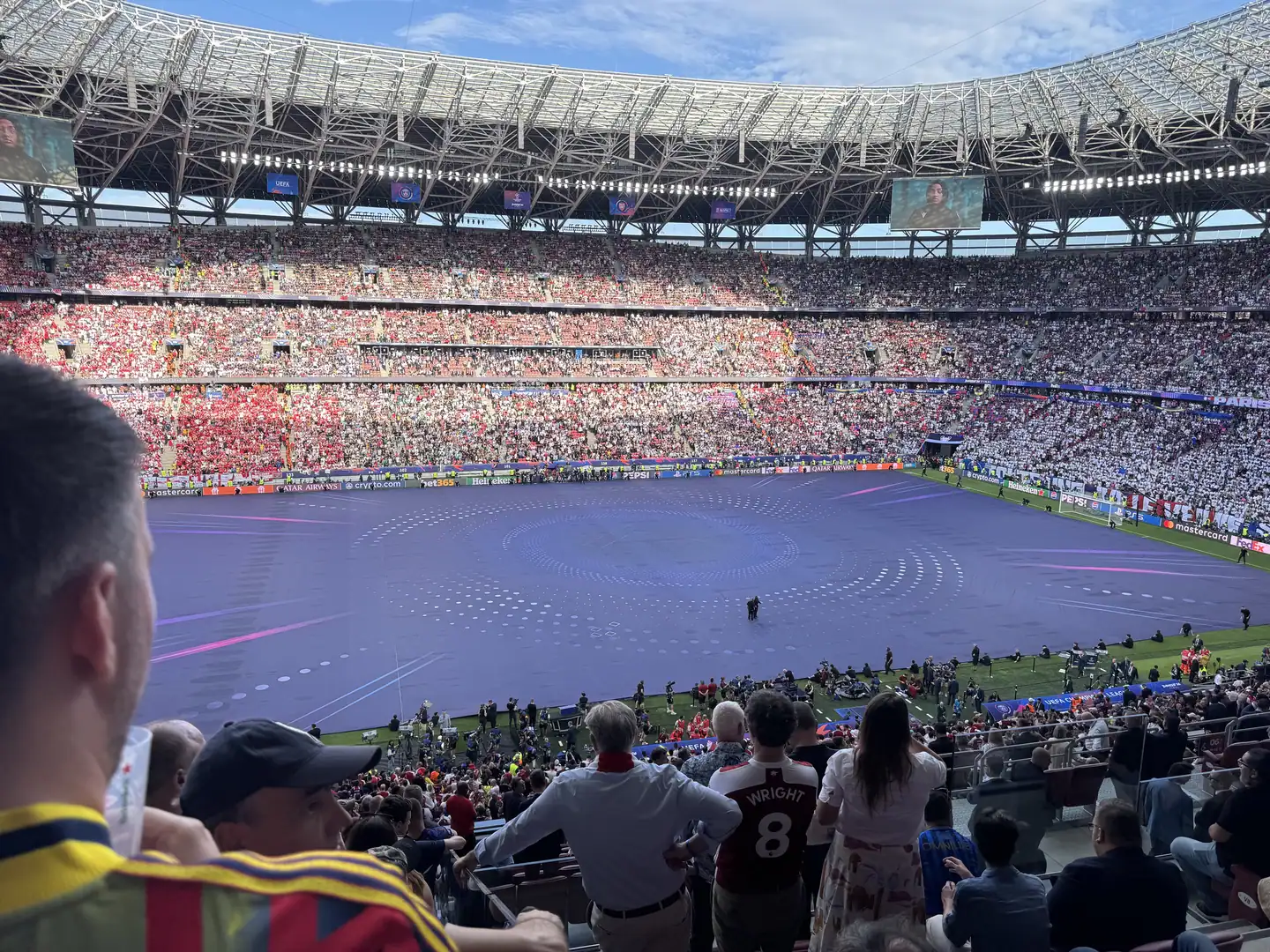
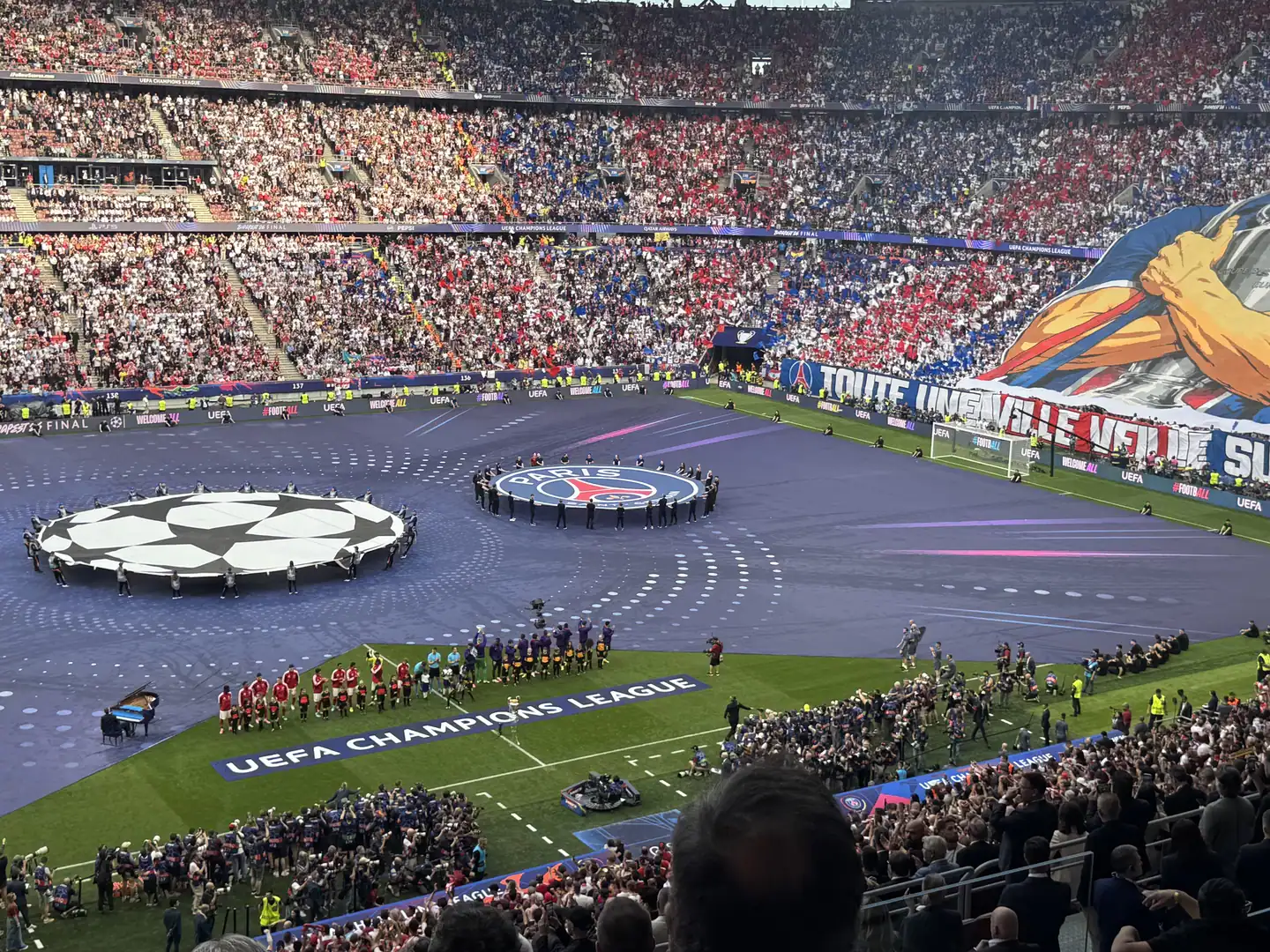
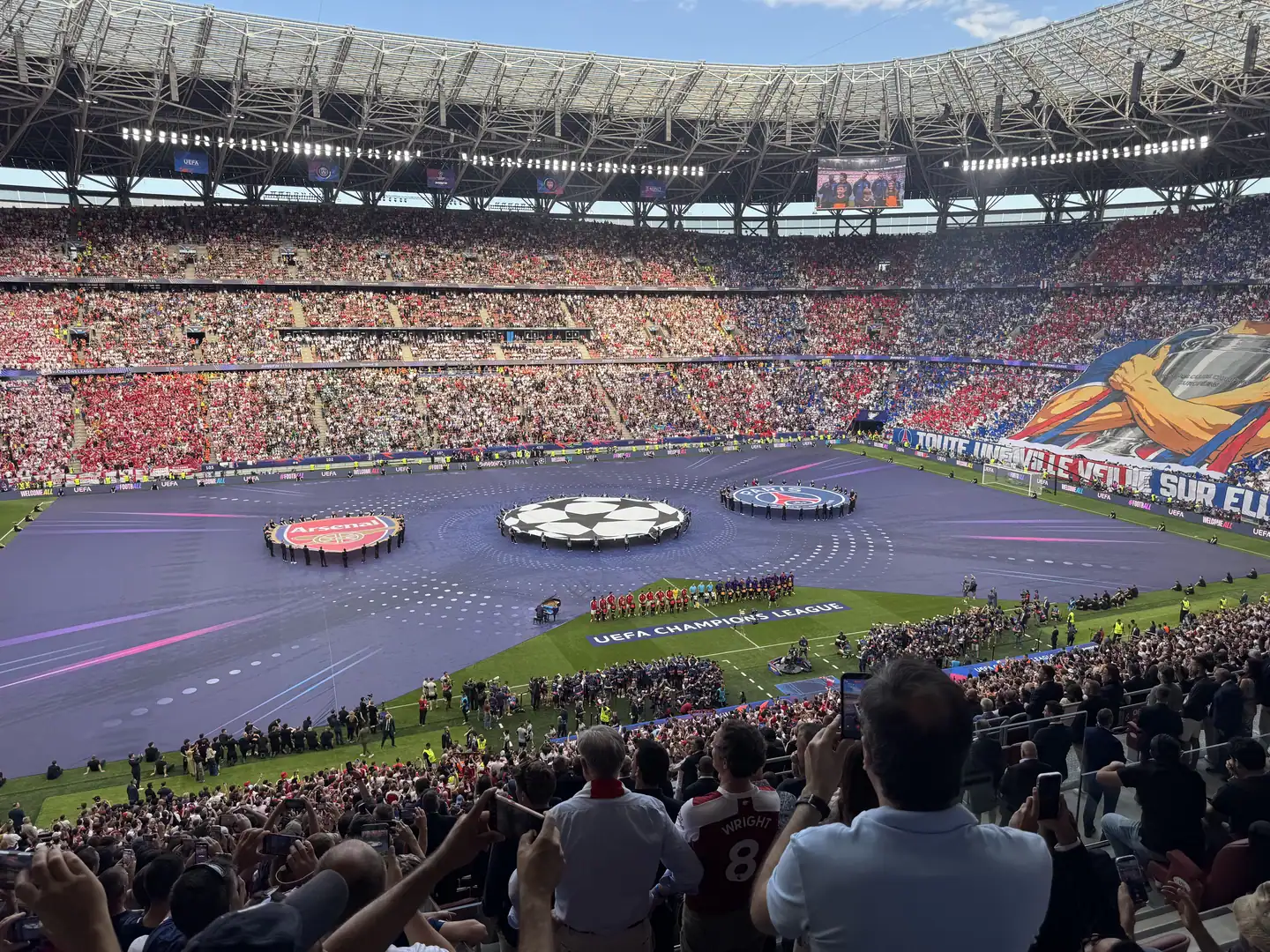
The PSG Surge: Drums, Chants, and the Moment the City Tilted
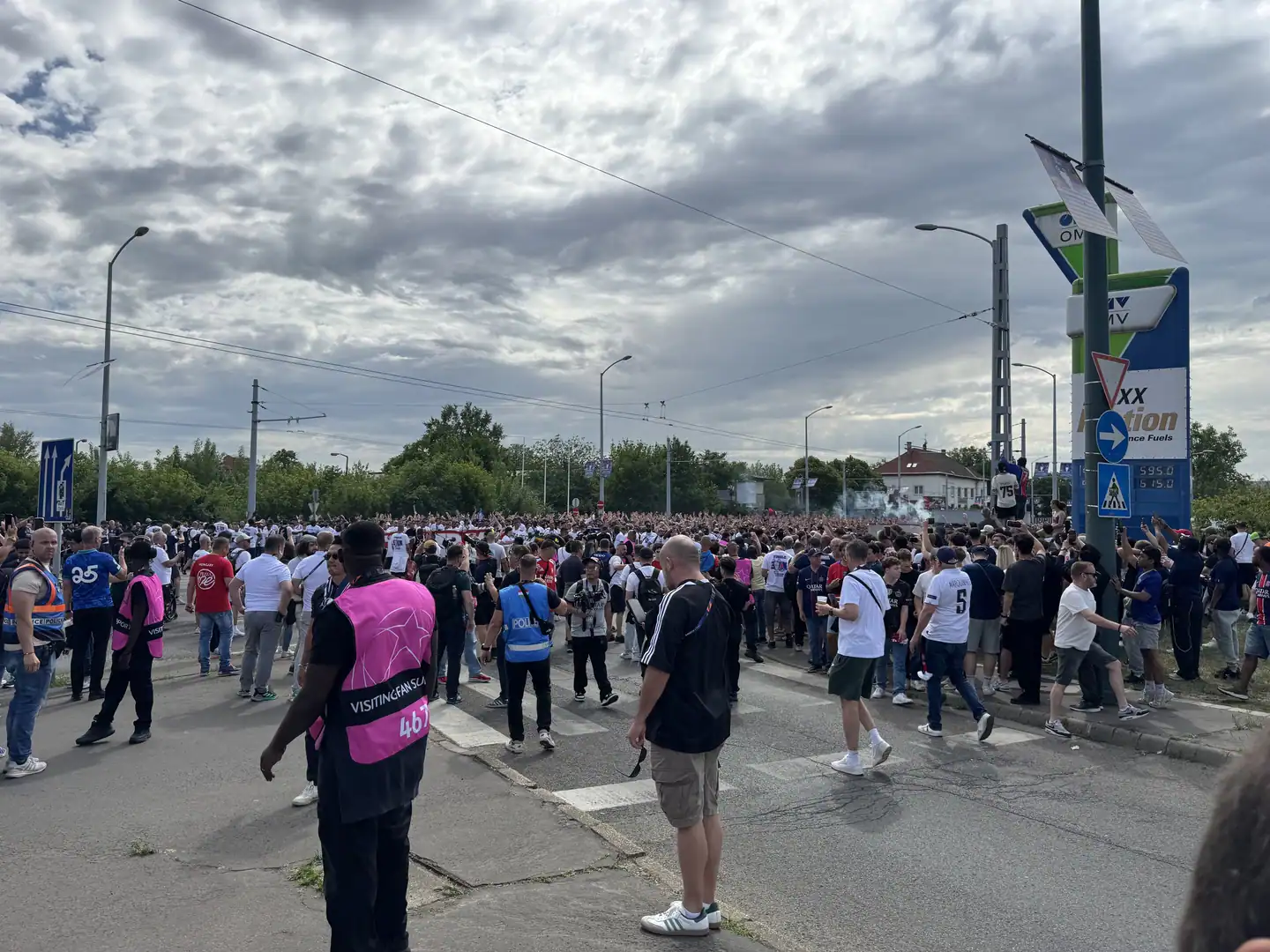
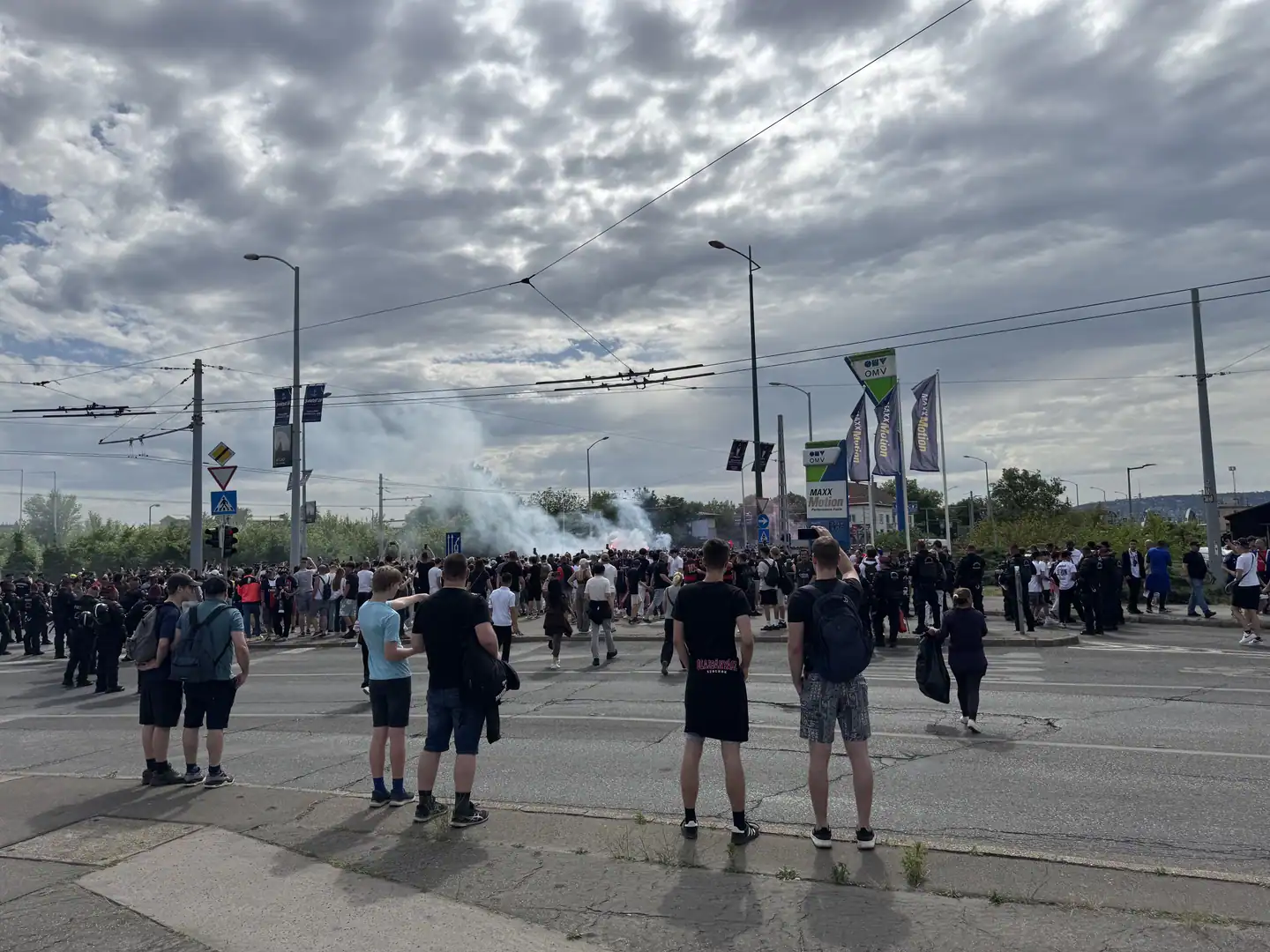
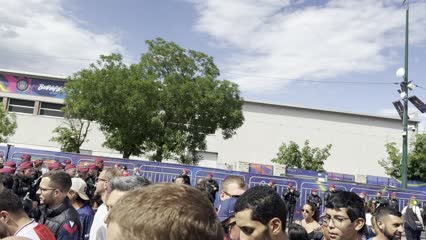
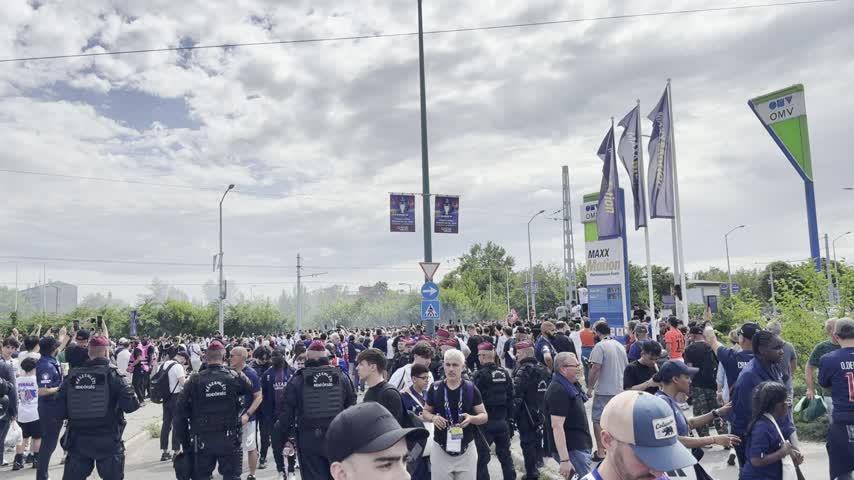
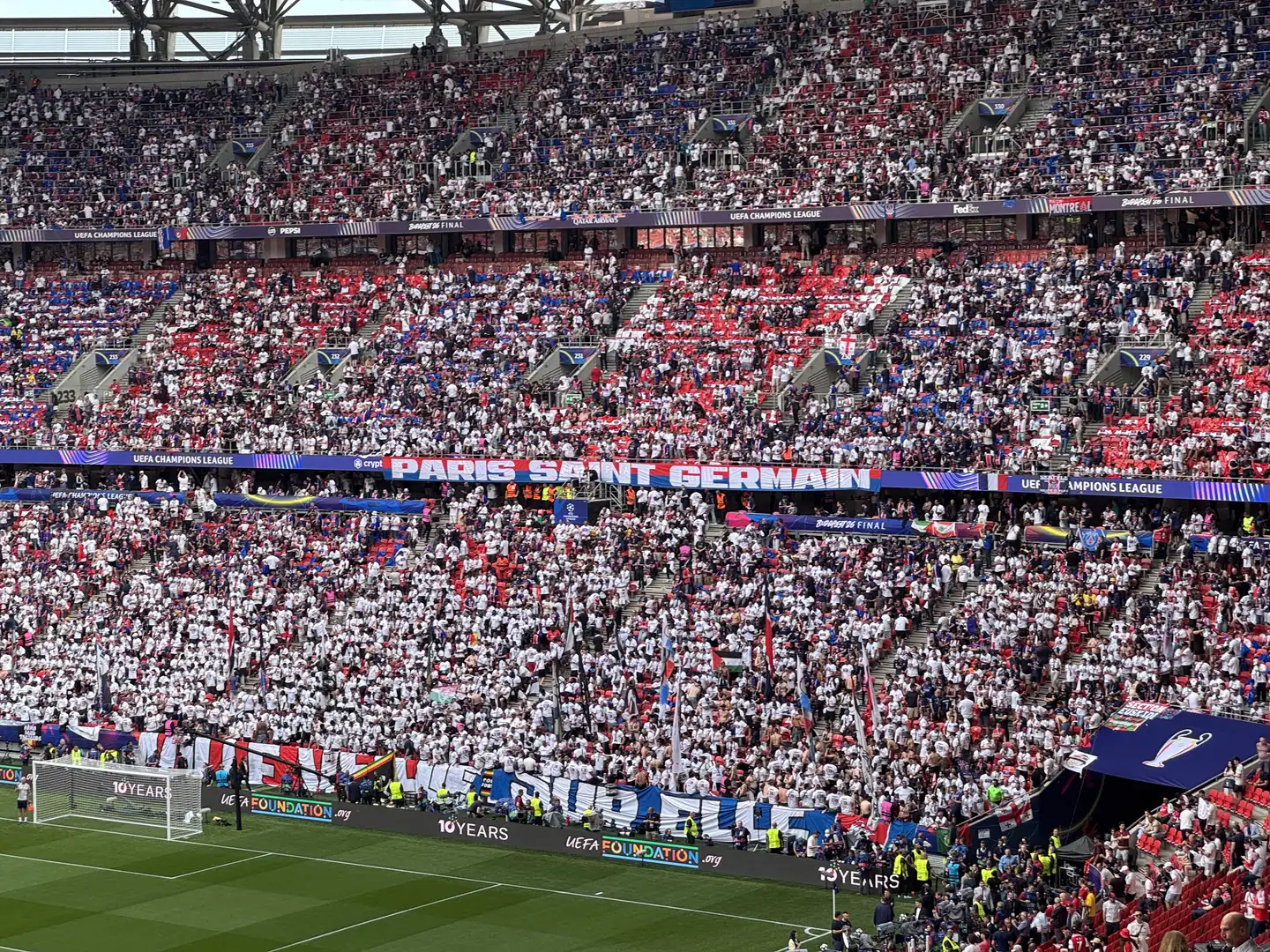
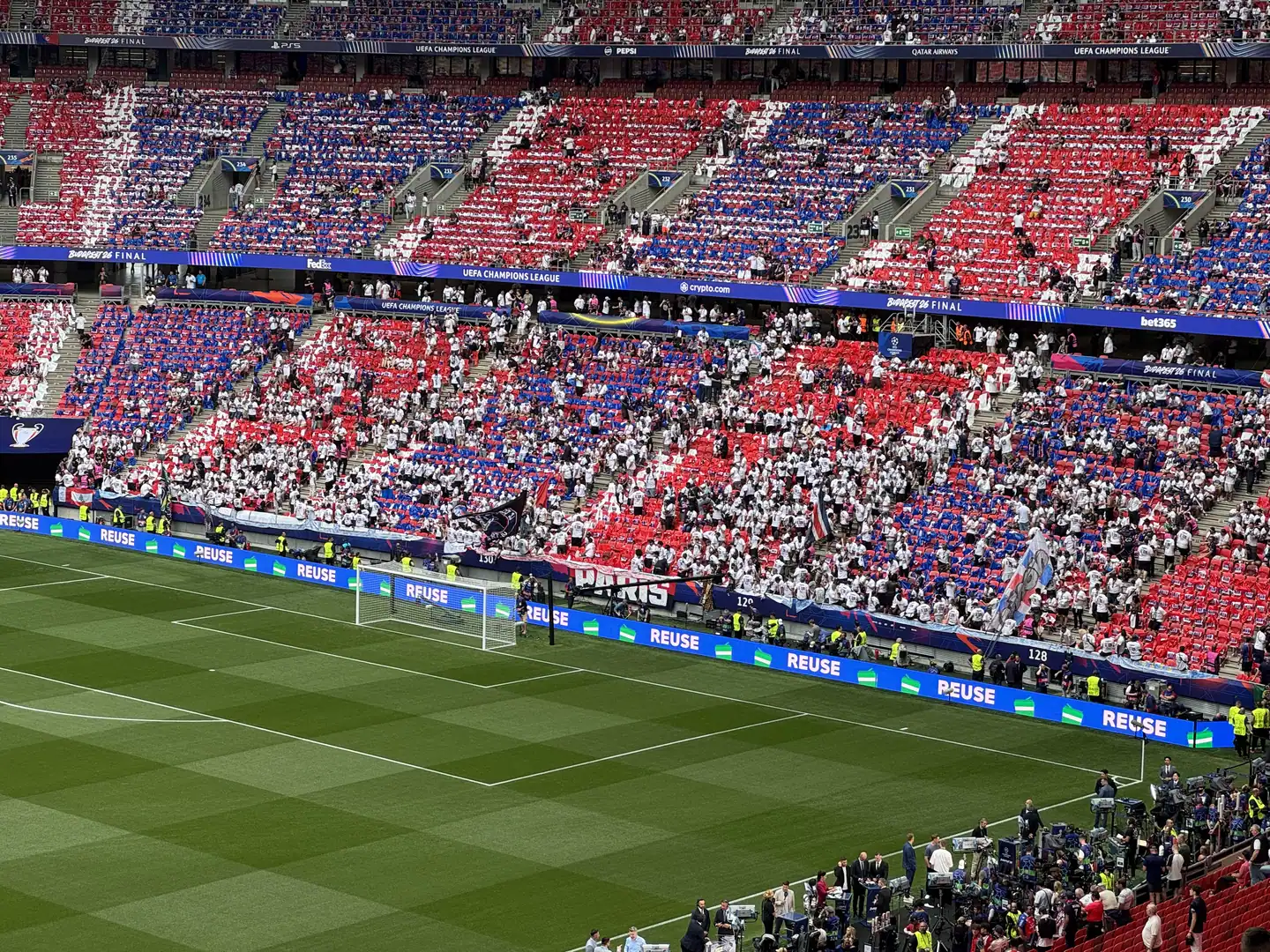
We surfaced from the metro and almost immediately met the force of the PSG contingent. The drums arrived first—deep, physical, like a second heartbeat. Then the chants, then the flags, then the density of bodies moving with purpose. It wasn’t simply loud; it was organized loud, the kind that turns a public space into a temporary nation.
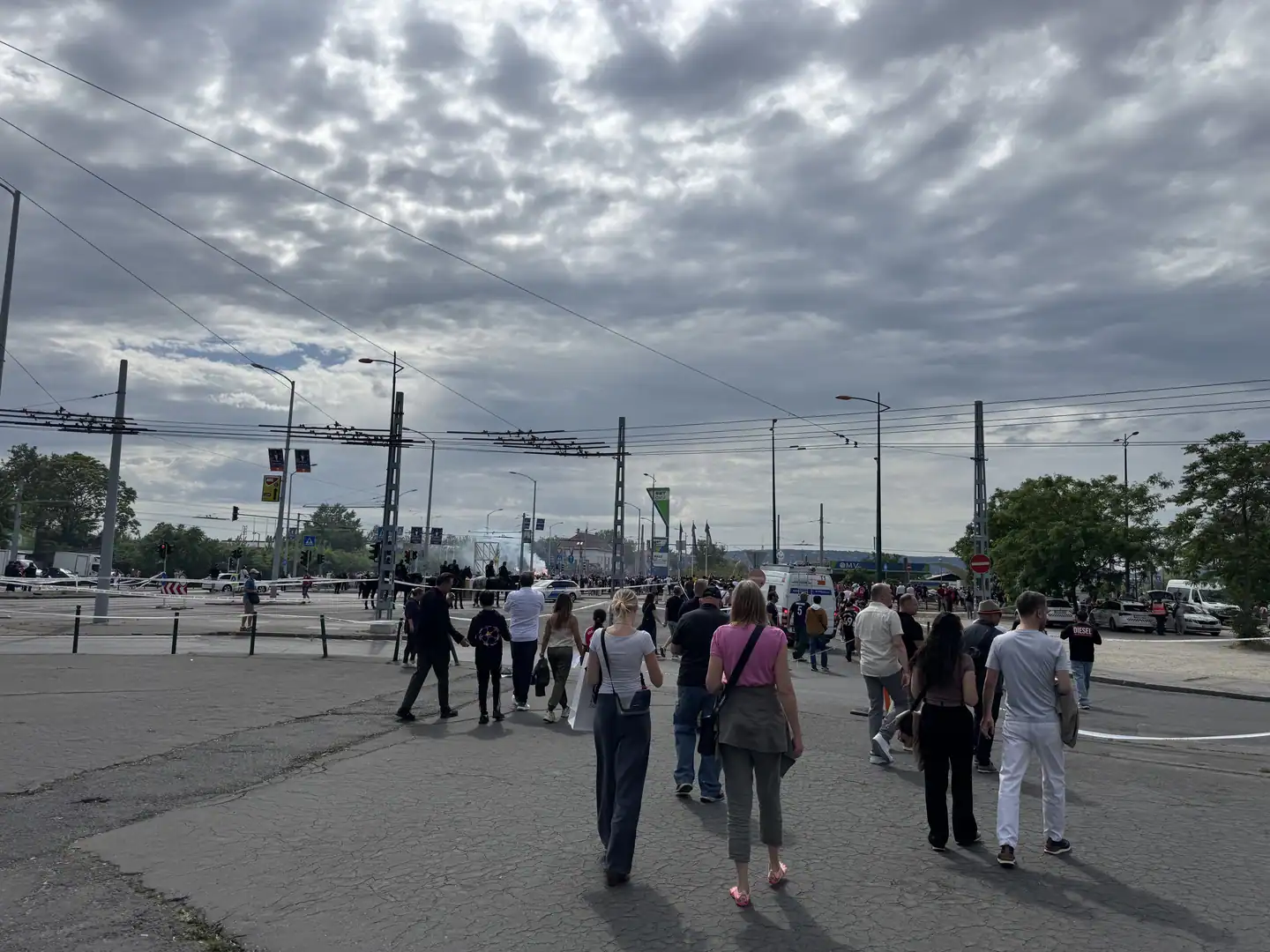
Police and coordinators kept the movement flowing. People watched from the edges, including plenty in Arsenal shirts who came not to antagonize but to witness: to see what “ultras” looks like when it’s choreographed, contained, and treated seriously by everyone involved. The most important detail is the simplest: it stayed civilized. The crowd had heat, but it had boundaries.
We took photos and a few videos, but we couldn’t get too close, and honestly, that was fine. On a day like that, the city belongs to flow. You can either fight the current or learn to move with it. We chose the second option and slipped toward the stadium before the biggest wave hit the gates.
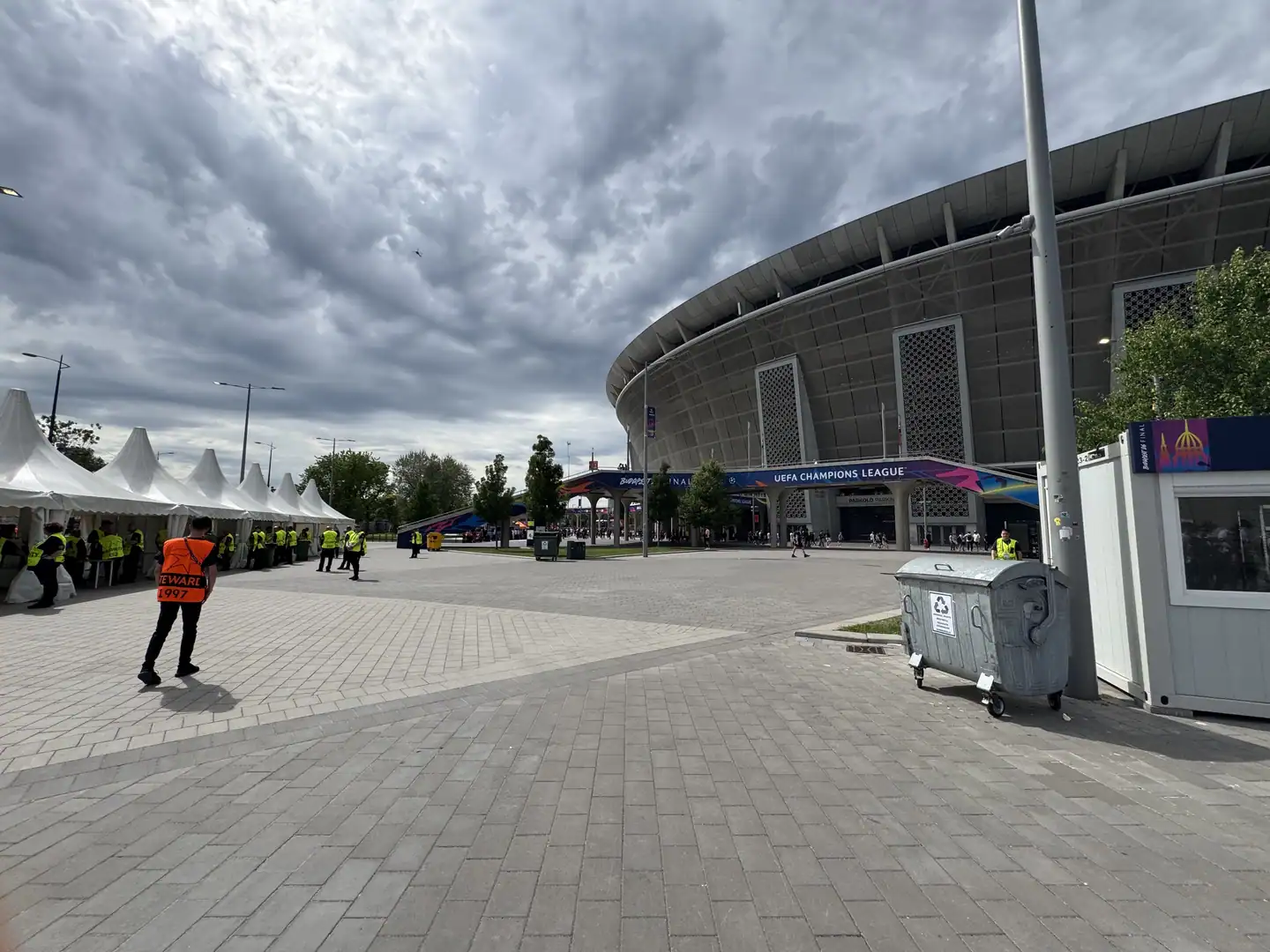
Security was layered—cordons, checks, app-based ticket verification, then more checks at the main entry. From a professional standpoint, it was impressive: enough friction to be meaningful, not enough to become chaos. From a human standpoint, it was comforting. Everyone in that stadium had something to lose by the night going wrong. The systems treated it that way.
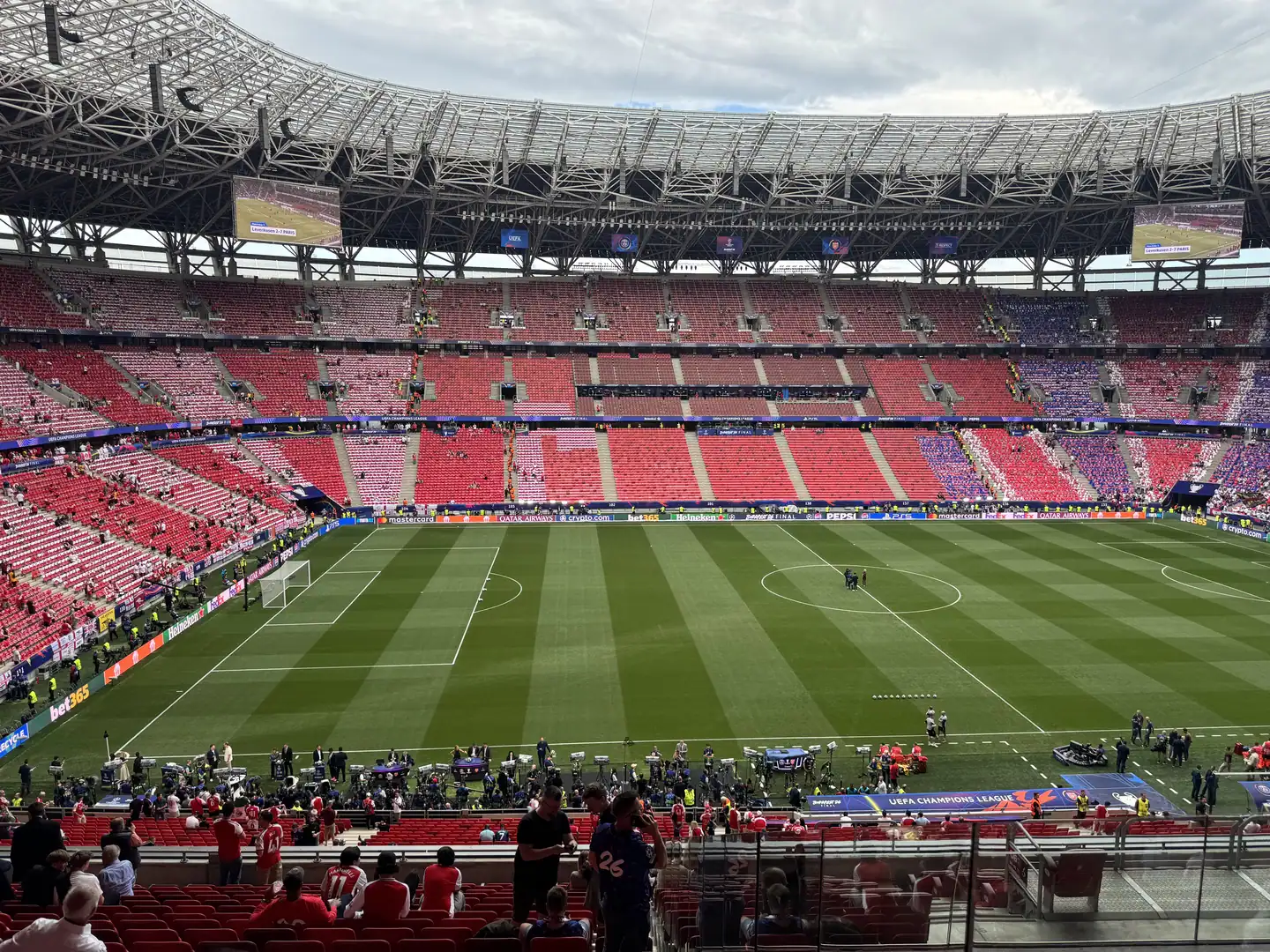
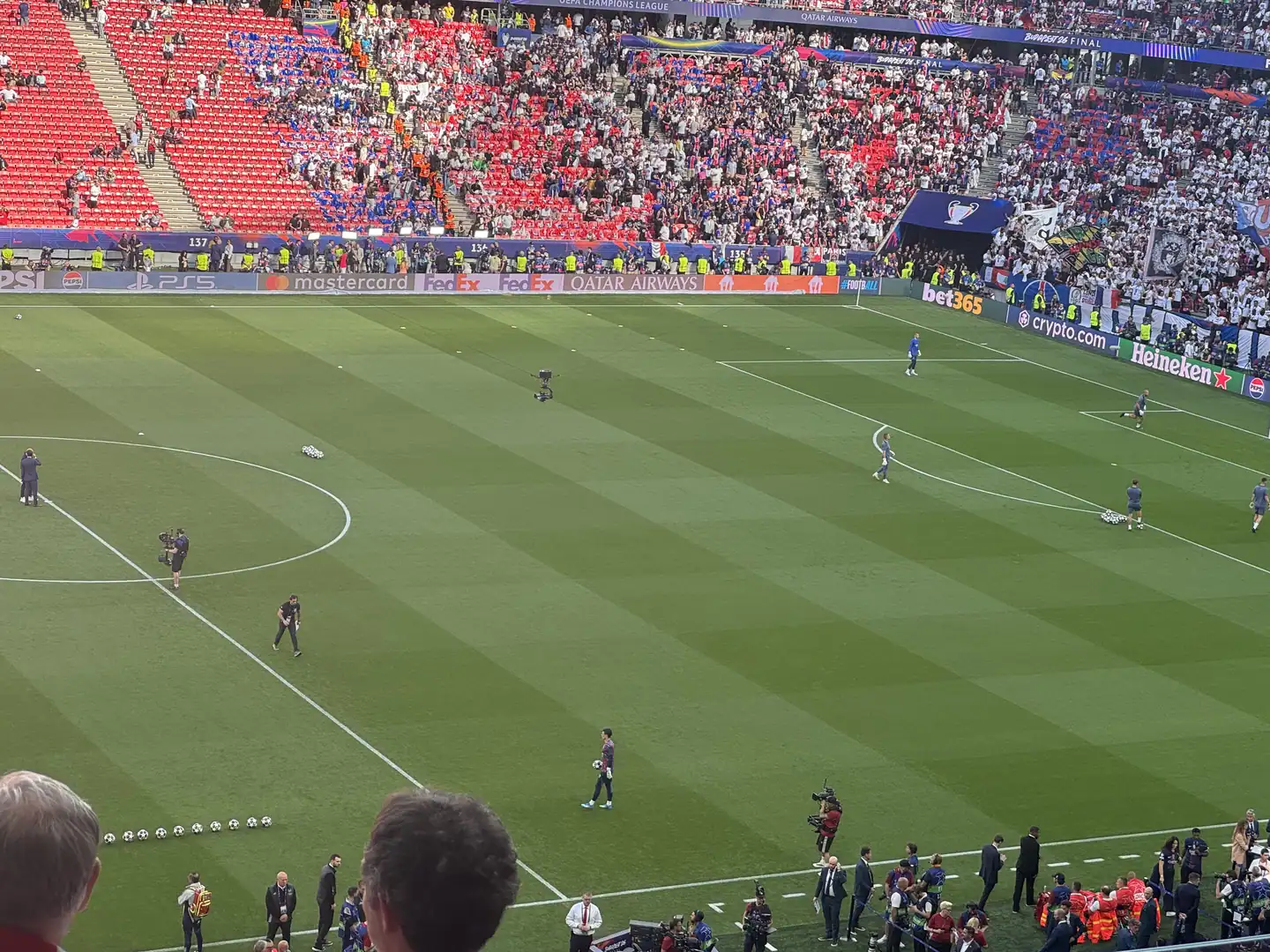
Inside, we made the small choices that decide whether a matchday feels like stress or joy. We went to the buffet early. We bought drinks early. We climbed to our seats while the stadium was still filling in, while the air still had room in it.
Our location felt unreal: near the main box, in the 218/217 area. And that’s when the evening offered a twist I didn’t expect to carry into a football story.
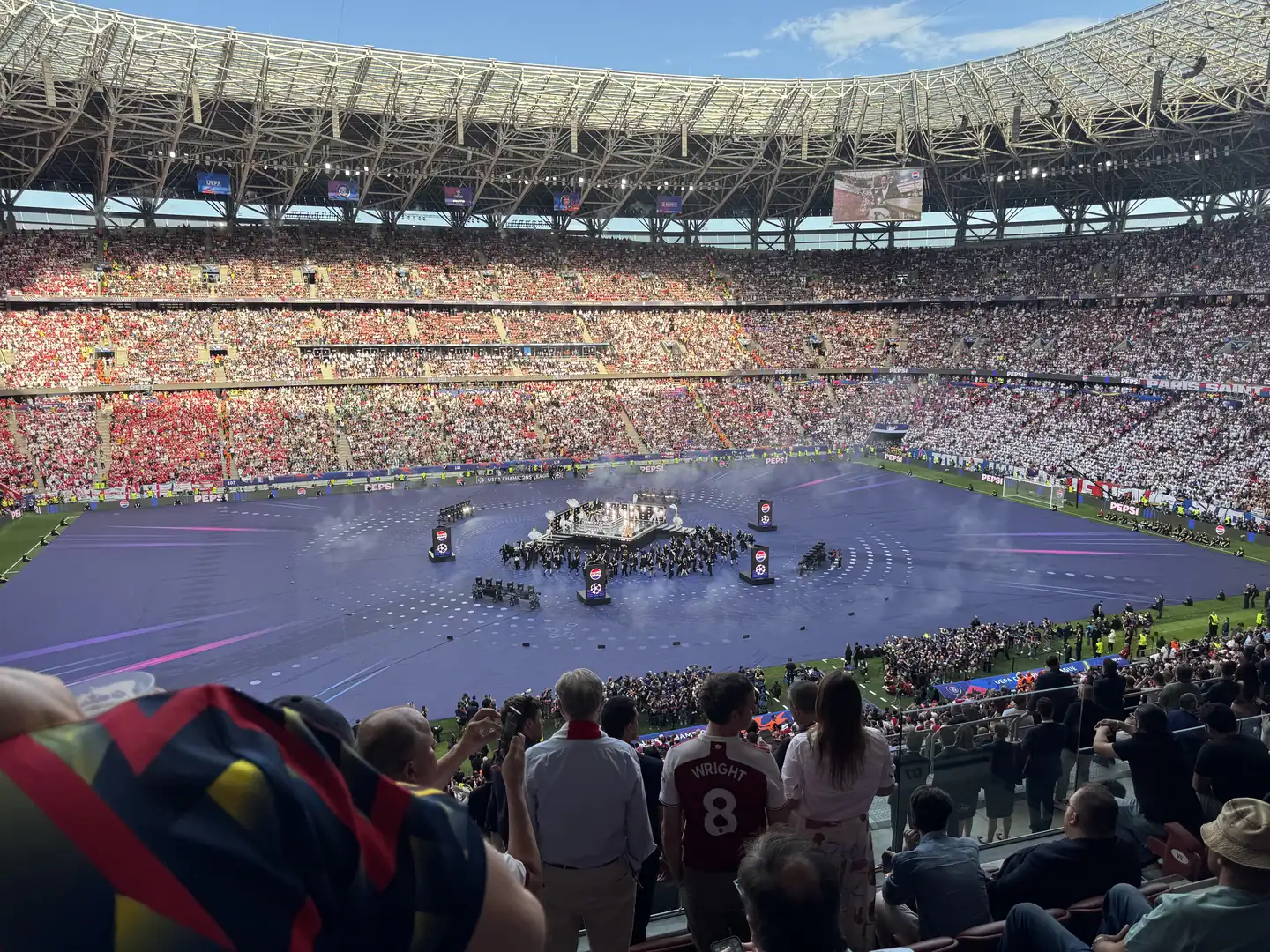
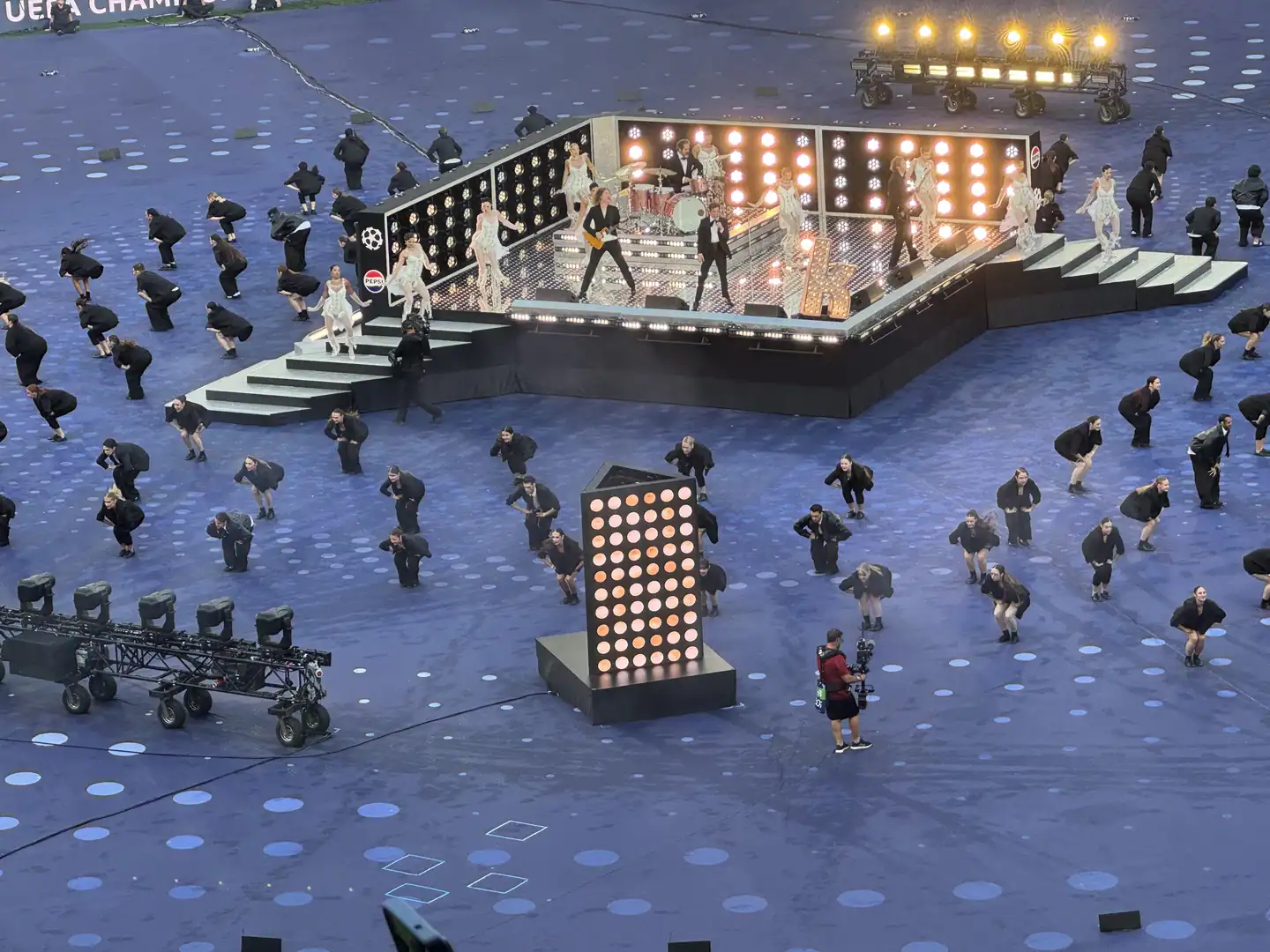
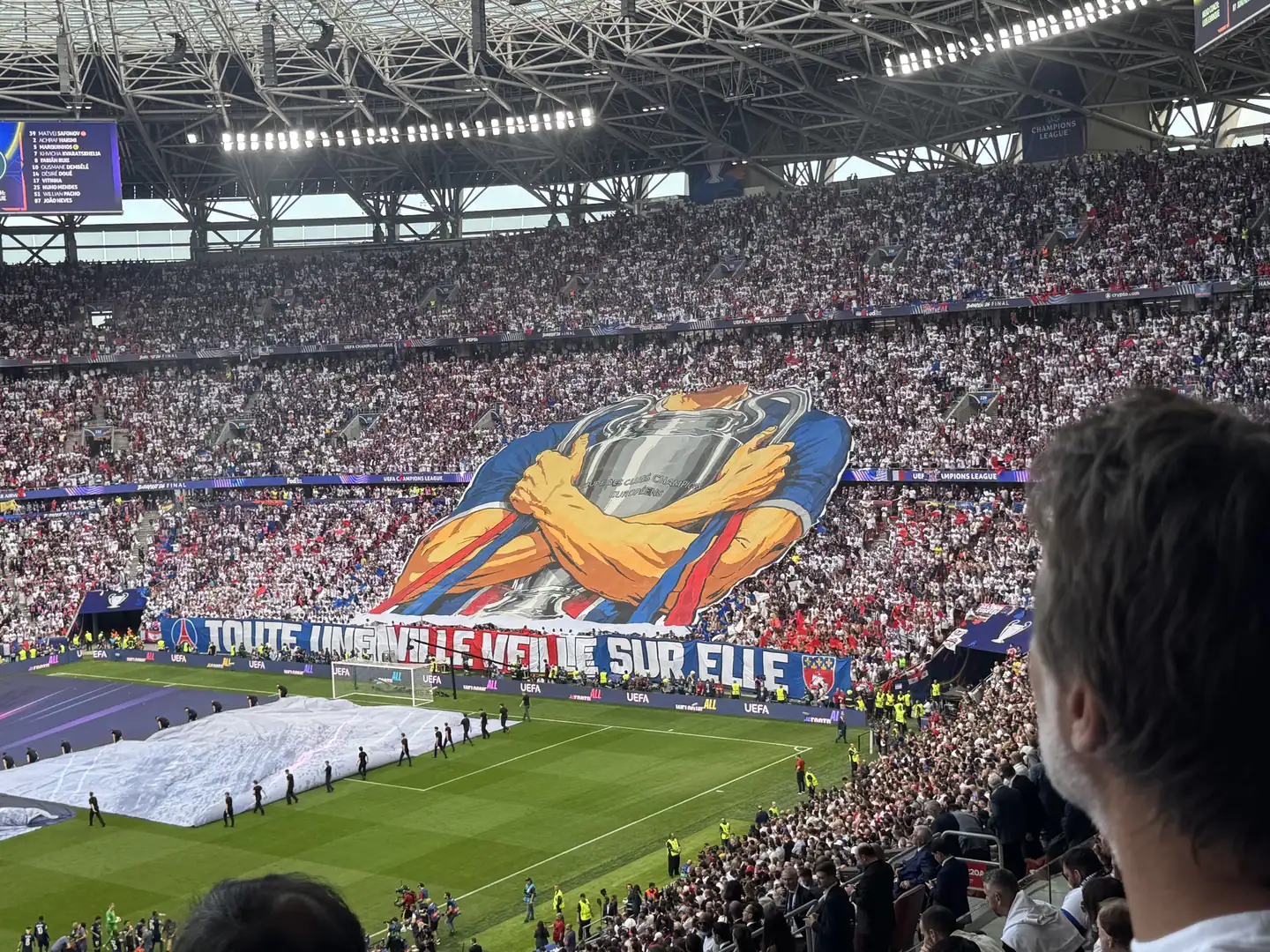

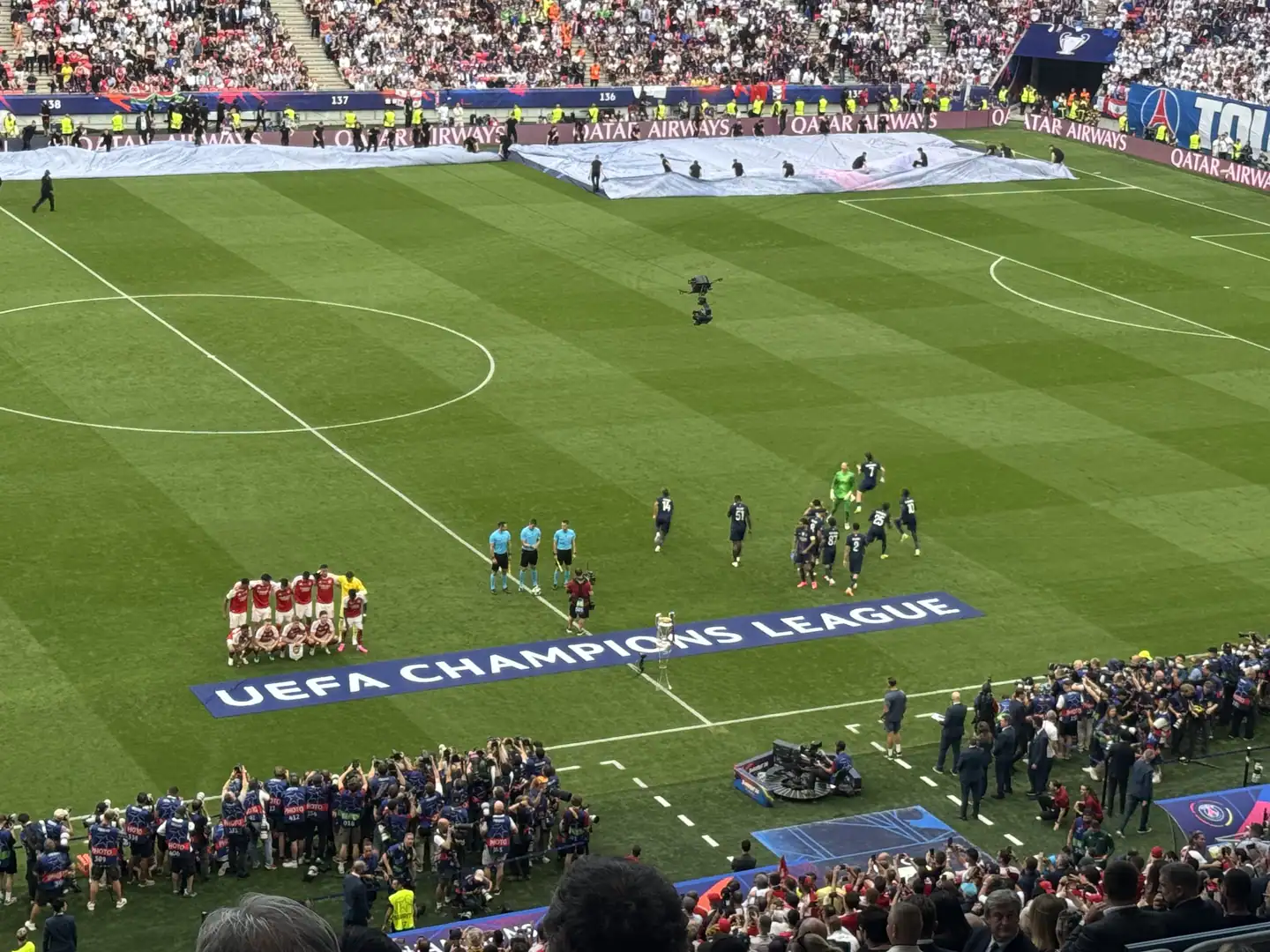
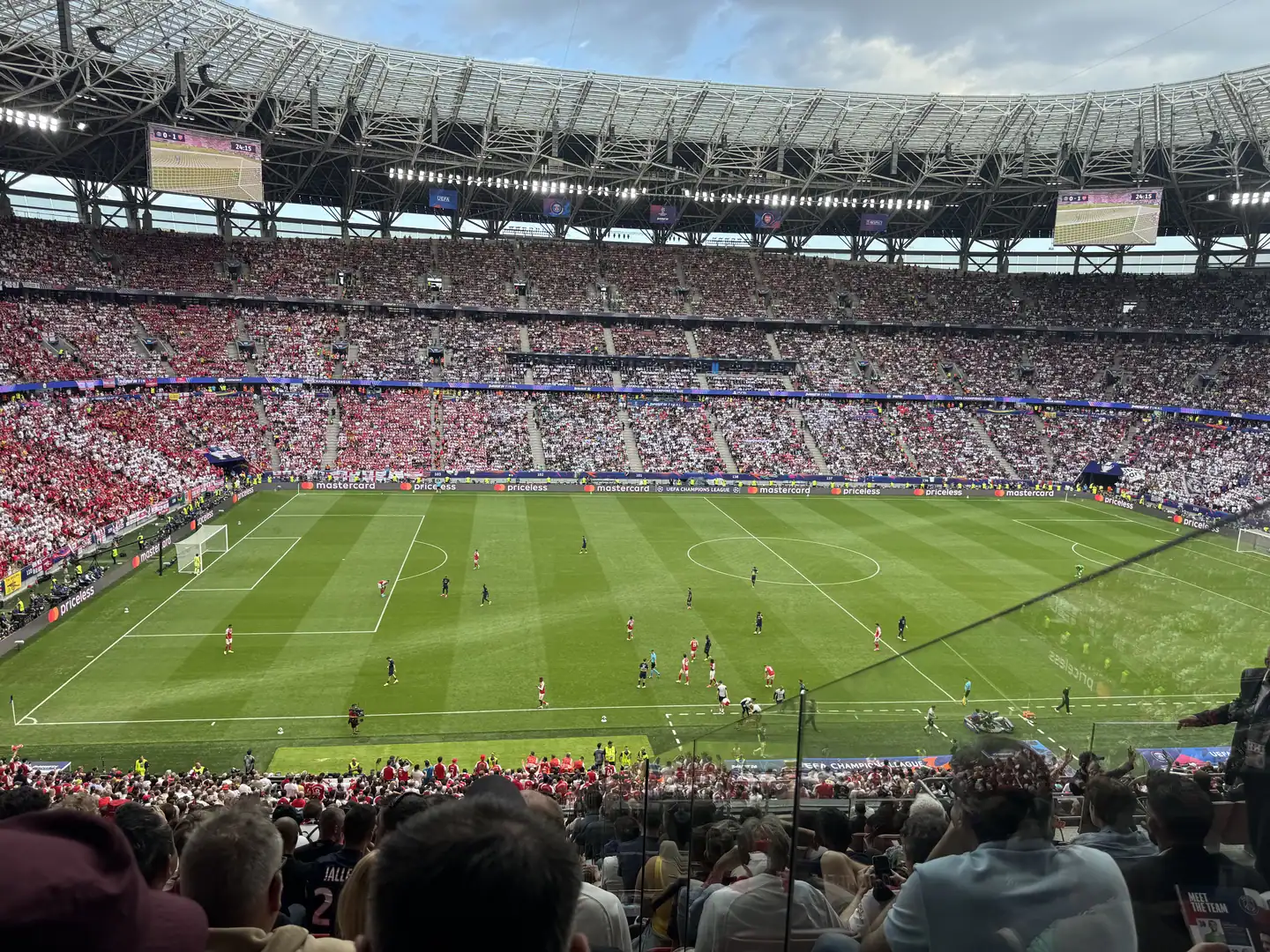
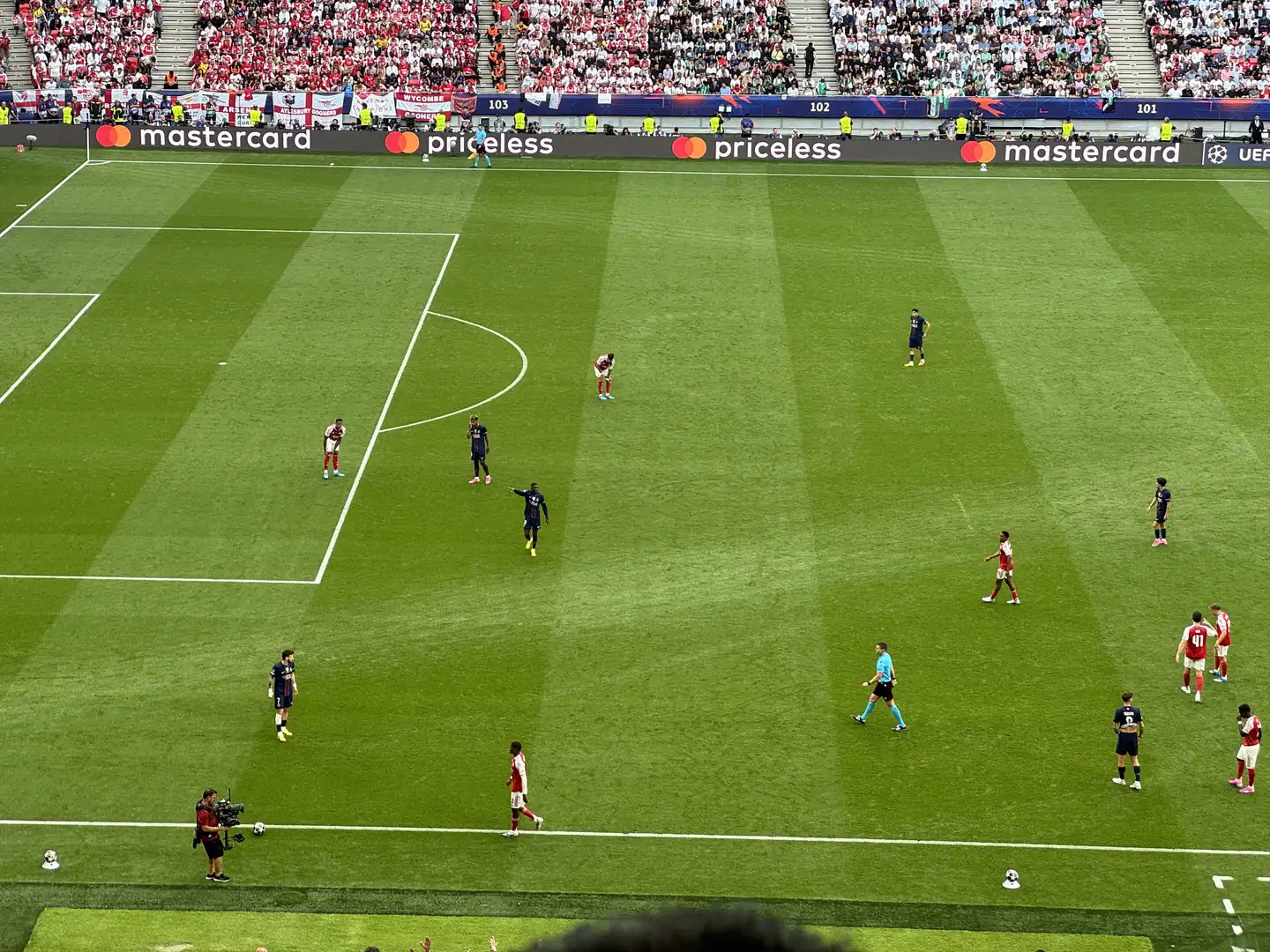
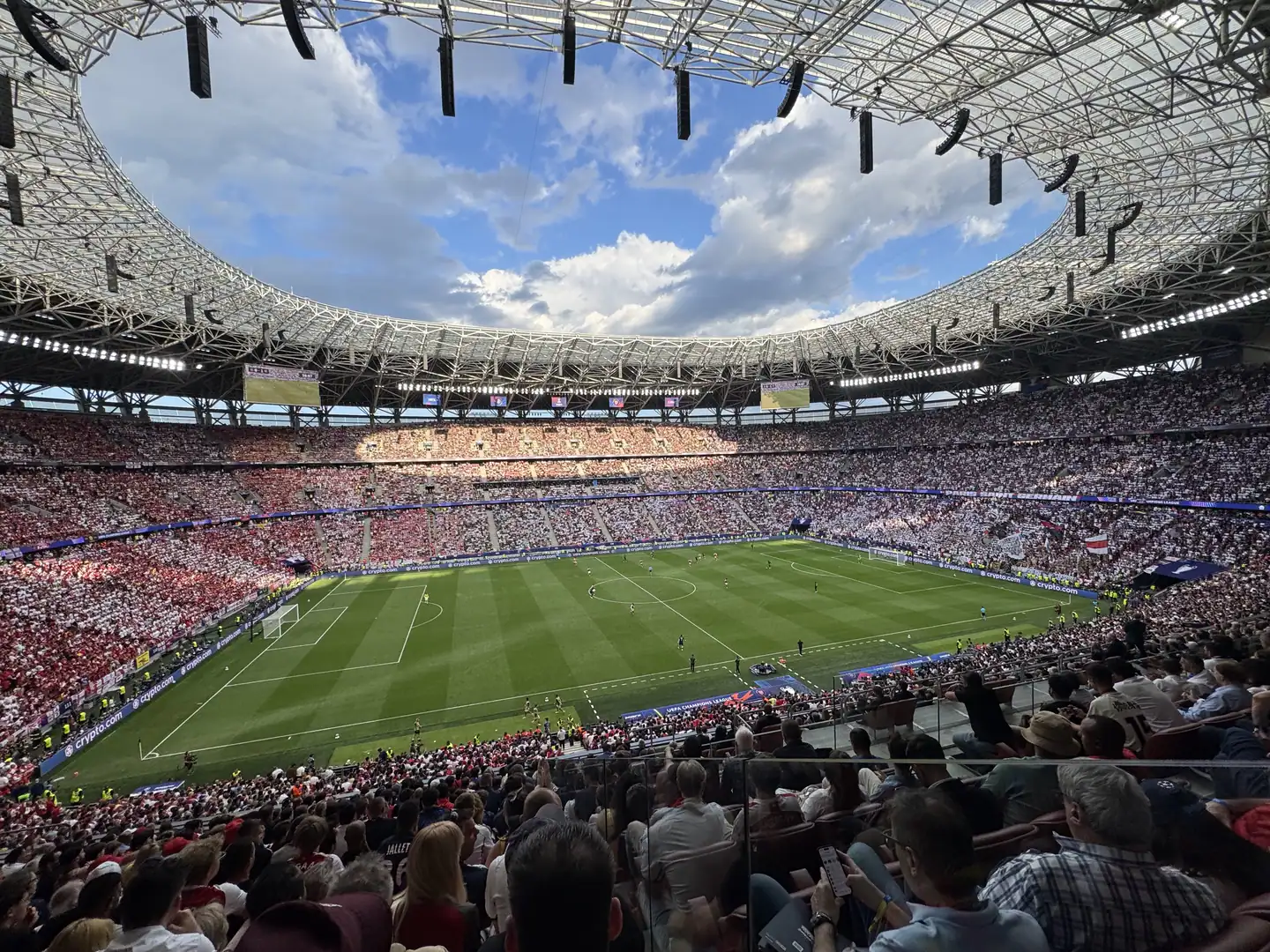

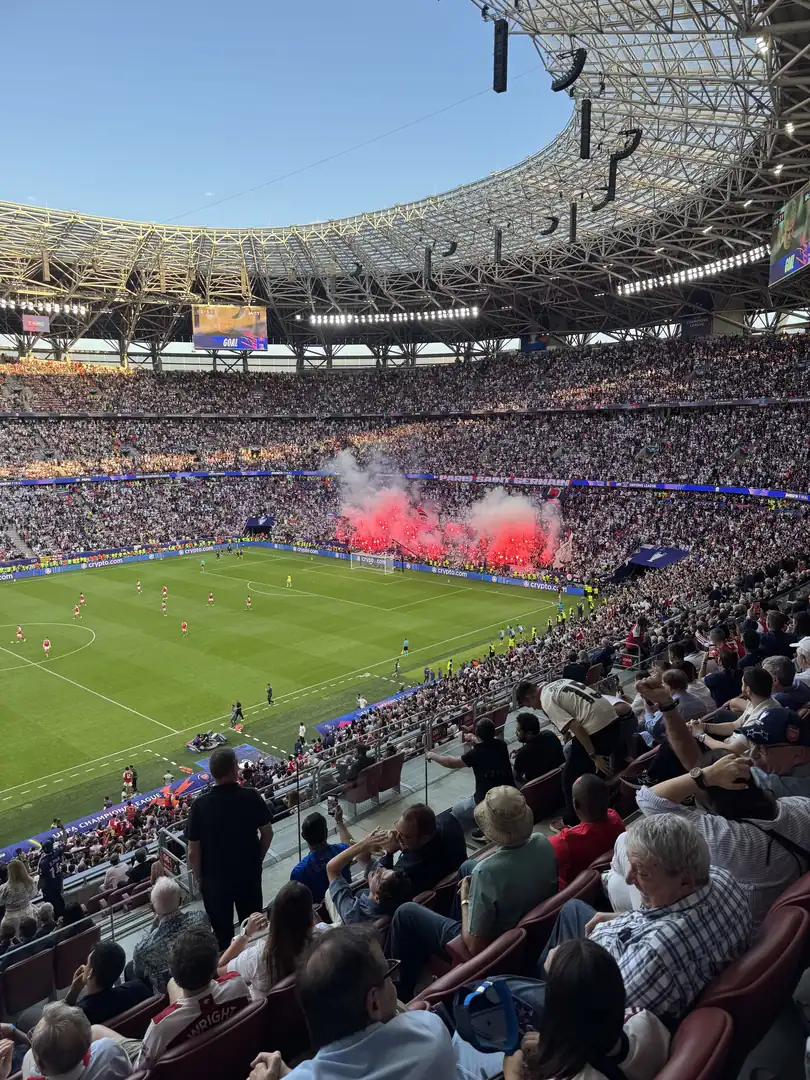
The Main Box: Seeing Power Up Close, Feeling the Crowd Just as Close
Because we were near the VIP area, we saw faces you normally only see through glass—public figures, officials, the choreography of important people trying to look relaxed. And in that proximity, we spotted Hungary’s newly sworn-in prime minister, Péter Magyar, in the stands with his sons—close enough to wave, and close enough for him to wave back.
It’s a strange experience, watching football beside the mechanisms of the state. It makes you realize that a final like this isn’t only sport. It’s soft power, urban reputation, institutional competence, and national pride compressed into 120 minutes and a penalty shootout.
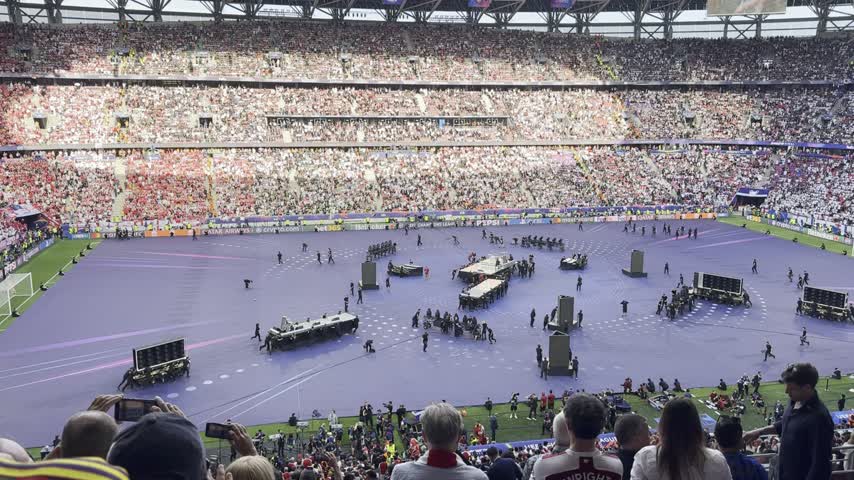
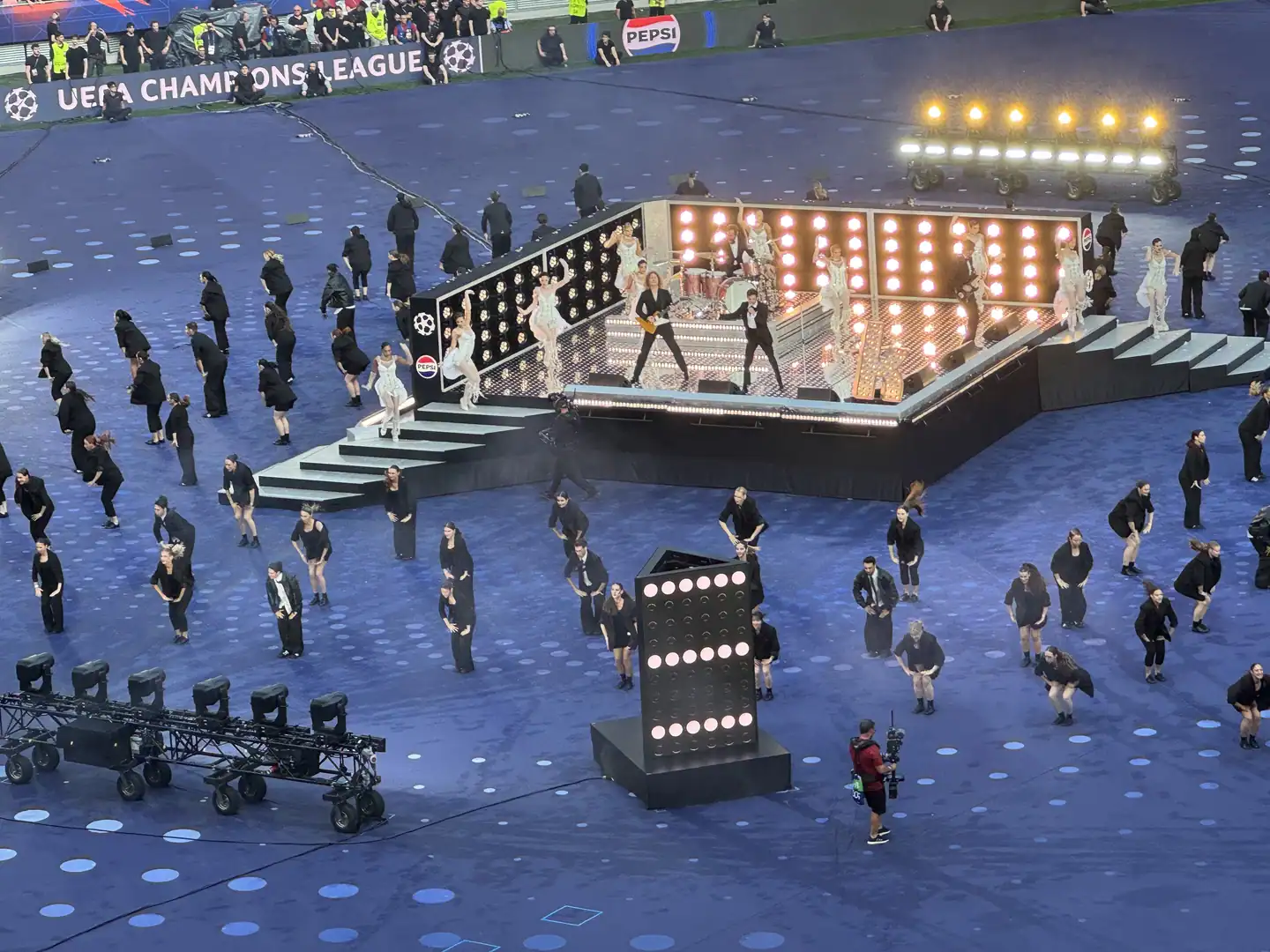
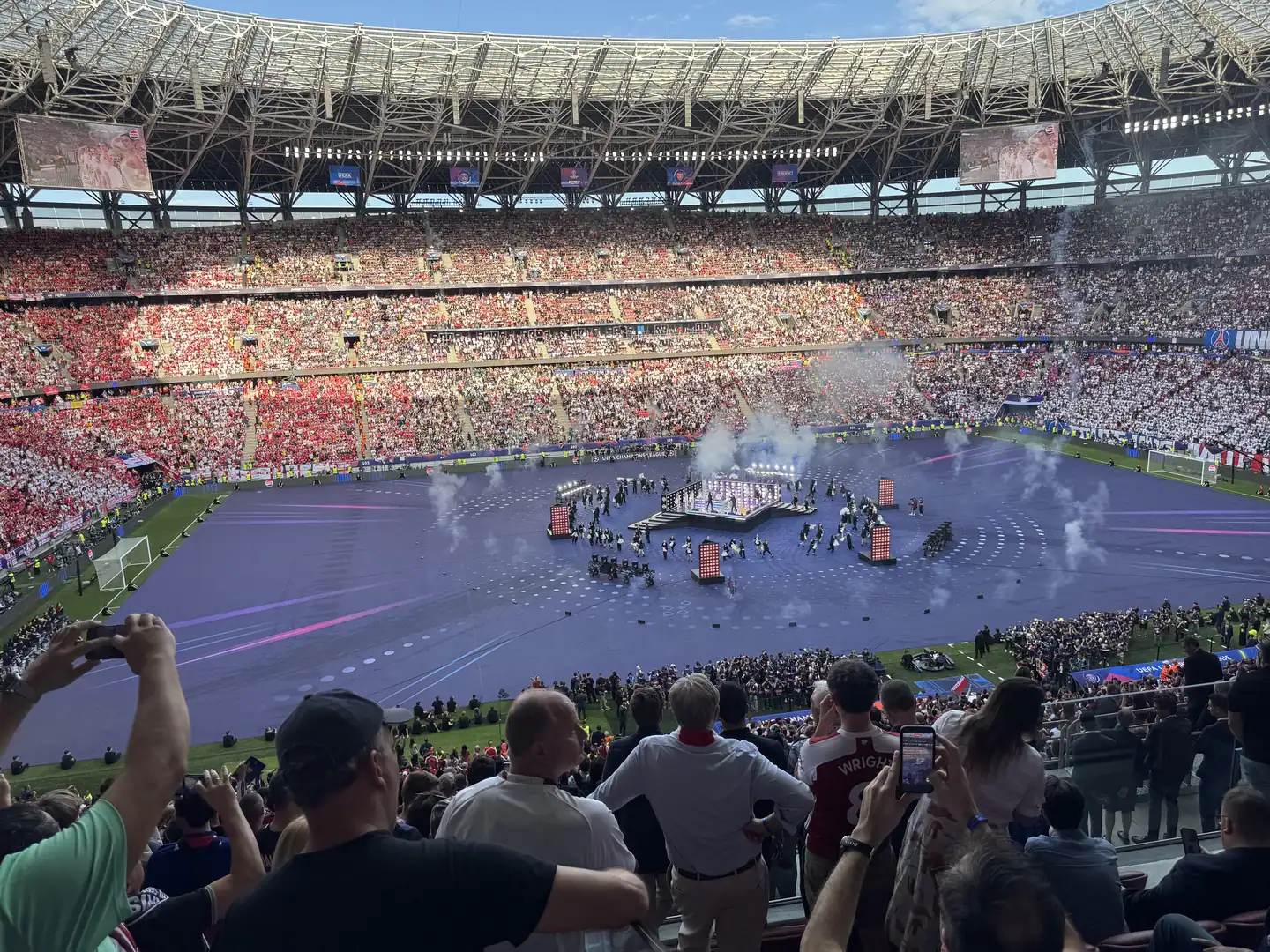
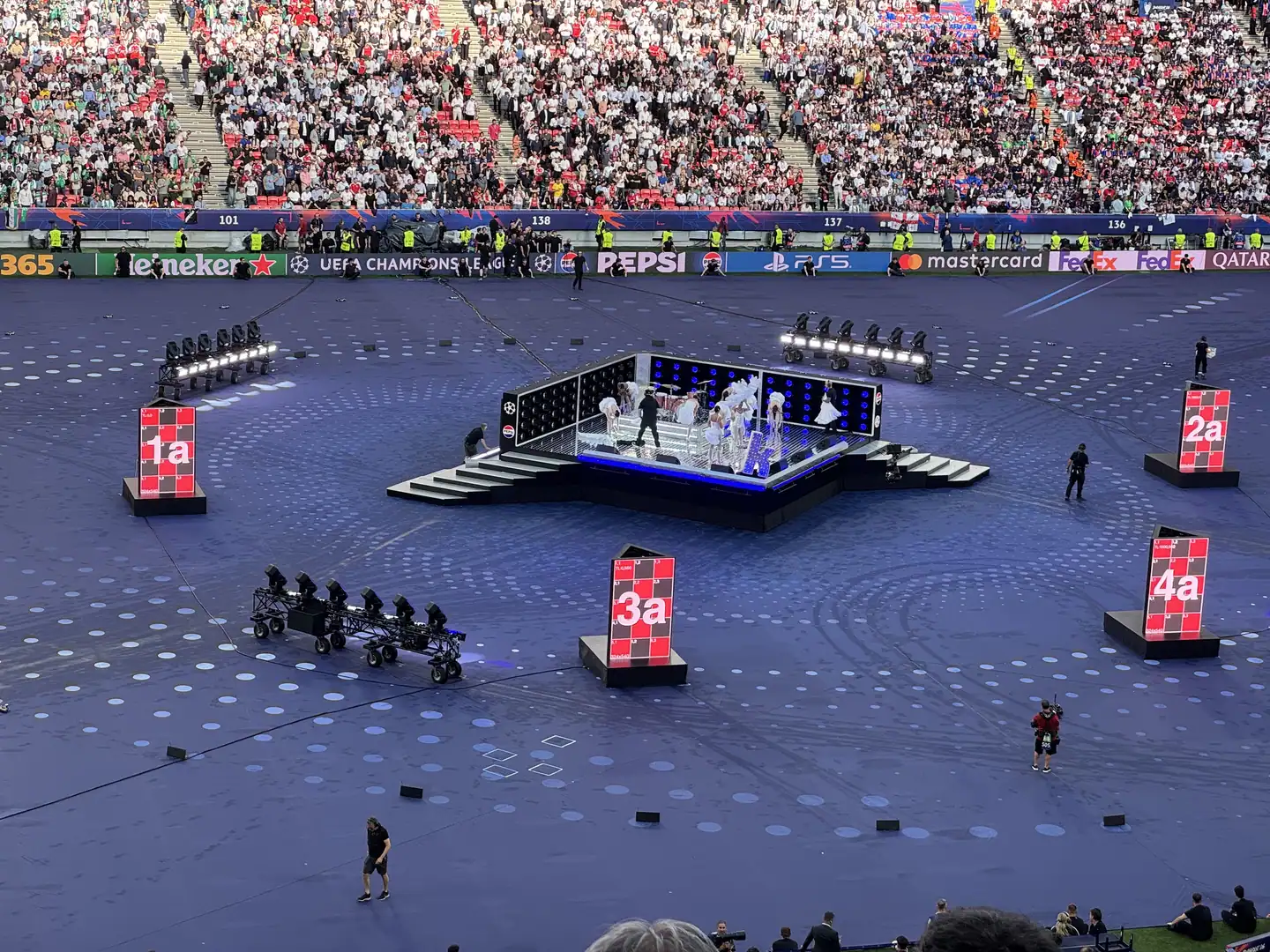
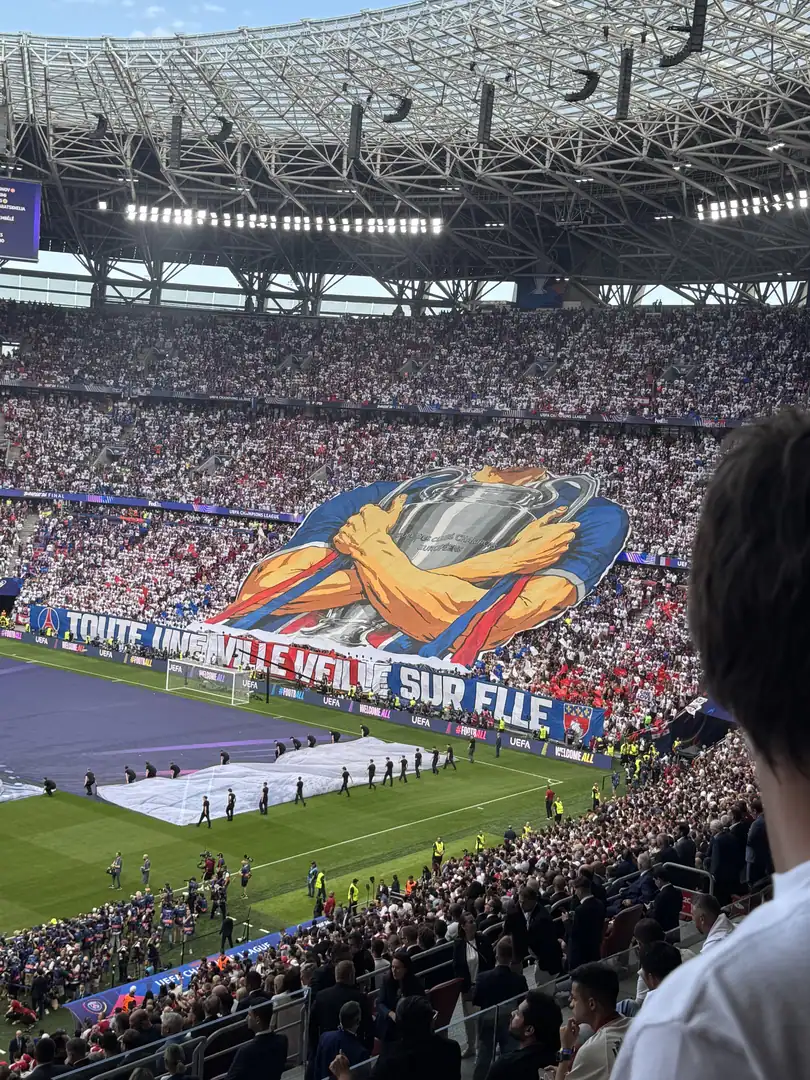
Then the ceremony began to pull focus back where it belonged. There was a pre-match show—The Killers—because modern finals are built like global broadcasts with a live audience attached. And there was a Budapest detail I loved: the Champions League anthem performed by the Budapest-born pianist Ádám György.
And then the match started, and the world narrowed.
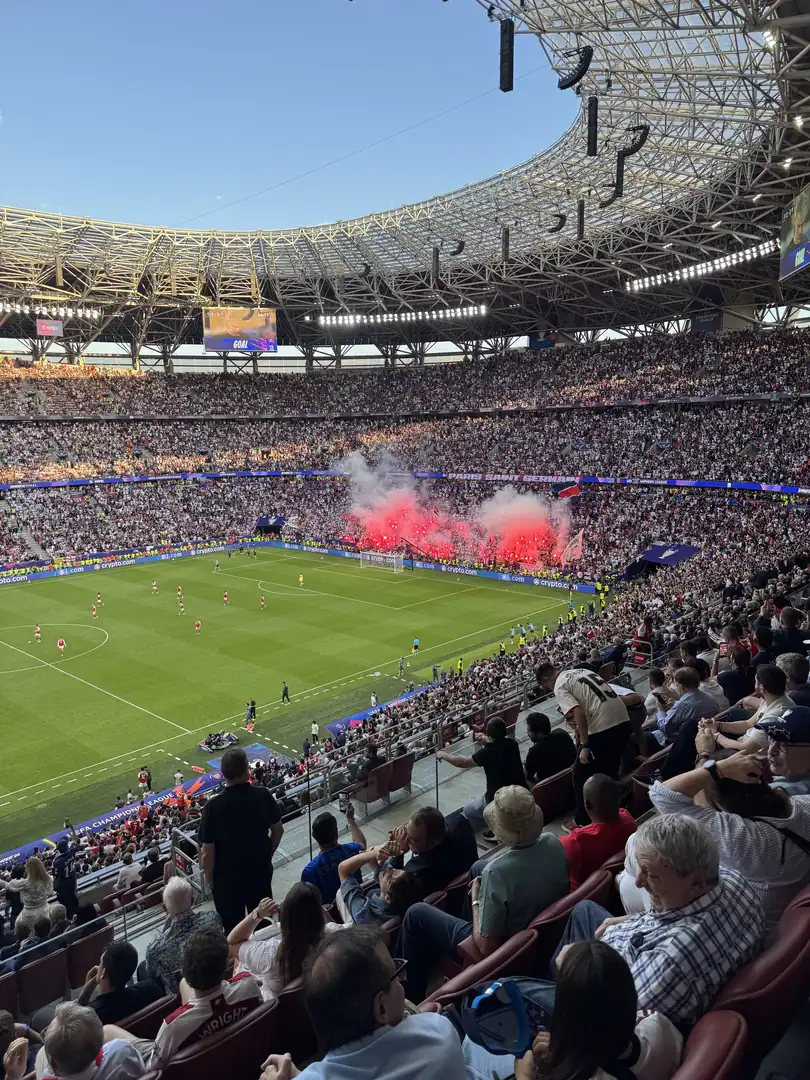
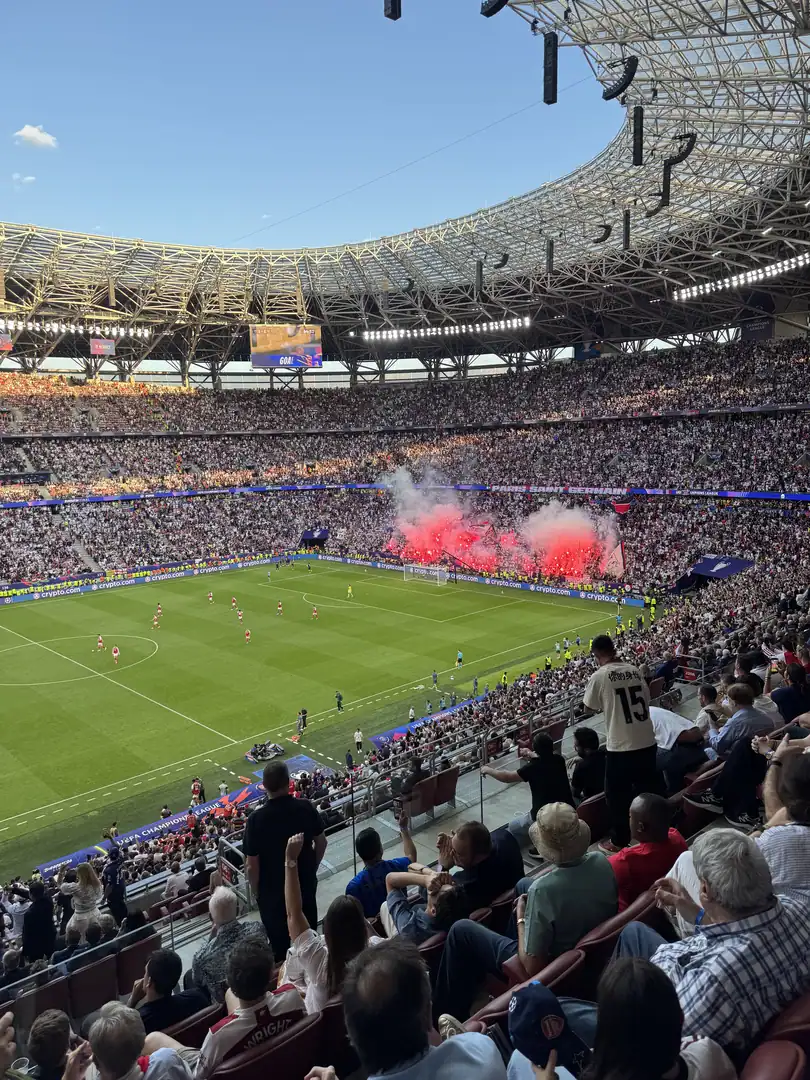
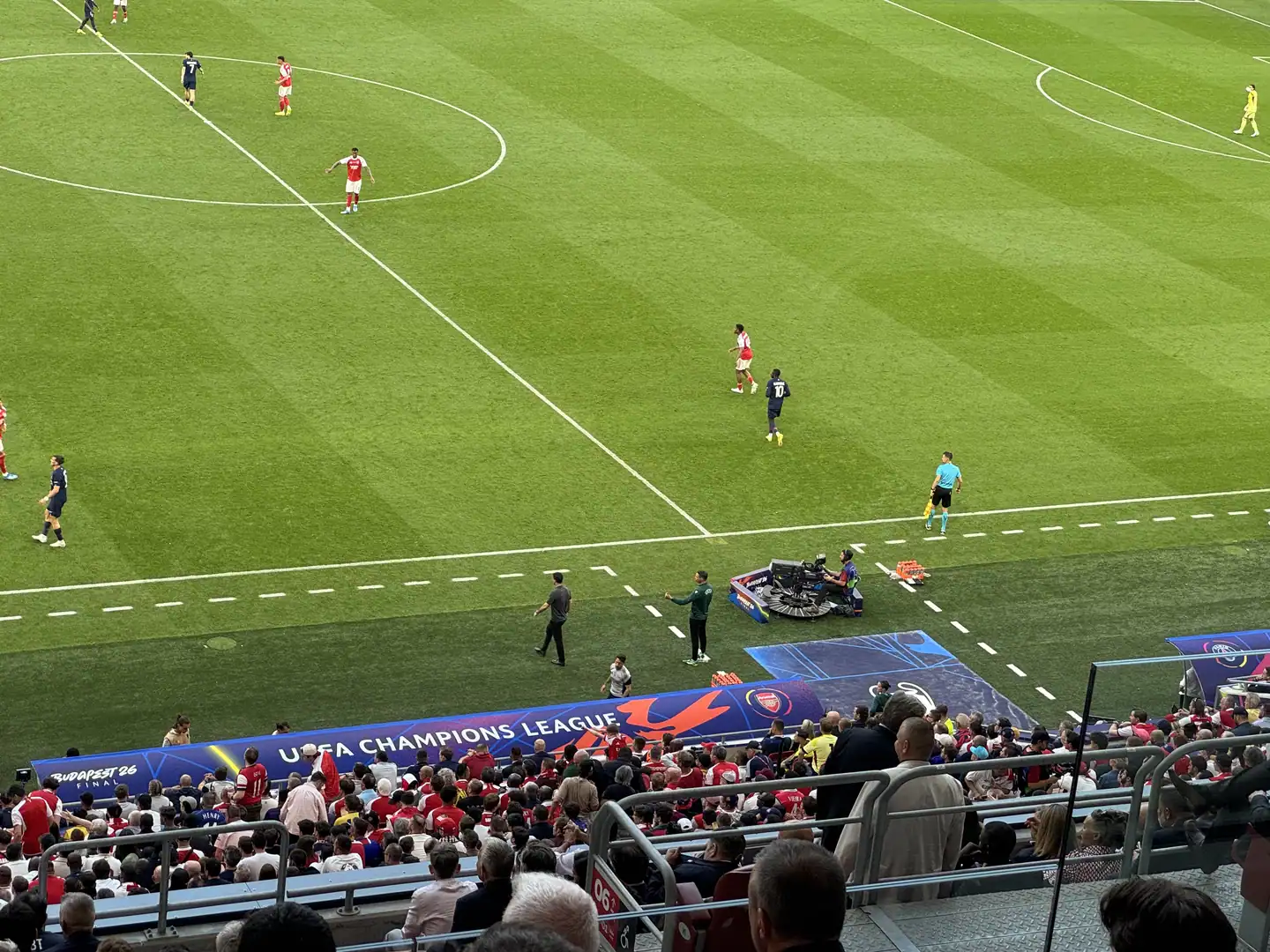
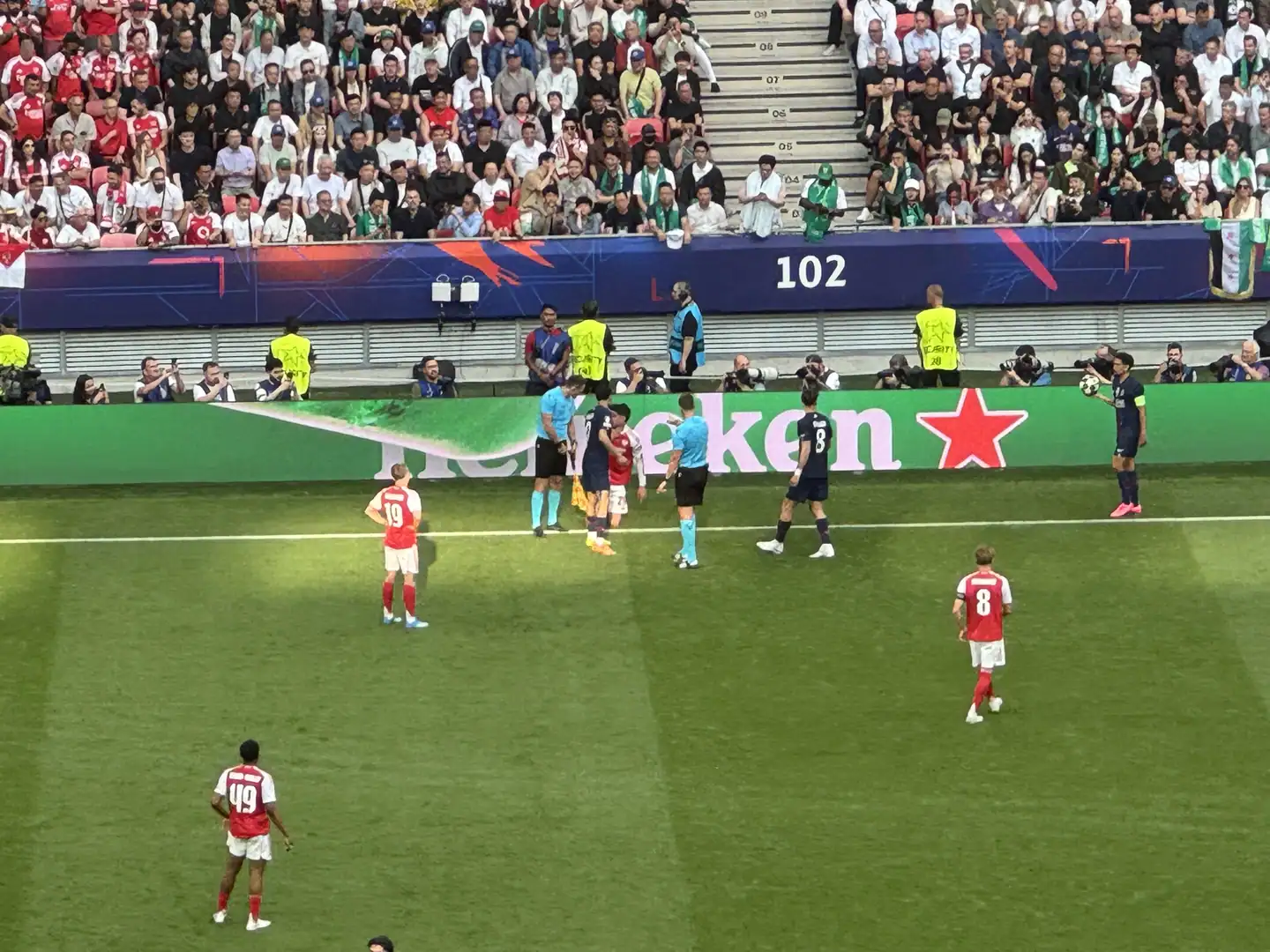
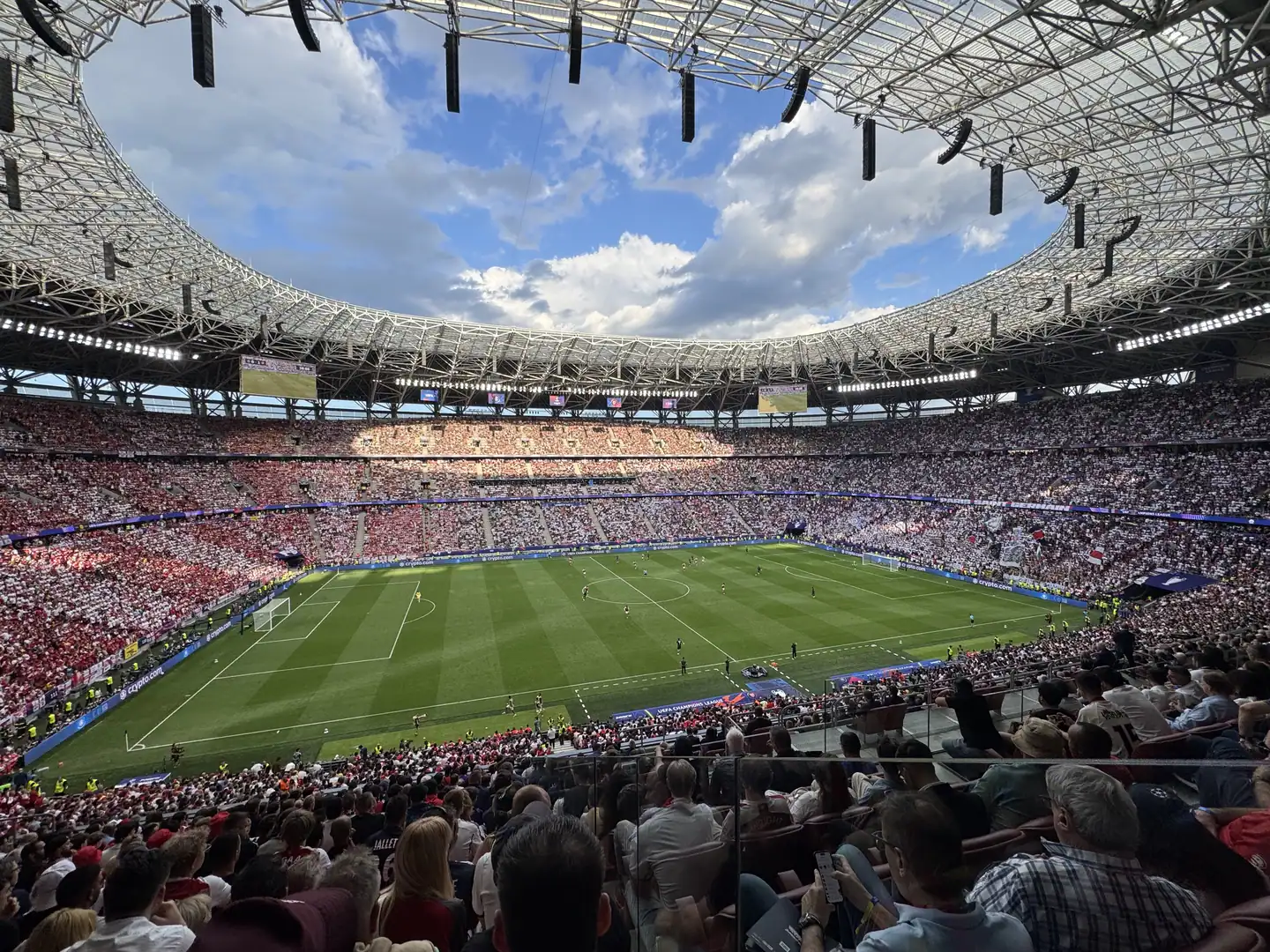

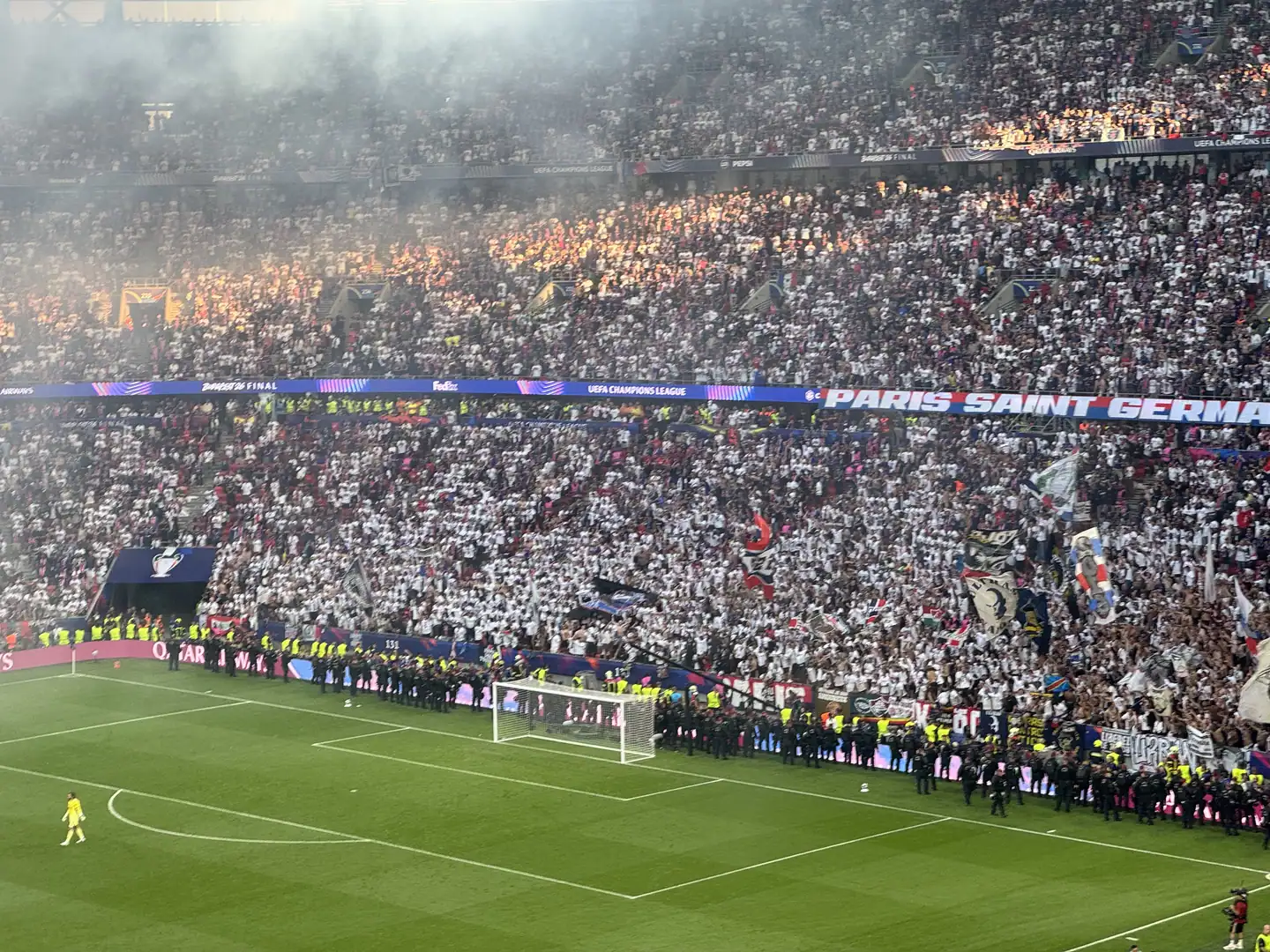
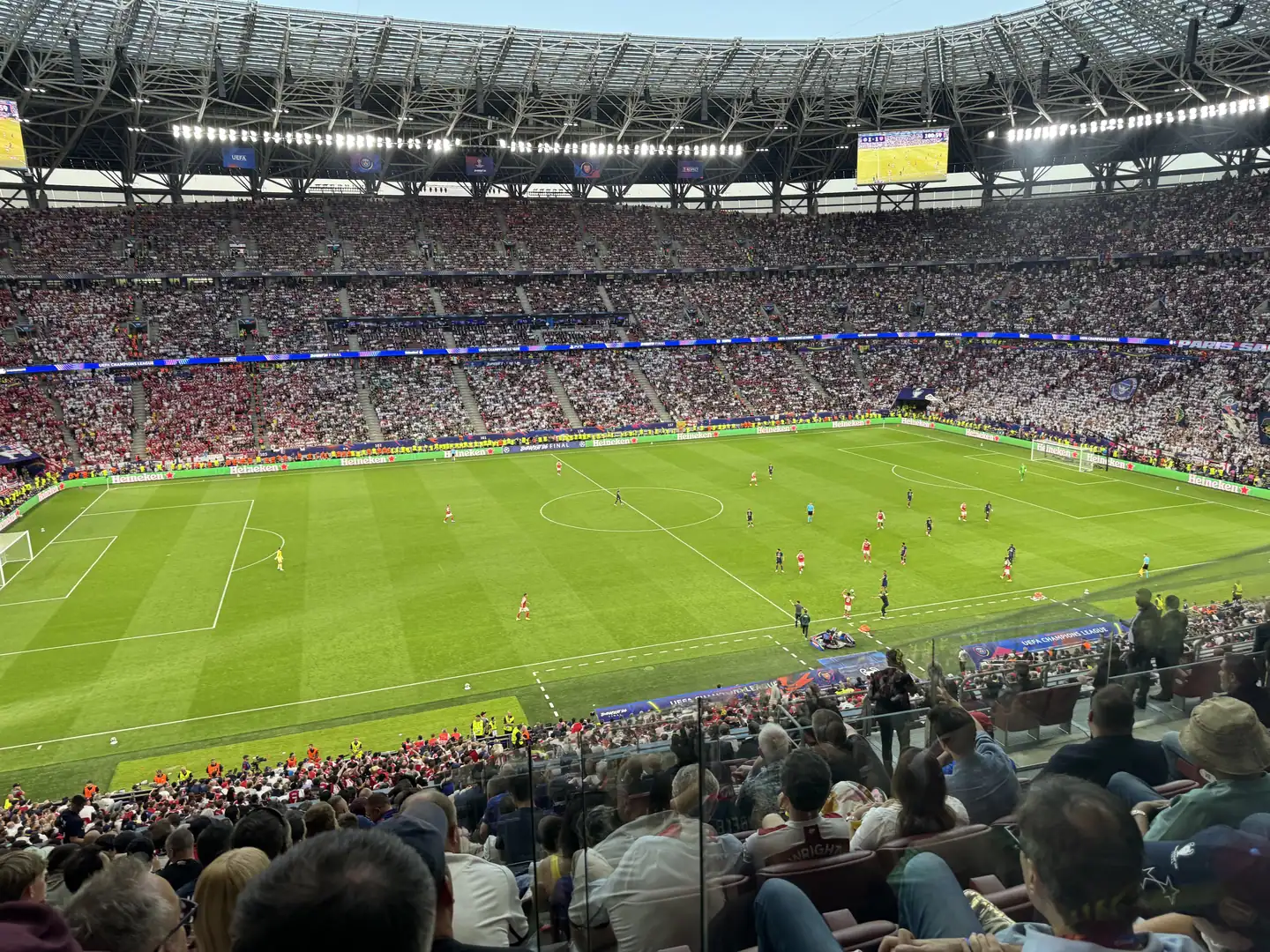
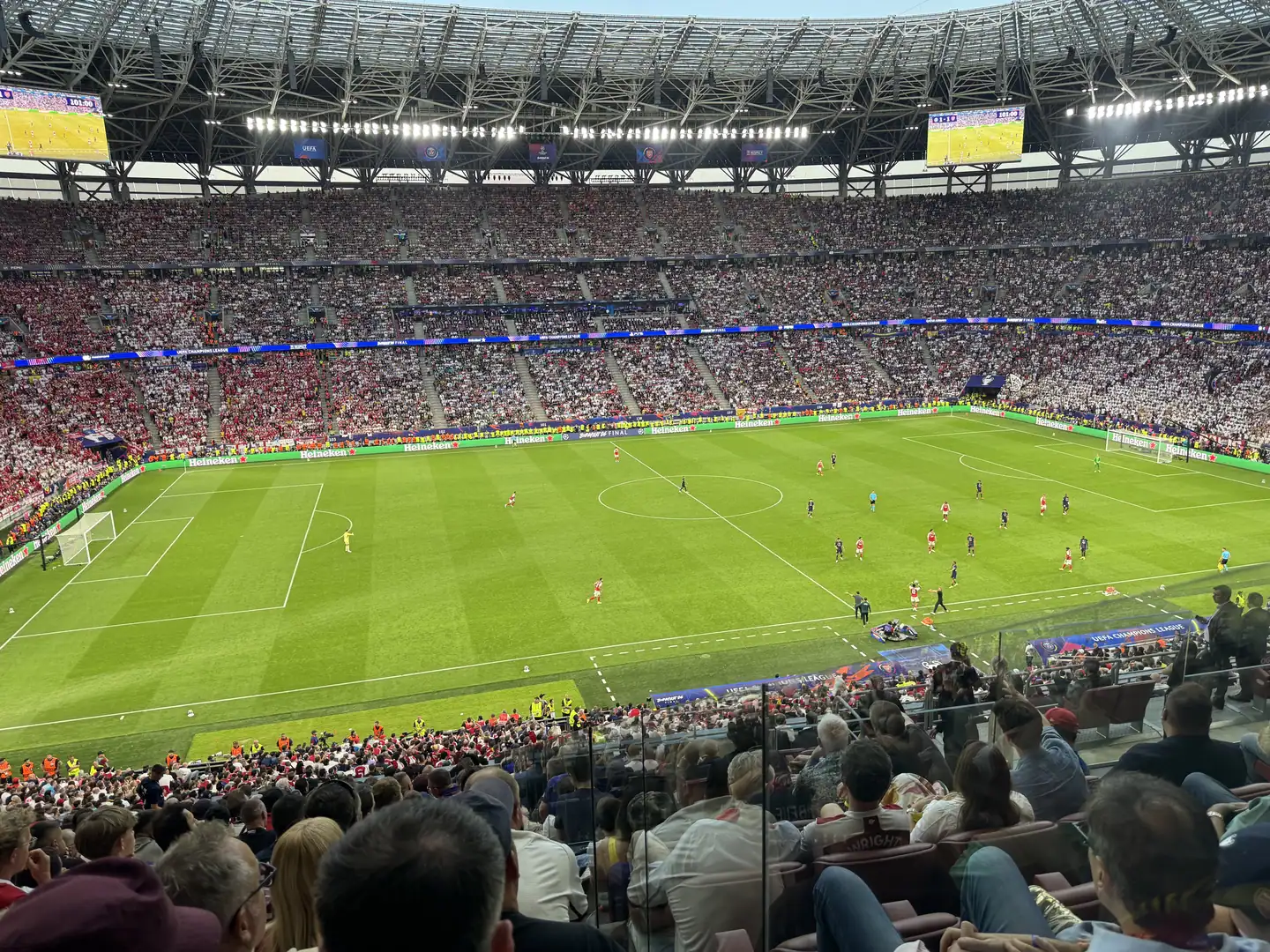
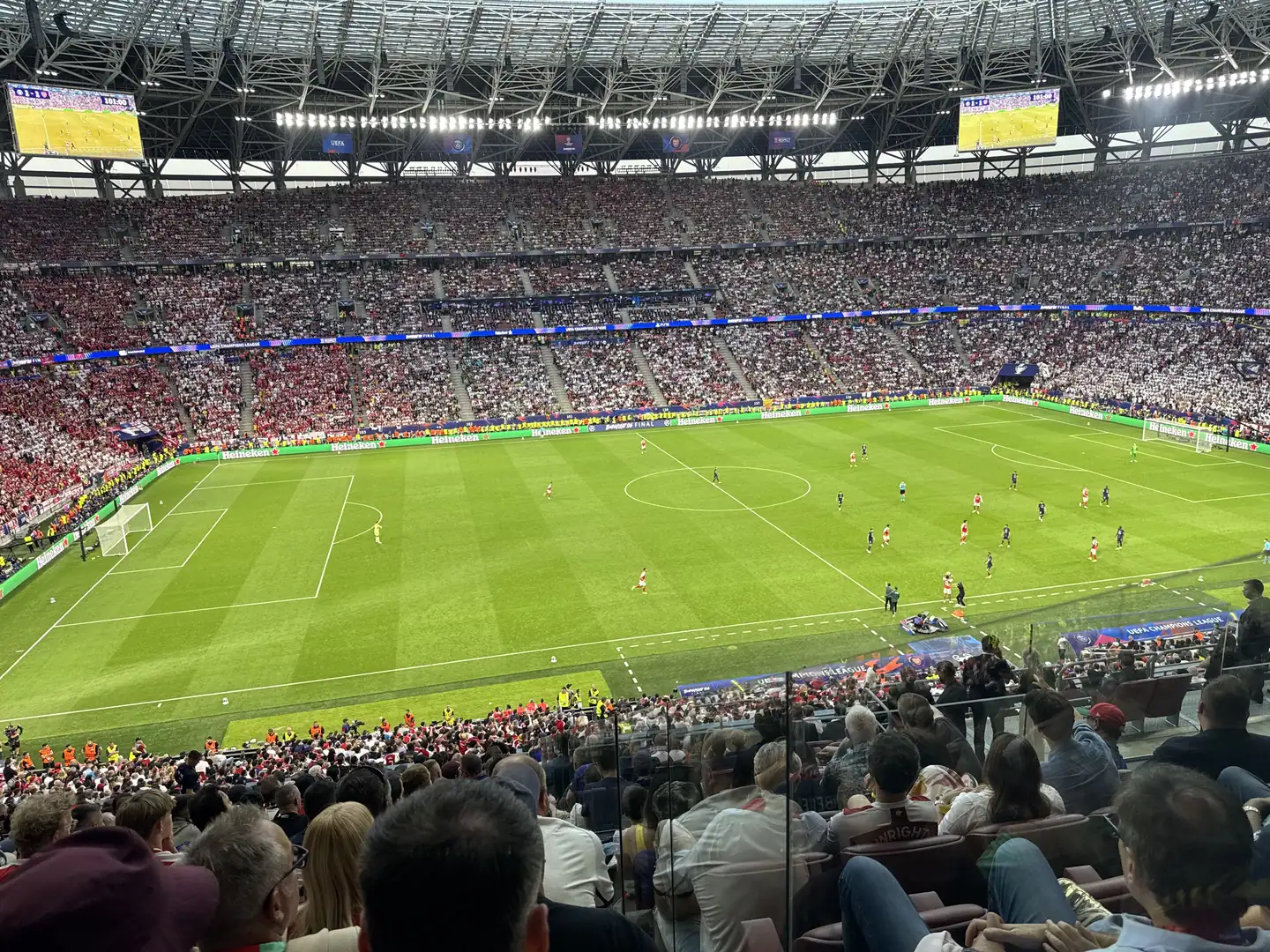
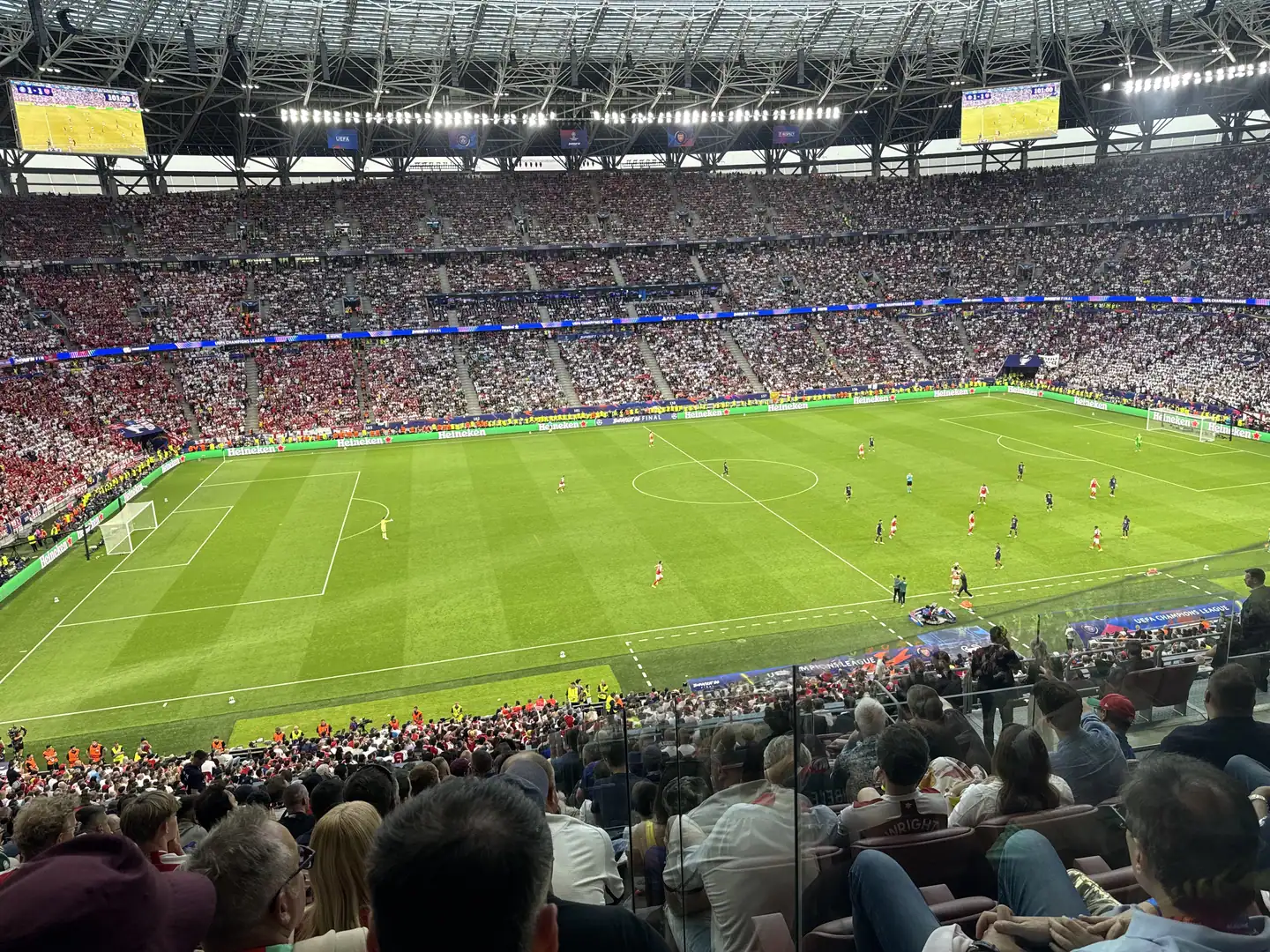


PSG vs Arsenal: The Match as We Lived It, the Numbers as It Happened
Kickoff was 18:00 CEST at Puskás Aréna. Arsenal struck early through Kai Havertz—listed by some feeds around the 5th minute, by others around the 6th—one of those timing quirks that comes from how competitions log stoppage and minute markers.
From the stands, what you feel is not “tactics” in the abstract, but rhythm: who’s comfortable, who’s chasing, who’s breathing too hard too early. PSG had the ball more. They kept returning, wave after wave, patient in the way elite teams can be when they trust the mathematics of dominance. The published statistical picture reflected that: 64% possession for PSG, 21 shots to Arsenal’s 8, and 7 shots on target to Arsenal’s 3.
But here’s the truth about watching live: your eyes are not a broadcast. You don’t get the perfect replay, the clean camera angle, the commentator translating chaos into meaning. You get raw sensation. Sometimes you miss what caused the whistle. Sometimes you see the outcome before you understand the crime.
That happened to us when PSG were awarded a second-half penalty. From where we sat, we heard the whistle, saw the referee point, and felt the stadium’s narrative snap into a new shape. Later reporting pinned the moment to a foul on Khvicha Kvaratskhelia, with Ousmane Dembélé converting to make it 1–1.
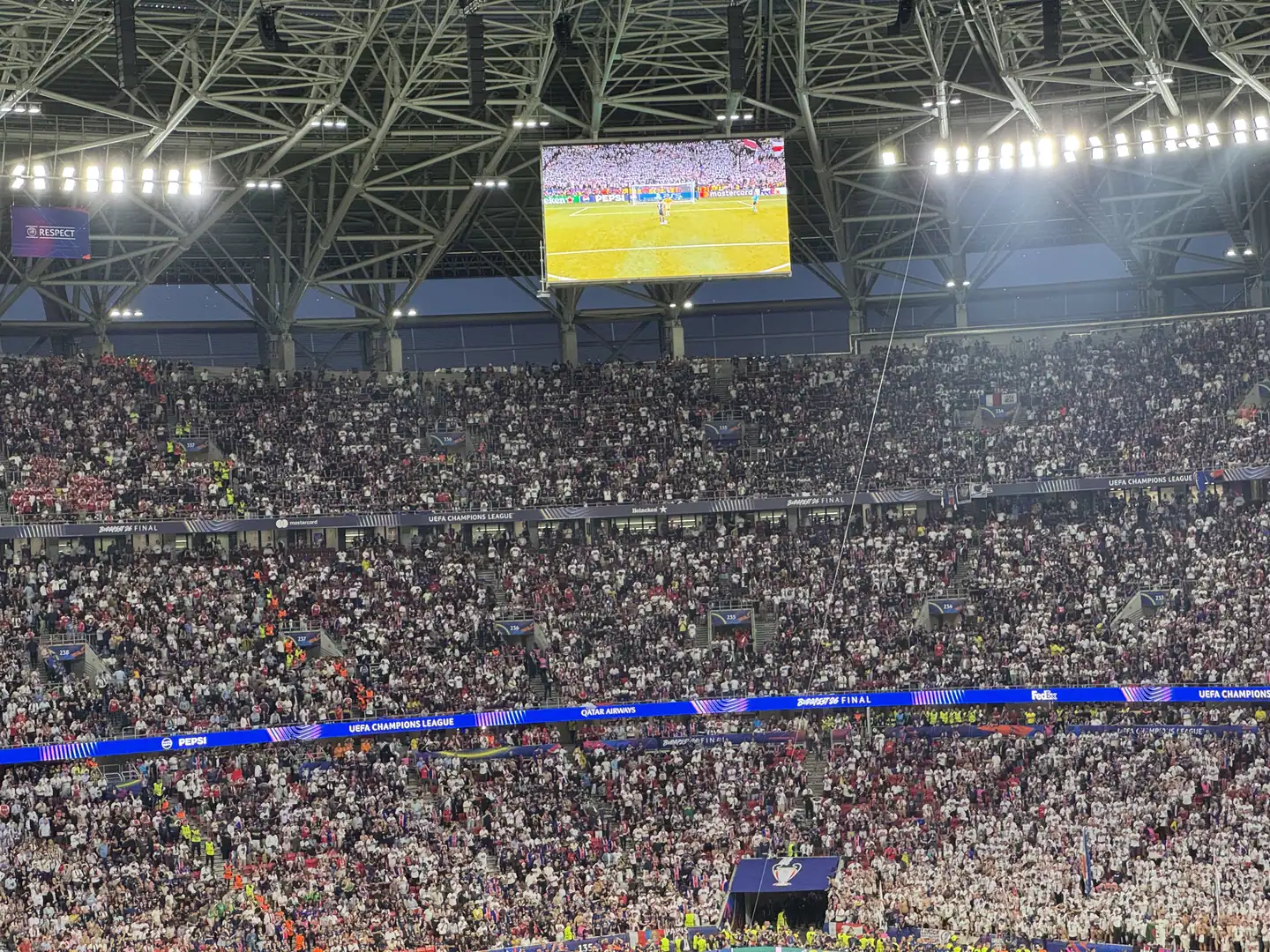
After that, the night became a slow tightening. Kvaratskhelia struck the post around the 77th minute, and for a second the stadium made the sound crowds make when they think destiny has spoken—and then realize destiny is still thinking. The match reached extra time, and extra time did what it often does in finals: it turned into survival, fatigue, and a mutual agreement not to lose in open play.
We were also human. At some point in extra time, we had to call a tactical timeout of our own and sprint to the restroom. We made it back for the shootout. Barely. Perfectly.
The penalty sequence, as recorded across reports, ended with PSG winning 4–3 after the shootout, with Gabriel Magalhães missing the decisive attempt. Vitinha was named player of the match in the final, and UEFA’s season awards later recognized Kvaratskhelia as Player of the Season.
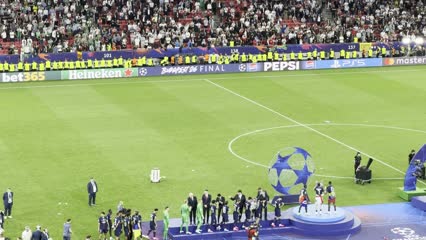
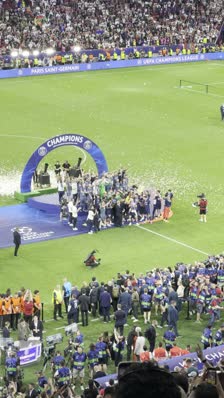
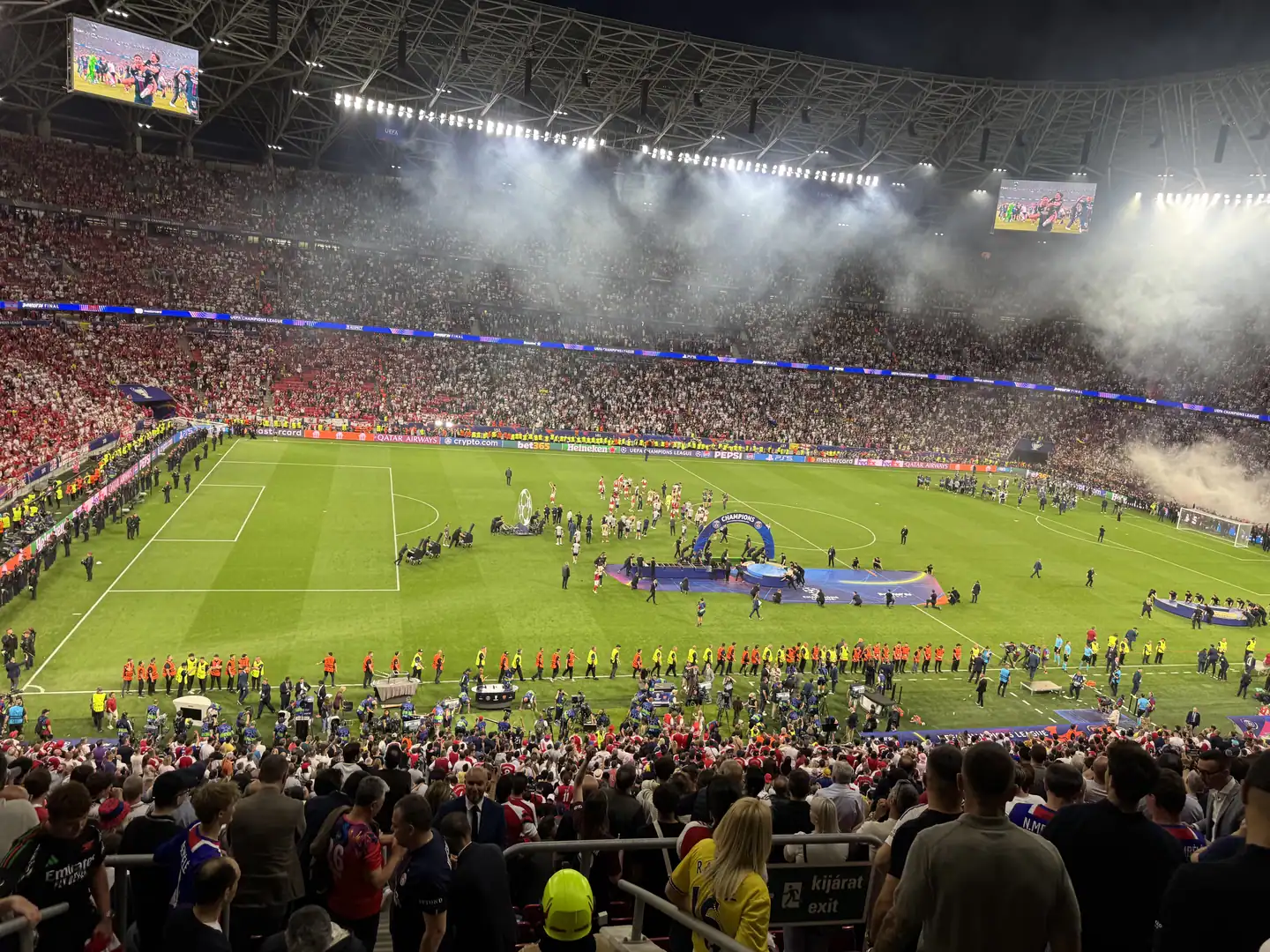
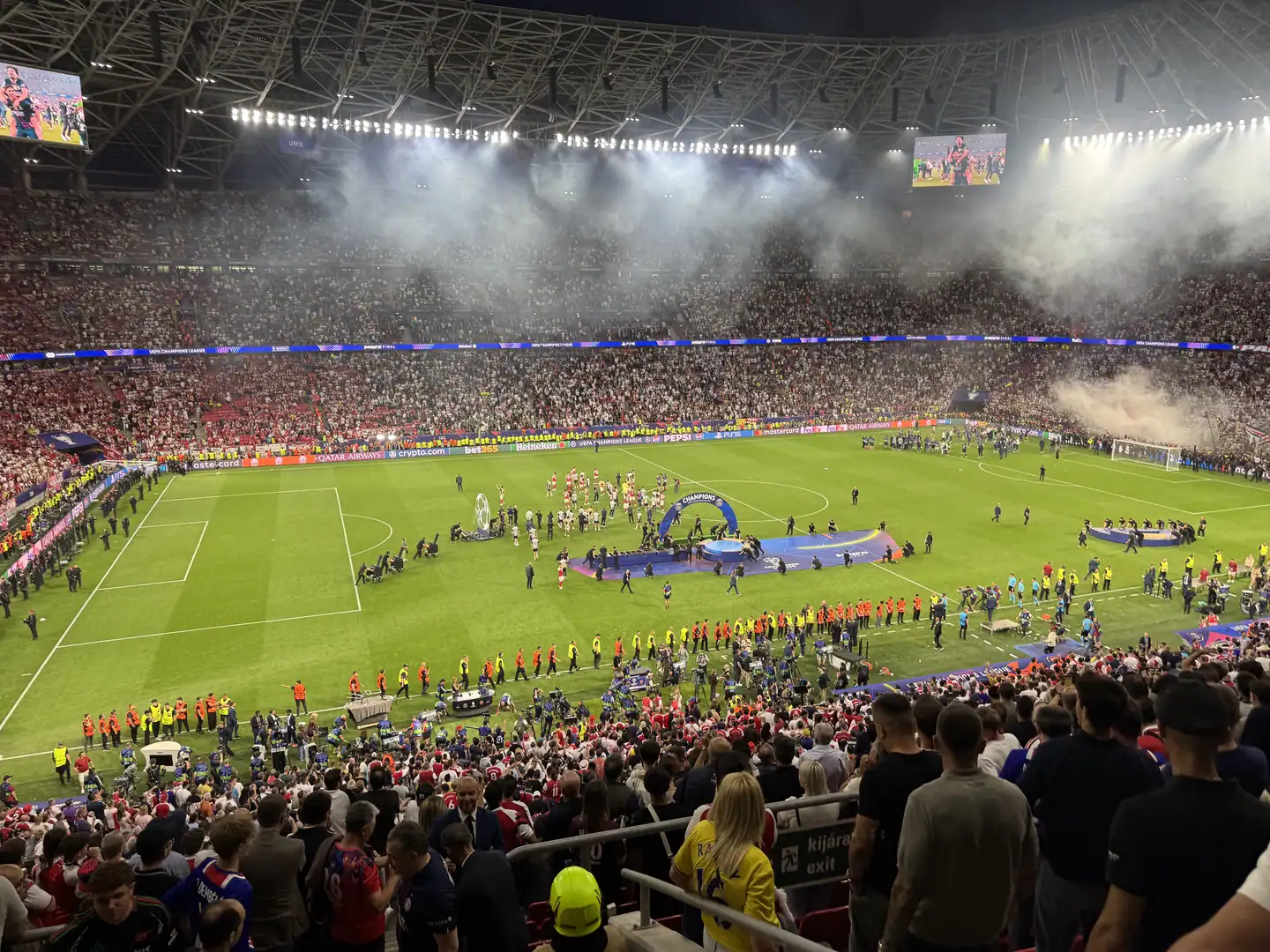
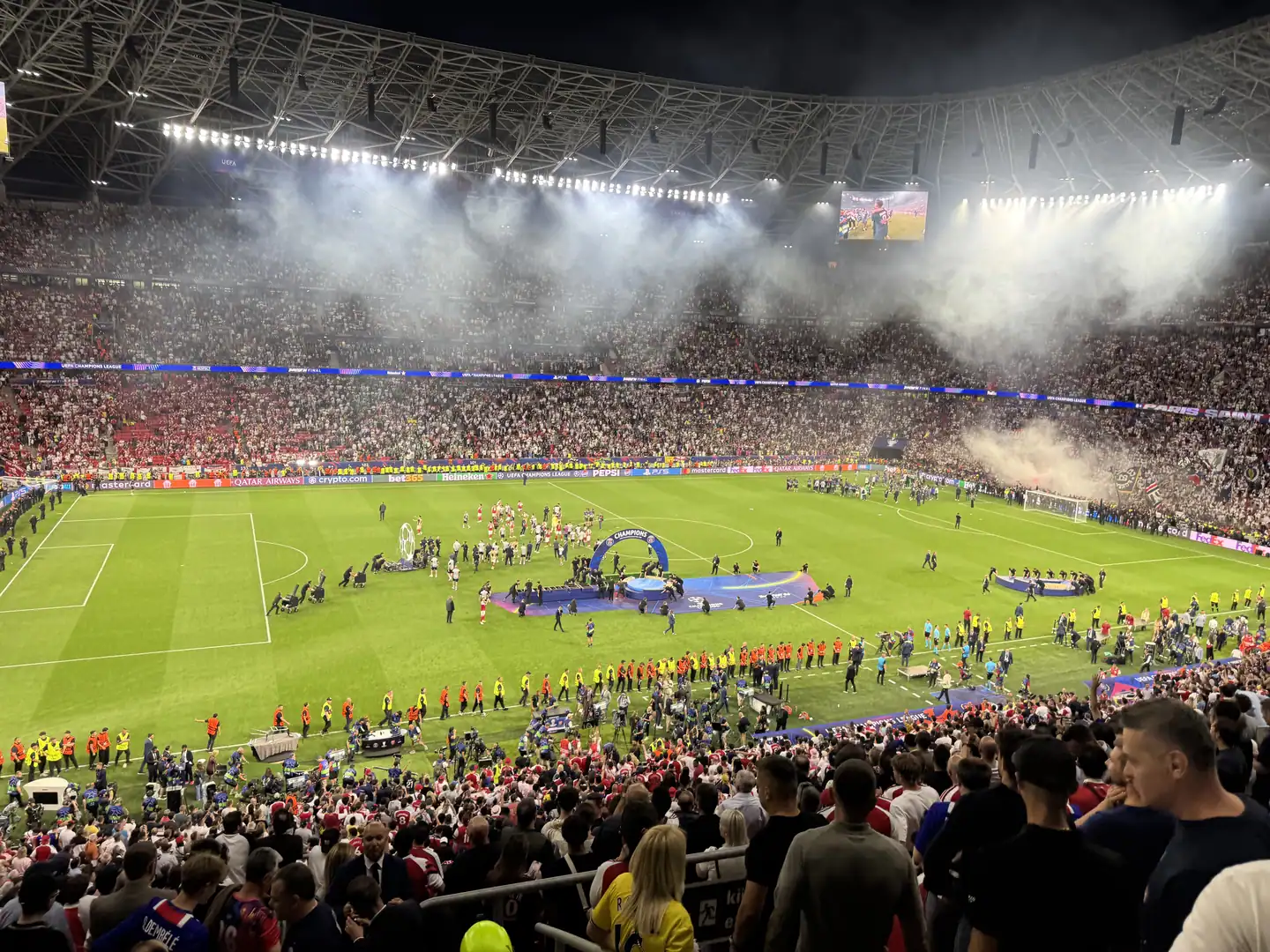
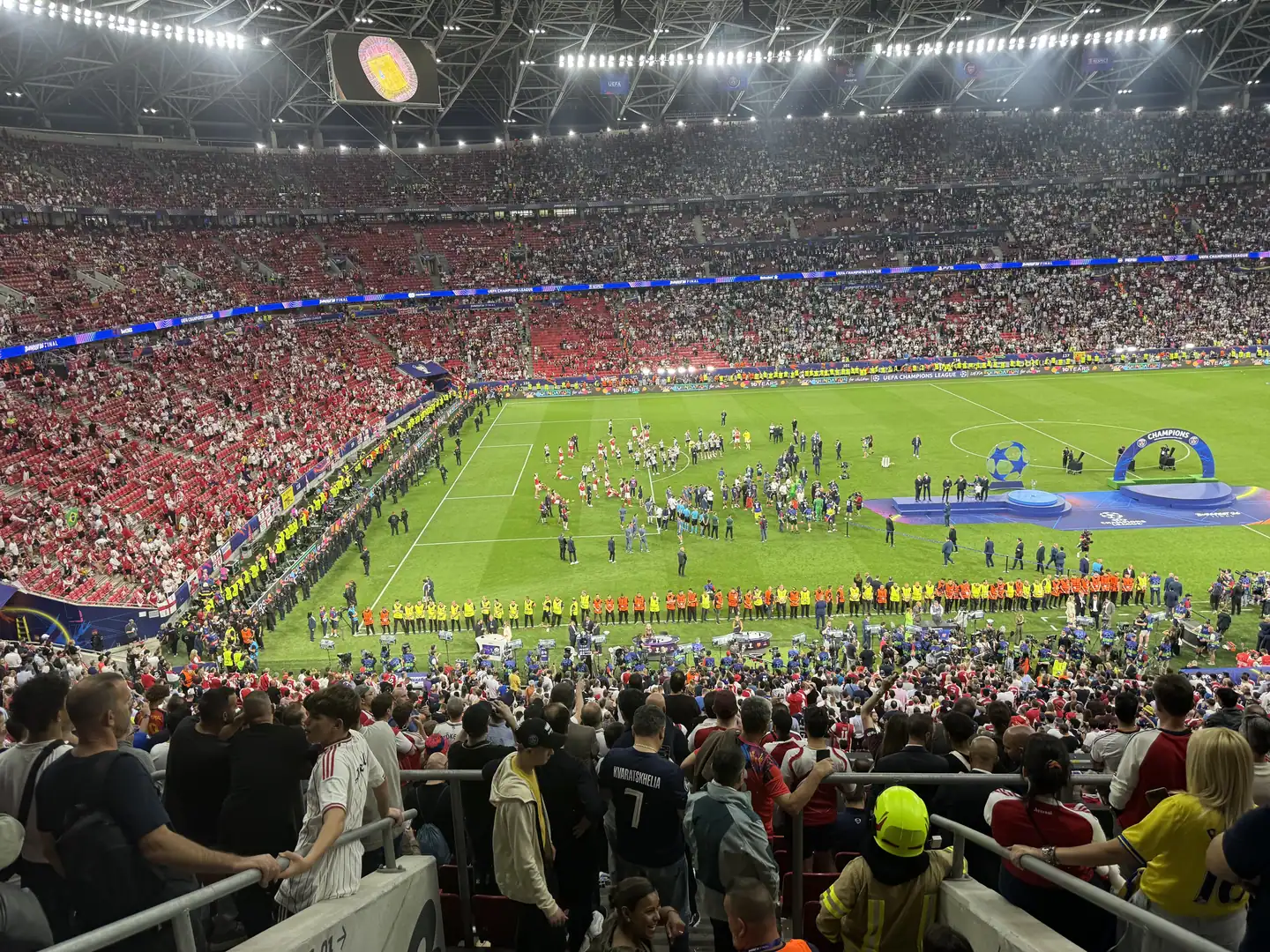
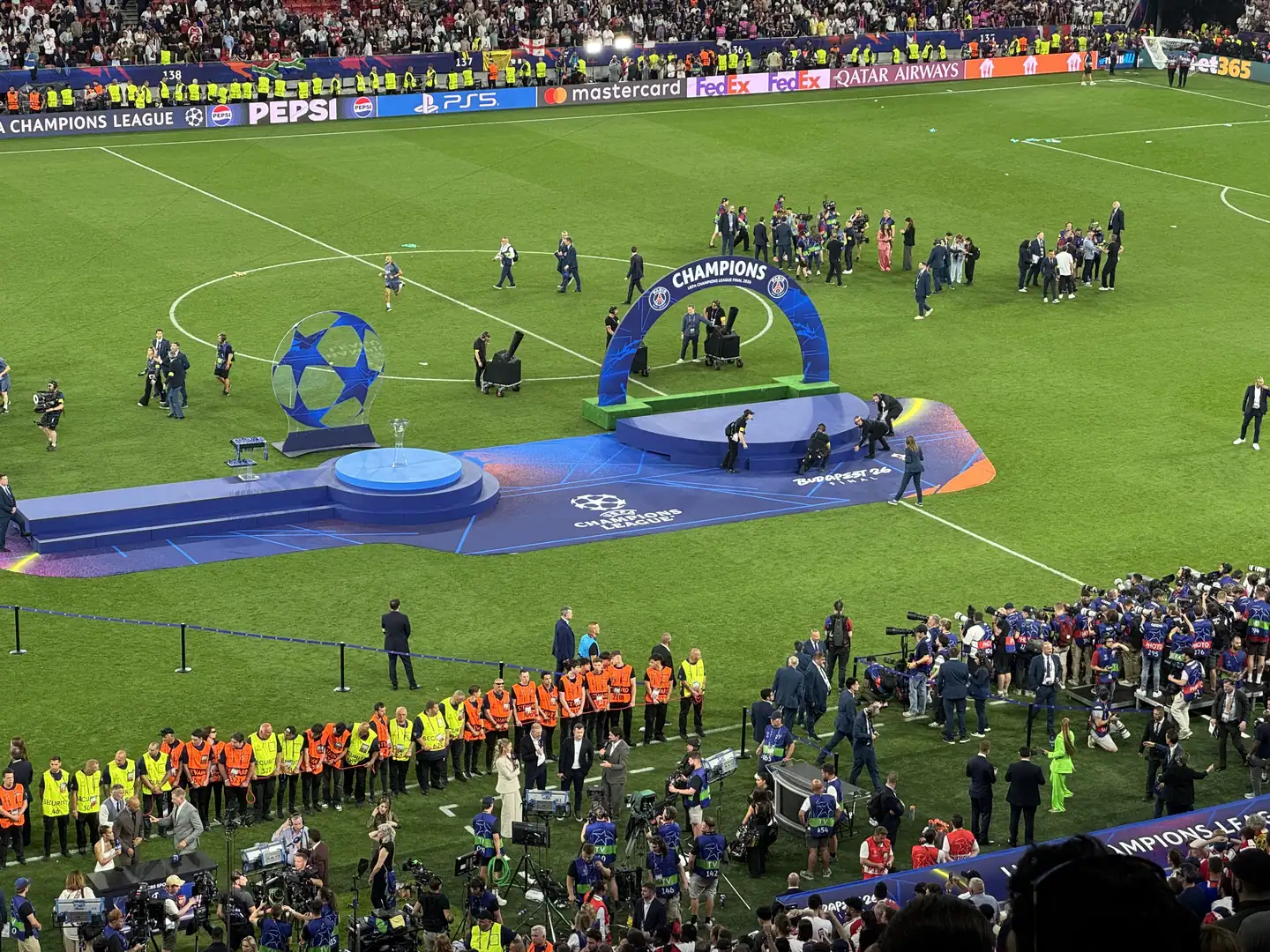
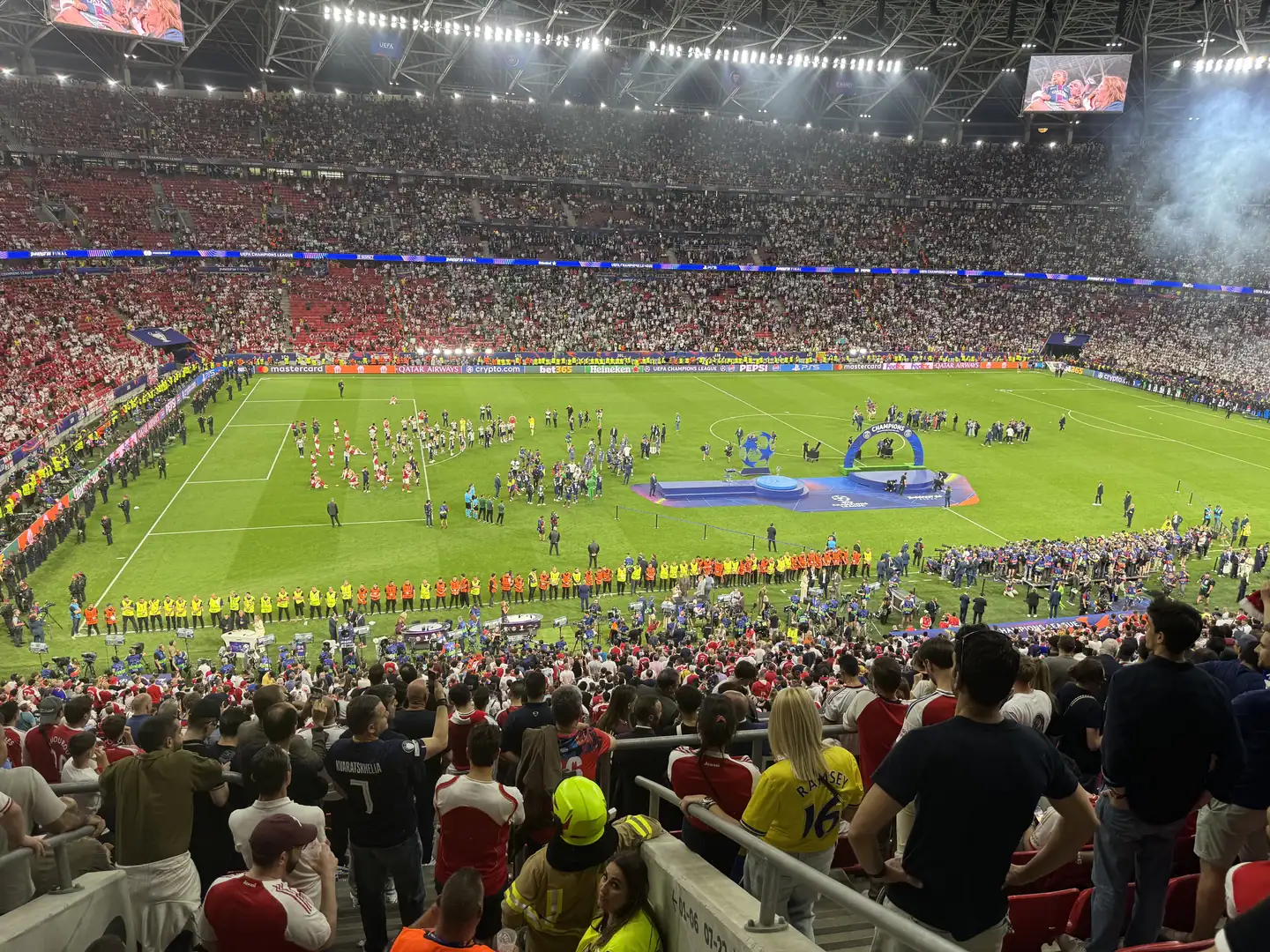
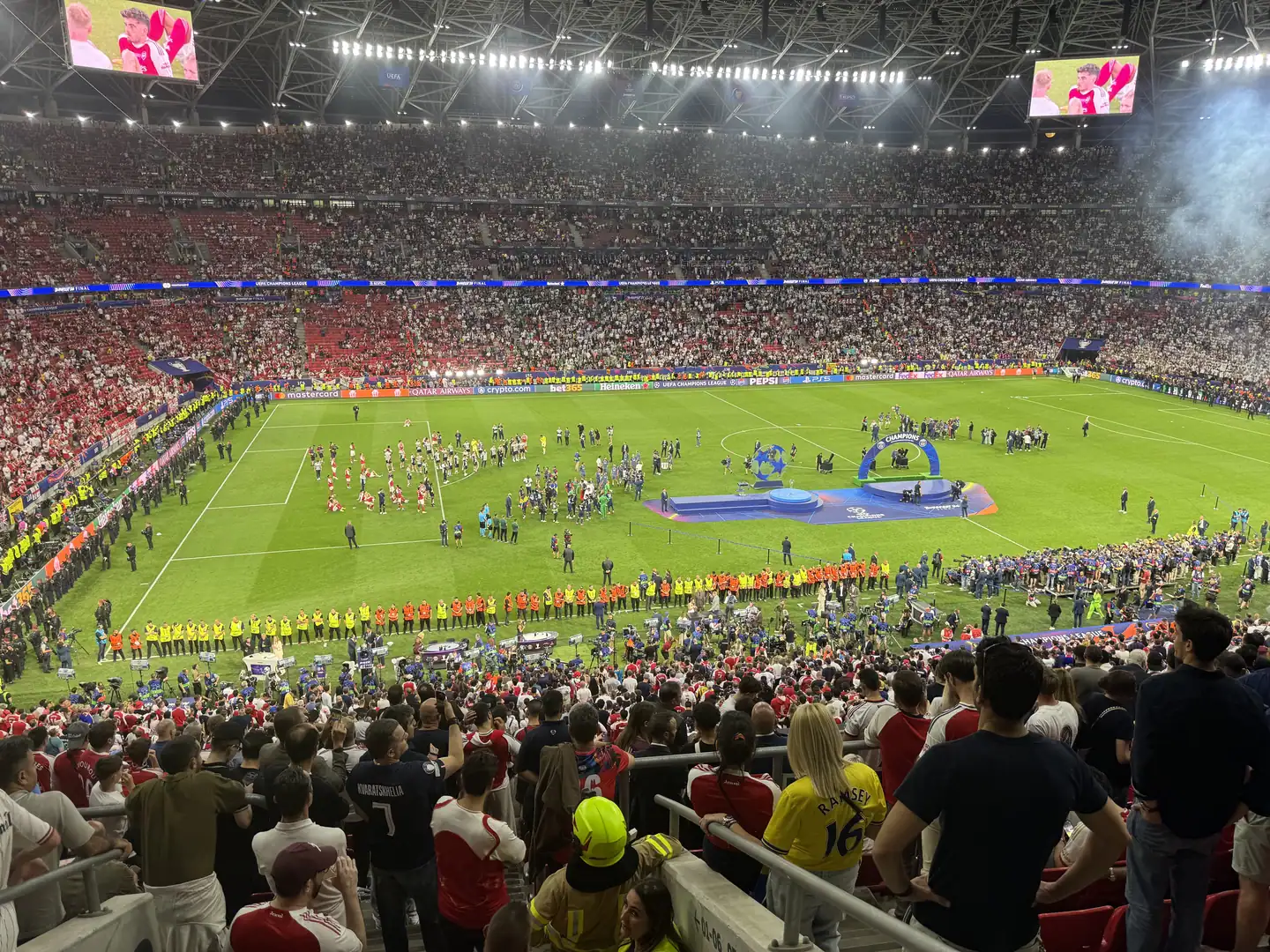
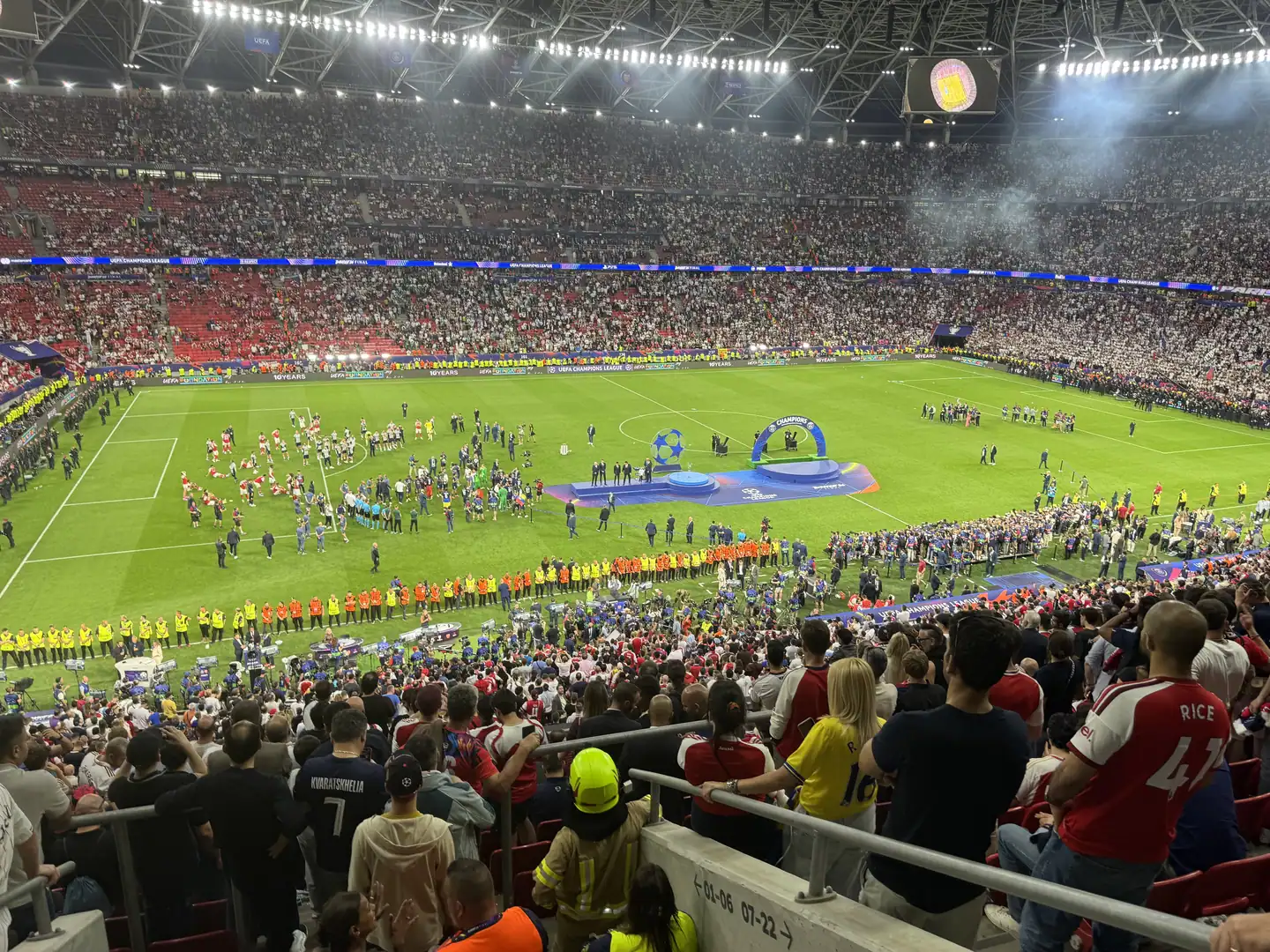
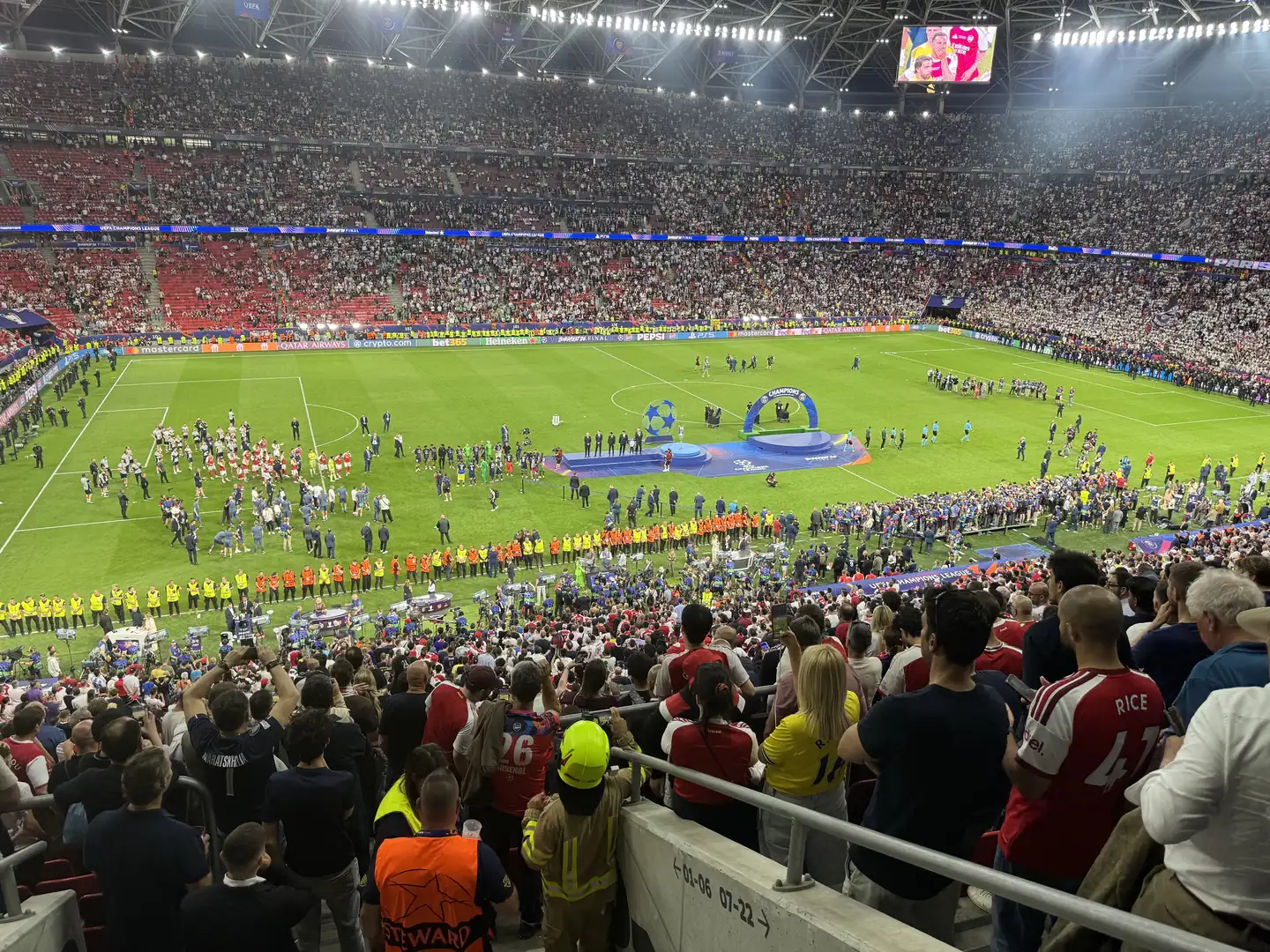
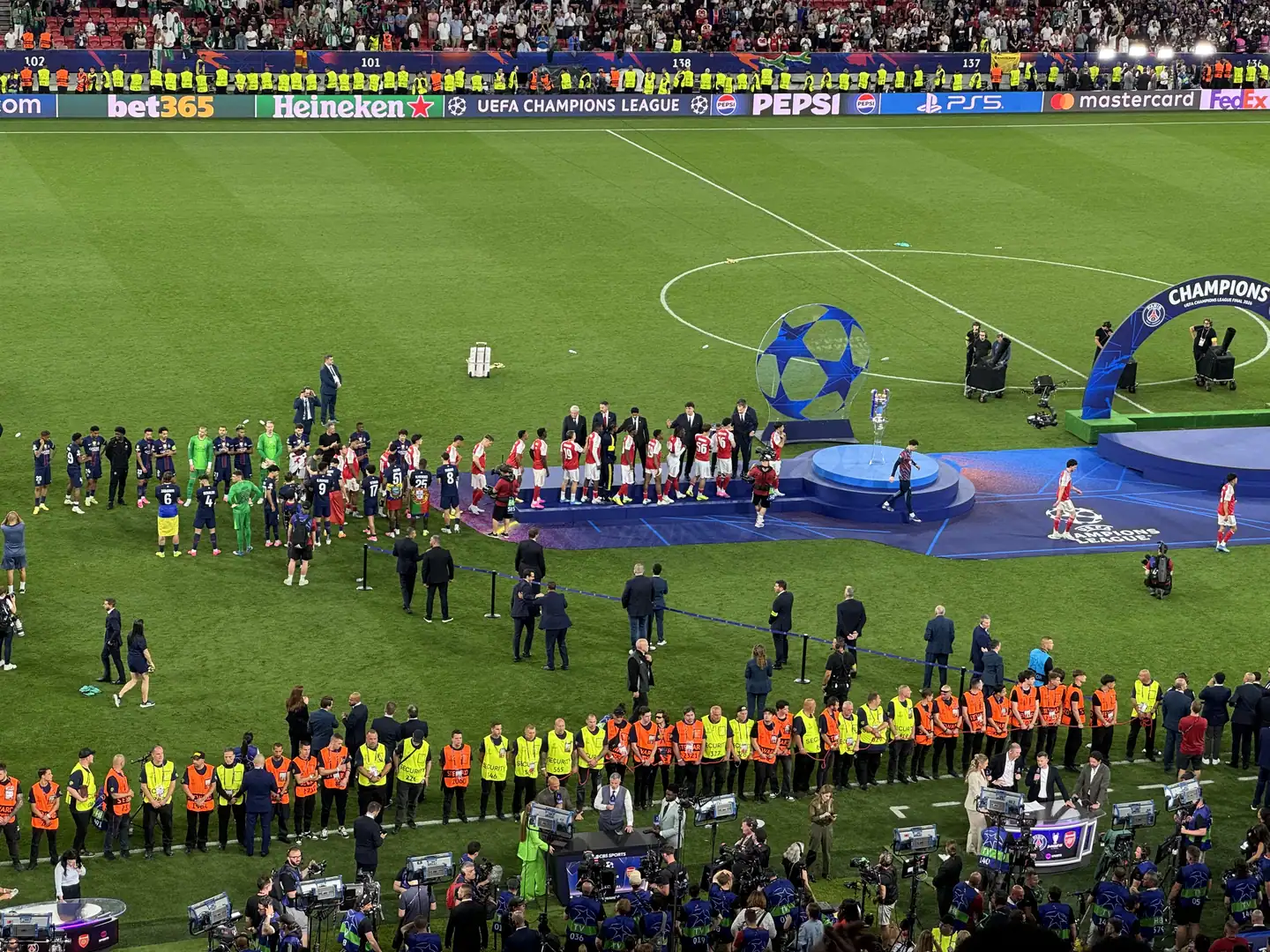
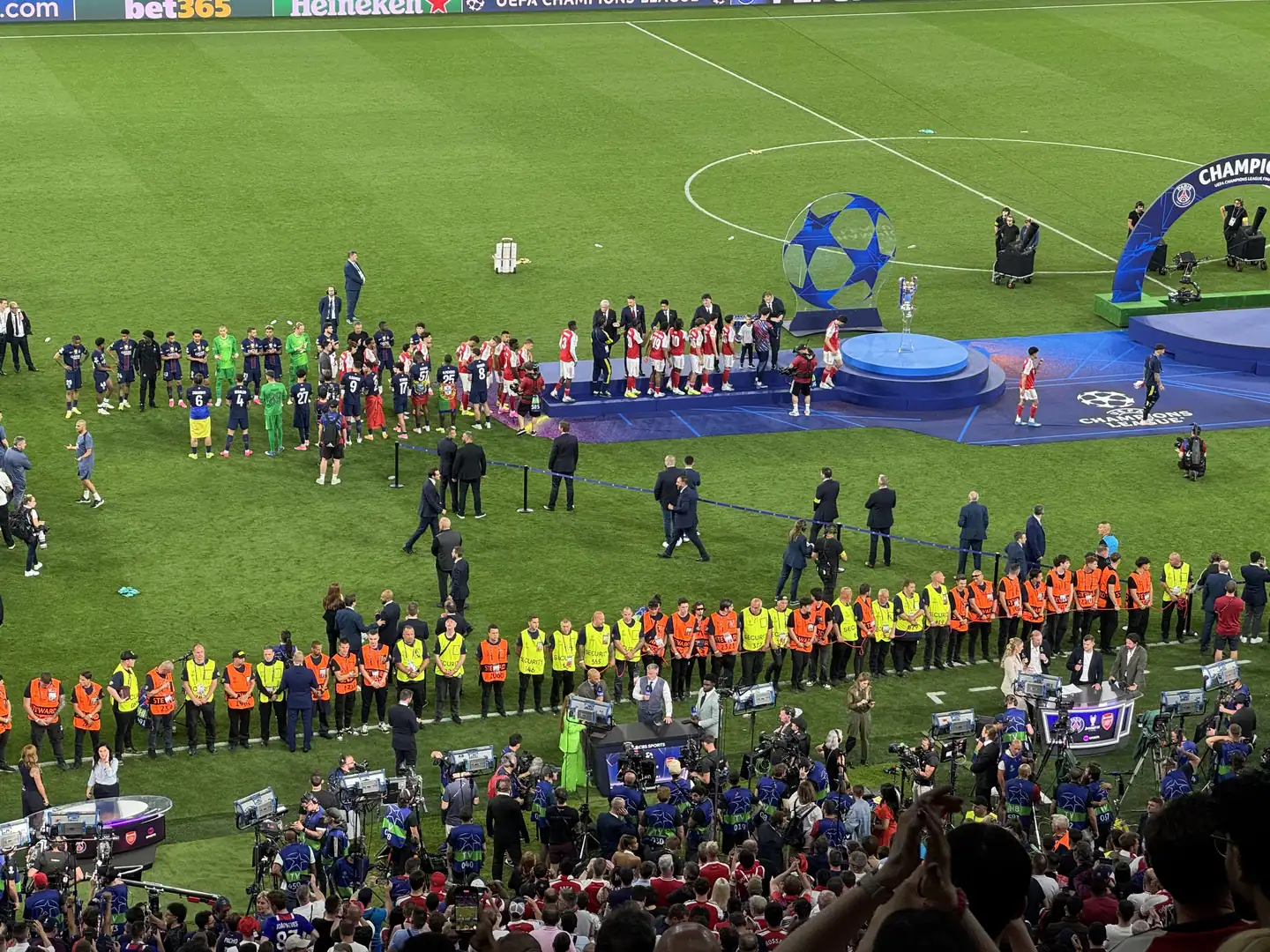
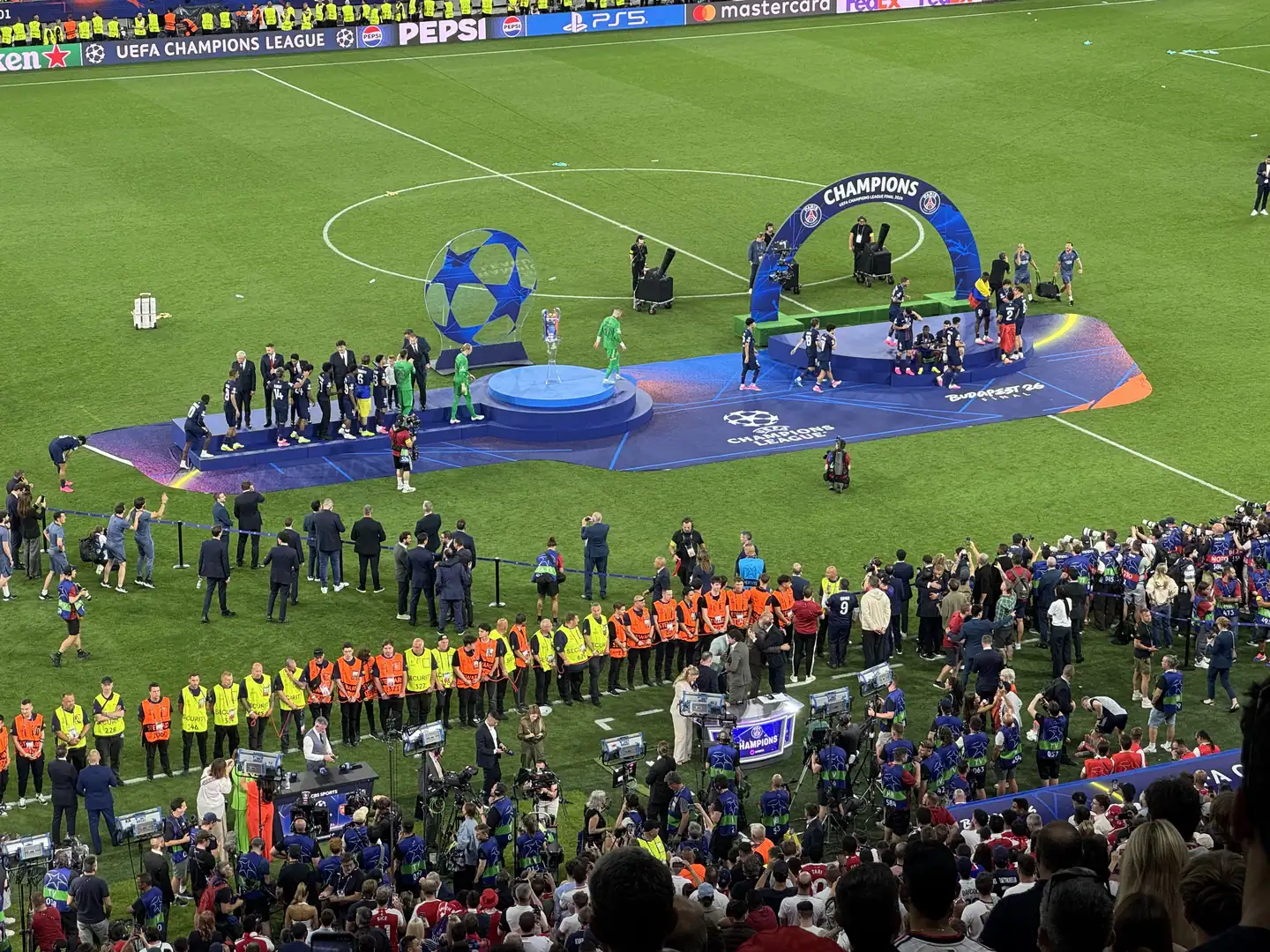
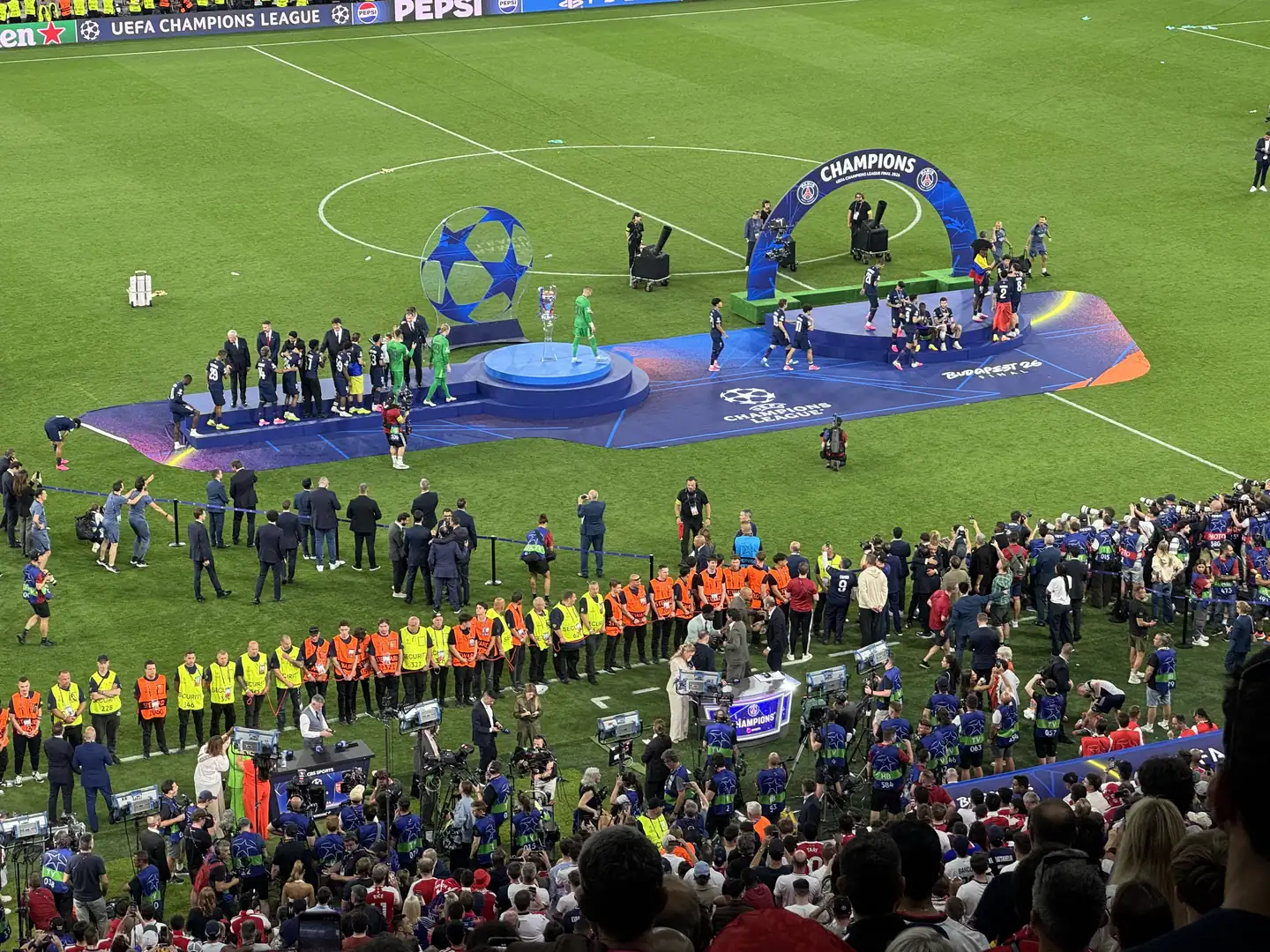
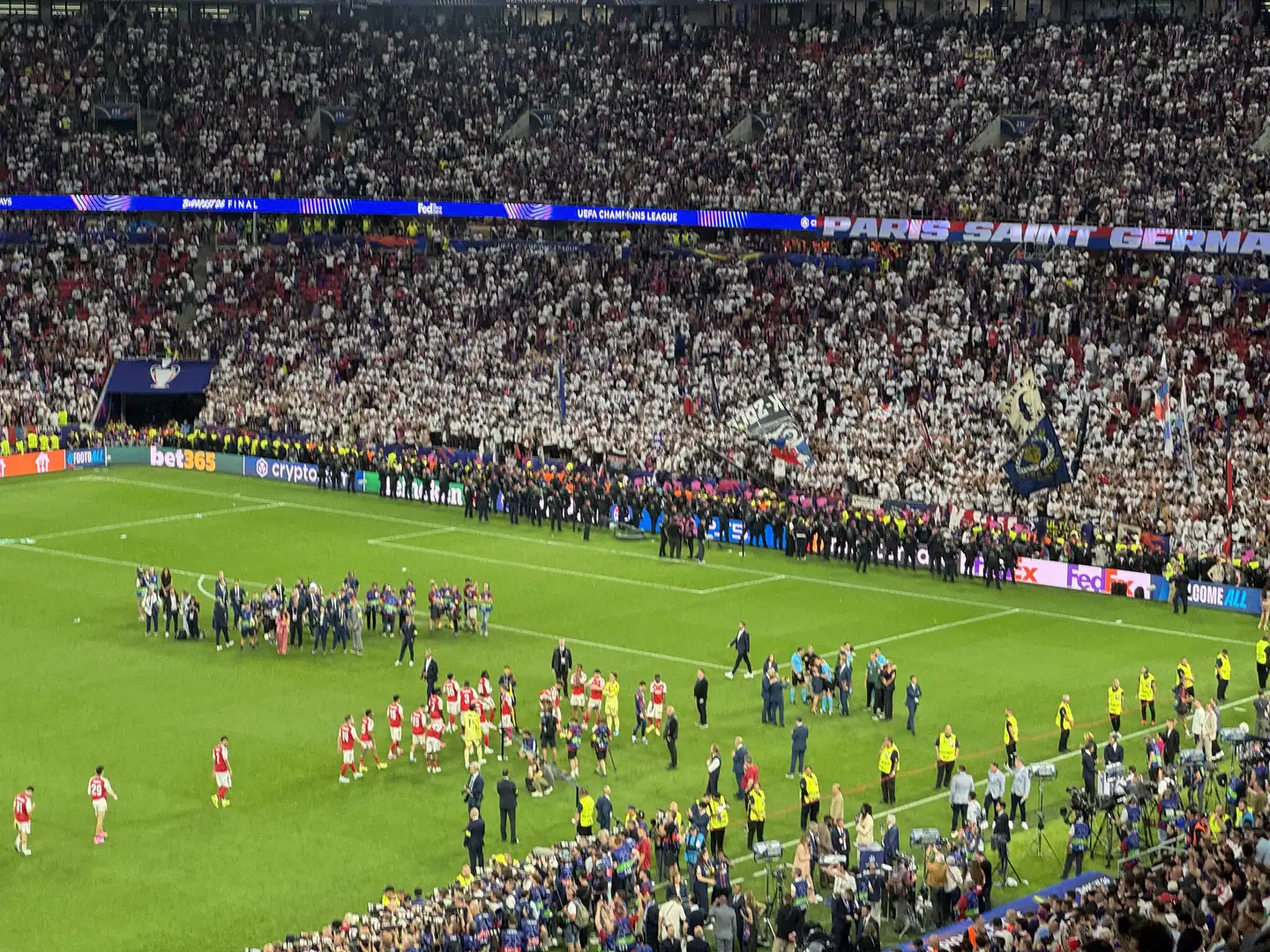
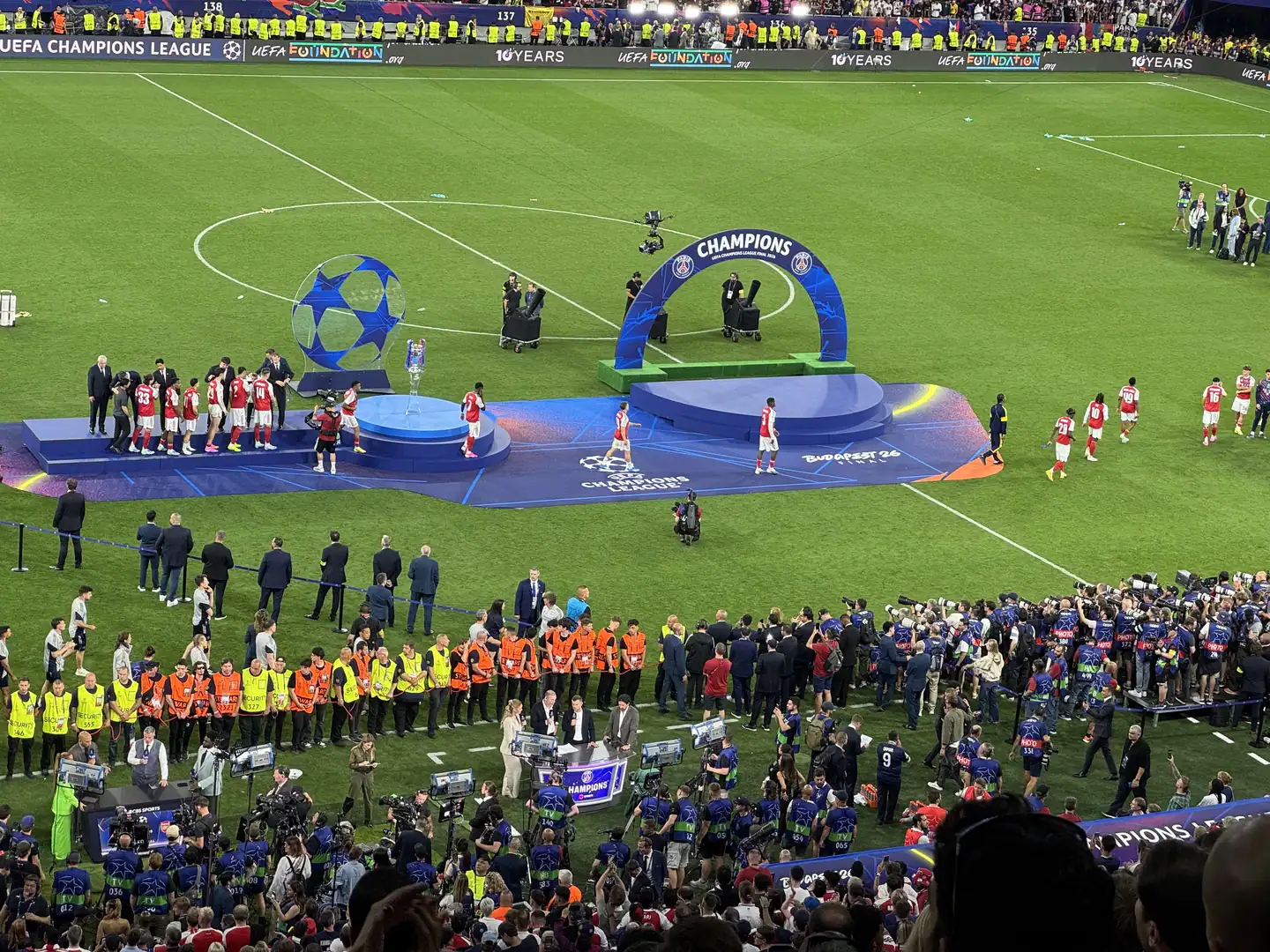
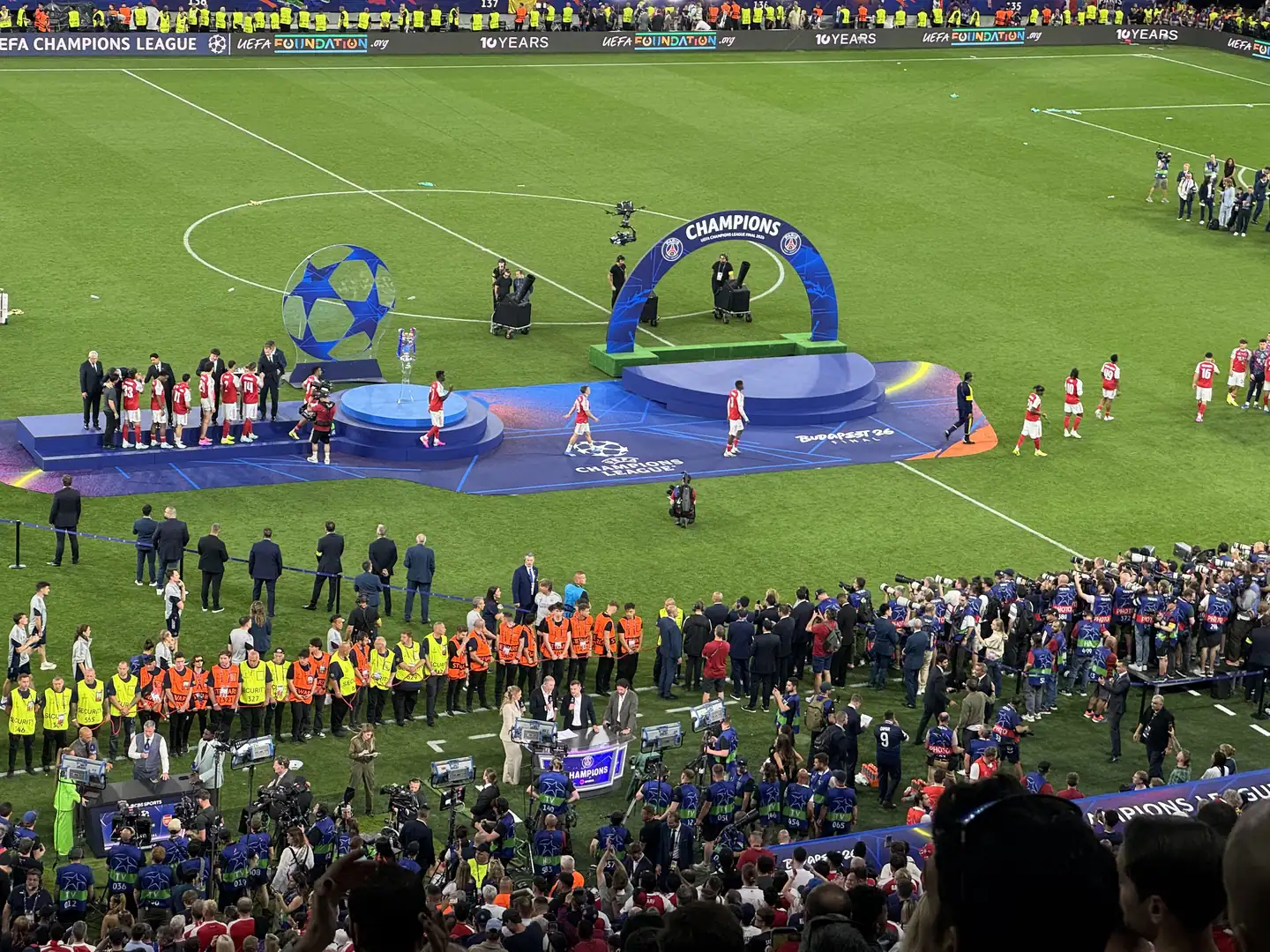
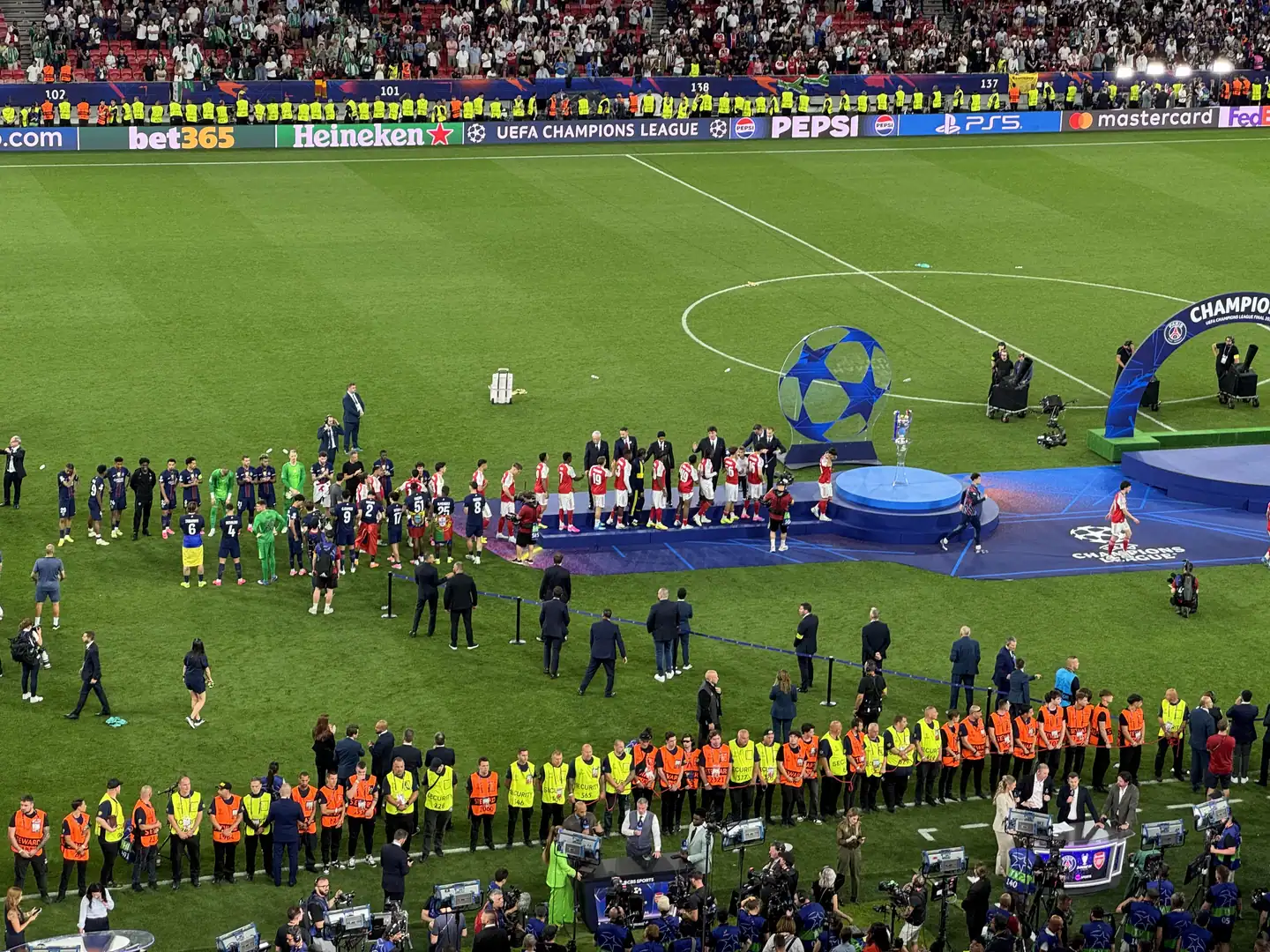
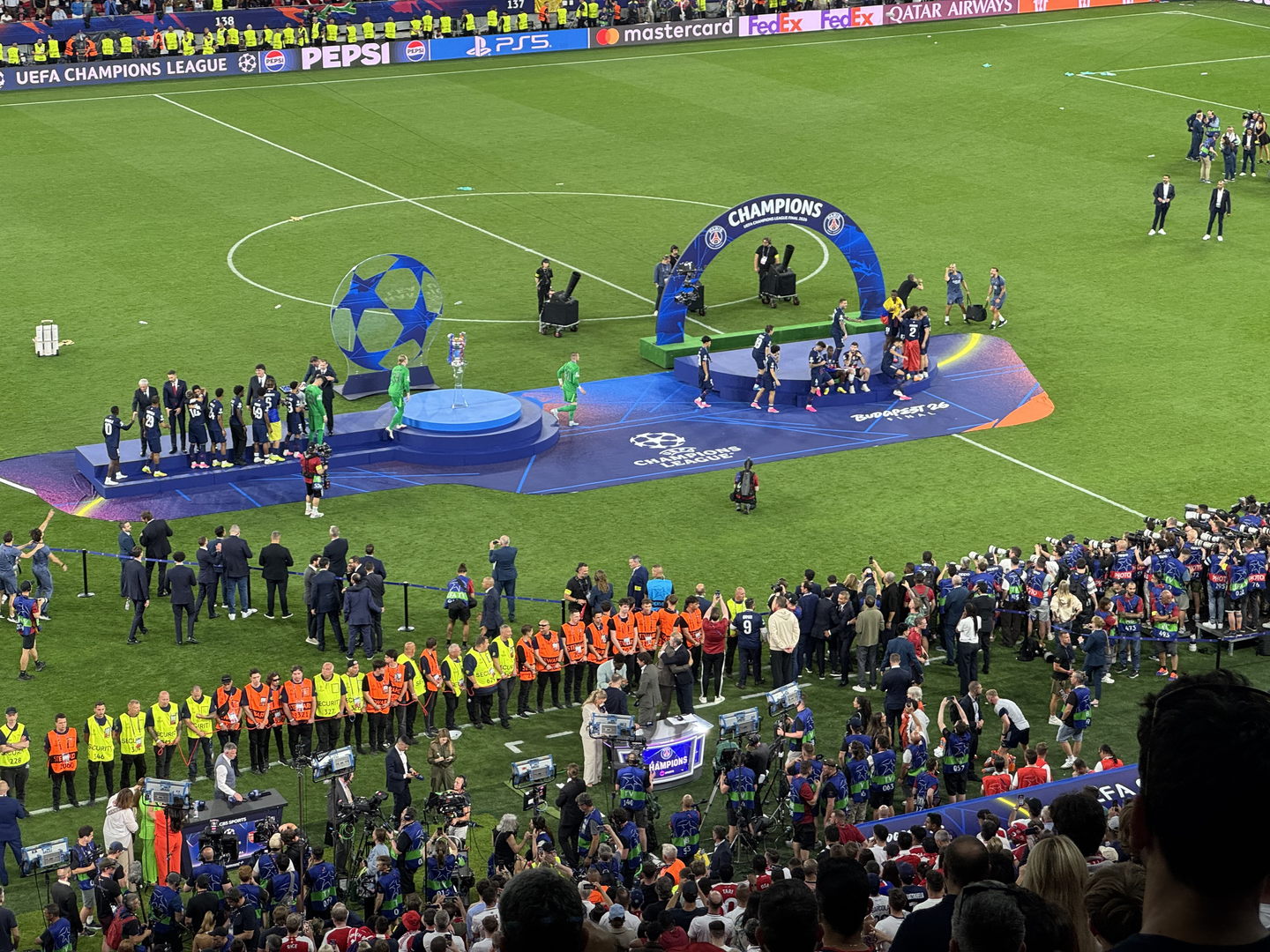
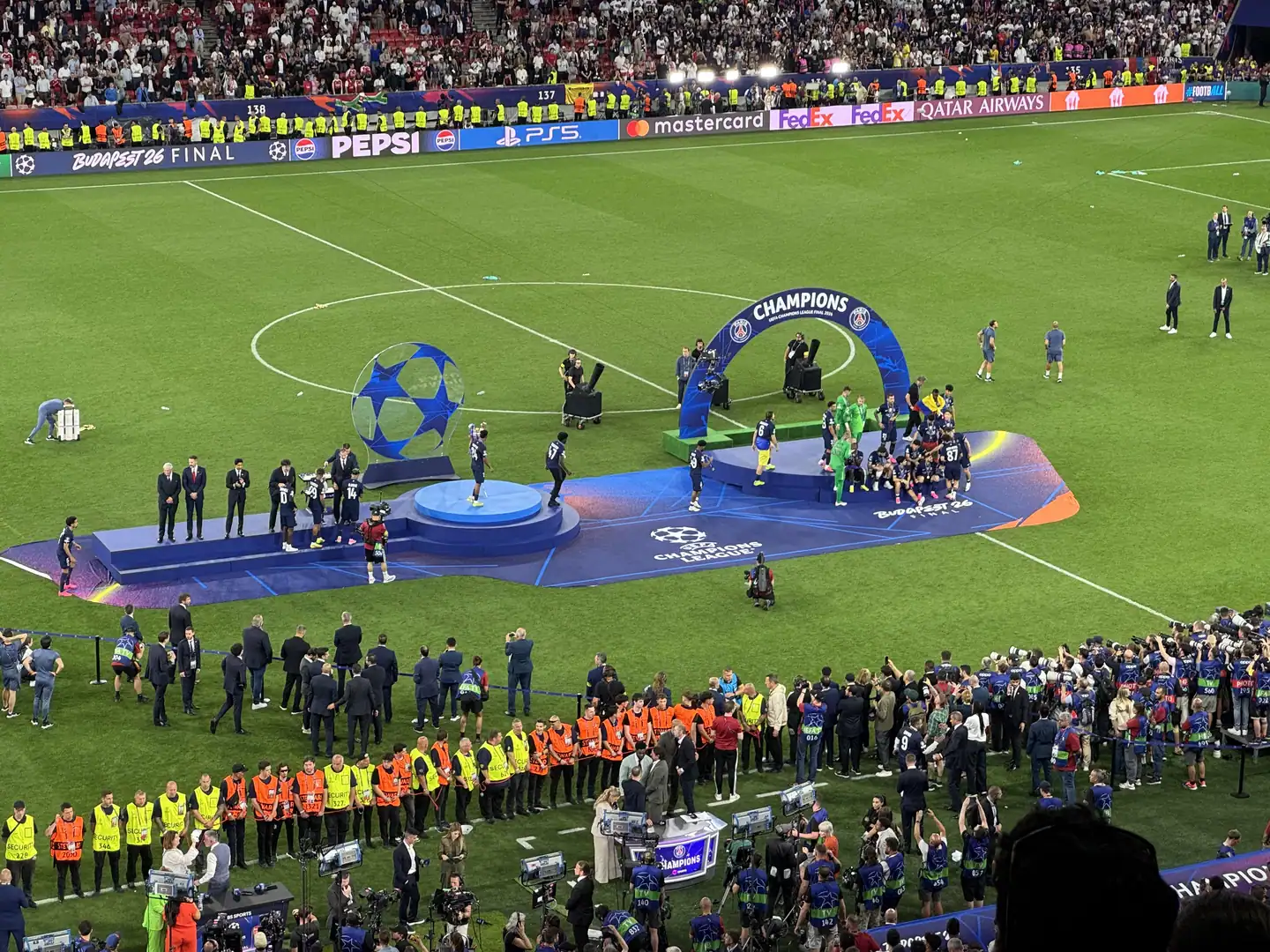
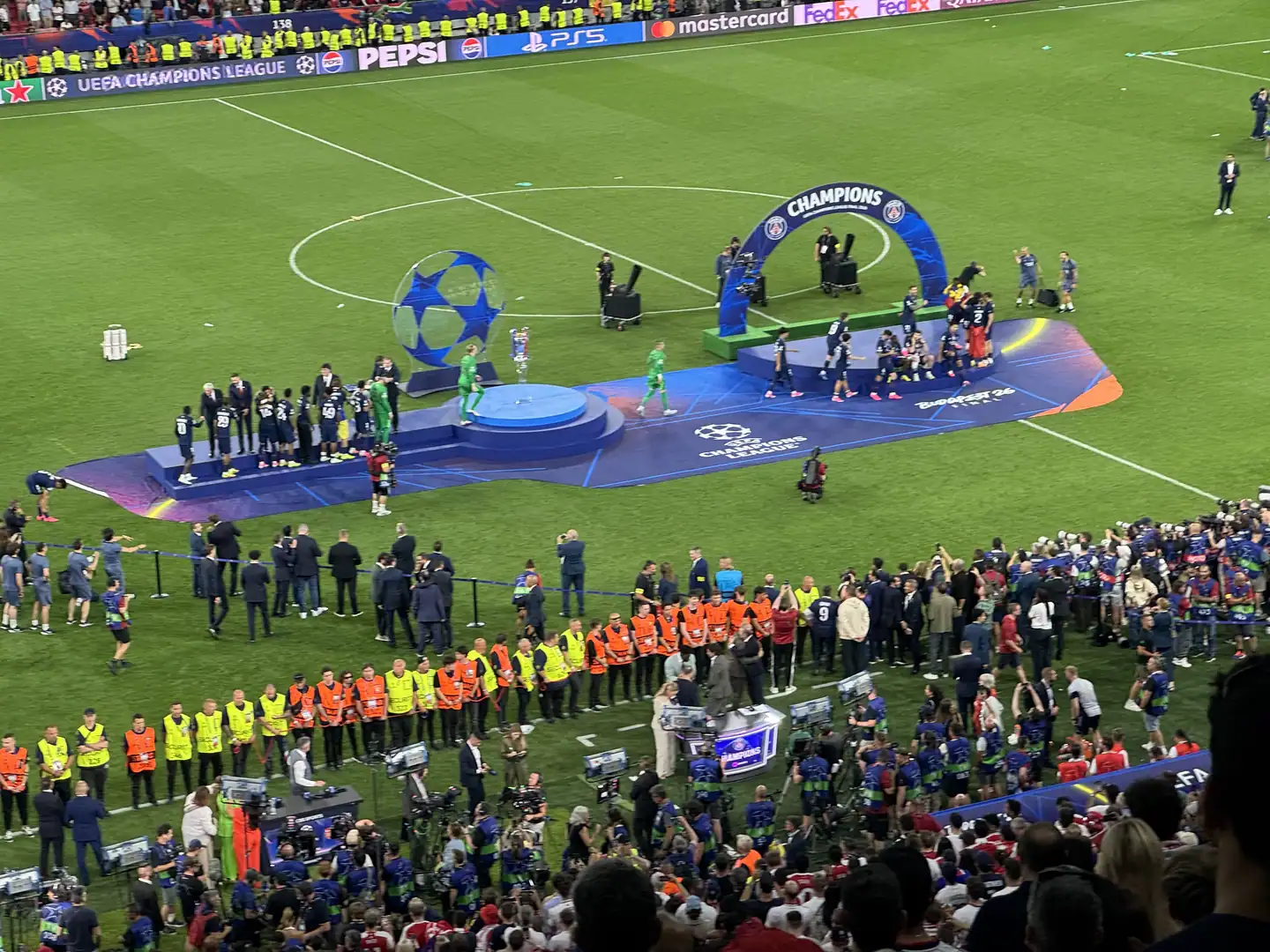
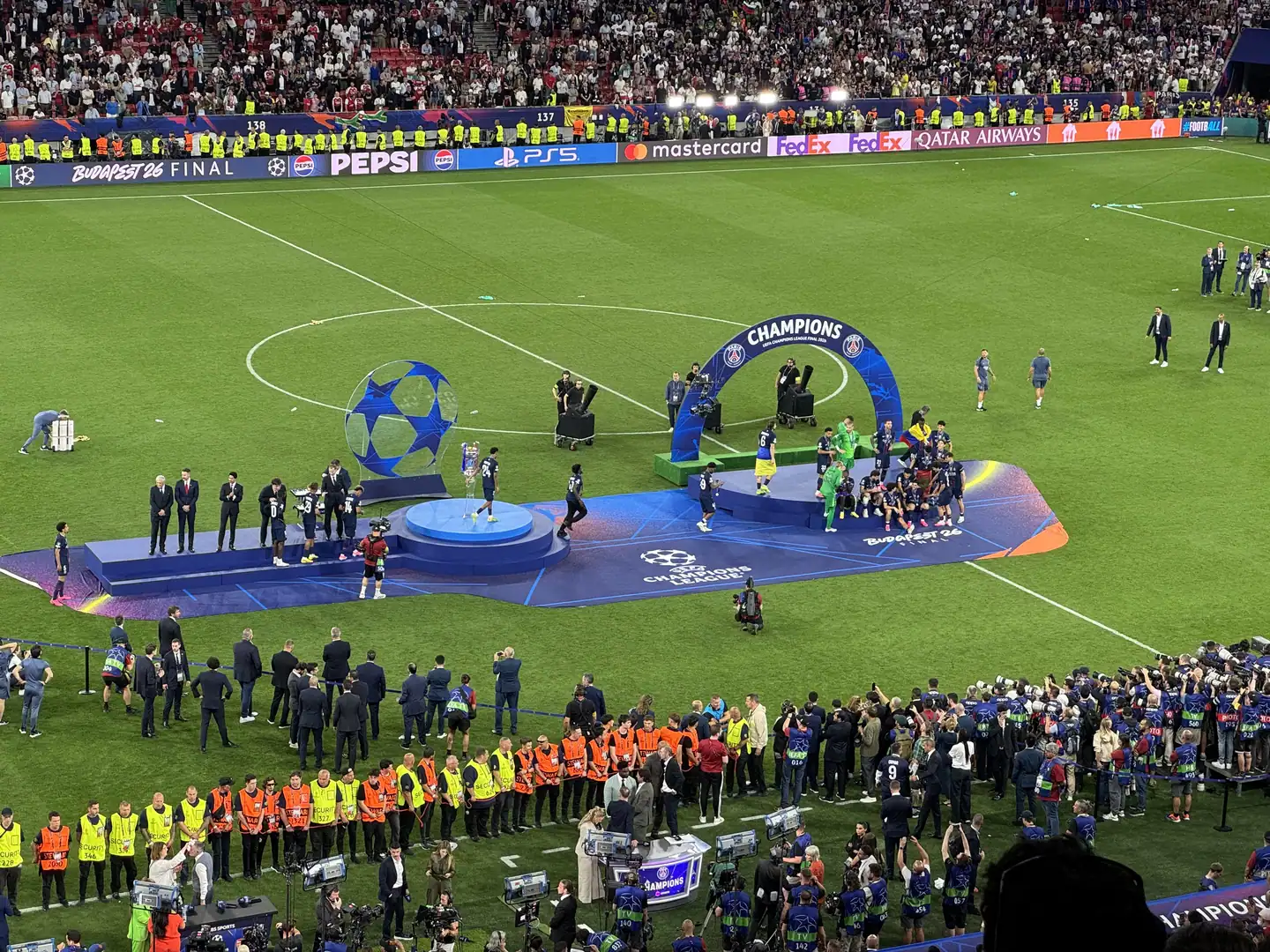
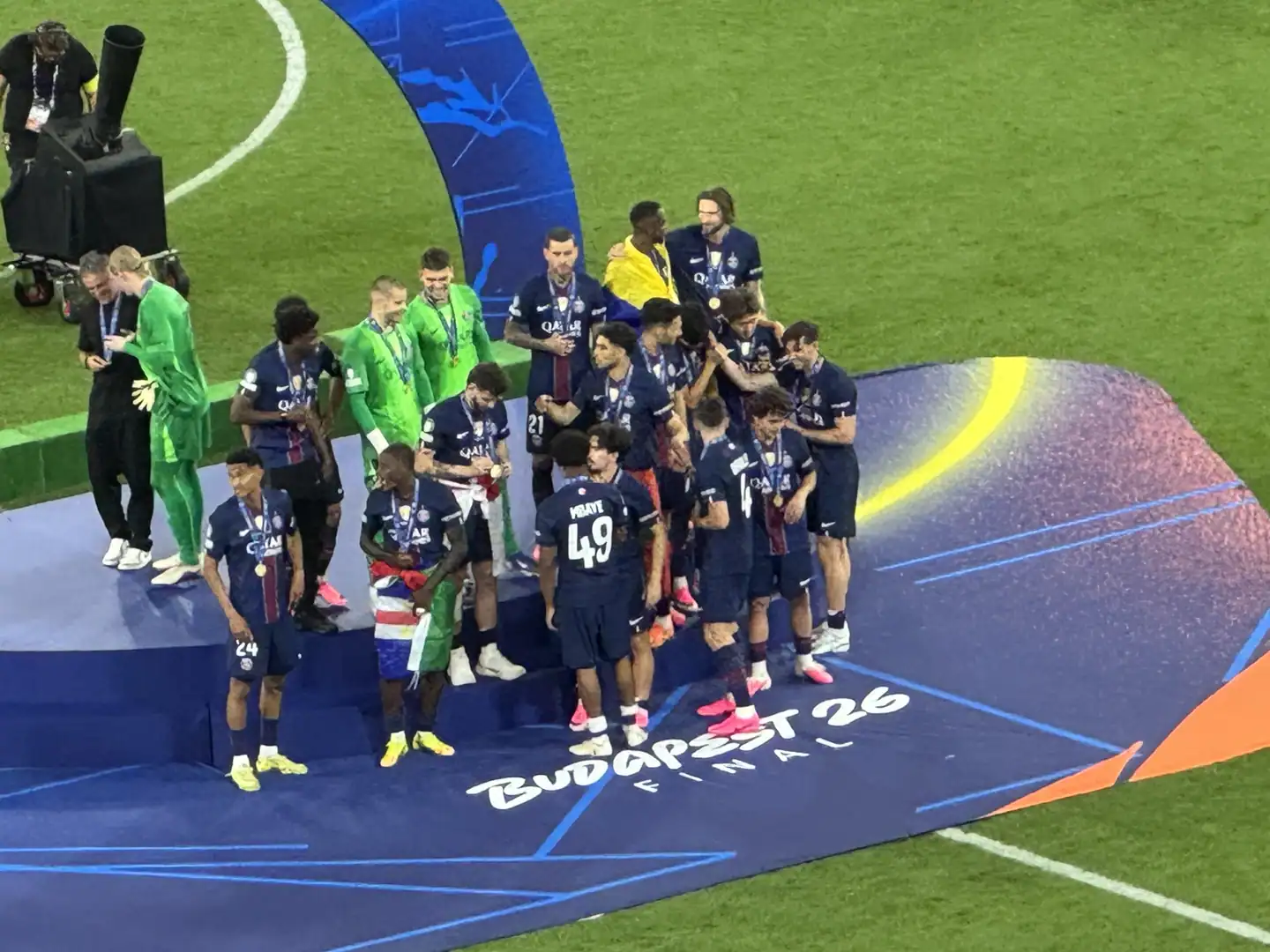
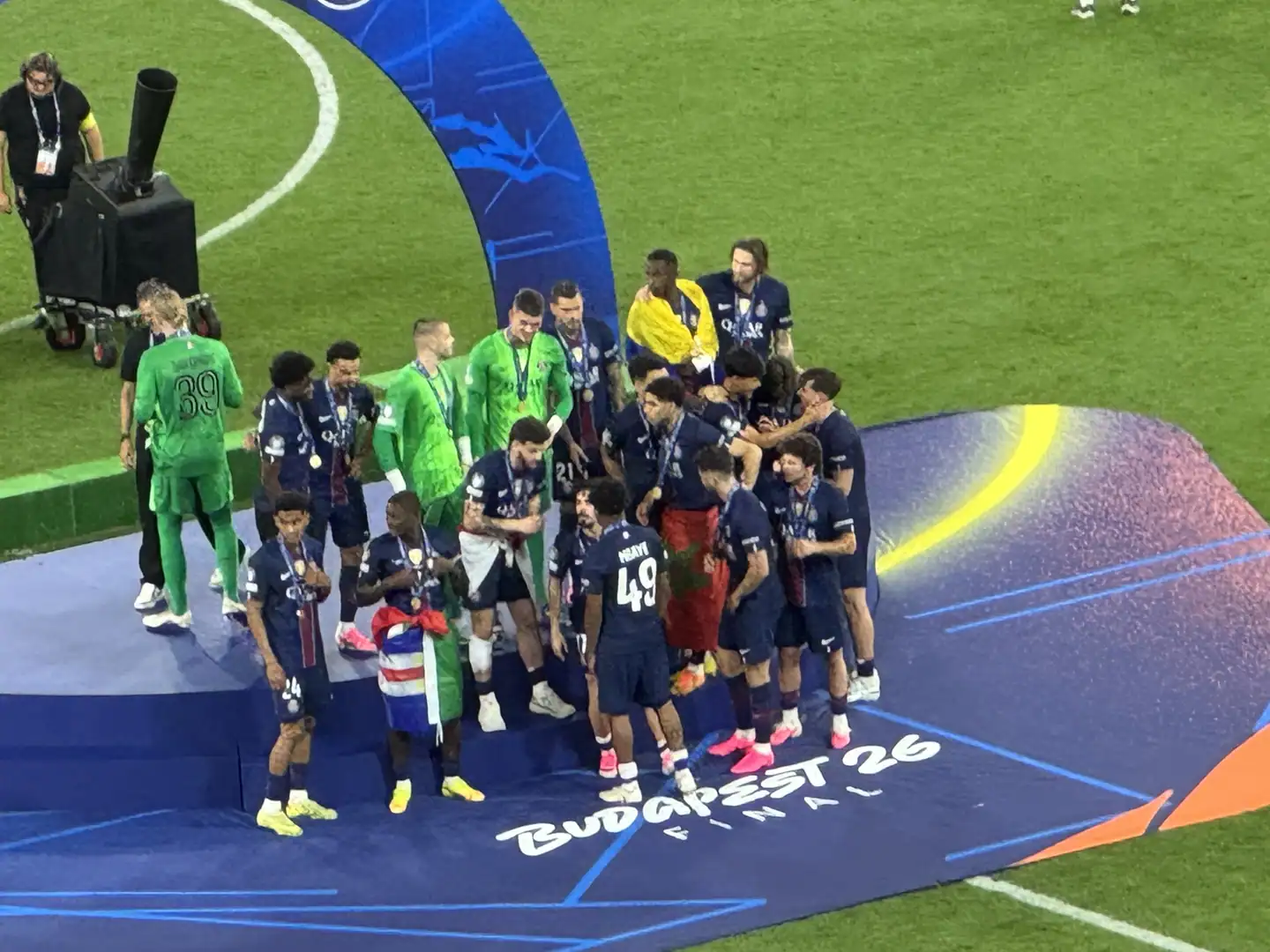
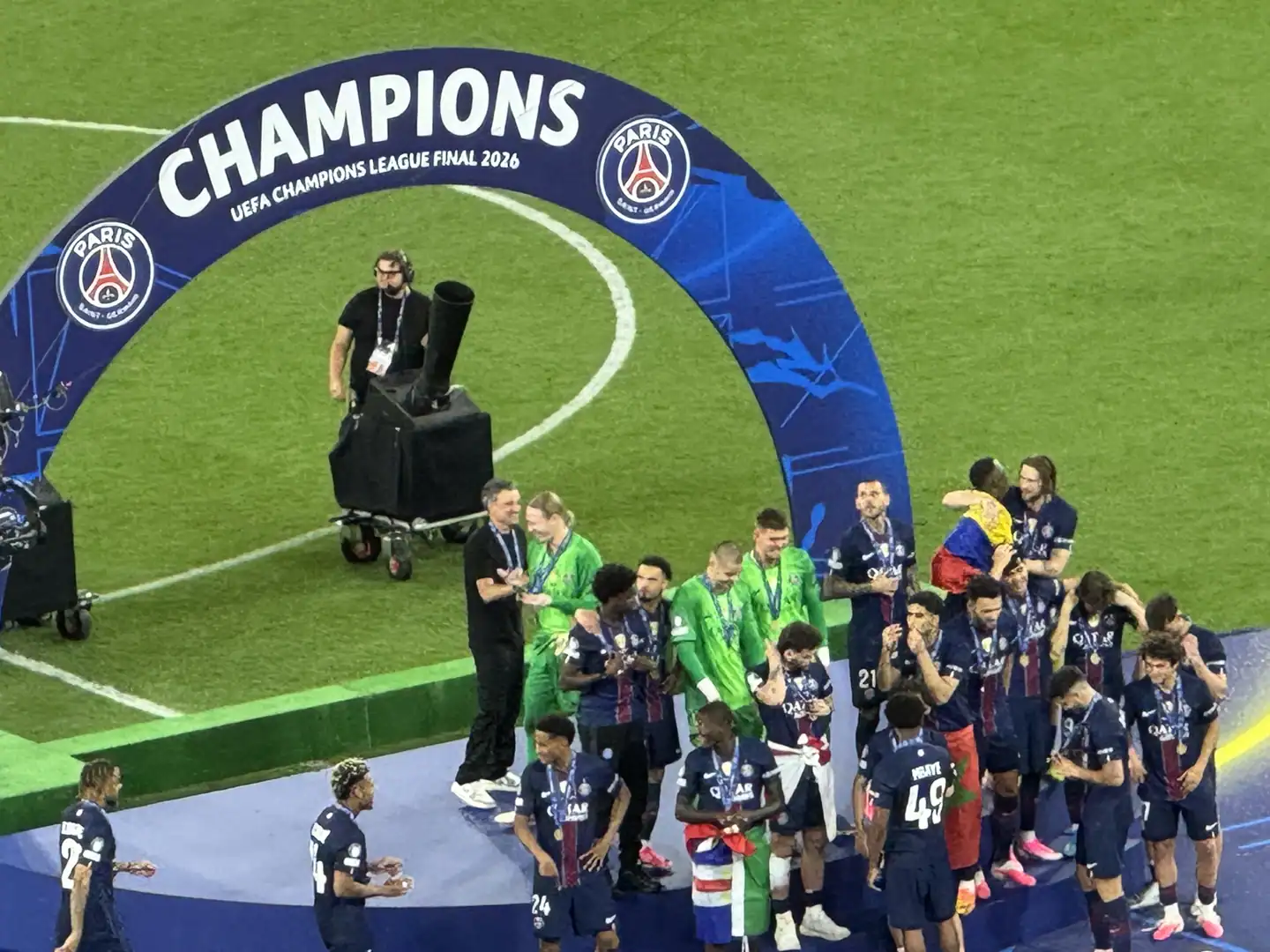
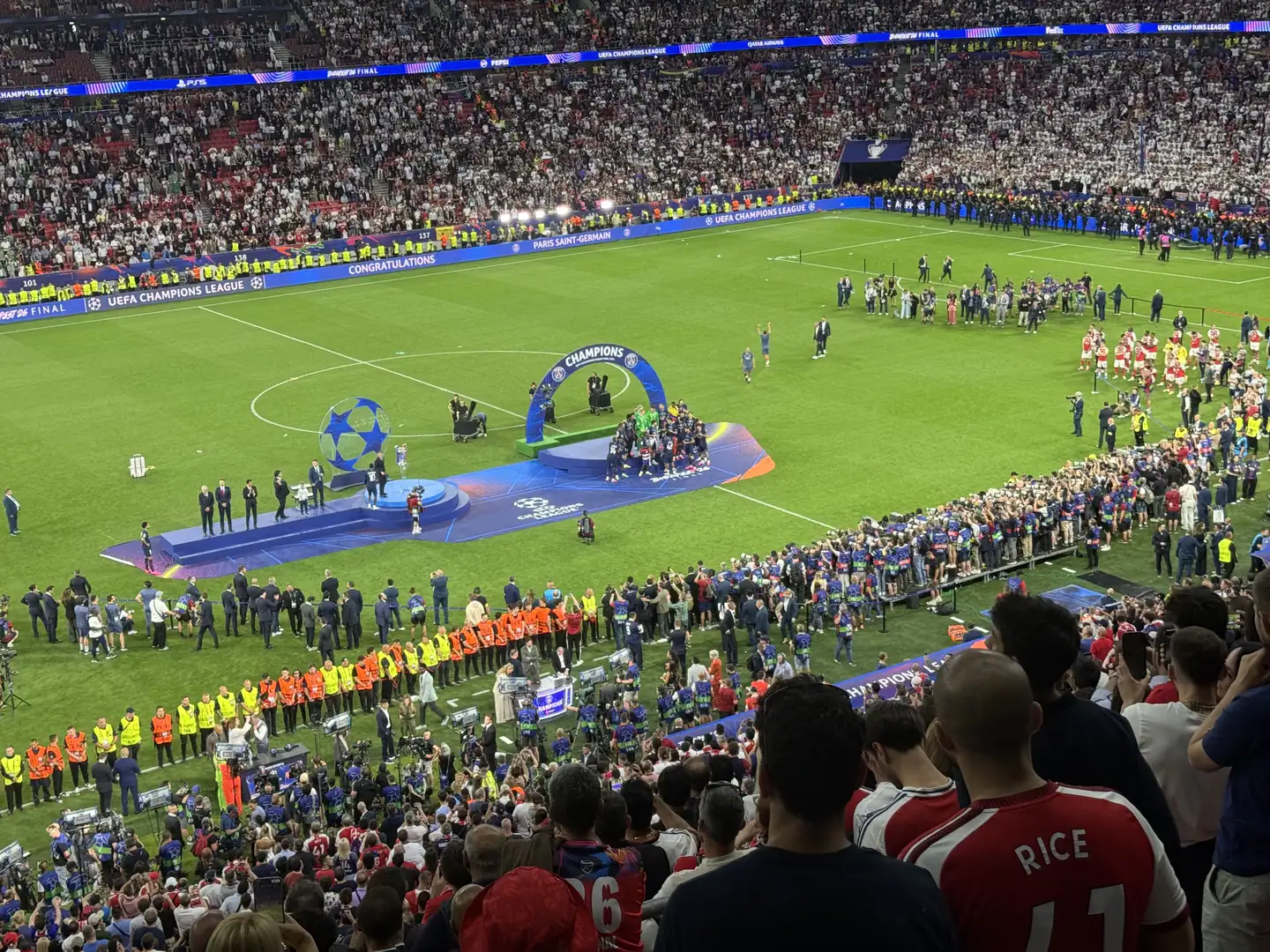
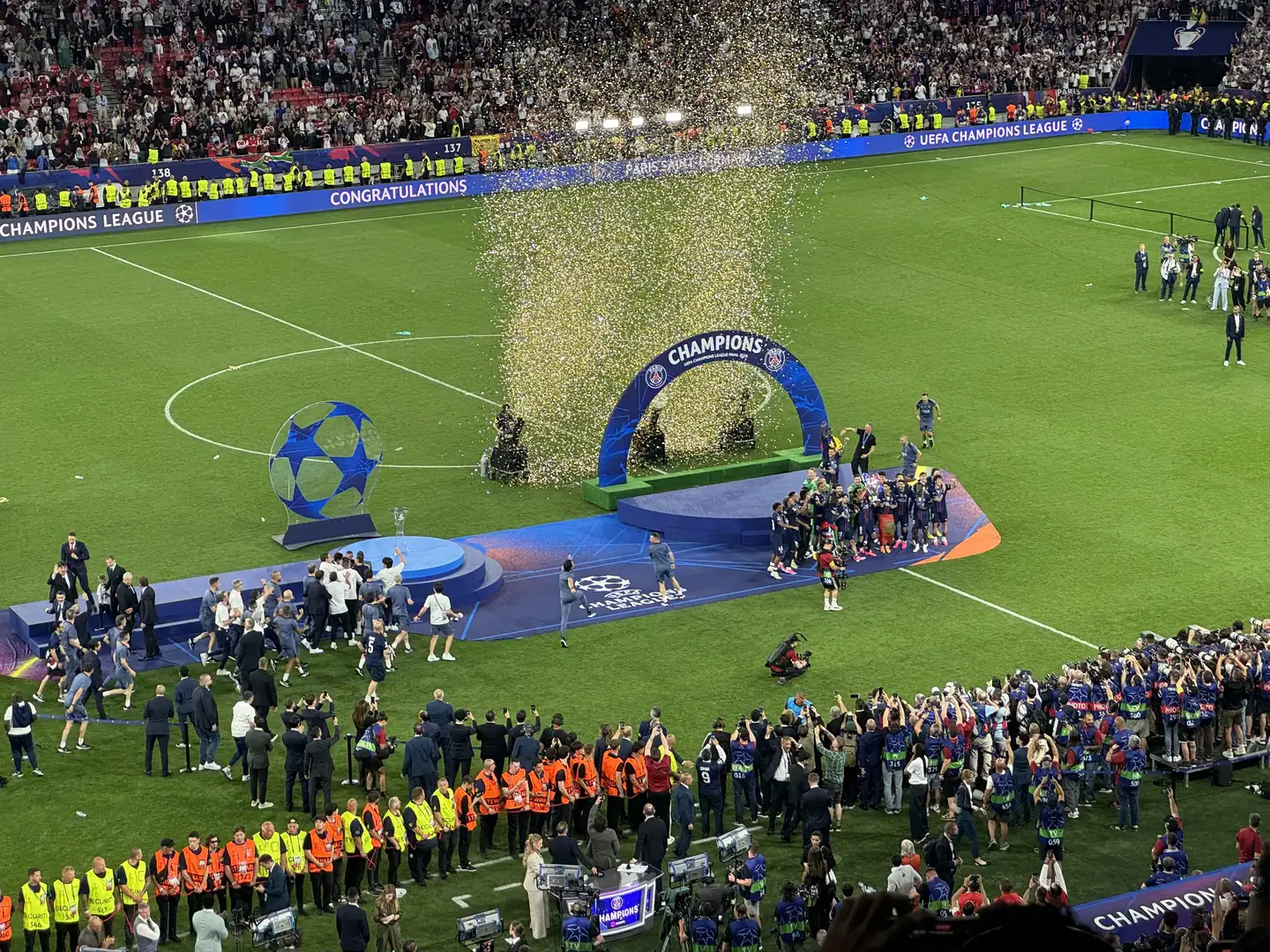
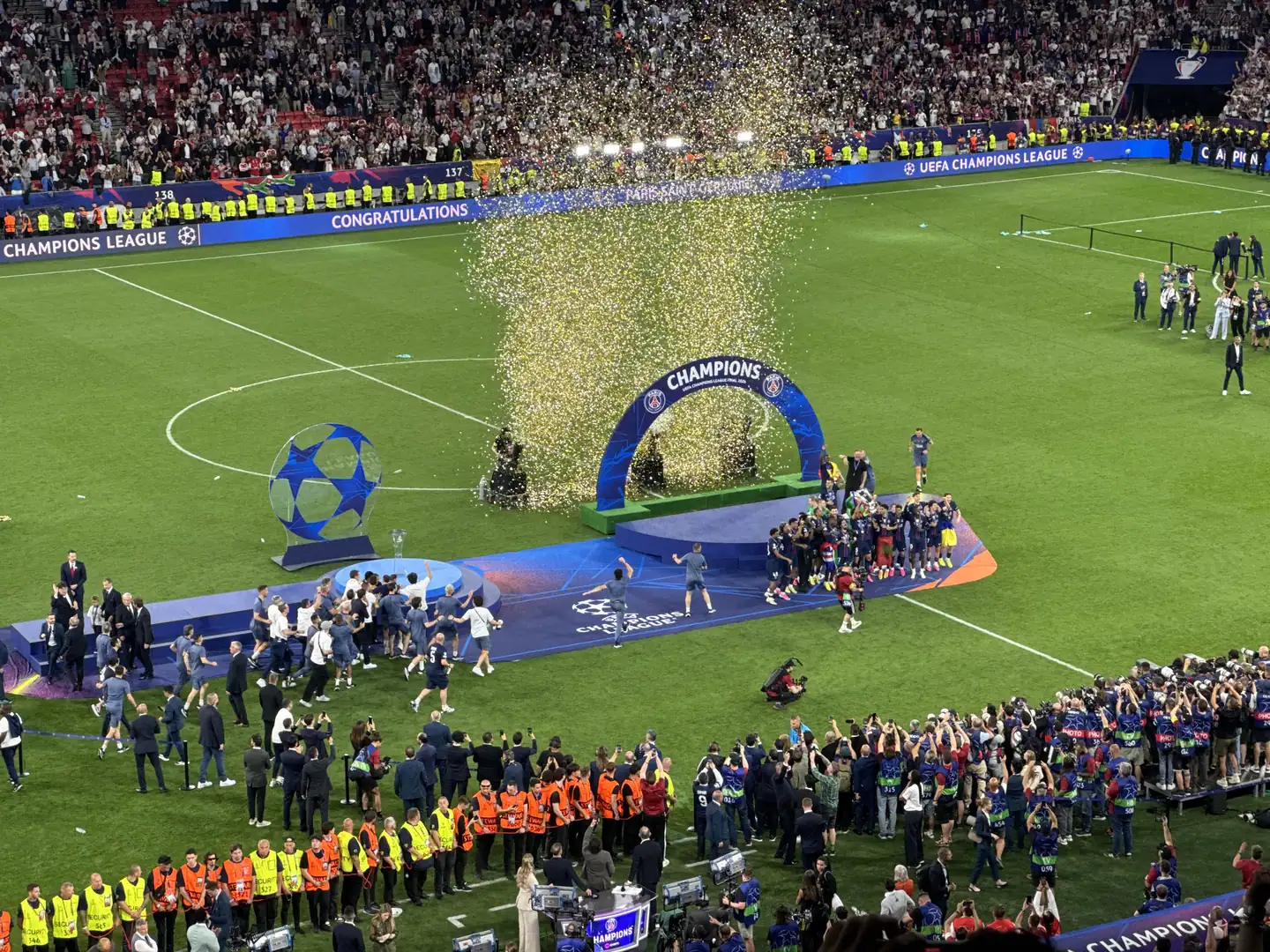
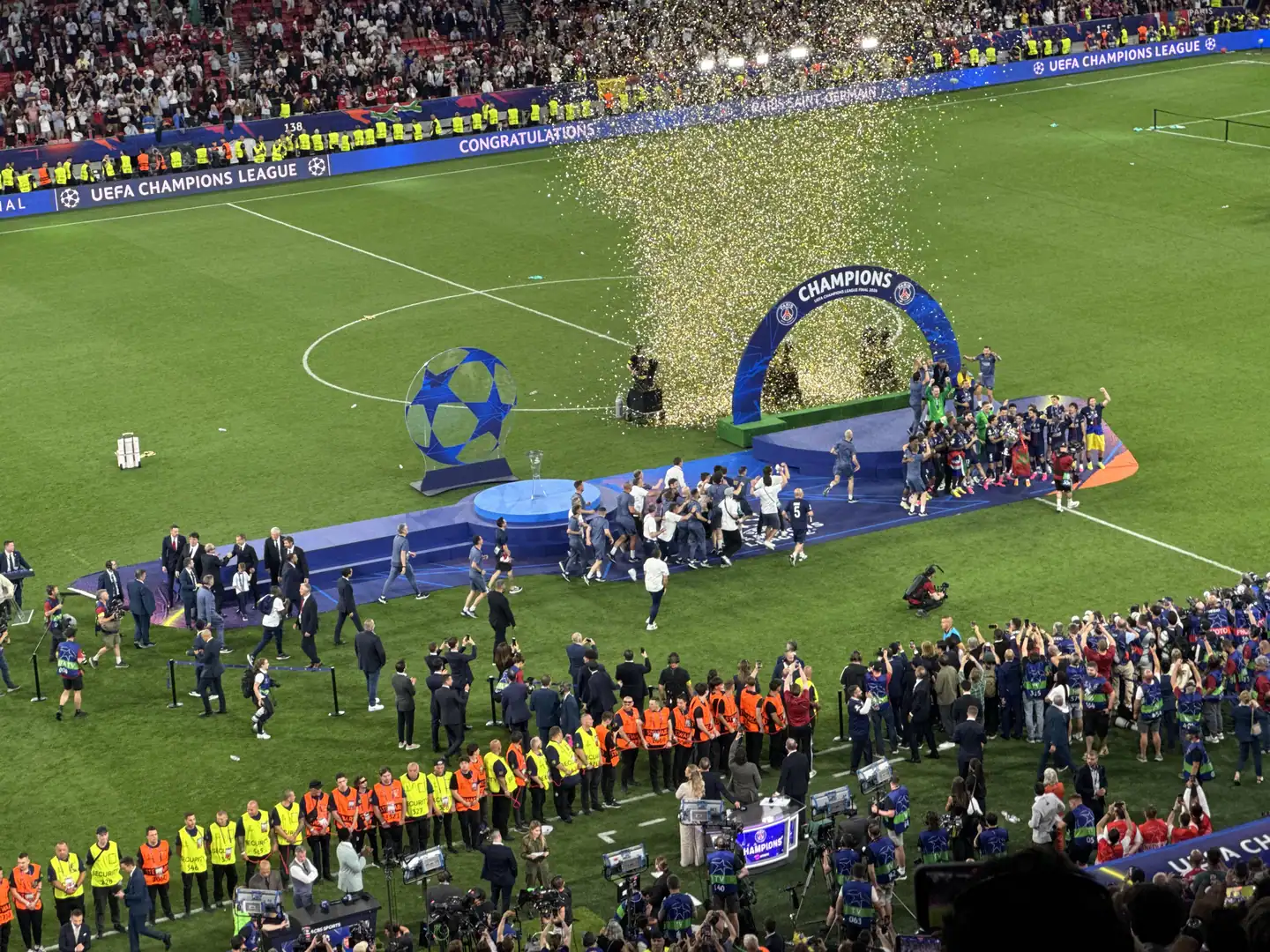
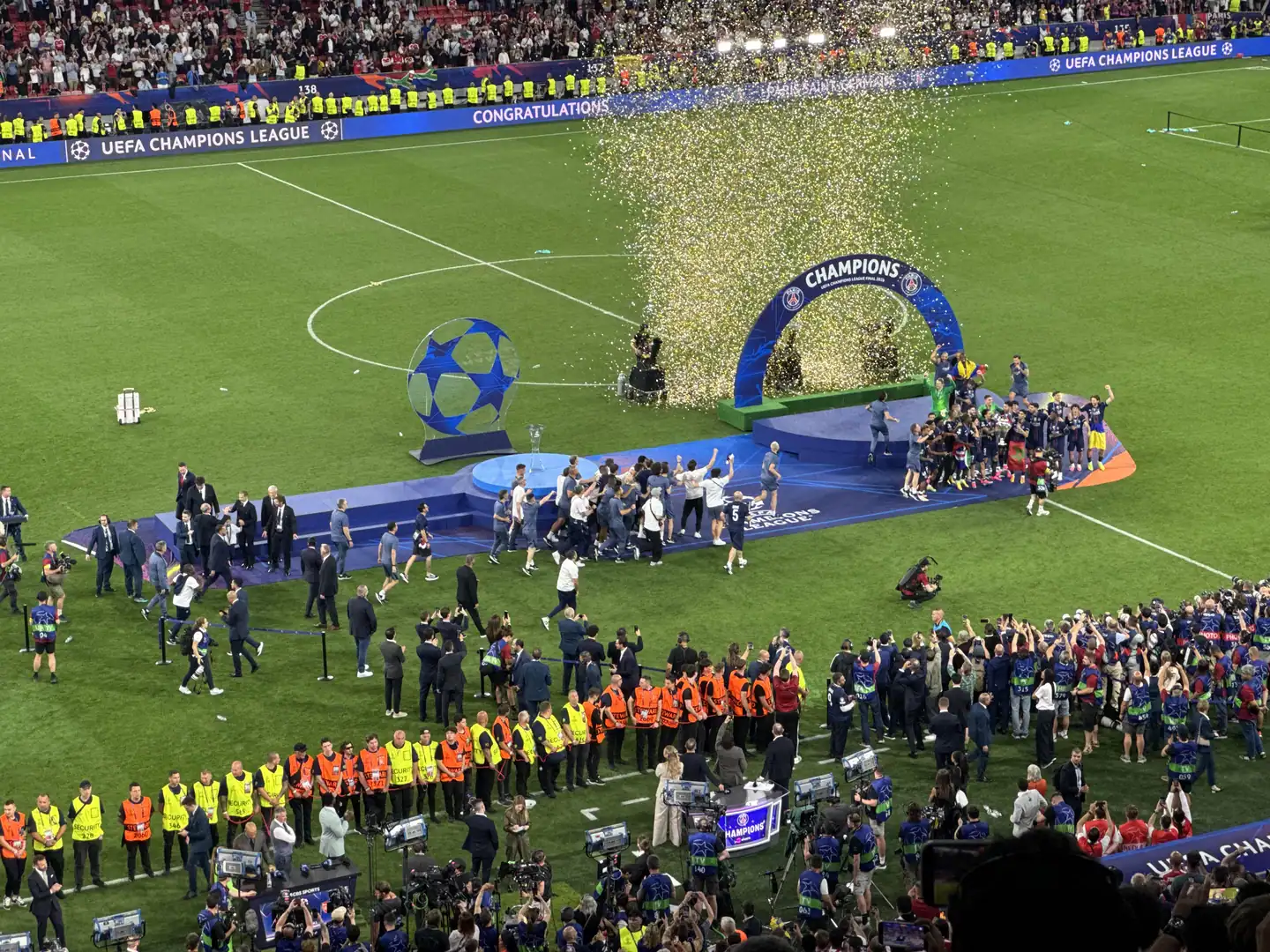
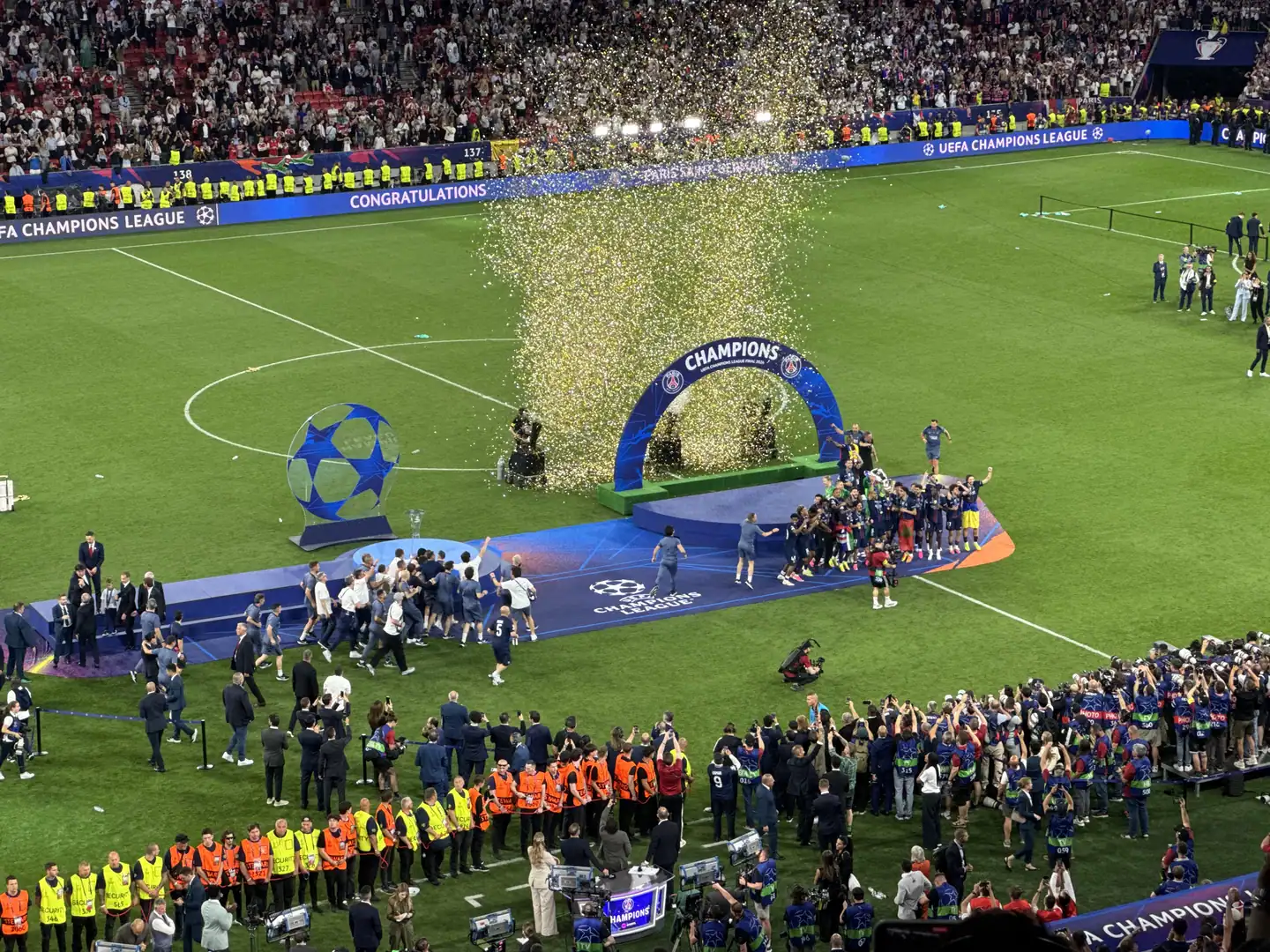
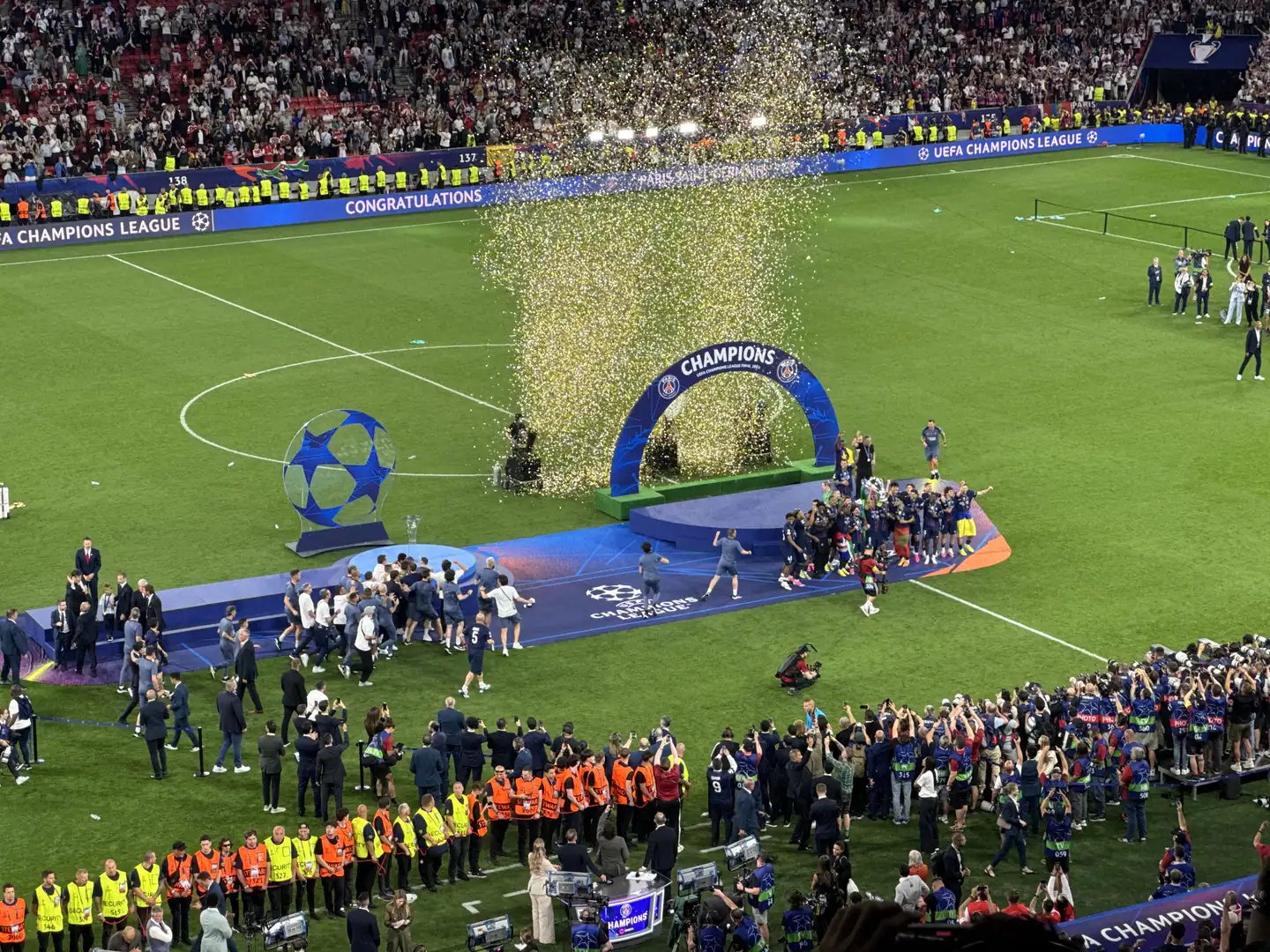
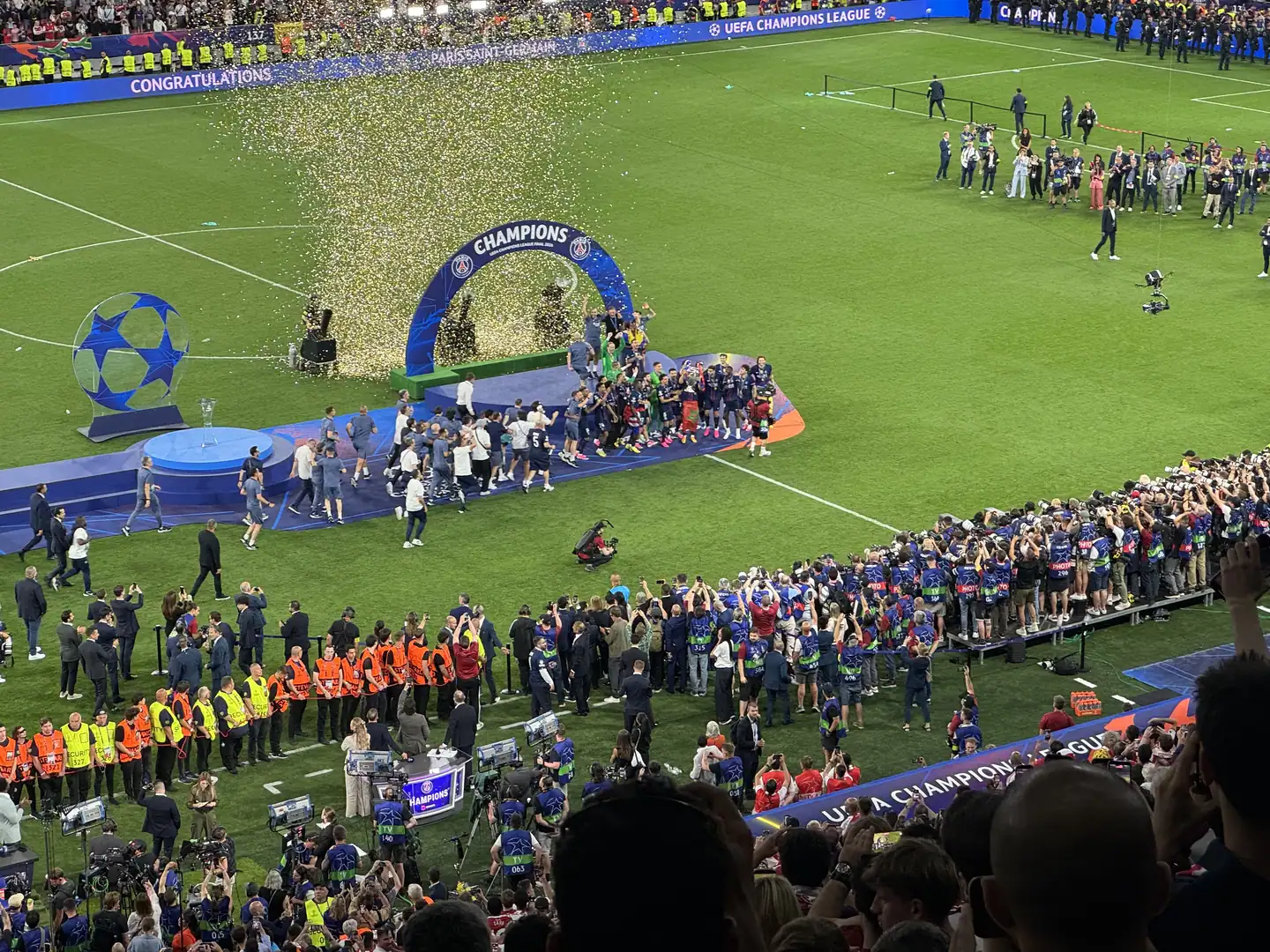
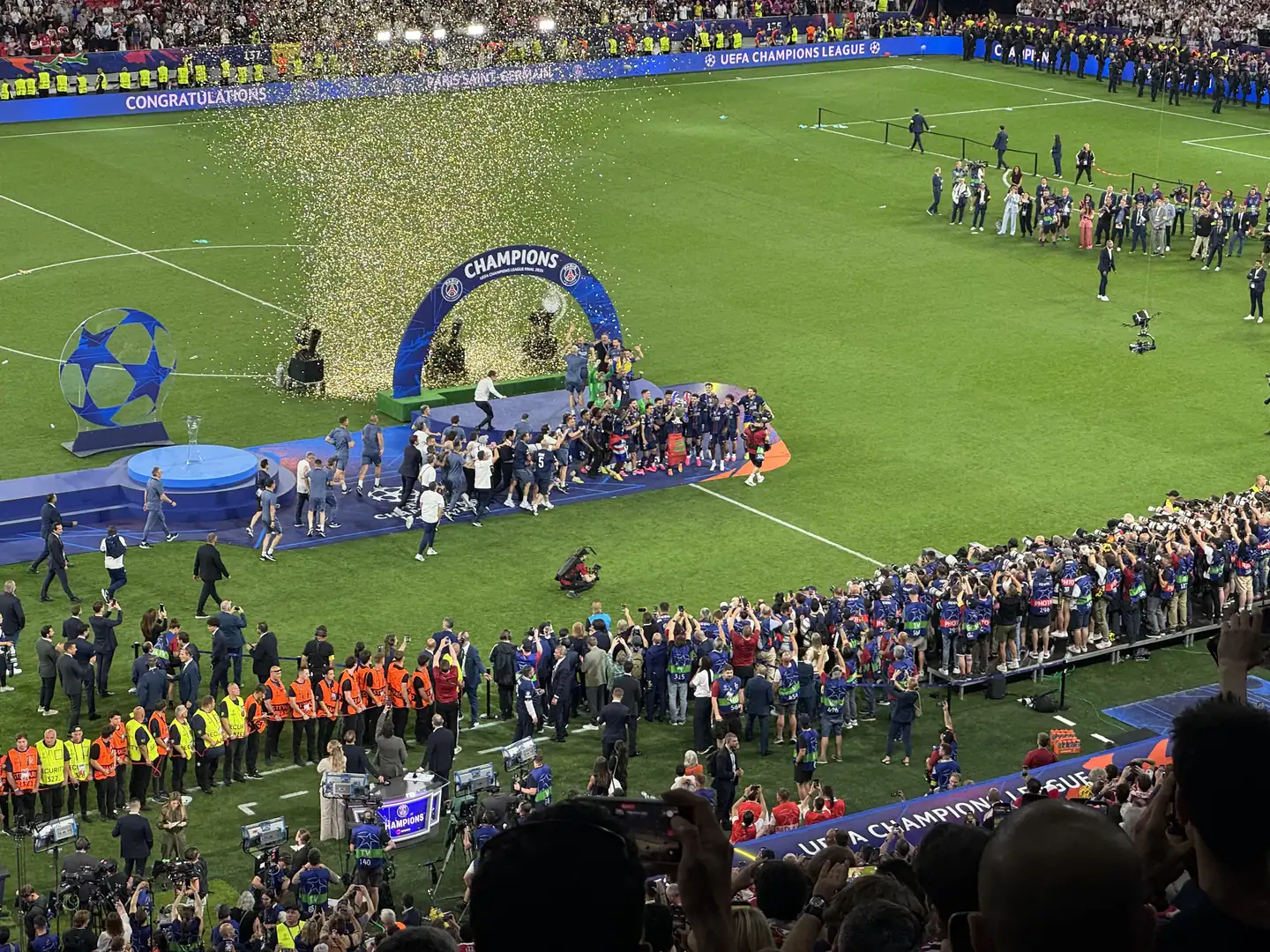
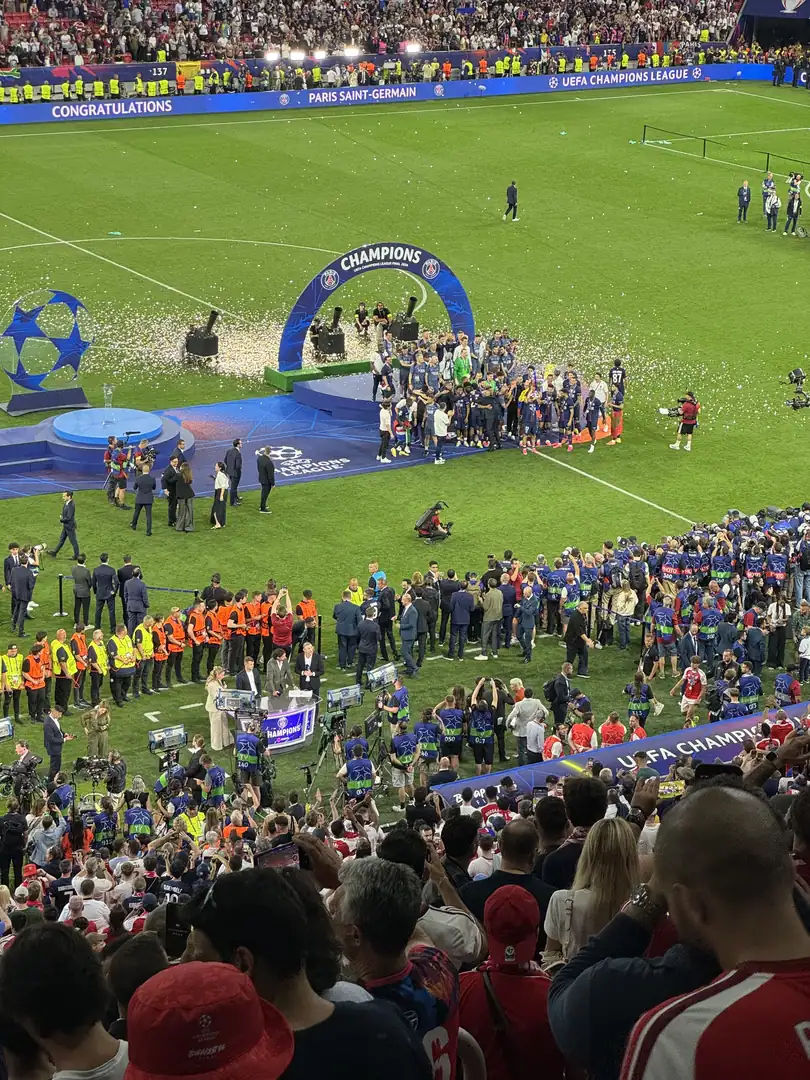
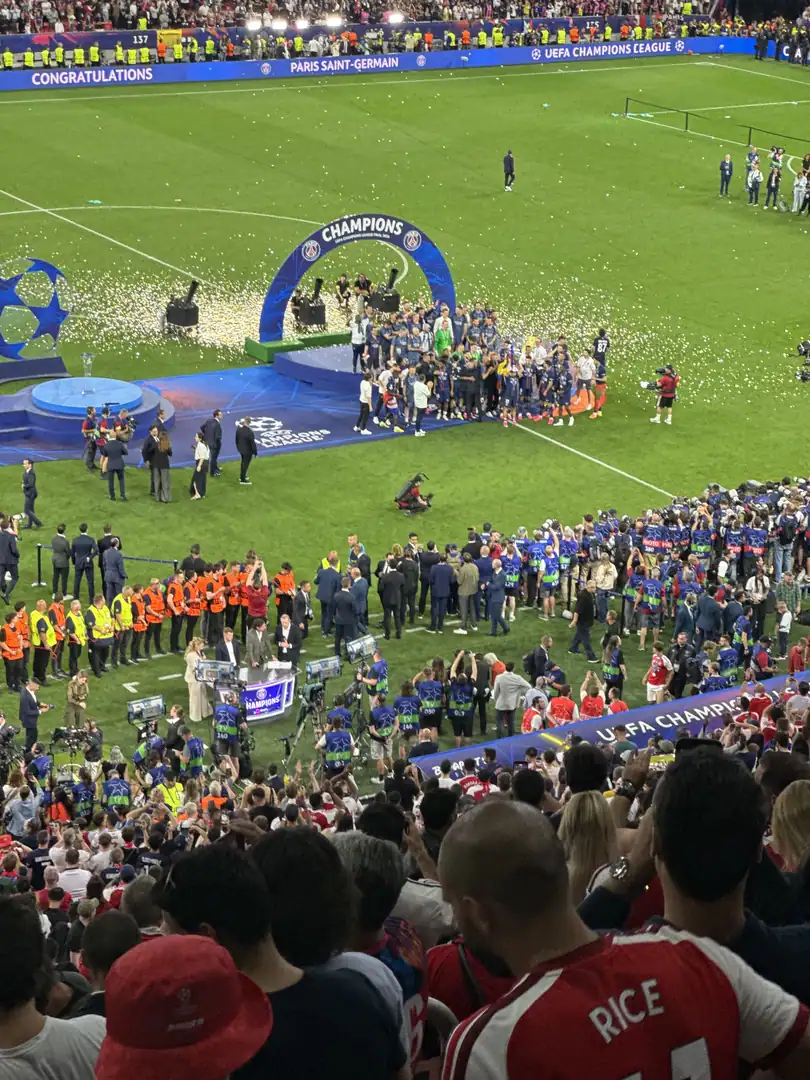
When PSG lifted the trophy, we stayed. We watched. We filmed a little. Not with the discipline of content creators, but with the messy tenderness of people trying to hold on to a moment that’s already leaving.

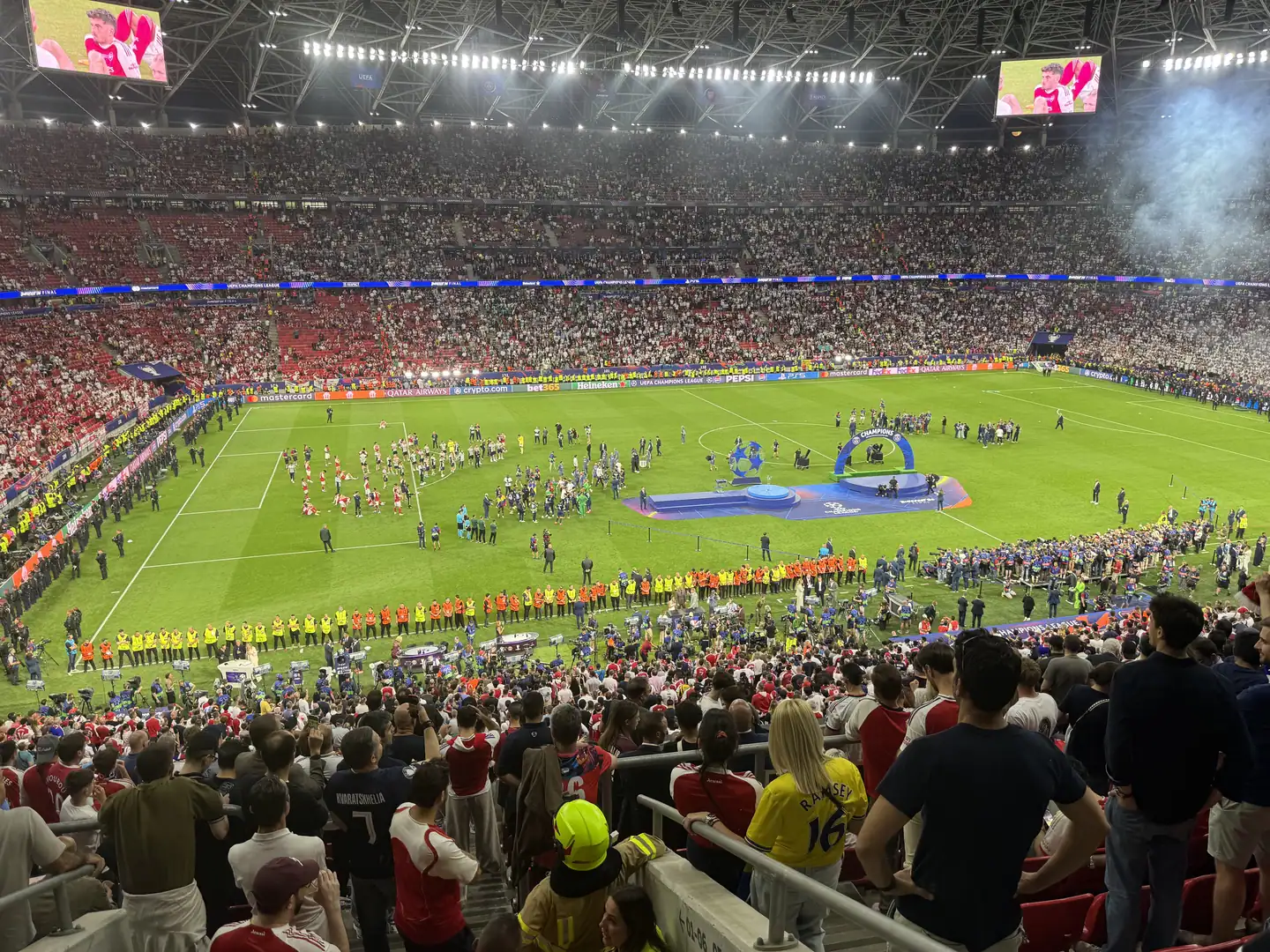
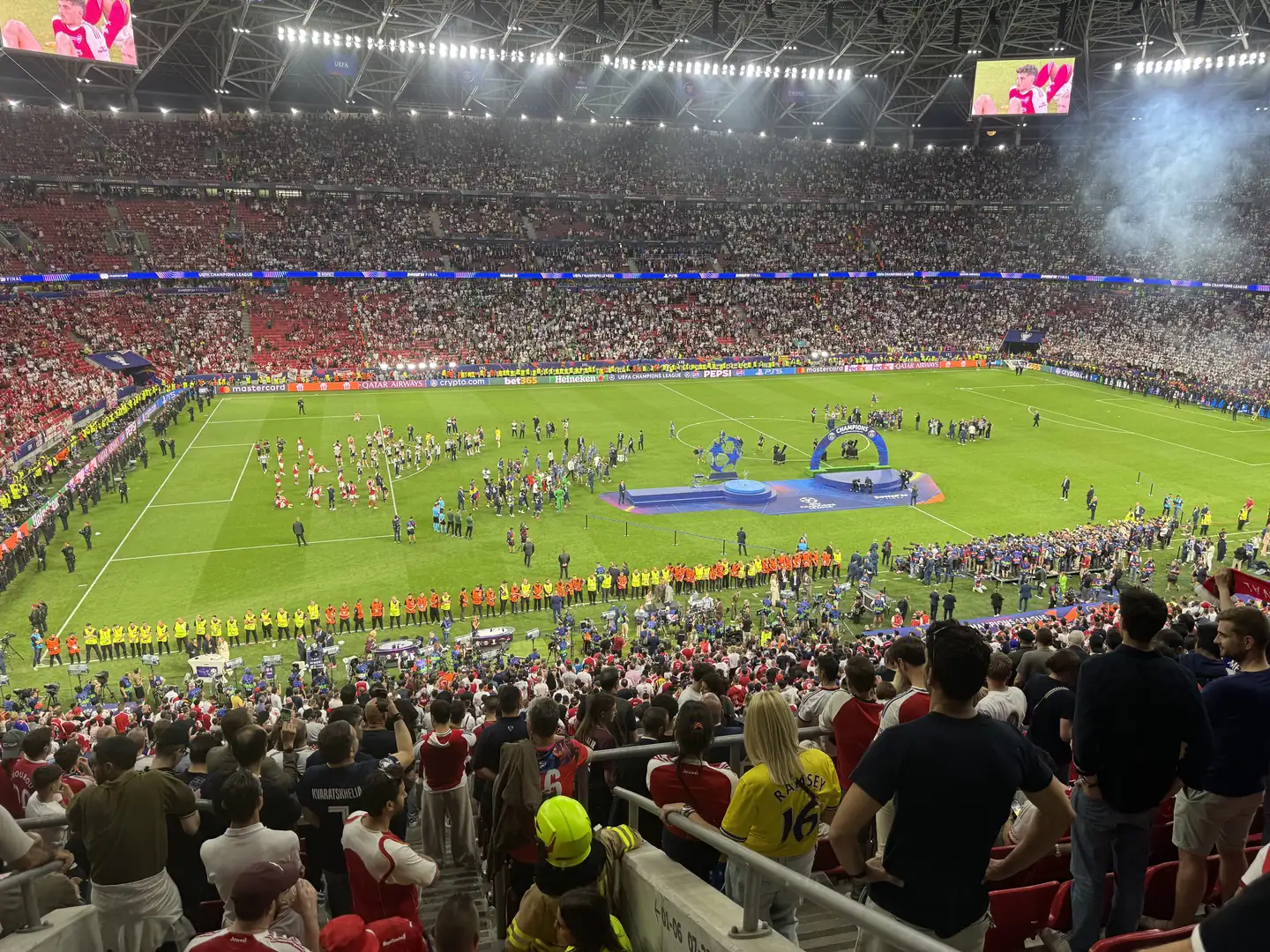
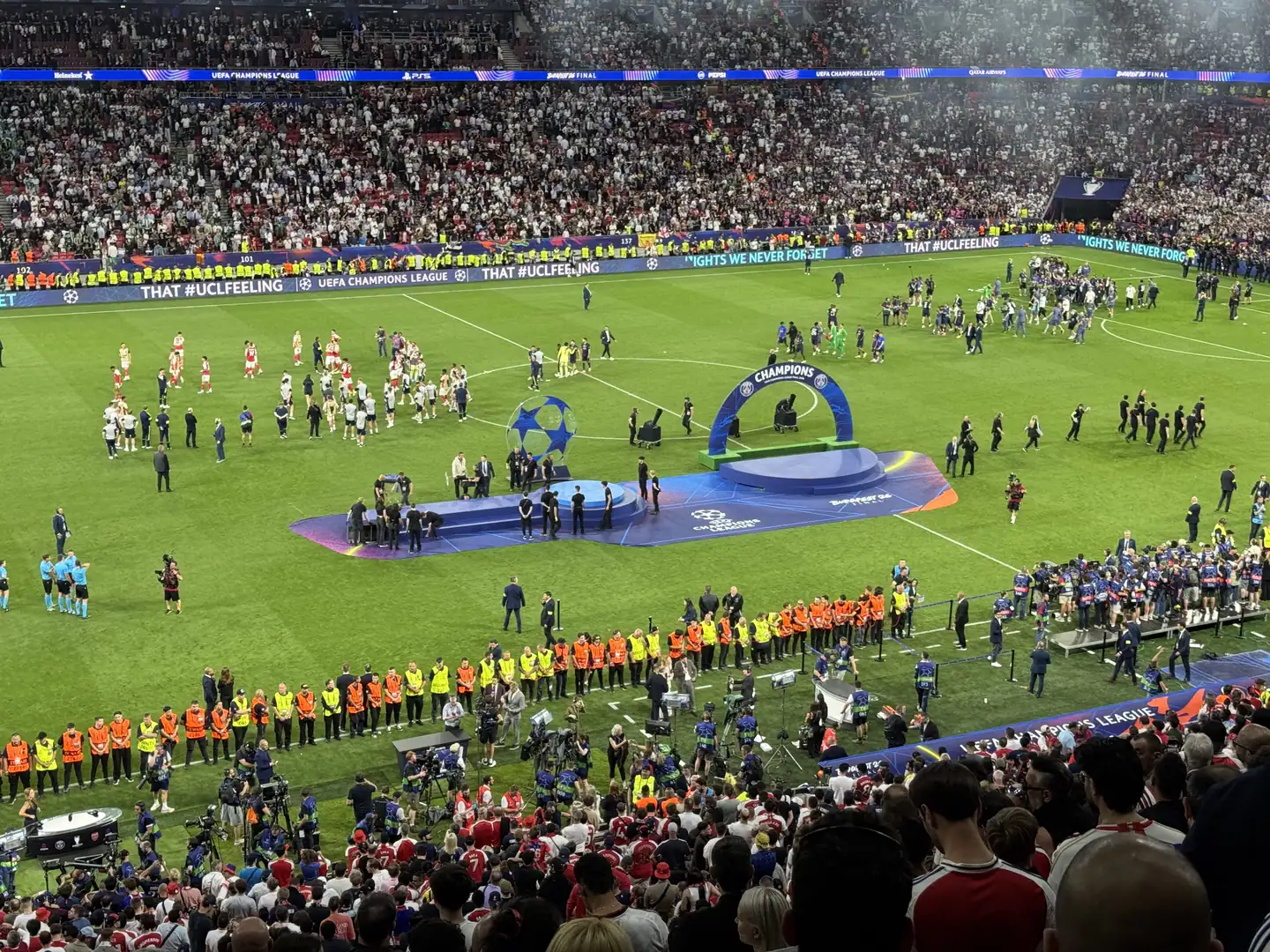

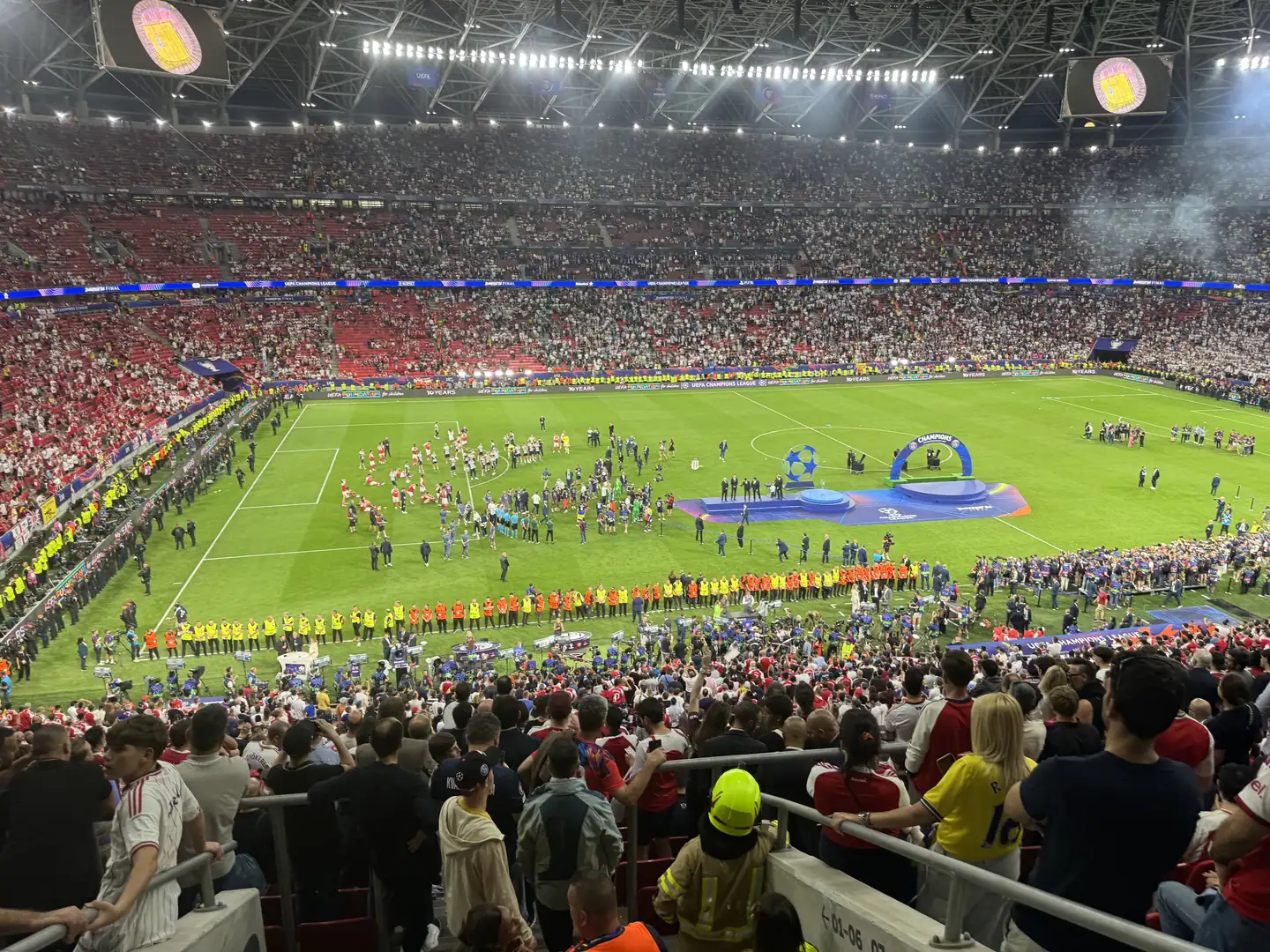
What Budapest Got Right—and What Visitors Should Learn From It
After the final whistle, we slid back into the city the way locals can: metro, the quieter direction, the relief of moving while others are still trapped in the gravitational pull of the main exits. It was one of those small gifts of urban knowledge.
From an operational perspective, Budapest’s matchday structure was built on three layers: the stadium itself, the festival and fan zones, and the transport-security ring that kept the whole thing from collapsing under its own popularity. The Champions Festival at Heroes’ Square and the public screening on Andrássy út mattered not just culturally but tactically: they dispersed crowds, created alternative “destinations,” and reduced pressure at any single choke point.
And yes, there were incidents, because big weekends always attract a few people determined to test the boundaries. But the official post-event framing emphasized that Budapest’s policing and security operation concluded without major disorder.
For anyone reading this as a travel recommendation, here is the lived takeaway: Budapest can host the biggest nights. Not only because it has a modern stadium, but because it can build a citywide experience around the match and still get people home.
That matters for tourism. It matters for confidence. And, for us, it mattered professionally: we saw how fast demand spikes, how quickly premium transport disappears, and how much value there is in planning early when the calendar turns red. The week before the final, every vehicle was spoken for. During the weekend, we moved supporters, guests, and serious stakeholders through a city that was essentially operating on an alternate set of rules.
If you ever come to Budapest for a major event—football, Formula 1, a festival weekend—treat the city like it’s in “event mode,” because it will be. Book early. Build buffers. Let the professionals handle the parts you don’t want to gamble on.
VanBudapest.com has been doing exactly that—quietly, professionally, and relentlessly—since 1988, across 1–49 passengers, Mercedes-Benz fleet options, private service only. When the city becomes a stadium, you want your ride to feel like the one calm place left.


The Feeling That Stayed: Pride, Exhaustion, and the Summer That Starts Here
Now it’s June 1—the first day of summer—and I can feel the season trying to change the subject. People want beaches, patios, late sunsets, and lighter conversations. But I know what will keep replaying in my head: that first drumbeat outside the metro, the look on my colleague’s face when we realized we were early and it was the right choice, the strange intimacy of waving at power from a football seat, and the moment the shootout ended and the stadium exhaled all at once.
You can spend a lifetime watching finals on screens, learning the language of football through commentary and replay. But seeing it live does something different. It bypasses analysis and goes straight to the part of you that remembers where you were when you felt something huge.
Budapest gave us that. UEFA gave us the ticket. Our team gave us the chance to step away for one night. And PSG—whether you love them, resent them, or simply respect what they’ve built—gave us a final that felt like a test of nerve, patience, and belief.
This summer will have other events. But it will be hard to top the night we worked the city, then sat down inside it, and watched Europe’s biggest club match arrive like a storm and leave like a memory.









FAQ
What time did the 2026 Champions League final in Budapest kick off?
Kickoff was scheduled for 18:00 CEST at Puskás Aréna on May 30, 2026.
How many fans attended the final at Puskás Aréna?
The published attendance figure was 61,035 in the stadium.
What should visitors know about getting to Puskás Aréna on major matchdays?
Major matchdays are designed around public transport, with layered security cordons, strong crowd guidance, and limited driving options near the stadium; official communications around the final emphasized public transport and noted there was no public parking at the venue.