
Hungary Election April 12, 2026: A Complete Guide for International Media in Budapest
Vice President JD Vance arrives April 7–8. Over 350 OSCE observers deployed. Orbán faces his toughest challenge in 16 years. Everything foreign journalists, diplomats, and delegations need to know — from the political landscape to on-the-ground logistics.
Date: April 12, 2026 (Sunday) · Polls open: 6:00 AM – 7:00 PM CEST · Seats: 199 (106 constituency + 93 list) · Threshold: 5% national minimum · Leading: Tisza ~47.5% / Fidesz ~40.6% · OSCE observers: 350+ · Vance visit: April 7–8
Key Players: Viktor Orbán — PM since 2010, Fidesz leader · Péter Magyar — Tisza Party leader, opposition front-runner · JD Vance — US Vice President, visiting April 7–8 · Eoghan Murphy — OSCE/ODIHR mission head · Marine Le Pen — Spoke at Patriots’ Assembly March 23
Why Hungary’s 2026 Election Matters Globally
On April 12, 2026, Hungary holds what Politico Europe has described as the European Union’s most consequential elections of the year. After 16 consecutive years in power, Prime Minister Viktor Orbán faces a genuine threat to his political dominance — not from a fragmented opposition, but from a single, surging challenger: Péter Magyar and his Tisza Party.
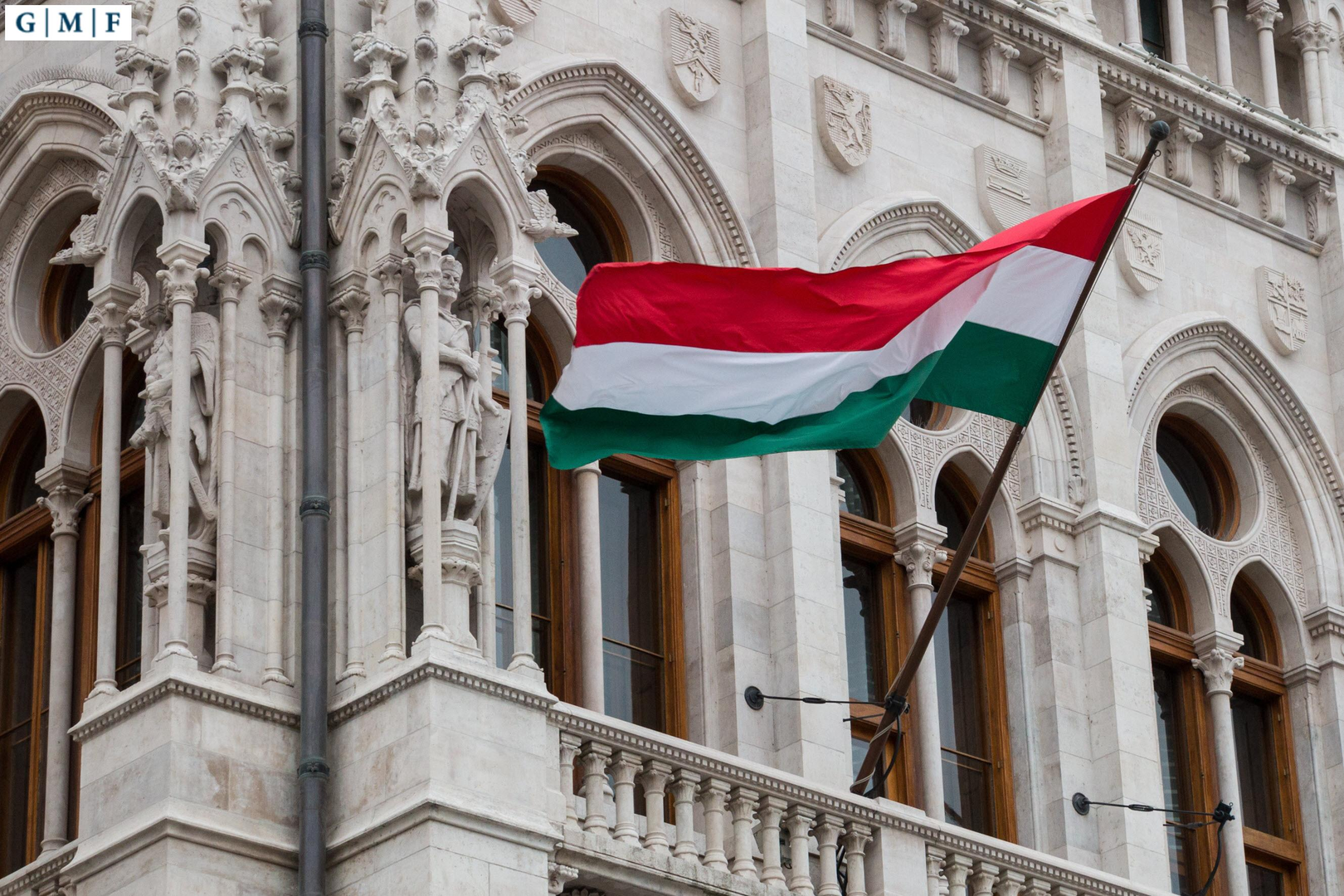
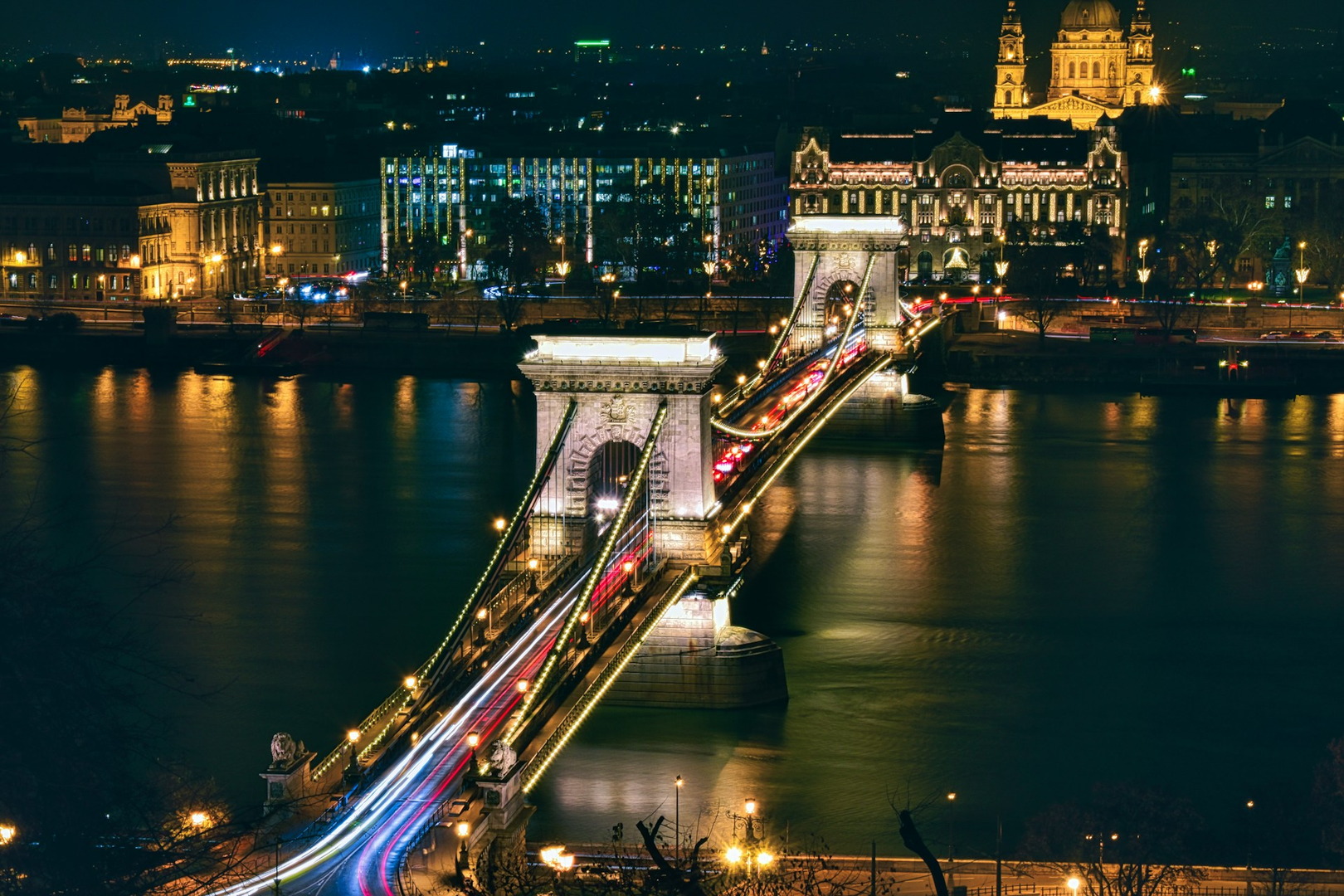
The outcome carries implications that extend well beyond Hungary’s borders. Orbán has positioned himself as the EU’s most prominent Eurosceptic voice, the architect of what he calls “illiberal democracy,” and a key interlocutor between the West and both Moscow and Beijing. Whether he retains power or a new government pivots Hungary back toward mainstream European politics will shape the EU’s ability to respond to overlapping crises — from the war in Ukraine and transatlantic defence cooperation to economic competitiveness and rule-of-law standards across the bloc.
“These elections will have a real impact on the European Union’s ability to face overlapping challenges in coming years, including economic competitiveness, support for Ukraine, and recalibrating the bloc’s relationship with the United States.”
— Center for Strategic and International Studies (CSIS), March 2026For the international press corps, diplomatic delegations, and political observers descending on Budapest, this is a story of continental significance — one that requires reliable logistics, local knowledge, and on-the-ground mobility.
Viktor Orbán vs. Péter Magyar — The Main Contenders
In power since 2010. Architect of “illiberal democracy.” Seeks a fifth consecutive term. Polling at approx. 40.6% among decided voters.

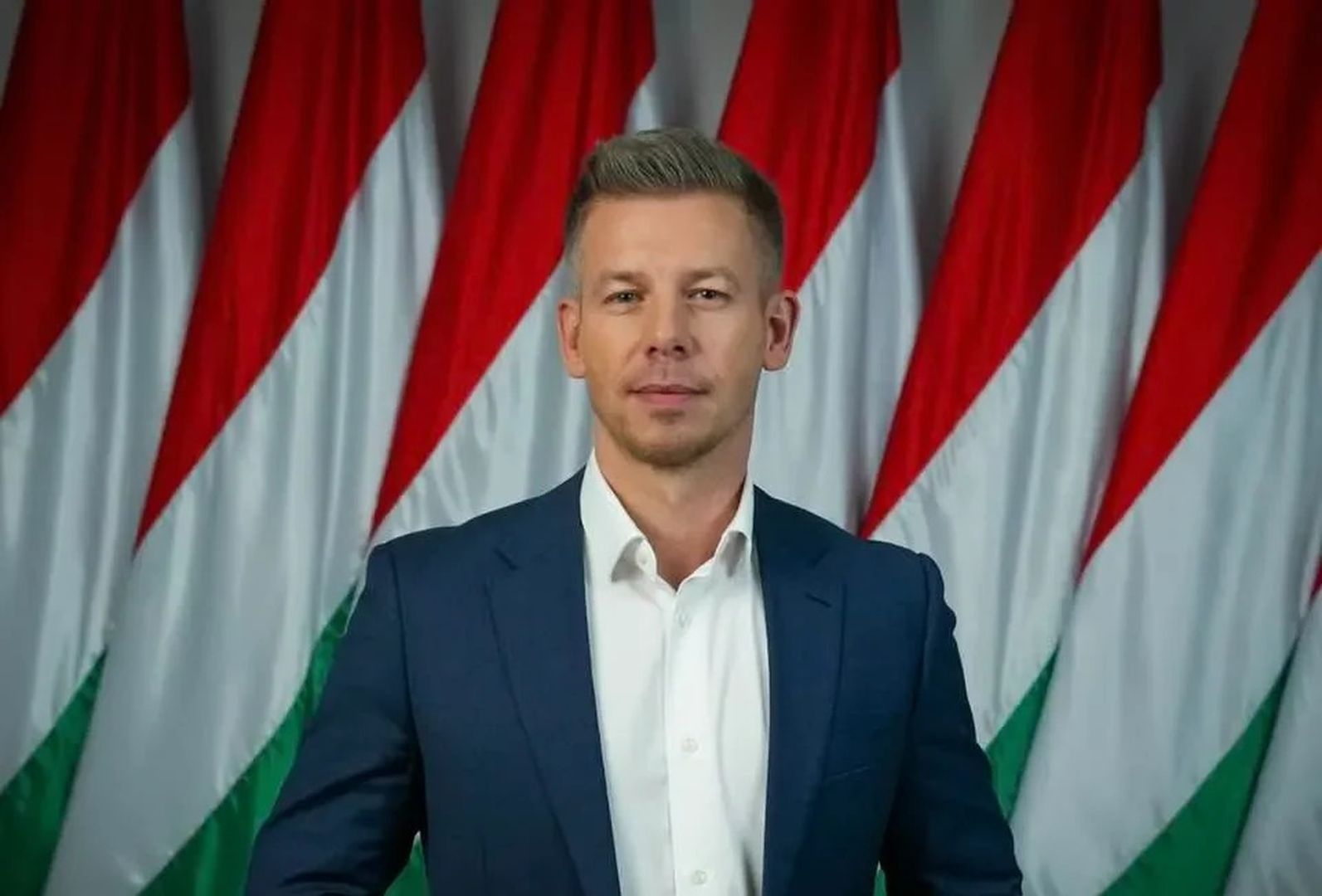
Former Fidesz insider turned reformist. Surged from obscurity to front-runner in under 18 months. Polling at approx. 47.5% among decided voters.
The political contest between Orbán and Magyar is both deeply personal and ideologically significant. Magyar, once embedded within the Fidesz ecosystem through his former marriage to ex-Justice Minister Judit Varga, broke publicly with the ruling party in early 2024 — alleging systemic corruption and a crisis of governance. Within months, he had assembled the Tisza Party into a political force that no Hungarian opposition movement has matched in a generation.
As of March 24, 2026, aggregated polling data from PolitPro — which synthesises surveys from Median, Publicus, IDEA, and other Hungarian polling institutes — shows the Tisza Party leading among decided voters. An estimated 15–20% of eligible voters remain undecided, and Hungarian polls have historically carried a margin of error of ±3 percentage points. Nevertheless, the trend represents a remarkable reversal for a party that did not exist two years ago.
| Party | Polling (March 2026) | Trend |
|---|---|---|
| Tisza (Péter Magyar) | ▲ Rising | |
| Fidesz–KDNP (Orbán) | ▼ Declining | |
| Mi Hazánk (Our Homeland) | ↔ Stable | |
| Demokratikus Koalíció (DK) | ↔ Stable |
Source: PolitPro Poll Aggregator (aggregating Median, Publicus, IDEA, Századvég), as of March 24, 2026. Figures represent share among decided voters only; 15–20% of electorate remains undecided. Margin of error: ±3 pp.
The Electoral System Explained
Hungary’s 199-seat National Assembly (Országgyűlés) is elected through a mixed system that combines single-member constituencies with proportional representation. Voters cast two ballots on election day: one for a local candidate in their constituency (106 seats, first-past-the-post), and one for a national party list (93 seats, proportional allocation with a 5% threshold). This dual structure means that raw polling percentages do not translate directly into seats — the geographical distribution of support across Hungary’s 106 constituencies is decisive.
While Tisza leads nationally among decided voters, Fidesz retains structural advantages: gerrymandered constituency boundaries redrawn in 2014, dominant rural media penetration, and significantly higher base turnout among older, conservative voters. A Tisza victory would require not just a popular vote lead, but winning a substantial number of individual constituencies — many of which Fidesz has held comfortably for over a decade.
JD Vance’s Budapest Visit — April 7–8, 2026
In a development that has electrified both Hungarian domestic politics and the international diplomatic community, US Vice President JD Vance is scheduled to visit Budapest on April 7–8, 2026 — just four days before Hungarians go to the polls.

The visit was first reported by Bloomberg on March 20, citing Hungarian Foreign Minister Péter Szijjártó, and subsequently confirmed through a State Department cable obtained and published by Politico with the subject line: “Hungary: Scenesetter for Vice President Vance’s April 7–8 Visit to Budapest.” Hungary Today independently confirmed the April timing.
The cable describes the current US-Hungary relationship as a “new golden era — a respectful, results-driven partnership focused on deepening defence, commercial, and energy ties.” Vance would become the highest-ranking US official to visit Hungary since President George W. Bush’s trip in June 2006 — a symbolic escalation that underscores the Trump administration’s close alignment with Orbán’s government.
Highest-level US visitor to Hungary in 20 years. Visit widely interpreted as an endorsement of Orbán ahead of April 12 vote.
Rubio’s earlier meeting with Orbán signalled a warming bilateral relationship and deepening defence ties under the Trump administration.
The timing of the visit — falling squarely within the final week of campaigning — has drawn scrutiny from the Hungarian opposition and European analysts alike. Critics argue it represents foreign interference in a democratic election; supporters frame it as routine diplomatic engagement between allied nations. Regardless of interpretation, the visit will generate an enormous media footprint in Budapest, with international press, security details, and logistics teams all converging on the city simultaneously.
“Vance would be the highest-level US visitor to Hungary since then-President George W. Bush’s trip in June 2006.”
— Hungary Today, March 2026OSCE International Election Observers — 350+ Deployed in Hungary
The OSCE Office for Democratic Institutions and Human Rights (ODIHR) has opened a comprehensive election observation mission for Hungary’s April 12 vote — the most extensive OSCE monitoring effort in the country in recent memory.
The mission, headed by Eoghan Murphy, is structured in three tiers: a 15-member core team of international experts based in Budapest, 18 long-term observers deployed across the country since March 7, and a planned deployment of 200 short-term observers arriving days before election day. The observers are drawn from 26 OSCE participating states.

The mission’s mandate encompasses all key dimensions of the electoral process: the campaign environment (including social media monitoring), campaign finance transparency, the work of the election administration at national, regional, and local levels, the legal framework governing the vote, institutional arrangements to detect disinformation, media coverage balance, and the election dispute resolution process.
Campaign conduct and spending, social media manipulation, election administration operations, legal framework compliance, disinformation countermeasures, media balance in coverage, and the election day voting and counting process. OSCE/ODIHR will publish a preliminary findings statement within 48 hours of election day.
International delegations requiring ground transportation during the observation period (April 9–14) will find practical logistics information in the Practical Guide section below.
The Budapest Political Calendar: Key Dates
For international journalists and delegations planning their coverage around election week, here is the complete timeline of significant political events in Budapest:


Campaign posters may be displayed; collection of candidate nomination signatures commences (500 per constituency required).
18 OSCE/ODIHR long-term observers begin monitoring across Hungary’s regions.
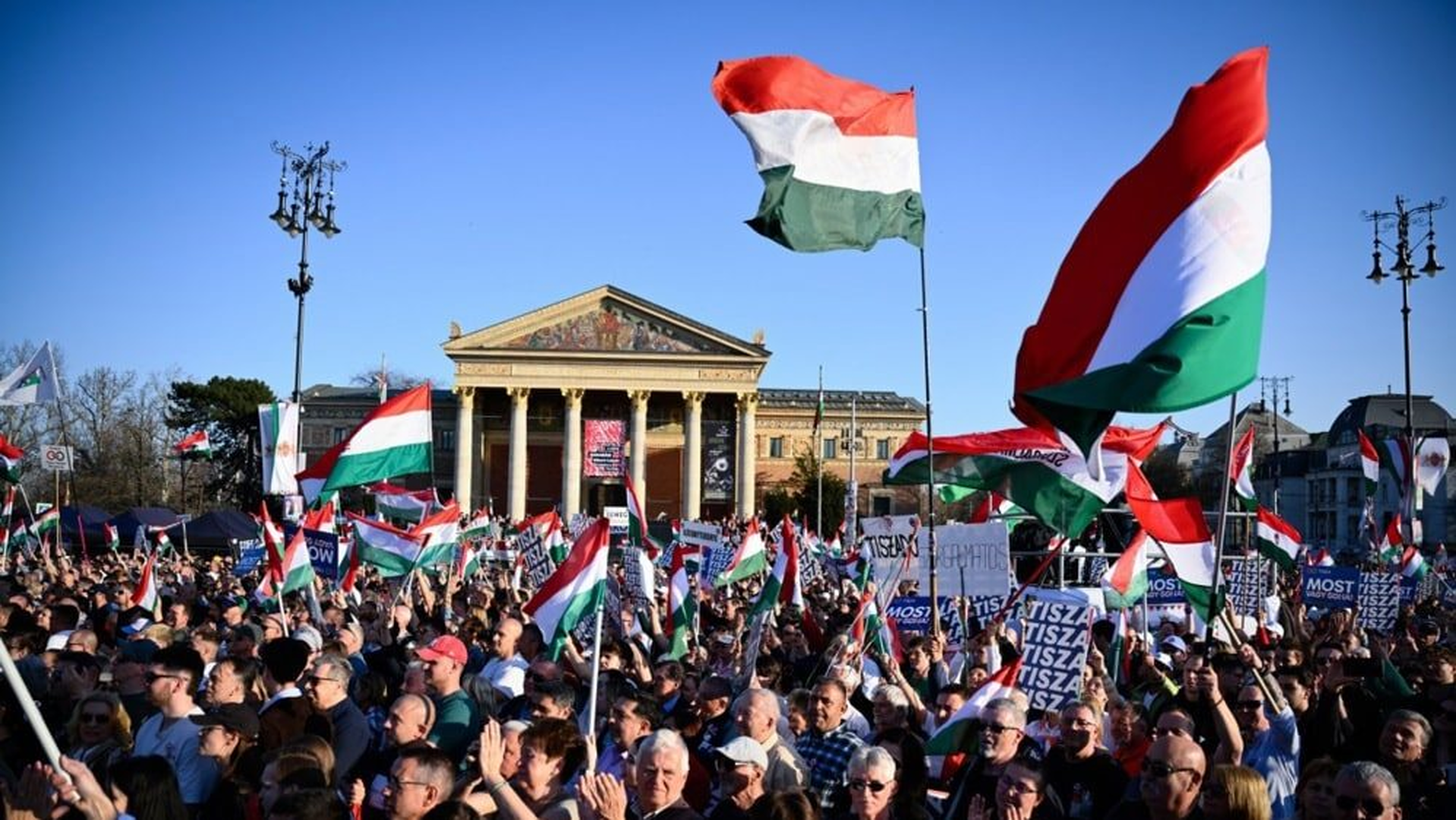
Orbán addresses Peace March at Kossuth Square; Magyar leads National March from Deák Square to Heroes’ Square. Both claim 100,000+ attendees.
667 international guests from 51 countries. Marine Le Pen, Salvini, Wilders, Abascal rally behind Orbán at Millenáris Park. 182 international journalists accredited.
US Vice President’s scheduled visit. Highest-level US official in Hungary since 2006. Massive security and media presence expected.
200 short-term election observers deploy to polling stations across the country.
By law, active campaigning must cease. Final media appearances and press briefings.
Polls open 6:00 AM – 7:00 PM (CEST). First exit polls expected by 7:30 PM. Preliminary results through the night.
National Election Office publishes preliminary official results. OSCE/ODIHR releases preliminary findings. International press conferences.
The March 15 Rallies: A Nation at a Crossroads
March 15 — Hungary’s national holiday commemorating the 1848 revolution against Habsburg rule — has become the defining barometer of political strength ahead of every election. In 2026, both camps mobilised on an extraordinary scale.




Prime Minister Orbán addressed a Peace March culminating at Kossuth Square, directly in front of the Parliament building. Under the slogan “Our sons will not die for Ukraine,” Orbán framed the election as a choice between peace and war — positioning Hungary as an “island of security and calm” in a turbulent Europe. Euronews reported the rally drew hundreds of thousands, making it one of the largest pro-government demonstrations in Hungarian history.
Simultaneously, Péter Magyar led his National March from Deák Ferenc Square along Andrássy Avenue to Heroes’ Square — retracing the path of the 1848 revolutionaries. Magyar’s estimate placed attendance at 500,000 — a figure difficult to independently verify but consistent with the Balkan Insight assessment that both rallies demonstrated formidable mobilisation capacity.
“We don’t want a hate campaign, but real conversations with people.”
— Péter Magyar, Tisza Party leaderCPAC Hungary 2026 & the Patriots’ Grand Assembly
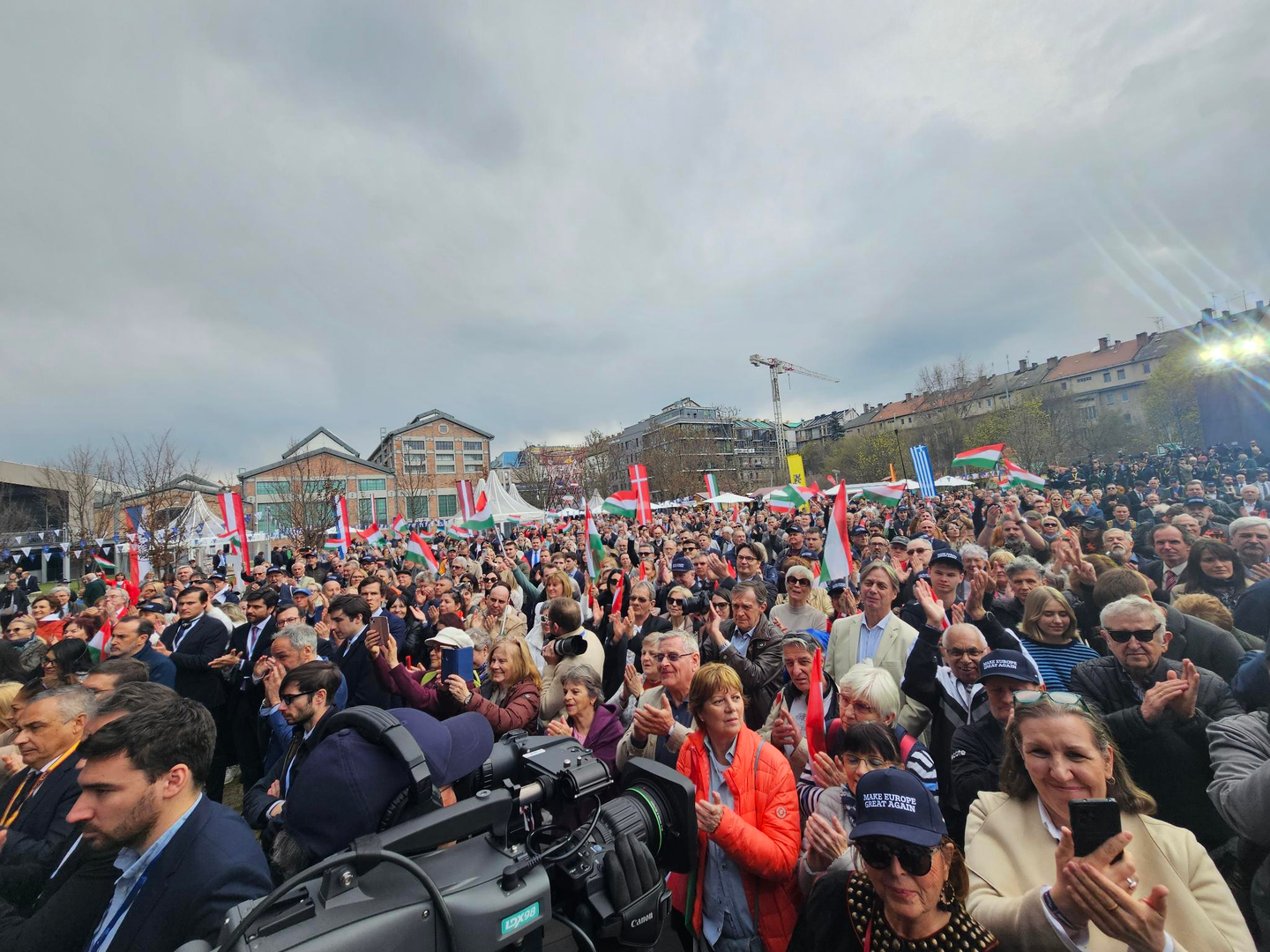
One week after the rival rallies, Budapest became the epicentre of global conservative politics. CPAC Hungary 2026 and the first Patriots’ Grand Assembly brought 667 international guests from 51 countries to the Hungarian capital on March 21–23, with 45 keynote speakers and 182 accredited international journalists.


The Patriots’ Grand Assembly on March 23 at Millenáris Park featured leaders of the Patriots for Europe (PfE) parliamentary group — including Marine Le Pen (France), Geert Wilders (Netherlands), Matteo Salvini (Italy), and Santiago Abascal (Spain) — in a unified show of support for Orbán’s re-election. The event was widely reported as a strategic campaign rally disguised as an international conference, with Orbán declaring his ambition to “turn the EU fully conservative by 2030.”

Former US President Donald Trump contributed an exclusive video message, further reinforcing the transatlantic conservative alignment that Orbán has cultivated as a cornerstone of his political identity.
For comprehensive coverage of the CPAC events and their significance, see our detailed guide: CPAC Hungary 2026 full coverage.
Hungary’s Electoral System — How Votes Are Counted
Understanding Hungary’s electoral mechanics is essential for interpreting results on election night. The system combines elements of both majoritarian and proportional representation — but in a configuration that structural analysts argue systematically advantages the incumbent.
Two Ballots, Two Channels
Every eligible Hungarian voter receives two ballots:
Ballot 1 — Constituency Vote: A vote for an individual candidate in one of 106 single-member constituencies. The candidate with the most votes wins (simple plurality / first-past-the-post). No second round exists — victory requires only a relative, not absolute, majority.
Ballot 2 — National List Vote: A vote for a party. The remaining 93 seats are allocated proportionally among parties that clear the 5% national threshold. Crucially, unused “fragment votes” from constituency races (votes cast for losing candidates, plus surplus votes above the winning threshold) are also factored into the list seat allocation — a mechanism originally designed to enhance proportionality but which has been criticised as susceptible to strategic manipulation.
Why Seat Projections Differ from National Polls
National polling figures reflect aggregate party preference, but seats are won constituency by constituency. Fidesz’s support base is geographically distributed across rural and suburban Hungary — territories where it holds deep institutional advantages, including dominant local media and municipal patronage networks. Tisza’s support is heavily concentrated in Budapest and larger cities. This urban-rural divide means that Tisza could win the national popular vote while still falling short of a parliamentary majority.
Constituency boundaries were redrawn in 2014 under a Fidesz supermajority, and independent analyses — including from the Hungarian Helsinki Committee — have documented significant malapportionment favouring Fidesz strongholds.
Economic Context — Why Hungarians Are Dissatisfied
Beyond the personalities and political drama, Hungary’s 2026 election is fundamentally driven by economic discontent. After years of double-digit inflation that peaked in 2023 at the highest rate in the EU, Hungarian households have seen their purchasing power eroded significantly. Public services — particularly healthcare and education — face chronic underfunding that has fuelled widespread frustration even among traditionally loyal Fidesz voters.
European Commission economic forecasts project slow recovery for Hungary, with GDP growth lagging behind regional peers. The forint has remained under pressure, energy dependence on Russian gas continues to distort trade dynamics, and EU structural funds — worth billions of euros — remain partially frozen over rule-of-law disputes.
Péter Magyar has made economic reform the centrepiece of his campaign, pledging to restore Hungary’s full access to EU funding, reset relations with Brussels, and address the public service crisis. Orbán, by contrast, has framed the election primarily through a national security lens — positioning himself as the leader who kept Hungary out of the Ukraine conflict and maintained economic stability through sovereign policymaking.
Practical Guide for International Journalists in Budapest
Budapest during election week will be a city in motion — with multiple high-profile events, security cordons around government buildings and diplomatic venues, and a density of international media not seen since Hungary’s 2024 EU Council Presidency. Here is what visiting press teams, diplomatic delegations, and political observers need to know about navigating the city.


Budapest Airport (BUD) — Getting Into the City
Budapest Ferenc Liszt International Airport (BUD) is located approximately 25 kilometres southeast of the city centre. Travel time to downtown Budapest ranges from 30–50 minutes depending on traffic conditions and your destination. During election week, heightened security around government buildings and the Vance visit may create additional delays on key routes.
Getting from BUD to the city: Options include the 100E airport shuttle bus (direct to Deák Ferenc tér, ~35 min, HUF 2,200), ride-hailing apps (Bolt is the dominant platform in Budapest; Uber also operates), or a private transfer with professional driver. For media teams arriving with equipment, crew, and tight schedules, a pre-booked private transfer eliminates the uncertainty of public transport and ensures punctual arrivals at press centres, hotel briefings, and event venues.
Getting Around Budapest During Election Week
Budapest’s public transport (BKK) is extensive and reliable: the metro network (4 lines), tram system, and extensive bus routes cover most of the city. Single tickets and multi-day passes are available at stations and via the Budapest GO app. For routine point-to-point travel, this is an efficient and affordable option.
However, international media crews covering election week often need flexible, on-demand transportation between multiple locations — the Parliament district, party headquarters, OSCE briefing venues, press centres, polling stations across Budapest, and the airport — on tight and shifting schedules. An hourly van rental in Budapest with a dedicated English-speaking driver provides the operational flexibility that election-week coverage demands — with the driver navigating traffic, security zones, and parking logistics while the team focuses on reporting.
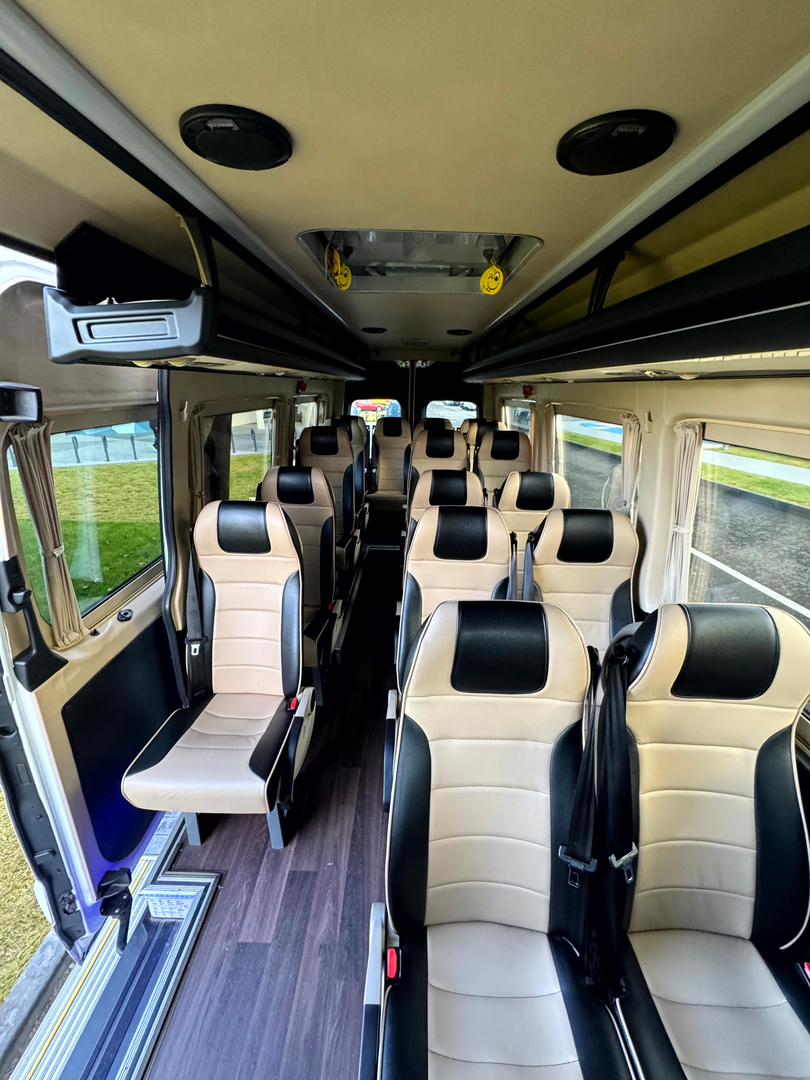
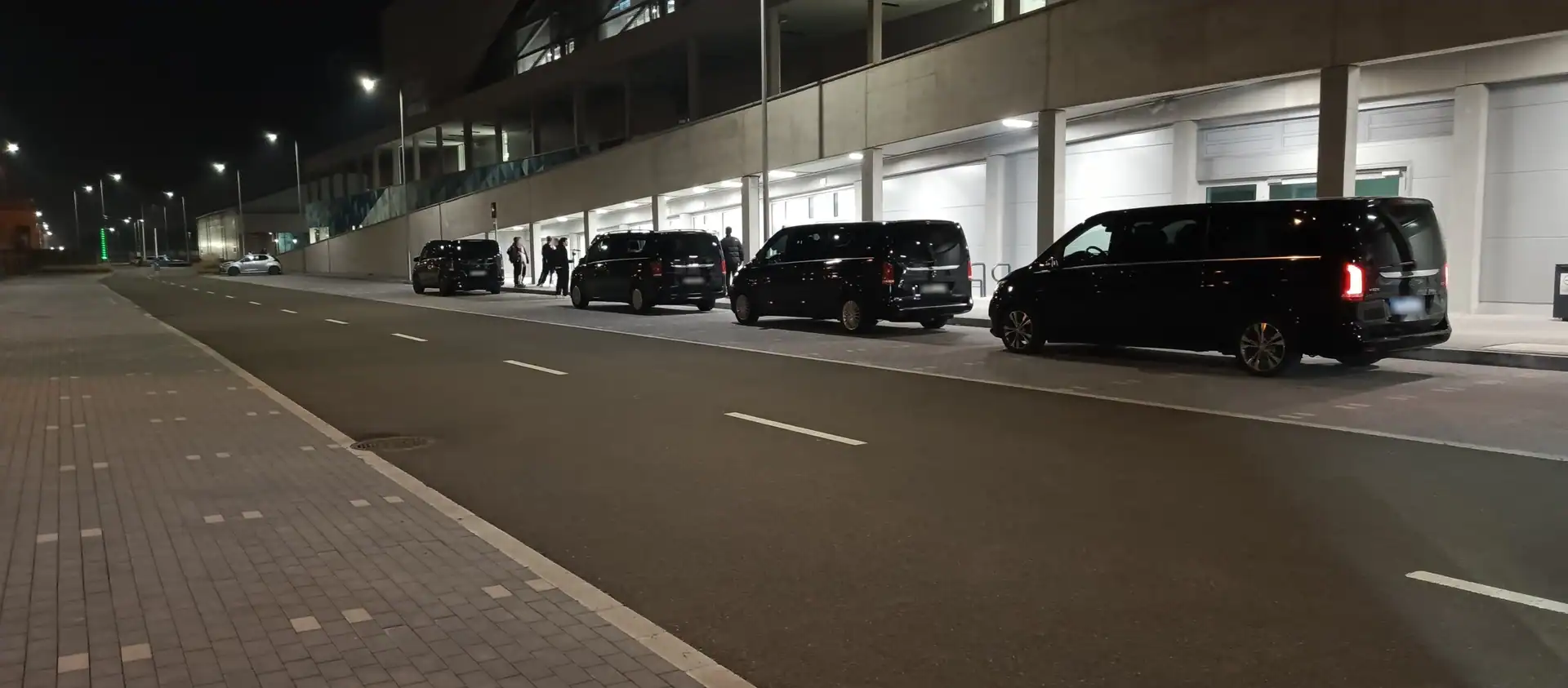
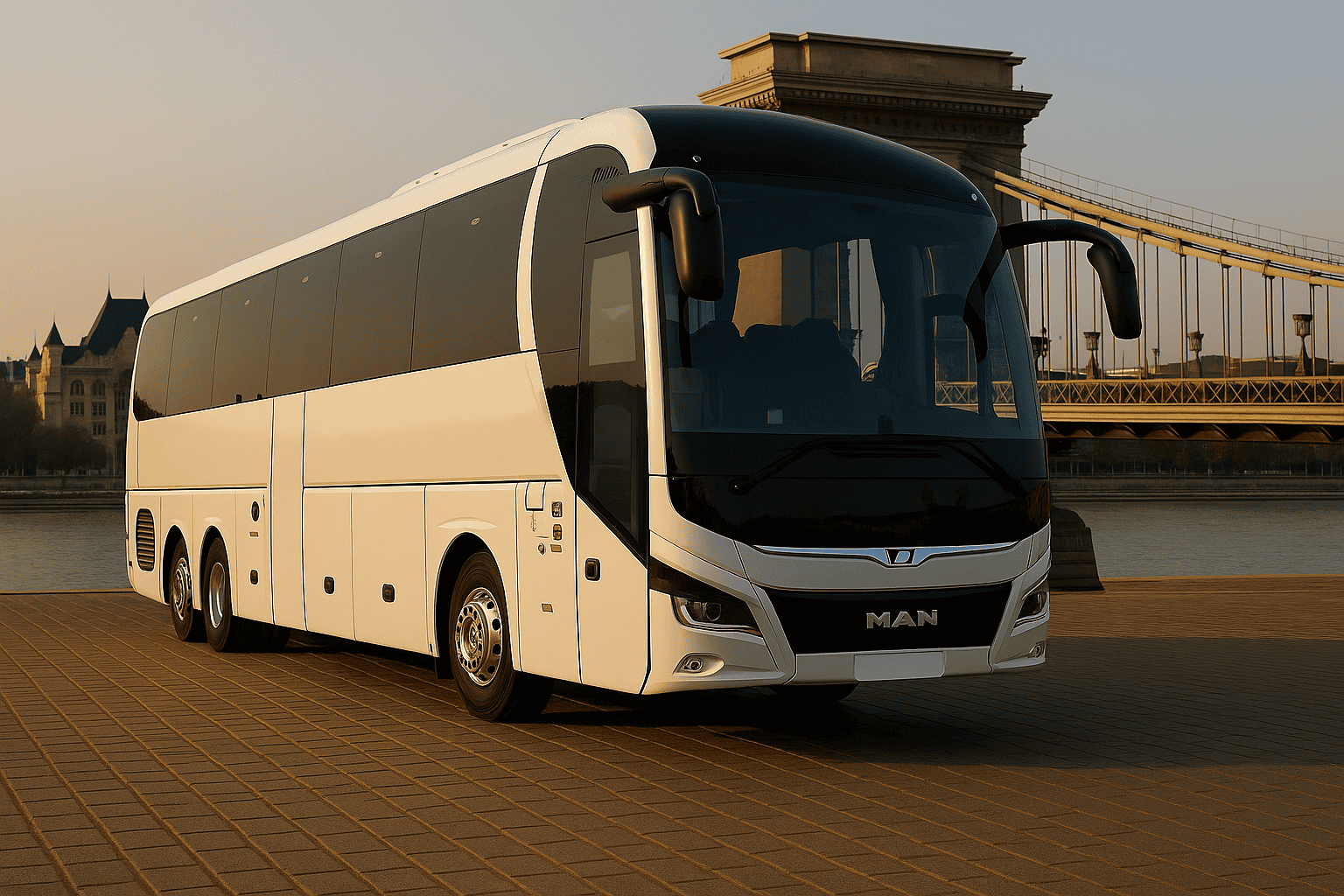
For larger delegations — OSCE observer teams, diplomatic groups, or broadcast crews with heavy equipment — VIP chauffeur service Budapest and group transfer options accommodate teams from 1 to 49 passengers in Mercedes-Benz vehicles.
VanBudapest.com has been providing premium transportation in Budapest since 1988 — including logistics support for political event transport in Budapest. For media teams, diplomatic delegations, and observer missions requiring dependable, professional ground transportation during the April 7–14 period, early booking is strongly recommended. Get Your Personalized Quote.
Your Premium Election Week Transport
All-Mercedes Fleet — Available 24/7 During Election Week











Frequently Asked Questions
The 2026 Hungarian parliamentary election is scheduled for Sunday, April 12, 2026. Polling stations will be open from 6:00 AM to 7:00 PM local time (Central European Summer Time). First exit polls are expected immediately after polls close, with preliminary results emerging through the night.
According to a State Department cable obtained by Politico, US Vice President JD Vance is scheduled to visit Budapest on April 7–8, 2026. Hungarian Foreign Minister Péter Szijjártó has confirmed the planned visit. This would make Vance the highest-ranking US official to visit Hungary since President George W. Bush in June 2006.
Hungary uses a mixed electoral system. The 199-seat National Assembly is elected through two channels: 106 members in single-member constituencies (first-past-the-post) and 93 members from national party lists (proportional representation with a 5% threshold). Each voter casts two ballots — one for a local candidate and one for a party list.
The two main contenders are Prime Minister Viktor Orbán (Fidesz-KDNP, polling at ~40.6%) and opposition leader Péter Magyar (Tisza Party, polling at ~47.5%). Other parties include Mi Hazánk (Our Homeland, ~5.8%) and Demokratikus Koalíció (~2.9%), though neither is expected to play a decisive role in government formation.
VanBudapest.com offers premium chauffeur and van rental services tailored for international media teams and diplomatic delegations. Services include hourly ride with driver, Budapest Airport transfers, and group transportation — available 24/7 during election week with English-speaking professional drivers and an all-Mercedes fleet. The company has been operating in Budapest since 1988.
The OSCE/ODIHR has deployed a full election observation mission: a 15-member core team in Budapest, 18 long-term observers across the country (since March 7), and 200 short-term observers arriving before April 12. Observers come from 26 OSCE participating states. The mission is headed by Eoghan Murphy.
- CSIS — What Is at Stake in Hungary’s Election? (2026)
- PolitPro — Hungary Election Polls & Voting Intentions 2026
- OSCE/ODIHR — Hungary Parliamentary Elections 2026
- Bloomberg — Vance Plans Hungary Trip Ahead of Key Vote (2026)
- Hungary Today — JD Vance’s Budapest Trip (2026)
- Balkan Insight — A Tale of Two Rallies (2026)
- Euronews — Orbán’s March 15 Rally (2026)
- Hungarian Conservative — Patriots’ Grand Assembly (2026)
- Hungarian Helsinki Committee — Selected Reading on 2026 Elections
- Wikipedia — 2026 Hungarian Parliamentary Election
Planning Your Budapest Visit During Election Week?
From airport transfers to hourly van rental with a dedicated English-speaking driver — VanBudapest.com has been the trusted transportation partner for international clients in Budapest since 1988. Whether you’re a journalist covering the election, a diplomatic delegation, or an OSCE observer team, we ensure your ground logistics run flawlessly.
Or call us directly: +36 70 753 6333