Sporting Clube de Portugal:
The Lisbon Lions’ Century-Long Chronicle and What Comes Next
From the first goal in European Cup history to the 2026 Champions League quarterfinals — the complete Sporting CP reference.
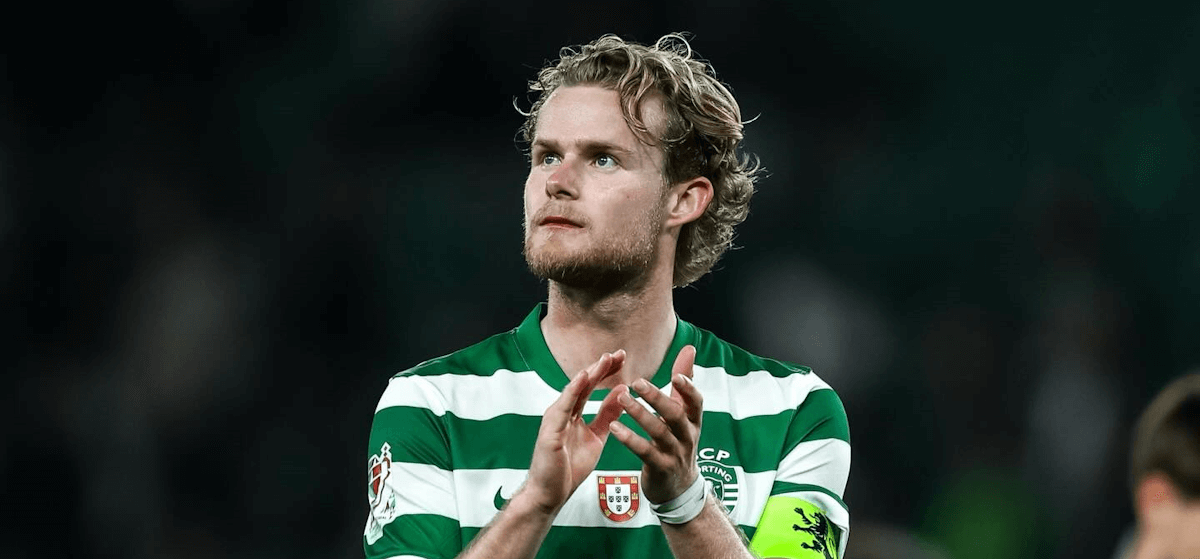
Sporting CP’s squad for the 2025–26 UEFA Champions League campaign — quarterfinals bound.
Sporting Clube de Portugal is not just a club with a badge and a stadium. It is an institution that has trained the mindset of Portuguese football for more than a century, built a multi-sport empire, and produced the most famous academy graduate the modern game has ever seen: Cristiano Ronaldo.
At VanBudapest, we look at elite performance the same way premium operators look at a flawless matchday: preparation, discipline, and standards that do not bend under pressure. Ronaldo is the clearest Sporting symbol of that mentality. We are not writing as ultras. We are writing with respect for a club that sits inside Portugal’s Big Three, has a European trophy that still defines an era, and is still standing in the Champions League when the season reaches its sharpest edge.
This is a full Sporting CP club dossier, built to be a permanent reference.
Key Takeaways
Sporting CP was officially founded in 1906 and grew out of earlier projects that started in 1902 and 1904.
The club’s official honors list counts 25 Portuguese national championships, plus 18 Portuguese Cups, four League Cups, nine Supercups, and one UEFA Cup Winners’ Cup title.
Sporting won the 1963–64 European Cup Winners’ Cup, defeating MTK Budapest in a replayed final, and holds the record for a 16–1 UEFA competition match win vs APOEL.
Frederico Varandas remains president through 2030 after winning re-election in March 2026 with 89.47 percent of the vote.
Estádio José Alvalade entered its Alvalade 2.0 phase with the moat removed and capacity raised to 52,095, alongside broader matchday and infrastructure upgrades.
In the 2025–26 Champions League, Sporting reached the quarterfinals and faces Arsenal on April 7 in Lisbon and April 15 in London.
1. Club History
1902–1906: The Roots Before the Name
Sporting’s origin story starts before the official foundation date.
In June 1902, a group of young men, including Francisco da Ponte e Horta Gavazzo and his brother José Maria, formed Sport Club de Belas. The project lasted only one match.
In 1904, the idea returned with stronger structure as Campo Grande Football Club, anchored by José Alvalade and José Stromp, with matches held on the property of Alfredo Holtreman, the Viscount of Alvalade.
The decisive split came in April 1906 during an outing where two visions collided: a social club of events versus a competitive sports club. Alvalade and 17 others left and, backed financially by his grandfather Alfredo Holtreman, formed the new club on May 8, 1906. The name Sporting Clube de Portugal was adopted on July 1, 1906, which remains the official founding date.
Alvalade’s founding ambition became the club’s eternal benchmark: Sporting would aim to be as big as Europe’s biggest.
1907–1934: Infrastructure, Identity, and Early Competition
In 1907, Sporting opened its first ground, Sítio das Mouras, considered one of the most modern Portuguese sporting sites of its time.
The club’s rivalry ecosystem formed early, including the Lisbon derby dimension that would later define Portuguese football’s domestic narrative.
By the early decades, Sporting was already building what would become its defining trait: a multi-sport identity with football as flagship but not as the only pillar.
1934–1956: League-Era Football Begins and Sporting Becomes a Standard
Sporting played its first Primeira Liga match on January 20, 1935.
The 1940s introduced Sporting’s first golden cycle at the national level. In 1941, Sporting won its first league title under Hungarian coach József Szabó, and the club’s football identity became inseparable from elite coaching and systematic preparation.
1947–1954: The Five Violins Era
Sporting’s most mythic attacking unit, Os Cinco Violinos, shaped an era:
Fernando Peyroteo, José Travassos, Albano Pereira, Jesus Correia, Manuel Vasques.
This group drove seven league titles in eight seasons from 1947 to 1954 and turned Sporting into the Portuguese reference point for attacking coordination and finishing.
1955: Sporting Enters European History on Page One
September 4, 1955
Sporting played Partizan in the first European Champion Clubs’ Cup match in history. Sporting’s João Martins scored the competition’s first goal. A record that sits on the opening page of European football.
1963–1964: The European Peak and a Record That Still Stands
Sporting’s greatest international triumph remains the 1963–64 European Cup Winners’ Cup title. Sporting defeated MTK Budapest in a replayed final to lift the trophy.
On that run, Sporting produced the biggest win in a UEFA club competition match: 16–1 vs APOEL, a record that remains a historical reference point.
1982–2002: Drought, Resets, and the Return of a League Title
The early 1980s delivered major domestic moments, including the 1981–82 double.
From there, Sporting experienced long stretches of league frustration despite cup runs and European visibility. The drought ended with the 1999–2000 league title, a cultural reset for the club.
In 2001–02, Sporting won the league again under László Bölöni, a coach who also became central to the club’s modern mythmaking because Cristiano Ronaldo’s pathway to the first team accelerated in that era.
2003–2018: Modern Stadium Era, Volatility, and the Need for Stability
The new Estádio José Alvalade opened in 2003, a major modernization milestone for Sporting’s matchday and business infrastructure.
The mid-2000s included a UEFA Cup final in Lisbon in 2005, while other seasons were defined by instability, coaching turnover, and financial pressure.
2018–2026: Varandas Stability, Amorim’s Model, and a New Competitive Cycle
Frederico Varandas became president in 2018 and led Sporting into a new era focused on financial rehabilitation, academy integration, and sporting stability.
Rúben Amorim brought a clear tactical identity and restored league-winning consistency. By 2026, Sporting’s narrative is again built around a coherent model: a modern system, academy-to-first-team integration, and disciplined squad building.
In March 2026, Varandas won a third term with 89.47 percent, extending his mandate to 2030.
2. Trophies and Honours
Sporting’s official honours page lists the following for Football Professional.
| Competition | Titles | Years |
|---|---|---|
| Portuguese National Championship (incl. Campeonato de Portugal) | 25 | 1923, 1934, 1936, 1938, 1941, 1944, 1947, 1948, 1949, 1951, 1952, 1953, 1954, 1958, 1962, 1966, 1970, 1974, 1980, 1982, 2000, 2002, 2021, 2024, 2025 |
| League Cup | 4 | 2018, 2019, 2021, 2022 |
| Portuguese Cup | 18 | 1941, 1945, 1946, 1948, 1954, 1963, 1971, 1973, 1974, 1978, 1982, 1995, 2002, 2007, 2008, 2015, 2019, 2025 |
| Supercup Cândido de Oliveira | 9 | 1982, 1987, 1995, 2000, 2002, 2007, 2008, 2016, 2021 |
| Império Cup | 1 | 1944 |
| European Cup Winners’ Cup | 1 | 1964 |
Sporting’s official honours presentation emphasizes its multi-sport dominance and international titles across modalities. In addition to football, Sporting’s brand is reinforced by elite-level futsal, handball, roller hockey, athletics, and other sections, creating an ecosystem where high-performance standards are not limited to one locker room.
3. Legendary Players
The Five Violins
The most mythic attacking unit in Sporting’s history — Os Cinco Violinos — drove seven league titles in eight seasons from 1947 to 1954.
Fernando Peyroteo
The signature Sporting striker and one of the most efficient scorers in European football history. The commonly cited Sporting career total is 544 goals in 334 matches across competitions, with an extraordinary league scoring rate often referenced as a historical outlier.
José Travassos
A defining creative force and one of the earliest Sporting icons to represent Portugal at the highest profile levels of his time.
Albano Pereira
Left-sided piece of the attacking machine, a crucial balance player in the Five Violins unit.
Jesus Correia
Wide attacker with elite end product for the era.
Manuel Vasques
The connective tissue between creation and finishing, remembered as an attacking brain.
Icons Across Eras
Vítor Damas
A goalkeeper whose Sporting identity is built on longevity and peak-level shot-stopping.
Manuel Fernandes
A Sporting symbol of the 1970s and 1980s, a goal source and leadership figure.
Héctor Yazalde
The 1973–74 season remains part of Portuguese football lore, including the Golden Shoe-winning campaign.
Luís Figo
Sporting academy graduate who became a global superstar and Ballon d’Or winner.
Cristiano Ronaldo
Sporting academy graduate who became a global benchmark for elite mentality and output.
Rui Patrício
Modern-era reliability in goal and a leadership figure across multiple cycles.
Bruno Fernandes
A modern Sporting engine who elevated the team’s attacking output and later became one of the club’s most important sales.
4. Most Prolific Sporting CP Scorers
All competitions, commonly cited club totals from Sporting historical summaries:
Additional modern-era high-impact scorers who define shorter cycles: Héctor Yazalde, Mário Jardel, Bas Dost, Bruno Fernandes, Viktor Gyökeres, Pedro Gonçalves.
5. Managers — Full Chronological List 1916–2026
This is the complete coaching chronology as compiled in the research dossier, presented as a continuous reference list.
🇭🇺 Hungarian-identity managers highlighted — significant figure in Sporting history.
6. Club President and Governance

Rui Borges — Sporting CP Head Coach, 2024–present
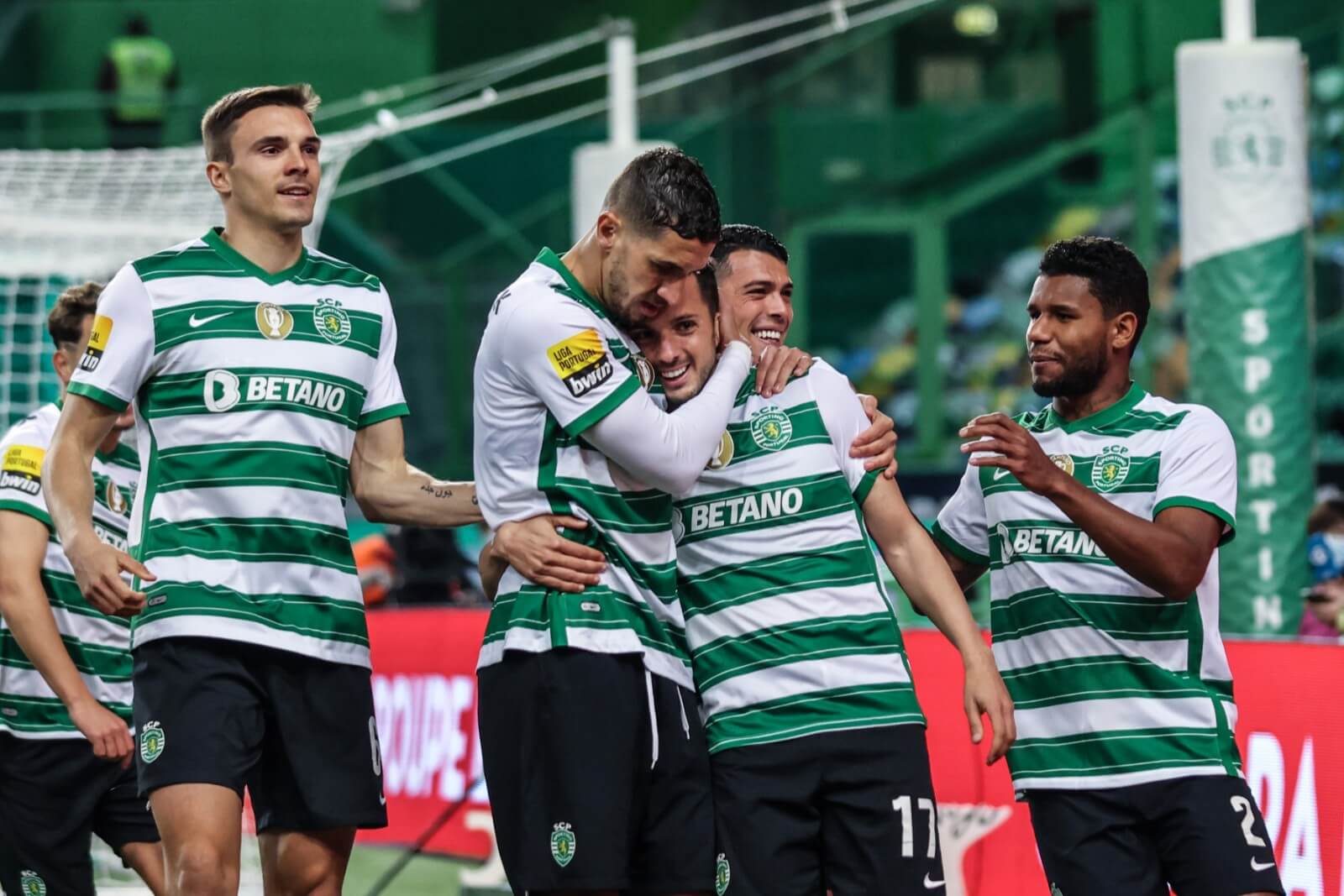
Frederico Varandas — President of Sporting CP, re-elected March 2026 with 89.47% of the vote
Current President
Frederico Varandas has led Sporting since 2018 and was re-elected in March 2026 with 89.47 percent of the vote, extending his presidency through 2030.
Key Historical Presidency Reference Points
Alfredo Holtreman, Viscount of Alvalade
The founding patron and first president, whose backing turned a youth project into a durable institution.
João Rocha — 1973–1986
The most cited long-tenure president in modern club memory, central to Sporting’s multi-sport expansion and infrastructure development.
Bruno de Carvalho — 2013–2018
A polarizing era that ended before Varandas took office.
7. Estádio José Alvalade — Full Stadium Profile
Alvalade 2.0 is not just about seats. It is about experience engineering: closer sightlines, upgraded screens and LED systems, premium access zones, and a matchday ecosystem designed to feel global, not provincial.
The most important and most requested change — the removal of the moat — was completed in 2025 in time for the 2025–26 season, enabling an increase of about 2,000 seats and pushing capacity to 52,095.
From 2021 onward, the stadium entered a sequence of upgrades that repositioned it among Europe’s best matchday environments.
8. Academy and Youth Development — How the Pipeline Works
Sporting’s academy is one of the world’s most productive talent factories. The academy complex in Alcochete was inaugurated in 2002 and is officially known as the Cristiano Ronaldo Academy since 2020.
Sporting’s youth model is player-centered early and integration-driven later. The club’s best cycles are not built by buying a full starting eleven. They are built by consistently introducing Sporting-trained players into a stable tactical system, then selling selectively at peak market value to fund the next cycle.
The academy’s signature graduates form an unbroken line from Figo to Ronaldo to modern core players, and Sporting’s first-team identity remains unusually academy-visible for a club competing for titles.
9. Legendary Transfers — External Signings That Changed Sporting
Sporting is known for producing, but the club’s best eras still required elite external decisions.
Arrived on a free transfer from Manchester United and brought a winner’s culture to a team ending a long league drought.
Arrived and delivered a historic goal explosion, anchoring a title-winning cycle.
Arrived as a club-record-level investment and immediately transformed Sporting’s ceiling through output, physical presence, and decisive scoring.
Arrived and became the midfield stabilizer and leadership core.
These are Sporting’s best kind of buys: not vanity names, but high-impact pieces that fit a system and elevate the academy spine.
10. Records and Club Benchmarks
Team Records
16–1 vs APOEL
Largest UEFA competition win — European Cup Winners’ Cup 1963–64, a record still recognized in UEFA competition record summaries. The biggest single-match margin in any UEFA club competition match in history.
The First Goal in European Football
The first match of the European Champion Clubs’ Cup was Sporting vs Partizan in 1955, with Sporting scoring the competition’s first goal. Sporting is permanently attached to the origin story of the European Cup.
Individual Records and Iconic Benchmarks
All-time leading scorer: Fernando Peyroteo — 544 goals in 334 matches.
Most mythic single-season scoring benchmark in Portugal: Héctor Yazalde, 46 league goals in 1973–74 — a Portuguese league-era reference season.
11. Active Squad 2025–26 — Full First-Team Profiles
This section is written to pair with player images and to work as a matchday-ready reference.
Goalkeepers


Rui Silva
A veteran Portuguese goalkeeper profile built on composure, positioning, and reliability. Sporting uses him as a stabilizer, not a highlight machine, which matters in knockout football where low-error goalkeeping is often the difference.
João Virgínia
A modern backup profile with strong training-ground value and enough experience to handle domestic rotation.
Defenders


Ousmane Diomande
A physically dominant center back with modern build-out traits. Sporting values him for aggressive duels and carrying ability in transition.
Gonçalo Inácio
Academy-developed central defender and one of the clearest examples of Sporting’s pipeline. Calm distribution, left-sided balance, and big-match temperament.
Zeno Debast
A young defender profile with top-level upside, added to increase depth and maintain Sporting’s high athletic baseline.
Maxi Araújo
An aggressive left-sided option with forward energy and high involvement in wide phases.
Iván Fresneda
A modern fullback template: speed, timing, and the ability to play both wide and inside depending on Sporting’s structure.
Georgios Vagiannidis
A right-sided option who expands Sporting’s tactical flexibility and transition speed.
Midfielders


Morten Hjulmand
The midfield anchor and leadership core. Sporting’s system needs a controlling presence to protect the back line and accelerate counter-attacks with clean first passes.
Daniel Bragança
A technical midfield brain. Sporting uses profiles like this to keep their attacking patterns precise rather than emotional.
Hidemasa Morita
A box-to-box worker who makes the machine run. In elite matches, this type of player becomes a silent advantage.
Francisco Trincão
A creator-finisher hybrid who gives Sporting a wide playmaking axis.
João Simões
A high-upside young midfielder, a symbol of Sporting’s willingness to accelerate talent when the profile is mature enough.
Attackers


Viktor Gyökeres
The modern Sporting spearhead: power, finishing, and relentless pressure on center backs. Sporting’s recent domestic dominance is inseparable from having a forward who can decide games without needing perfect service.
Pedro Gonçalves
A multi-skill attacker who produces goals and assists, and also manipulates defensive shape. Sporting’s attacking logic often flows through his timing, not just his touches.
Geovany Quenda
A teenage talent with top-level ceiling, already treated like a future export-tier asset. Sporting’s challenge is to extract performance without rushing the body and without damaging development.
Luis Suárez
A forward profile designed to keep Sporting’s scoring threat high even when rotations and injuries hit.
Fotis Ioannidis
A striker option that gives Sporting matchup variety, especially in games where physical presence and penalty-box timing matter.
12. Champions League and European Cup History
Sporting’s Unique Place in Champions League History
The First Match. The First Goal.
Sporting is permanently attached to the origin story of the European Cup. The first match in competition history featured Sporting, and Sporting scored the first goal.
Sporting’s Best European Title Run
1963–64 Cup Winners’ Cup
Sporting won the trophy, defeating MTK Budapest in a replayed final.
Champions League and European Cup — Season-by-Season Reference
First round — first-ever European Cup match
First round
Preliminary round
First round
First round vs Vasas
Second round
First round
First round vs Budapest Honvéd
Quarterfinal
Group stage
Group stage
Qualifying, eliminated by Internazionale
Group stage
Group stage then UEFA Cup continuation
Round of 16
Group stage
Group stage
Group stage
Round of 16
Group stage
New format league phase and knockout phase play-offs
Facing Arsenal — April 7 in Lisbon, April 15 in London.
2025–26 Champions League Quarterfinal
Sporting CP vs Arsenal — The Lions’ biggest stage in decades.
13. Sporting’s Connection to Budapest and Puskás Aréna
The MTK Connection — The Most Important Historical Bridge
Sporting’s European Cup Winners’ Cup triumph is directly linked to Hungarian football because the final opponent was MTK Budapest. Sporting won the trophy in a replayed final.
This is not a trivia line. It is a structural narrative hook: Sporting’s only major European title is forever tied to a Hungarian club.
The 2026 Budapest Gravitational Pull
The Champions League narrative in 2026 naturally points toward Budapest because the season’s decisive matches define travel plans, logistical pressure, and supporter movement across Europe. For Sporting, the quarterfinal stage is where clubs stop talking about dreams and start talking about execution.
14. Hungarian Players and Hungarian Influence at Sporting
Hungarian Managers — The Historical Competitive Edge
József Szabó — A foundational Sporting coach who drove early league success and helped build the conditions for the Five Violins era.
Rudolf Jeny — Coached Sporting in the 1930s and sits inside the club’s early tactical development story.
Sándor Peics — A Hungarian coaching presence in the mid-century timeline.
László Bölöni — A Hungarian-identity coach who led Sporting to major domestic success in the early 2000s and is central to the modern Sporting narrative for how the club handled elite young talent.
Hungarian Players — First-Team History
Sporting’s historical summaries and player nationality databases identify Hungarian representation in the club’s senior football history primarily via goalkeepers and early-era names, including Béla Katzirz and Ferenc Mészáros.
Present Day
There is no established Hungarian national team player currently embedded in Sporting’s senior core as of the 2025–26 squad profile used for this dossier.
Final Word — Sporting’s Identity in One Line
That Is Not Hype. That Is Sporting.
Sporting Clube de Portugal is the rare club that can say all of this at once, and mean it: we built a European title run that still defines a nation, we wrote the first line of European Cup history, we run a multi-sport empire, and we produced Cristiano Ronaldo.
Wikipedia — Sporting CP ↗ European Football History ↗ 1964 Cup Winners’ Cup ↗ Sporting Primeira Liga ↗
FAQ
When was Sporting Clube de Portugal founded?
Sporting Clube de Portugal’s official founding date is July 1, 1906.
What is Sporting’s biggest European achievement?
Sporting’s biggest European achievement is winning the 1963–64 European Cup Winners’ Cup, defeating MTK Budapest in a replayed final.
What is Estádio José Alvalade’s current capacity?
After the Alvalade 2.0 upgrades and the removal of the moat, the stadium capacity is 52,095.
Who is Sporting’s current president and how long is his mandate?
Frederico Varandas is Sporting’s president and his third mandate runs through 2030 after re-election in March 2026.
When are Sporting and Arsenal playing in the 2025–26 Champions League quarterfinals?
The first leg is April 7, 2026 in Lisbon and the second leg is April 15, 2026 in London.

Travelling to Lisbon or London for the Quarterfinals?
VanBudapest.com — Exclusive Travel Solutions Since 1988. Premium Mercedes fleet, professional chauffeurs, seamless transfers across Budapest and Central Europe. Let us handle the journey while you focus on the match.