
VanBudapest.com — Political Event Coverage
Patriots’ Grand Assembly
The complete guide to Budapest’s transformative political week — March 21–23, 2026. Full program, 45+ speakers from 51 countries, venue details, and expert analysis.
CPAC Hungary 2026 & Patriots’ Grand Assembly: Complete Budapest Guide
CPAC Hungary 2026 and the 1st Patriots’ Grand Assembly transformed Budapest into the epicenter of global conservative politics on 21–23 March 2026, attracting 667 foreign guests from 51 countries. The five-day convergence featured 45 keynote speakers and drew 182 international journalists to witness what organizers positioned as a defining moment for European conservatism, with the Patriots’ Grand Assembly bringing together Marine Le Pen, Matteo Salvini, Geert Wilders, Herbert Kickl, and Santiago Abascal at Millenáris Park for a coordinated show of transnational right-wing solidarity.
What Is CPAC Hungary? Background and Evolution (2022–2025)
CPAC Hungary represents the European adaptation of the American Conservative Political Action Conference, organized jointly by Hungary’s Center for Fundamental Rights (led by Miklós Szánthó) and the American Conservative Union/CPAC Foundation under the leadership of Matt Schlapp. Since its inception, CPAC Hungary has served as a critical convening point for building global right-wing networks and advancing Hungary’s positioning as a flagship of conservative resistance to what organizers characterize as progressive Brussels dominance.
The Four Previous CPAC Hungary Conferences
2022 (1st CPAC Hungary): Held at Bálna Budapest, the inaugural conference featured Prime Minister Viktor Orbán delivering the keynote address with the thematic message “God, homeland, family”—a formulation that became the ideological cornerstone for subsequent events. This first gathering established the framework for positioning Hungary as the vanguard of European conservatism against progressive policies.
2023 (2nd CPAC Hungary): This edition crystallized the conference’s core messaging with the slogan “No migration, no gender, no war!”—a triad that would echo across European conservative movements. Born in Budapest, this formulation captured the three defining pillars of the emerging Patriots for Europe alliance and became a rallying cry for anti-establishment right-wing parties across the continent.
2024 (3rd CPAC Hungary): The 2024 conference marked a pivotal moment, coinciding with the formal founding of the patriotic coalition and the deepening of the Orbán–Trump relationship during Trump’s presidential campaign. However, funding transparency became a contentious issue when the investigative outlet Átlátszó reported that the Center for Fundamental Rights received up to 1.15 billion Hungarian forints (HUF) in public funds allocated to CPAC-related activities, raising questions about the use of state resources for political organizing.
2025 (4th CPAC Hungary): Held on 29–30 May under the banner “The Age of Patriots,” this edition featured prominent American conservative figures including Ben Shapiro and Dave Rubin. The financial scale expanded significantly, with contracts worth 650 million HUF documented for the Lounge Event component alone, continuing patterns of substantial public funding allocation.
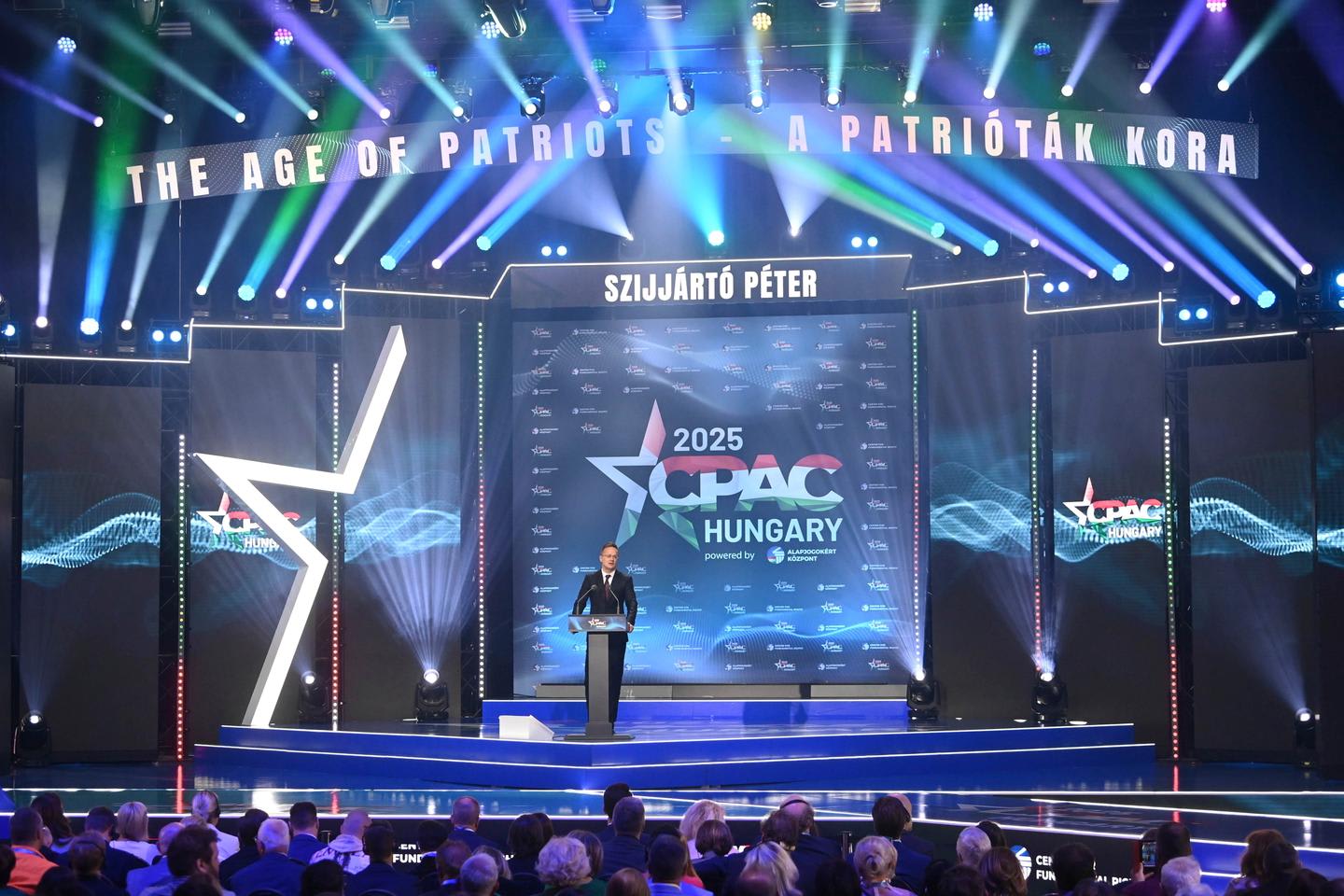
Organizers’ Strategic Aim: The stated objective of both Szánthó and Schlapp is to connect fragmented right-wing forces globally into a coordinated political movement. Critics, however, characterize these conferences primarily as campaign tools designed to amplify Orbán’s and Fidesz’s political positioning domestically while creating the appearance of international legitimacy through the presence of foreign political leaders.
CPAC Hungary 2026: Date, Venue, and Symbolic Timing
Date: 21 March 2026 (Friday)
Venue: MTK Sportpark, Hungária krt. 2, Budapest 1146
Organizers: Center for Fundamental Rights (Hungary) & CPAC Foundation (USA)
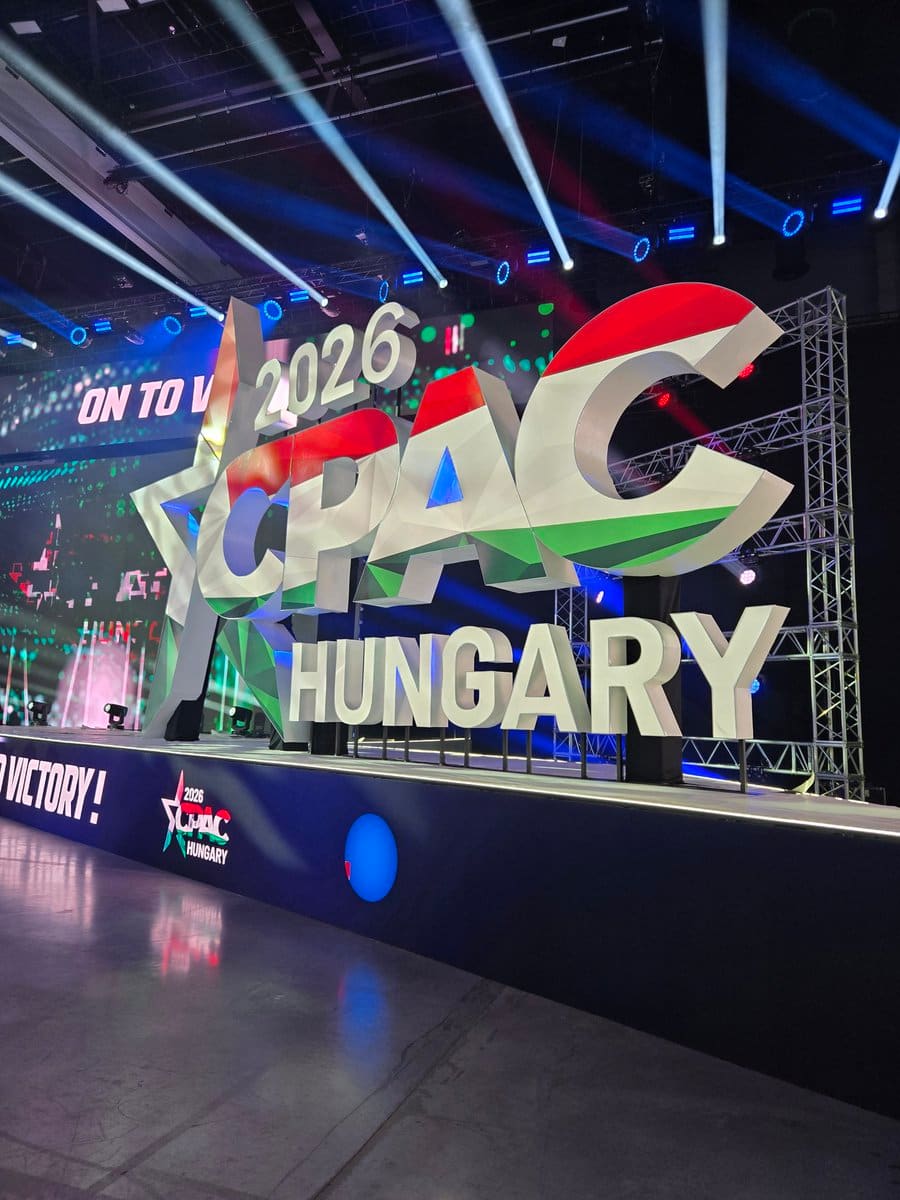
Speakers: 45+ from 51 countries • Theme: “On to Victory!”
Registration: Invitation-only • Live stream: Available on official channels
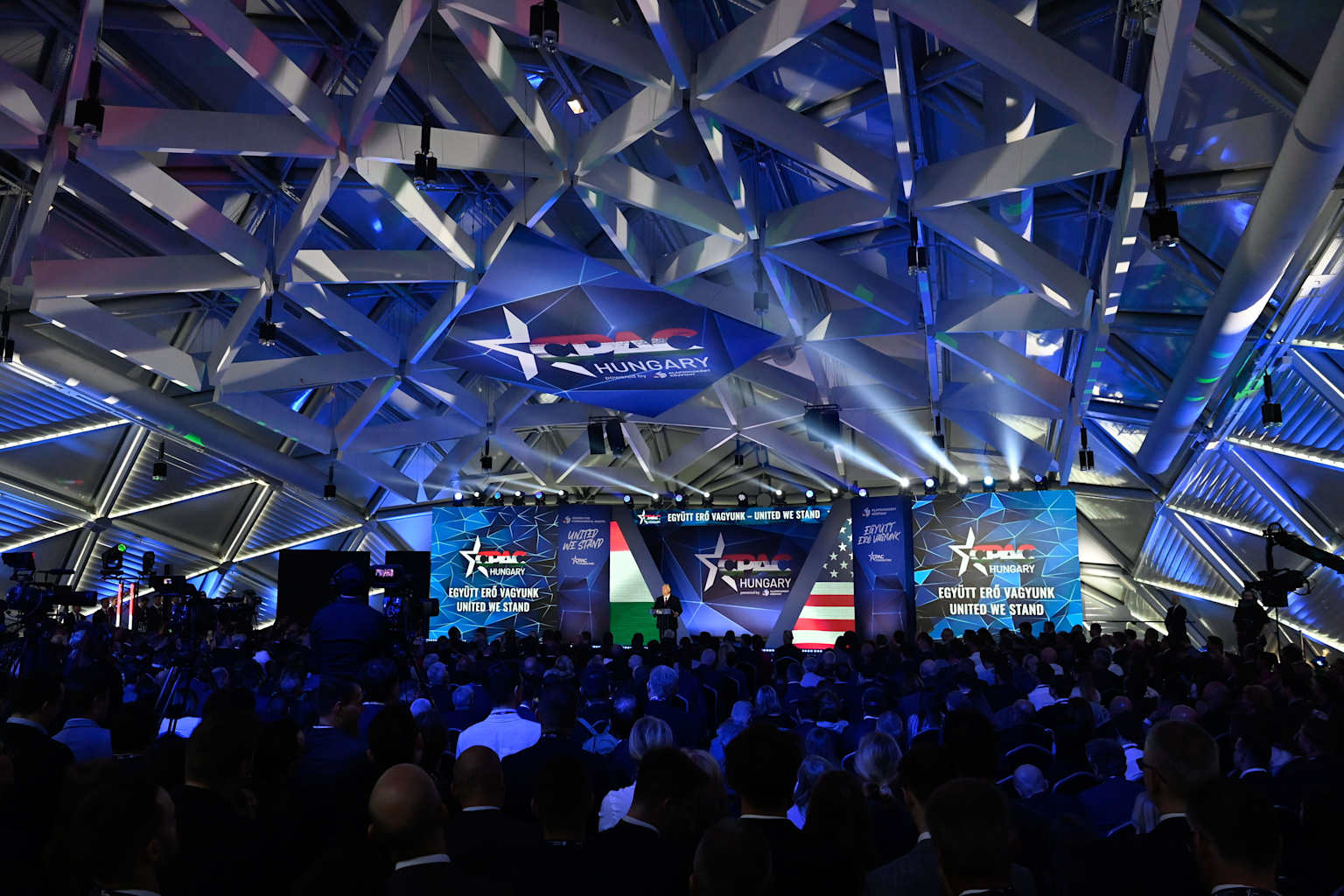
The 5th CPAC Hungary was held on 21 March 2026 at MTK Sportpark in Budapest. The selection of this specific date carries profound symbolic weight: 21 March marks the 106th anniversary of the Hungarian Soviet Republic of 1919, a historical reference point that Orbán’s rhetoric frequently invokes as a moment of national sovereignty and resistance to foreign domination. This choice of commemoration was not coincidental.
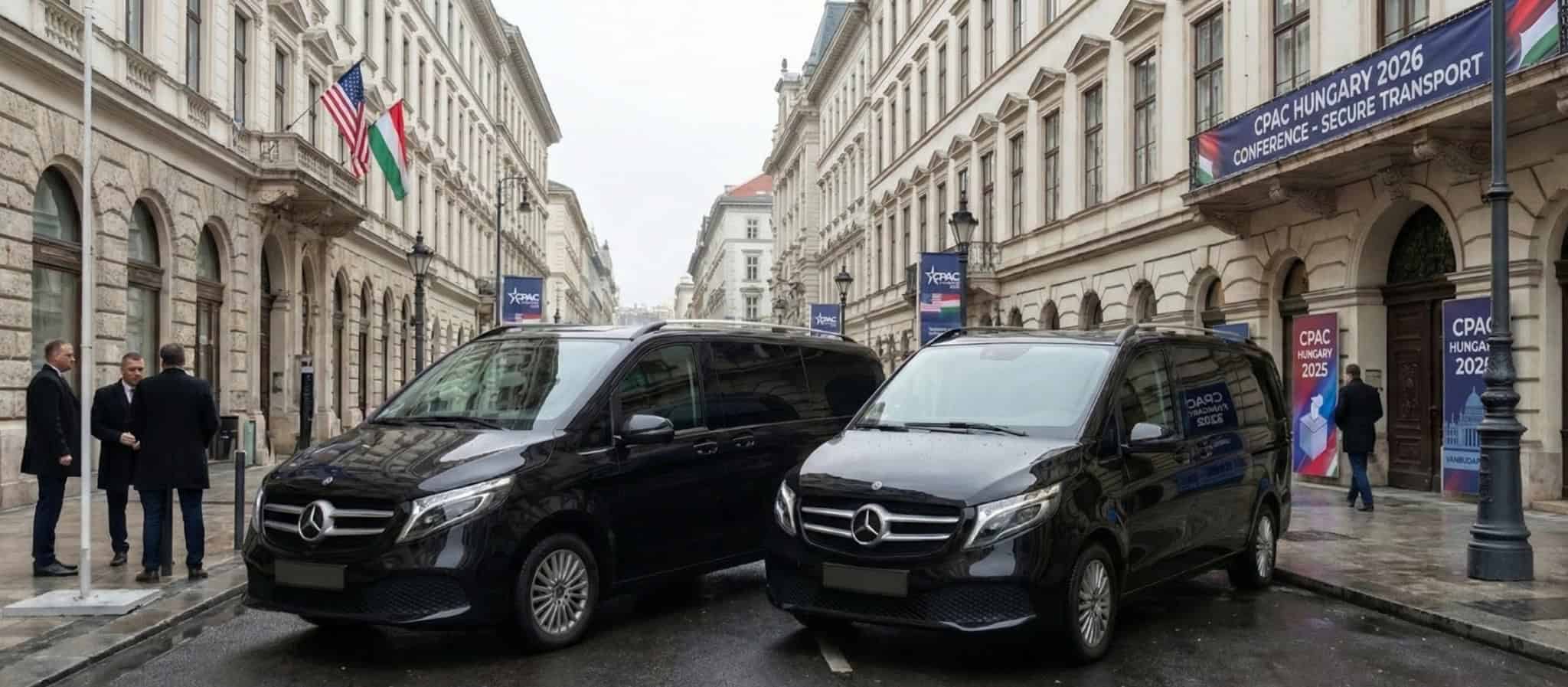
Attending CPAC Hungary or a political conference in Budapest? Request a free quote from VanBudapest.com — premium airport transfers and event transportation with our professional Mercedes fleet. Reply within 12 hours.
More significantly, the timing placed CPAC Hungary 2026 precisely 22 days before Hungary’s 12 April 2026 parliamentary election—a departure from previous years when the conference was held in late May. By shifting the event into the campaign period itself, organizers positioned the conference as a direct electoral intervention, transforming what might otherwise appear as an international conservative gathering into a prominent campaign rally.
The Campaign Slogan: “On to Victory!”
The conference slogan “On to Victory!” operated simultaneously on two political registers: the immediate Hungarian parliamentary election and the broader European movement toward what organizers termed a patriotic ascendancy. This dual messaging was reinforced through repeated references to the existential stakes, particularly the phrase “If we fall, Europe falls too”—a formulation that framed the April 12 Hungarian election as a pivotal moment not merely for domestic politics but for the trajectory of European civilization itself.
CPAC Hungary 2026: The Complete Program and Speaker Lineup
The 21 March 2026 CPAC Hungary conference featured a meticulously organized program spanning from morning opening ceremonies through the closing keynote. The structure combined ceremonial elements, policy-focused panels, and high-profile speeches designed to project coherence, legitimacy, and international weight. Below is the comprehensive schedule with all speakers and participants.
Opening Ceremonies (9:30–10:45 AM)
The conference commenced with ceremonial performances and opening addresses that established both the Hungarian nationalist and international conservative frameworks for the event.
Hosts and Ceremonial Elements: The event was hosted by Dániel Bohár and Stefi Déri, who guided proceedings throughout the day. The Hungarian national anthem was performed by Imre Vadkerti, while Erika Miklósa performed the American national anthem—a symbolic pairing that underscored the Hungary–USA axis that would become central to the conference narrative. A blessing was delivered by László Kiss-Rigó, the Bishop of Szeged-Csanád, lending ecclesiastical authority to the proceedings.
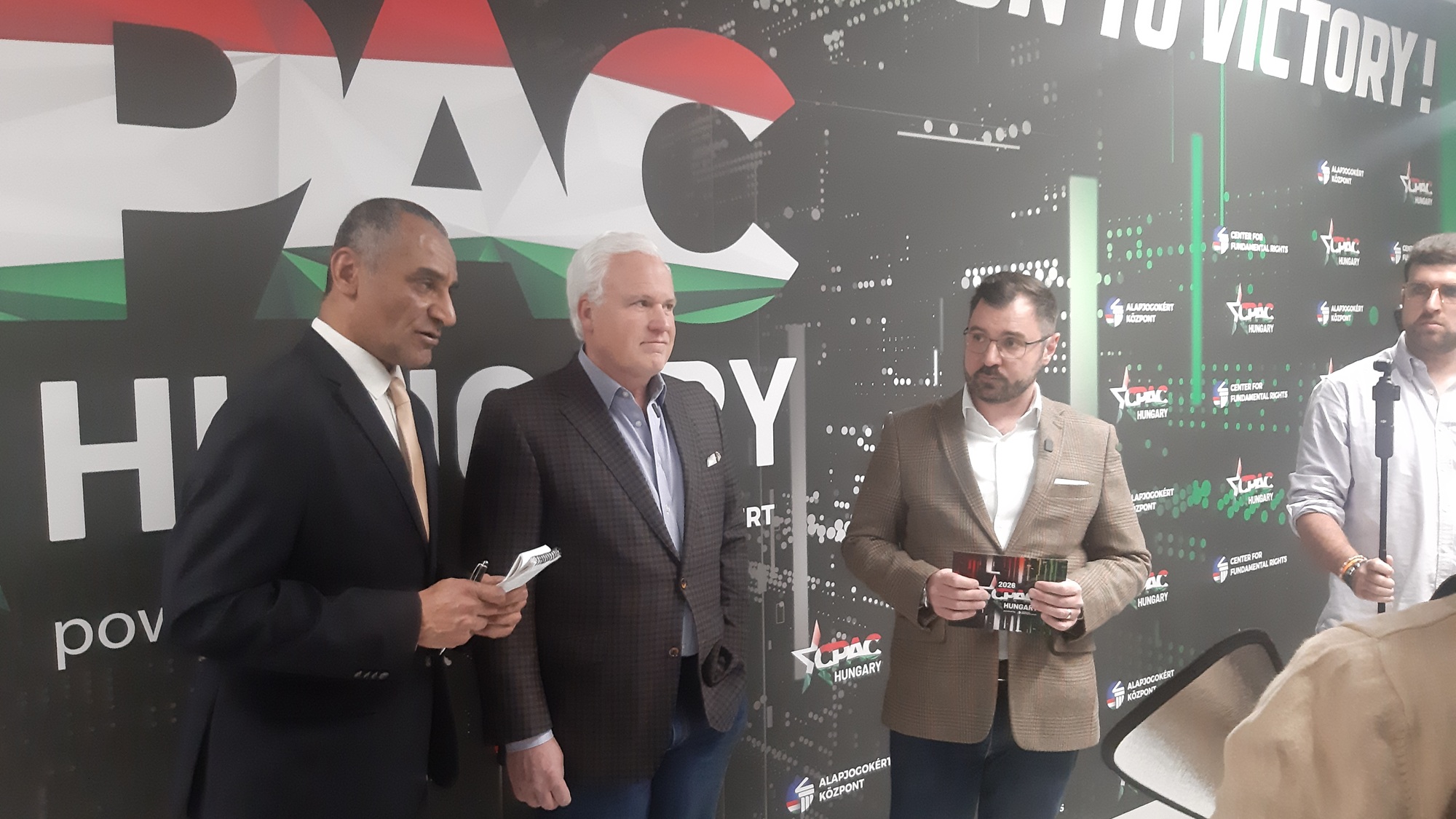
Opening Remarks: Miklós Szánthó, director of the Center for Fundamental Rights, and Matt Schlapp, chairman of the American Conservative Union and CPAC Foundation, delivered the official opening addresses, framing the event within the context of a global struggle between patriotic and progressive forces.
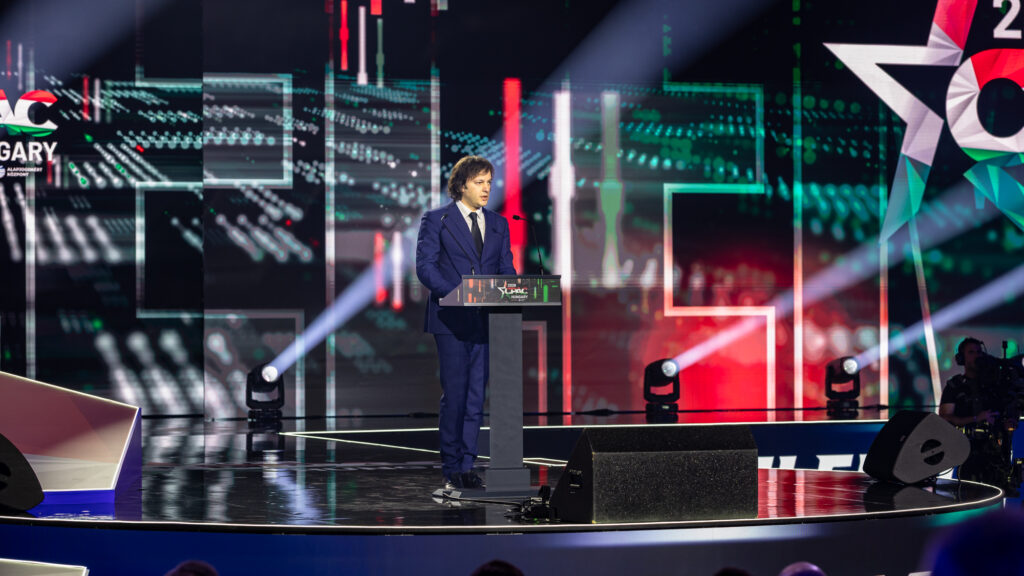
International Presence: Irakli Kobakhidze, the Prime Minister of Georgia, delivered remarks in person, emphasizing Georgia’s own struggle for sovereignty against external pressure. His participation underscored the broader geopolitical narrative of small nations defending independence against hegemonic powers.
Video Messages: Two prominent political figures delivered video messages due to inability to attend in person. Donald Trump, then-President-elect, sent a video message of support that would become a central element in the conference narrative regarding the USA–Hungary alliance. Andrej Babiš, the former Czech Prime Minister and ANO party leader, was unable to attend due to a terrorist attack that occurred in the Czech Republic on 17 March, but sent video greetings.
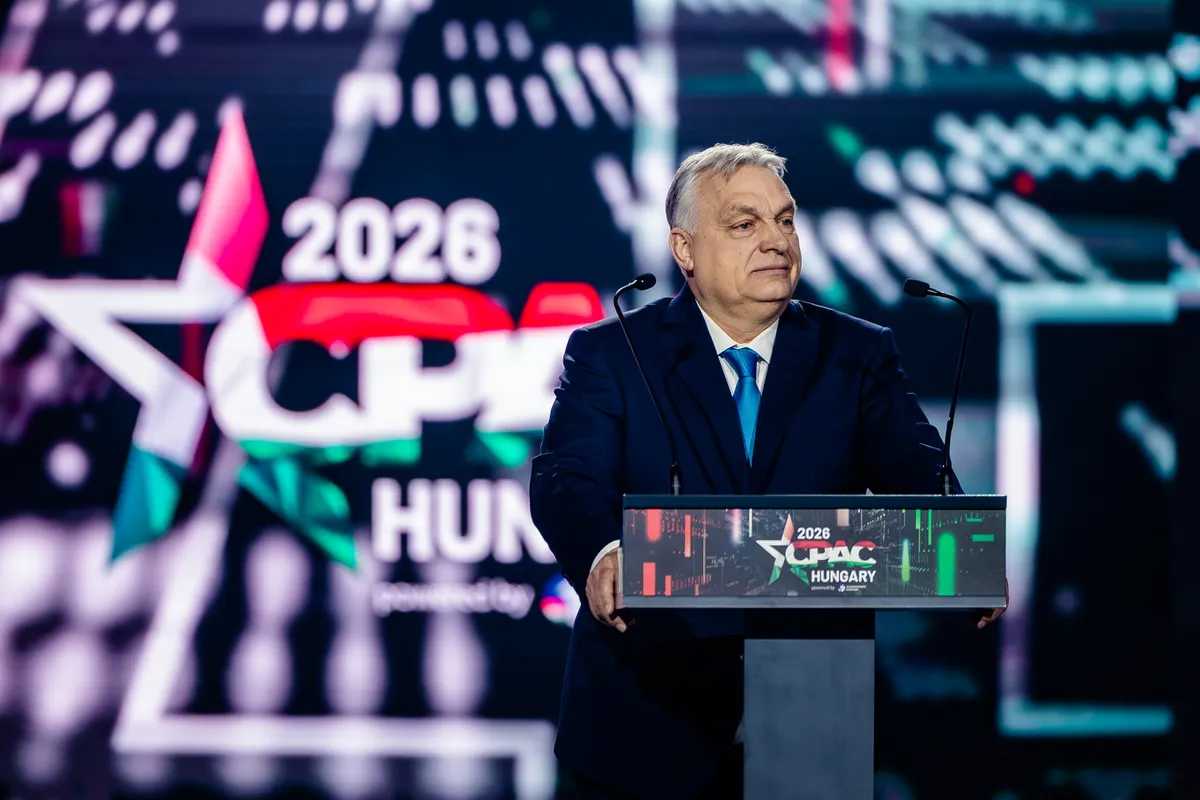
Viktor Orbán Keynote: Prime Minister Viktor Orbán closed the opening block with his keynote address, establishing the thematic and rhetorical framework for the entire conference (detailed in Section 5 below).
CPACINFO Section (10:45–11:45 AM)
Government Briefing Format: Péter Szijjártó, Foreign Minister, and Gergely Gulyás, Minister of the Prime Minister’s Office, conducted what was formally styled as a government press briefing but functioned as a political statement. Szijjártó made a particularly stark assertion regarding Ukraine, stating that European Union membership for Ukraine would constitute “not peace, but escalation of war”—a formulation that crystallized Hungary’s opposition to increased EU support for Kyiv.
CPAC–Institutional Conservative Dialogue: Dave Rubin, the American political commentator and CPAC participant, engaged in dialogue with Zoltán Kovács, the government spokesperson, bridging CPAC’s institutional conservatism with the Hungarian government’s political messaging.
“Those Who Cannot Be Silenced” Panel: This thematic panel brought together international conservative figures who position themselves as victims of progressive censorship: Eduardo Bolsonaro (son of former Brazilian President Jair Bolsonaro), Zbigniew Przybyłowski (representing Poland’s Ordo Iuris, a conservative Catholic legal organization), and István Kovács, a Hungarian figure. The panel’s title itself advanced the narrative that conservative voices face systematic suppression in contemporary liberal democracies.
Eva Vlaardingerbroek’s Remarks: The Dutch conservative activist delivered remarks on her third consecutive CPAC Hungary appearance, asserting that “Hungary is the only country truly standing in the way of European federalization”—a characterization that positioned Hungary as Europe’s lone defender of national sovereignty against an integrationist Brussels establishment.
Afternoon Session I (12:45–13:50 PM)
János Pócs (Fidesz MP): The Fidesz parliamentary deputy used his platform to directly criticize Péter Magyar, the leader of the opposition Tisza Party and Orbán’s primary electoral challenger. Magyar was characterized as a threat to national stability and patriotic governance.
Tom Van Grieken: The chairman of Vlaams Belang, the Flemish separatist and nationalist party from Belgium, addressed the conference, expanding the geographical and political range of participants to include regional autonomy movements.
American Congressional Representation: Congressman Russ Fulcher (R-Idaho) and Congressman Andy Harris (R-Maryland) constituted the highest-ranking live American political representatives at the conference. Both lawmakers represent the most conservative faction of the Republican Party and have cultivated close relationships with Hungarian conservative circles. Harris would serve as a closing speaker later in the day.
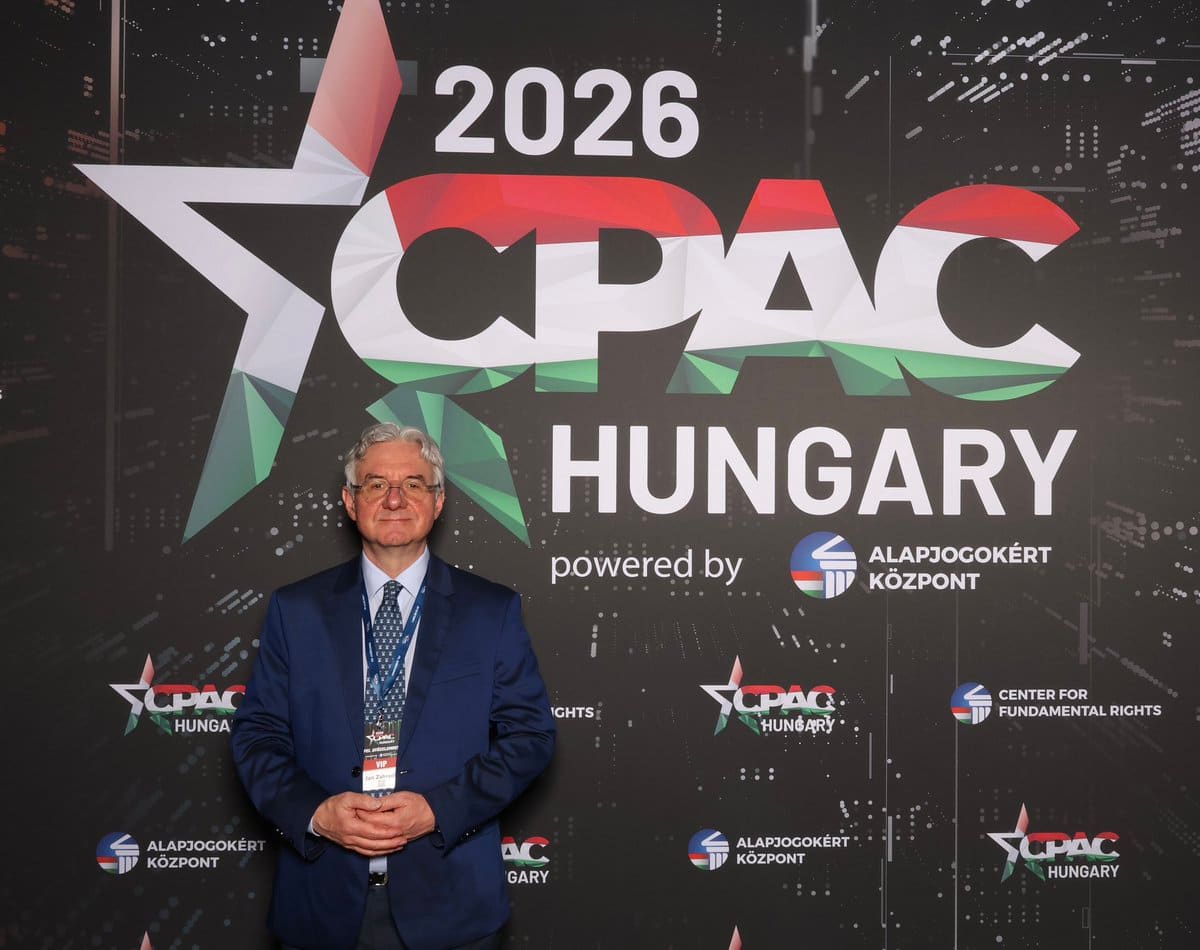
Stefano Forte: The New York Young Republican Club representative brought American grassroots conservative organizing perspectives to the gathering.
Geert Wilders’ Address on Orbán: The Dutch PVV leader delivered remarks that became among the most widely quoted of the conference. Wilders characterized Viktor Orbán as “one of the greatest politicians of our age” and employed a striking metaphor, calling Orbán “a lion on a continent led by sheep.” Wilders further characterized CPAC Hungary as a gathering of a global “brotherhood,” reinforcing the narrative of transnational conservative solidarity.
Ladies’ Summit Panel: A gender-specific panel was convened, though details remain limited in available documentation.
Mid-Afternoon Session (14:25–15:40 PM)
Herbert Kickl’s Address: The chairman of Austria’s Freedom Party (FPÖ) and chancellor candidate delivered a comprehensive address on European sovereignty. Kickl declared that “a patriotic wind is blowing across Europe,” characterizing the moment as a historical turning point. He positioned Hungary as the “beacon, spotlight of sovereignty” and as a “rock-solid bastion of true European values,” reinforcing the symbolic weight placed on the Hungarian government’s role in conservative Europe.
ZEBRA-SHOW Performance: A theatrical or comedy segment was performed by Máté Kocsis and Krisztián Lentulai, the satirical duo known for content aligned with the Fidesz political perspective. This provided entertainment and reinforced in-group messaging to the conservative audience.
Dinesh D’Souza Dialogue: The American conservative filmmaker and political commentator engaged in dialogue with Balázs Orbán, the political director of the Prime Minister’s office and son of Viktor Orbán. This pairing linked American conservative intellectual frameworks with the Hungarian government’s political positioning.
André Ventura: The Portuguese CHEGA party leader addressed the gathering, extending geographic representation to southern European right-wing movements.
“Europe’s Decisive Moment” Panel: A thematic panel brought together multiple perspectives on European political change: James Orr from the Edmund Burke Foundation (a conservative American think tank), Martin Helme from Estonia’s EKRE party, and Péter Törcsi from Hungary’s Oeconomus institute. This panel synthesized policy analysis, nationalist ideology, and institutional conservative thinking.
Mateusz Morawiecki: The former Prime Minister of Poland and chairman of the European Conservatives and Reformists (ECR) parliamentary group addressed the conference, bringing the weight of his leadership experience and ECR’s positioning within the European Parliament to the gathering.
Andy Harris Closing Remarks: The Maryland congressman provided concluding remarks for this session block.
Closing Session (16:00–17:15 PM)
Alice Weidel’s Address: The co-chair of Germany’s Alternative for Germany (AfD) delivered perhaps the most incendiary speech of the conference. Weidel characterized Europe as resembling the “horsemen of the apocalypse,” employing apocalyptic imagery to describe the continent’s current trajectory. She mounted a fierce critique of immigration policy, asserting that illegal migration “steals Europe’s soul”—a formulation that reduced migration to a civilizational threat. Remarkably, Weidel invoked the historical memory of the 1956 Hungarian Revolution, stating: “Germans will never forget what they owe the Hungarian nation,” thereby attempting to link historical German–Hungarian solidarity with contemporary political alignment. Her closing invocation—”God bless Hungary”—employed religious language to reinforce the conference’s spiritual-civilizational framing.
Santiago Abascal’s Address: The chairman of Spain’s VOX party delivered a combative political address, explicitly addressing the existential threat to the Orbán government. Abascal asserted: “Our opponents want to finish off Fidesz and Orbán,” framing the upcoming Hungarian election as a crucial battle in a wider ideological war. He characterized the European Union as the “last bunker of globalism,” employing military imagery to suggest that the patriotic right must “occupy” these institutional positions—a rhetoric that combined territorial and political metaphors to suggest that taking power in Brussels was equivalent to a military conquest.
Javier Milei’s Address: The President of Argentina delivered remarks during his first visit to Hungary as head of state. Milei was received by Viktor Orbán and later awarded an honorary doctorate from Hungary’s University of Public Service, receiving a form of formal state recognition. His remarks emphasized that “Europe does not need to reinvent itself but to return to its roots,” articulating the conference’s historical nostalgia theme. Milei further asserted that Hungary and Argentina were “bound by the love of freedom,” constructing a transnational alliance of libertarian-leaning right-wing leaders, and providing the conference with a Latin American dimension that extended beyond the North Atlantic alliance structure.
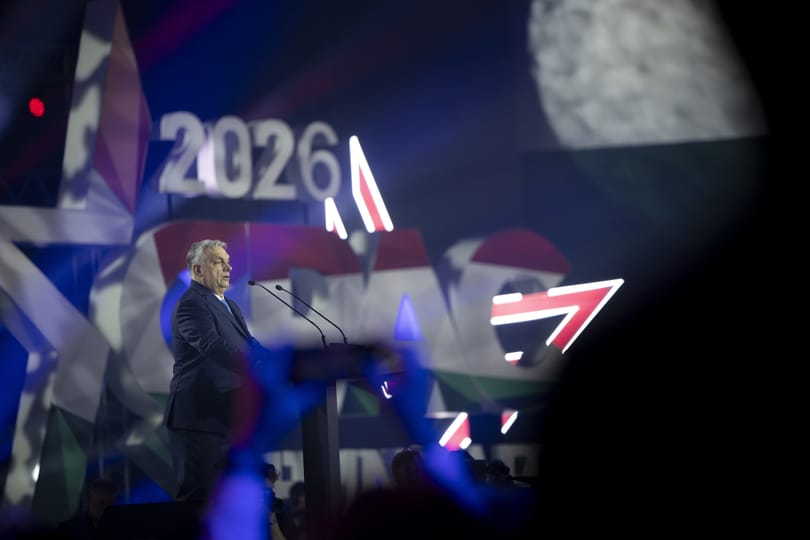
Conference Closing: Attila Nyerges provided closing remarks, bringing the day-long program to a conclusion.
Key Speeches in Detail
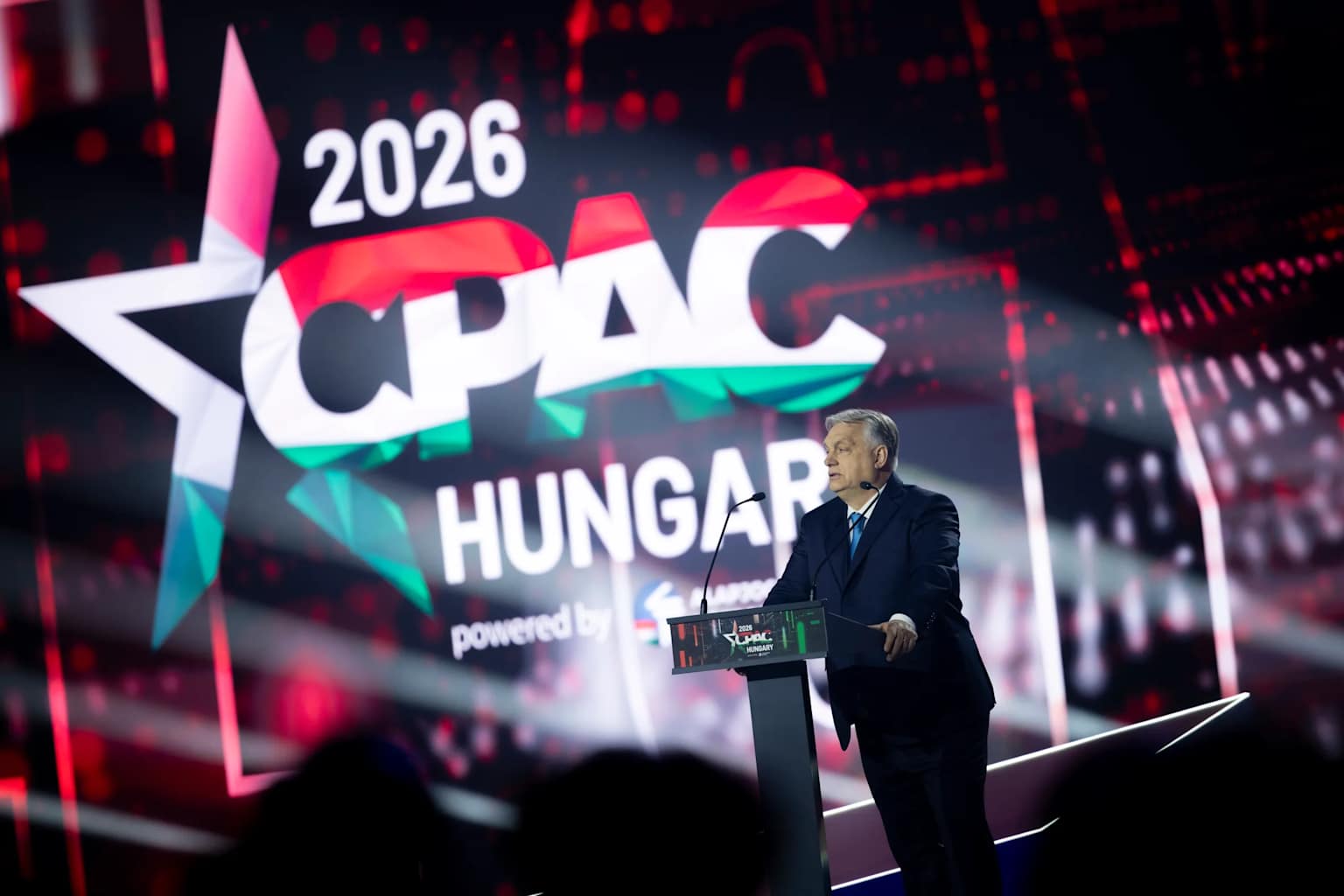
Viktor Orbán’s Keynote Address
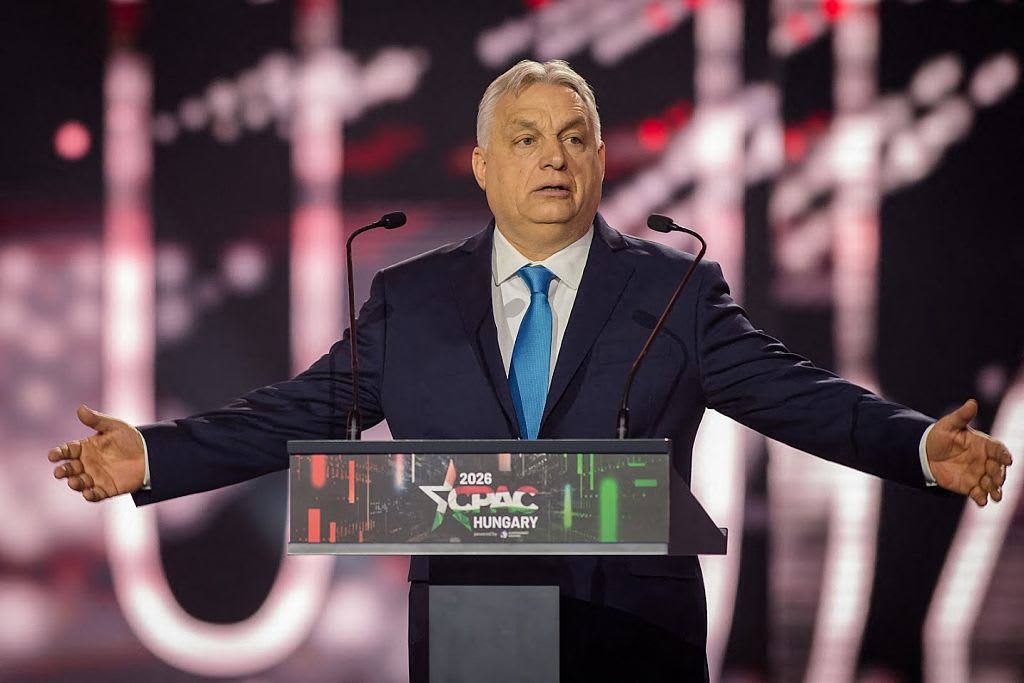
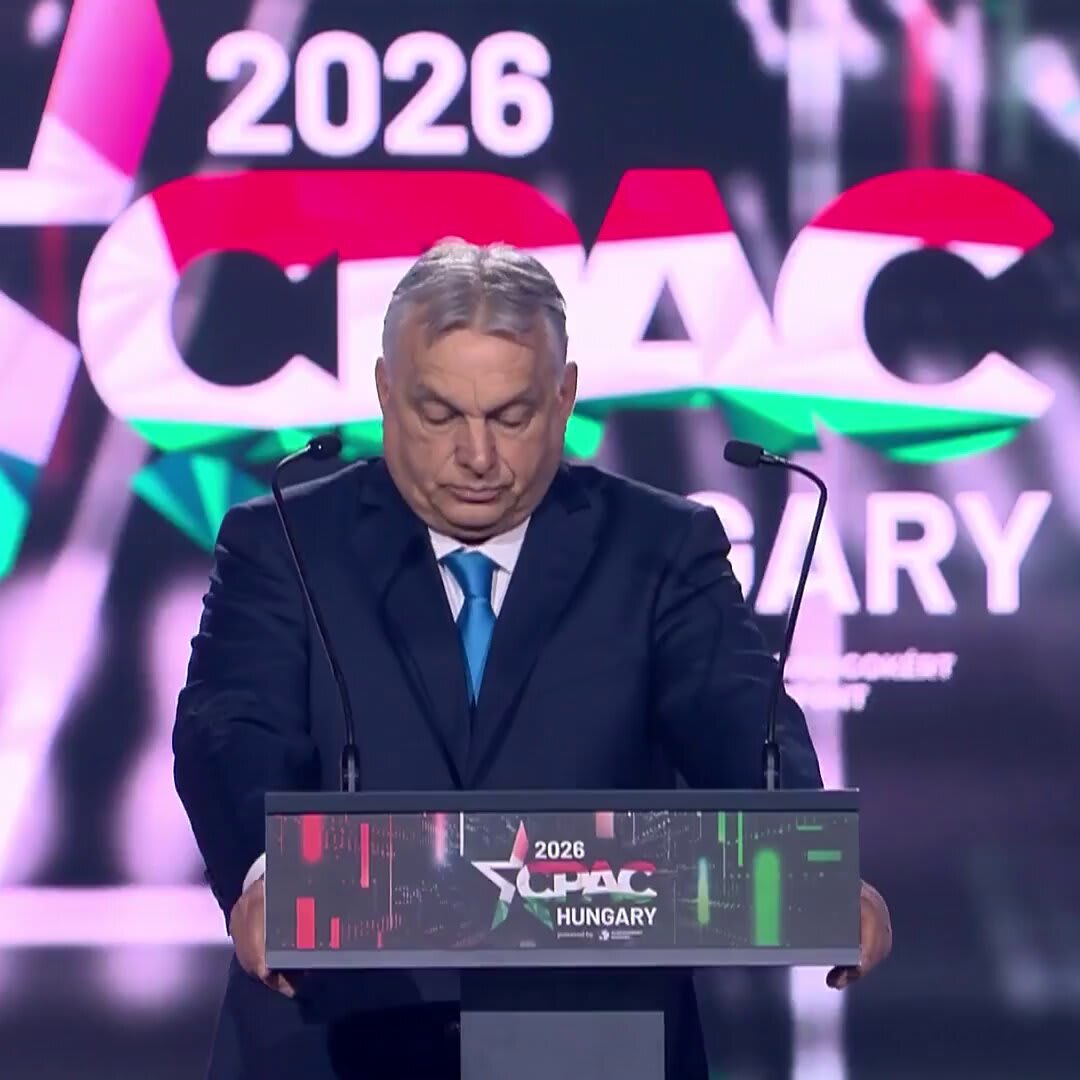
Prime Minister Orbán’s keynote address functioned as the ideological centerpiece of the conference, synthesizing the themes that would be elaborated by subsequent speakers. His remarks established several critical framings:
The “Biggest Political Realignment” Narrative: Orbán characterized Donald Trump’s 2024 electoral victory as the “biggest political realignment of the last 100 years of Western civilization.” This formulation elevated Trump’s victory from a U.S. domestic political event to a civilizational turning point, suggesting that the return of Trump to power represented a fundamental shift in the trajectory of Western society comparable to the upheavals of the 1920s–1940s.
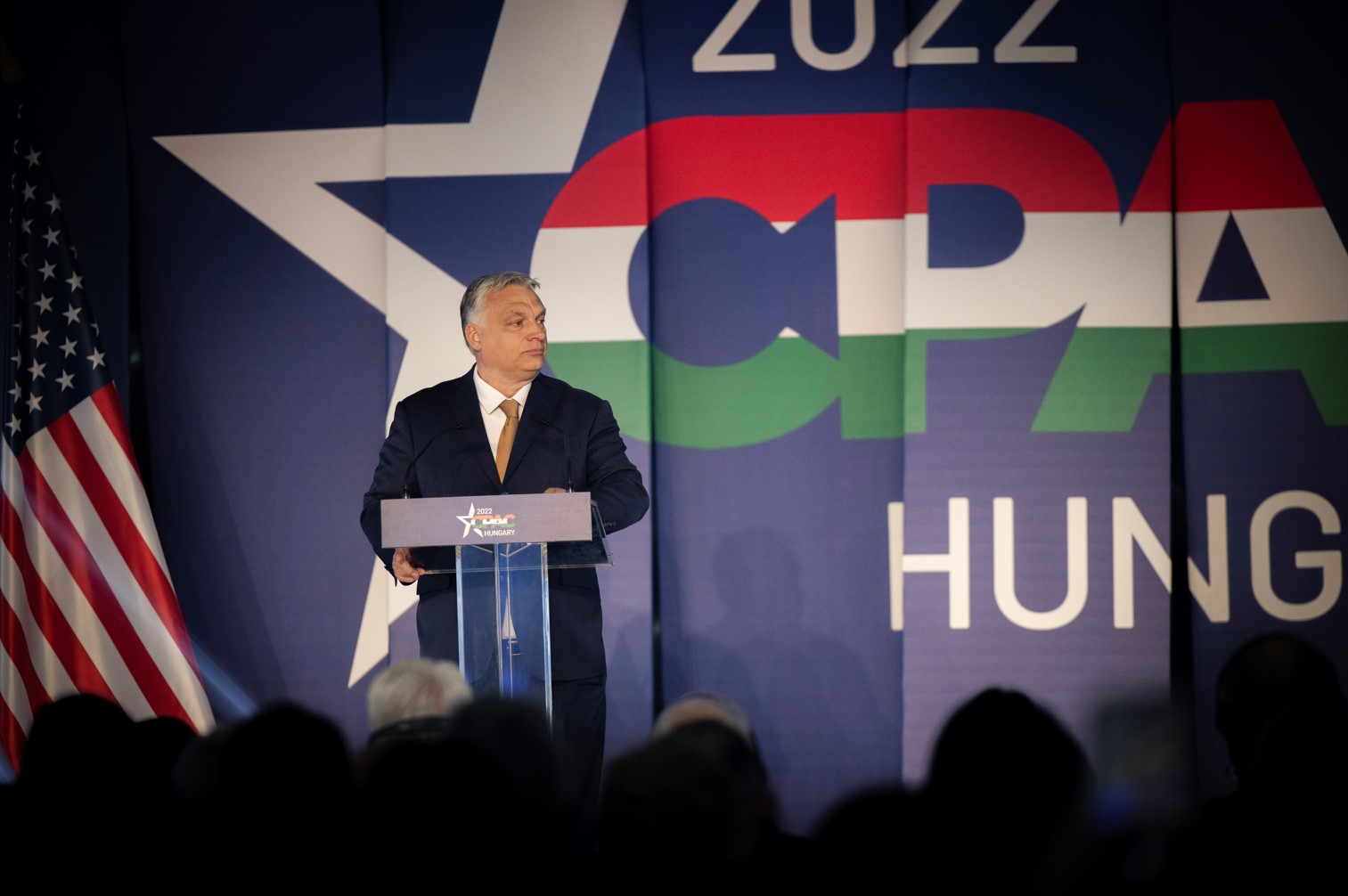
Brussels as “Last Progressive Fortress”: Orbán described the European Union as the “last progressive fortress” to be “besieged.” This military-political metaphor suggested that the EU represents the final institutional bastion of progressive values in the Western world, and that patriotic forces must mount political siege against European institutions. The language invoked historical imagery of castle sieges and territorial conquest, implying an inevitable conflict between patriotic and progressive forces.
Hungary’s Geopolitical Vulnerability: Orbán characterized Hungary as being caught in a “pincer”—threatened simultaneously from the east by Ukraine’s political trajectory and from the west by Brussels’s institutional pressure. This metaphor suggested that Hungary faces existential threats from multiple directions, justifying both authoritarian domestic consolidation and defiance of international legal frameworks.
EU Policy Decisions: Orbán referenced Hungary’s veto of a 90-billion-euro EU loan to Ukraine at the 19 March EU summit, using this concrete policy action as evidence of Hungary’s willingness to defy Brussels consensus in the name of national interest and opposition to what Hungary characterizes as an escalation of the Ukraine conflict.
The “3.5 Visegrád” Thesis: Orbán asserted that “3.5 of V4 countries have patriotic government,” referring to Hungary, Poland (under Mateusz Morawiecki’s successor), and Czechia (apparently counting Slovakia as the “0.5”). This framing positioned Hungary within a broader Central European alliance of patriotic governments.
“Make Europe Great Again”: Orbán invoked the “Make Europe Great Again” slogan, directly paralleling Trump’s “Make America Great Again” formulation and suggesting that a comprehensive European political realignment was both possible and necessary.
The Electoral Stakes: Orbán concluded his remarks with a stark formulation: losing the upcoming Hungarian parliamentary election would represent the “greatest victory of the progressives.” This rhetorical maneuver elevated the domestic April 12 election to the status of a civilizational clash, suggesting that electoral defeat would constitute not merely a change in government but a triumph for progressive globalism across Europe.
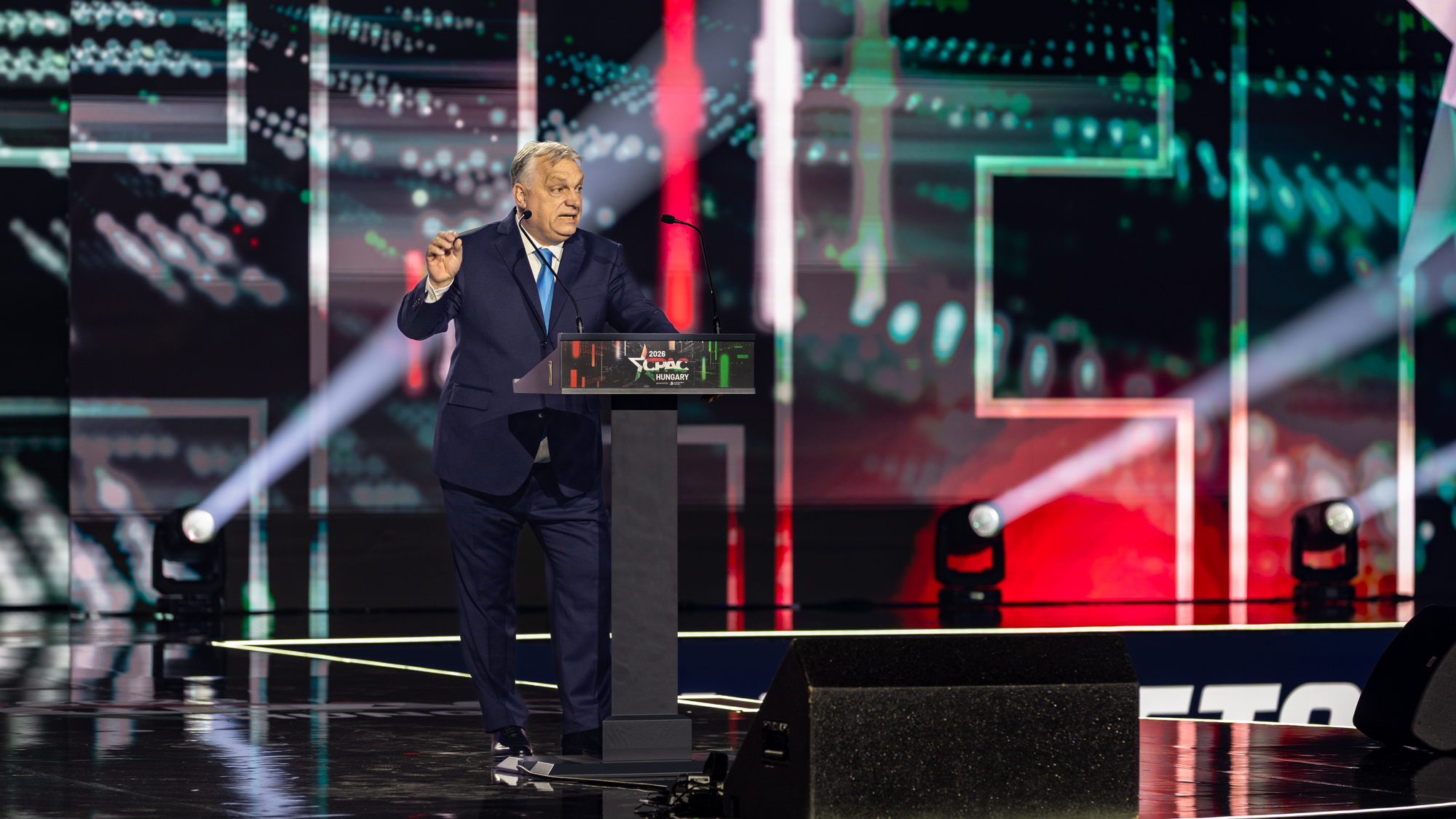
Donald Trump’s Video Message
The U.S. President-elect delivered a video message to CPAC Hungary 2026, recorded from the White House, which functioned as the most significant international endorsement of the event and Orbán’s electoral prospects. Trump’s remarks included several key elements:
Unconditional Support: Trump stated his “full and unconditional” support for Viktor Orbán, employing language that conveyed both personal alignment and political commitment.
Electoral Victory Expectations: Trump expressed hope that Orbán would “win by a large margin” in the April 12 election, effectively endorsing Orbán’s reelection before Hungarian voters had cast ballots. This statement constituted direct interference in Hungarian electoral processes from the U.S. president-elect.
Two Peoples as Models: Trump characterized the American and Hungarian peoples as “show[ing] the way toward a renewed West,” suggesting that the U.S.–Hungary partnership represented a model for broader Western political transformation.
Substantive Policy Alignment: Trump referenced potential cooperation between the U.S. and Hungary on energy and migration—two areas where both governments have adopted positions in opposition to European Union consensus and international liberal norms.

Andrej Babiš Video Greeting
“Budapest has become the intellectual capital of the global conservative movement.
The former Prime Minister of Czechia and ANO party leader sent video greetings to the conference, though he was unable to attend in person due to the terrorist attack in Pardubice, Czech Republic on 17 March 2026.
The JD Vance Question: Promised Visit, Strategic Ambiguity
The question of whether U.S. Vice President-elect J.D. Vance would attend CPAC Hungary 2026 or the Patriots’ Grand Assembly became a significant element of pre-conference speculation and strategic communication, ultimately demonstrating the limitations of the Orbán–Trump relationship and the complexities of American foreign policy engagement in Central Europe.
The Vance Attendance Timeline
January 2026 Speculation: In January 2026, rumors circulated that President-elect Trump might visit Budapest during the CPAC Hungary 2026 event. This possibility ultimately did not materialize, though the symbolic weight of such a visit would have constituted an extraordinary statement about the Trump administration’s priorities and its Central European orientation.
18 March Reuters Report: On 18 March 2026, Reuters reported that Vice President-elect J.D. Vance might visit Hungary “in the coming days,” citing unnamed sources. This timing placed a potential Vance visit within the window of CPAC Hungary 2026 (21 March) and the Patriots’ Grand Assembly (23 March).
Szijjártó’s Confirmation: On 18 March, Hungarian Foreign Minister Péter Szijjártó publicly confirmed to Reuters that “Vice President J.D. Vance will be in Hungary around early April.” This statement functioned as an official governmental confirmation, though it placed the visit outside the March CPAC/Patriots’ events and into the post-election period.
White House Silence: The White House declined to comment on the Vance visit, suggesting either ongoing deliberation about the visit’s timing and scope, or deliberate maintenance of strategic ambiguity regarding U.S. engagement with Hungary.
Middle East Contingencies: Reuters and Associated Press reporting noted that ongoing Middle East conflicts could potentially alter the planned visit schedule, introducing geopolitical uncertainty into the diplomatic planning.
Vance’s Actual Absence: Ultimately, Vice President-elect Vance did not attend either CPAC Hungary 2026 or the Patriots’ Grand Assembly, and no public confirmation has been made of when or whether the planned early April visit will materialize.
Strategic Function of the Vance Announcement
Even though Vice President-elect Vance did not ultimately appear at either event, the initial announcement of a planned visit served important strategic functions for the Orbán government:
Reinforcement of the USA–Hungary Axis: The public announcement that the U.S. Vice President-elect would visit Hungary, combined with Trump’s video message to CPAC, constructed a narrative of deepening U.S.–Hungary relations at the highest levels of the incoming Trump administration.
Temporal Extension of Campaign Focus: By scheduling the visit for “early April”—after the March 21–23 CPAC/Patriots’ events but before or coinciding with the April 12 election—the Vance visit announcement extended the period during which international political attention would focus on Hungarian politics, potentially amplifying the electoral campaign.
Domestic Opposition Messaging: Péter Magyar and the opposition Tisza Party seized on the Vance announcement as evidence of “foreign interference” in the Hungarian election, while also using it to support their assertion that the international environment was being manipulated to advantage Orbán’s electoral position.
Uncertainty as a Campaign Tool: The strategic ambiguity surrounding Vance’s visit—confirmed to occur but not specifically scheduled, not confirmed by the White House—maintained an element of unpredictability that could be leveraged by either the Orbán government or opposition forces depending on how developments unfolded.
The 1st Patriots’ Grand Assembly: March 23, 2026
Date: 23 March 2026 (Sunday)
Venue: MVM Dome (formerly Papp László Budapest Sportaréna), Budapest
Organizer: Patriots for Europe (PfE) parliamentary group
Expected attendance: 10,000+ • Key figure: Viktor Orbán (host)
Format: Political rally with live speeches • Significance: 1st PfE mass gathering

Following the conclusion of CPAC Hungary 2026 on March 21, the Patriots for Europe political group convened its 1st Grand Assembly in Budapest on March 23, 2026, providing continuity to what organizers framed as a unified “Budapest week” of conservative political convergence. This two-day gap allowed international delegates to network, travel within Budapest, and transition from the CPAC framework to the explicitly partisan European political format.
Background: The Origins and Structure of Patriots for Europe
Founding Moment: Patriots for Europe was formally founded on 30 June 2024 in Vienna through an initial agreement between Viktor Orbán’s Fidesz party (Hungary), Herbert Kickl’s Freedom Party (Austria), and Andrej Babiš’s ANO party (Czechia). This founding charter established the ideological and organizational framework that would guide the group’s subsequent expansion.
Patriotic Manifesto: The founding parties adopted a “patriotic manifesto” centering on several core commitments: the restoration of national sovereignty against supranational integration, the cessation of illegal migration, and a comprehensive review or reversal of European Union Green Deal environmental policies. These three pillars would become the defining elements of the Patriots for Europe political platform.
European Parliament Formation: On 3 July 2024 in Brussels, the Patriots for Europe group formally constituted itself as a European Parliament political group, rapidly expanding beyond the three founding parties. Parties from the Identity and Democracy (ID) group, including France’s Rassemblement National, Italy’s Lega, and the Netherlands’ PVV, transferred into the newly formed Patriots for Europe group. Additionally, Spain’s VOX party, which had previously been unaffiliated in the European Parliament, joined PfE. This rapid expansion reflected the organizational momentum and financial resources supporting the group’s formation.
Current Composition: Patriots for Europe currently comprises 84 members of the European Parliament from 12 EU member states, making it the third-largest political group in the European Parliament, positioned between the center-right European People’s Party and the center-left Socialist & Democrats group.
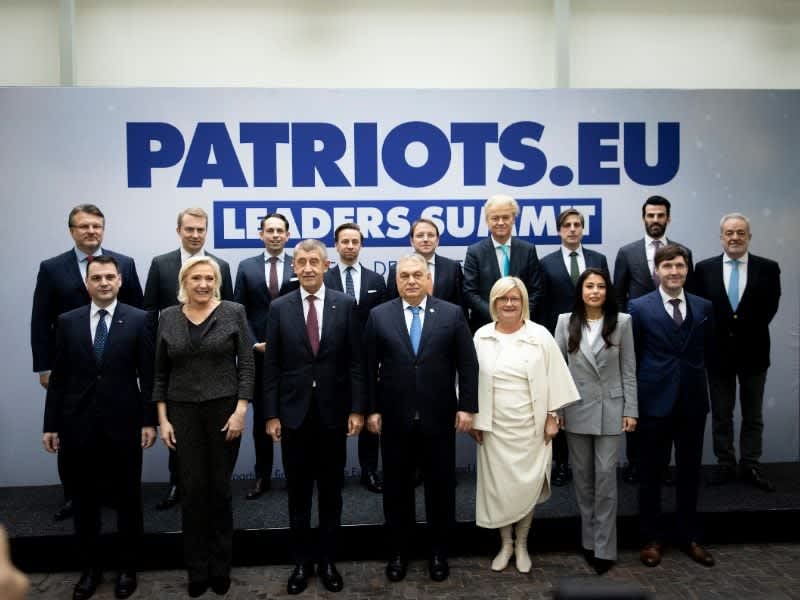
Leadership Structure: Jordan Bardella, the young French nationalist politician and Rassemblement National figure, serves as president of the group, while Kinga Gál, the Hungarian Fidesz MEP, holds the position of First Vice President. This leadership structure reflects both the numerical strength of the French Rassemblement National within the group and the political centrality of Hungary and Viktor Orbán to the group’s founding vision.
With two major political gatherings in a single week, Budapest’s event infrastructure was tested at scale. VanBudapest.com coordinated premium transfers for conference attendees requiring reliable airport pickup, hotel shuttles, and inter-venue transport across the city.
Why Budapest, Why Now: Strategic Positioning
Symbolic Capital of Sovereigntism: Budapest has become institutionally positioned as the symbolic capital of European sovereigntism under Viktor Orbán’s leadership. By hosting the Patriots’ first Grand Assembly in Budapest, the group reinforced the narrative that Hungary—and Orbán—represent the political and ideological vanguard of European patriotic resistance to Brussels supranationalism.
Electoral Timing: The 23 March assembly took place precisely 20 days before the 12 April 2026 Hungarian parliamentary election, placing it squarely within the campaign period and constituting a direct intervention in Hungarian electoral politics. The presence of Marine Le Pen, Matteo Salvini, Geert Wilders, Herbert Kickl, and Santiago Abascal in Budapest functioned as a powerful international endorsement of the Orbán government’s political project.
The “Budapest Week” Concept: The strategic clustering of CPAC Hungary (March 21) immediately followed by the Patriots’ Grand Assembly (March 23) created what organizers implicitly framed as a unified week of conservative and patriotic political convergence. This temporal clustering allowed for maximum media attention, delegation coordination, and symbolic reinforcement of the international conservative alliance.
Patriots’ Grand Assembly Program
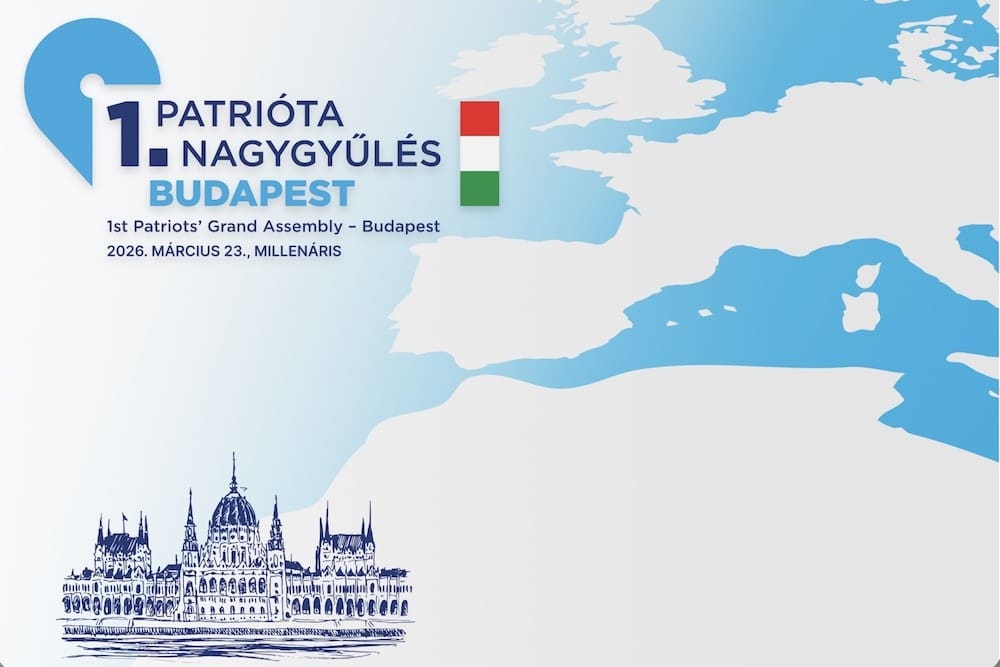
The Patriots’ Grand Assembly was structured in two geographical and functional components: a formal parliamentary conference in the Hungarian Parliament building during the morning hours, and a large public rally at Millenáris Park during the afternoon.
Parliamentary Building Conference (10:00 AM–12:00 PM)
Session Title: “The Right to Decide: Migration and Sovereignty”
Kinga Gál (Opening): The Fidesz MEP and Patriots for Europe First Vice President delivered the opening address, framing the conference within the discourse of national decision-making rights regarding migration policy and structural European sovereignty.
Gergely Gulyás (Presentation): The Hungarian government’s Minister of the Prime Minister’s Office delivered a substantive presentation on migration policy and EU relations, explaining the Hungarian government’s position on these core issues.
János Bóka (Presentation): The Minister for EU Affairs provided technical and diplomatic perspectives on Hungary’s approach to European Union negotiations and institutional relations.
László Kövér (Closing): The Speaker of the Hungarian National Assembly provided closing remarks to the parliamentary conference, lending the prestige of Hungary’s legislative leadership to the proceedings.
Millenáris Park Public Rally (12:00 PM Onward)
Following the parliamentary conference, the Patriots’ Grand Assembly transitioned to Millenáris Park, a large public space in Budapest, where a public rally with prominent stages and outdoor exhibition areas hosted speeches by major European right-wing leaders and organizational booths from affiliated think tanks and institutes.
Exhibition Pavilions
The Millenáris Park assembly featured exhibition areas and booths staffed by think tanks and civil society organizations affiliated with the patriotic conservative movement, including:
- 21st Century Institute (Hungarian think tank)
- Center for Fundamental Rights (organizer of CPAC Hungary; led by Miklós Szánthó)
- Axioma Center (conservative research)
- Danube Institute (Orbán-aligned geopolitical think tank)
- Christian Democratic Institute
- MCC (Mathias Corvinus Collegium, government-aligned intellectual platform)
- Nézőpont Institute (polling organization)
- Századvég (economics research institute)
- Saint Stephen Institute (Christian policy organization)
- Digital Civic Circles (civic technology initiative)
These organizations collectively represented the intellectual, policy-analytical, and civil society infrastructure supporting the patriotic conservative political movement in Hungary and Europe.
Main Stage Speakers at Millenáris Park
The main stage of the Millenáris Park rally featured speeches by the leading figures of Patriots for Europe and allied parties, each addressing the assembled crowd of supporters and international delegates.
Viktor Orbán (Keynote)
Prime Minister Orbán delivered the keynote address as the founding president of Patriots for Europe and host of the assembly. In his remarks to the patriotic conservative assembly, Orbán reviewed the historical moment of the group’s founding and its current positioning. He invoked language from the November 2024 Patriots’ summit in Paris, asserting: “Since Trump’s victory, we patriots are the majority of the Western world.” This characterization transformed the Trump election from an American domestic political event into evidence of a broader Western political realignment that positioned patriotic and nationalist movements as ascendant forces.
Marine Le Pen (Rassemblement National, France)
The Rassemblement National leader and presidential candidate addressed the assembly, representing the party with the largest European Parliament delegation within Patriots for Europe (30 MEPs). Le Pen’s participation signified the centrality of French nationalism to the patriotic conservative alliance. The relationship between Orbán and Le Pen has deepened significantly since 2021, when initial ideological and organizational contacts began to evolve into structured coordination. Le Pen has increasingly adopted positions aligned with Orbán’s sovereigntist critique of the European Union, particularly regarding EU centralization, migration policy, and national autonomy.
Matteo Salvini (Lega, Italy)
The leader of Italy’s Lega party and Vice Prime Minister of Italy addressed the assembly. Salvini represents a close and nearly two-decade-long alliance with Orbán and the patriotic conservative movement. The two leaders have cultivated an exceptionally strong personal and political relationship, with Orbán famously attending Salvini’s Padania rallies in northern Italy and publicly characterizing Salvini as “a hero.” This long-standing alliance demonstrates one of the most stable and institutionalized relationships within the patriotic conservative network.
Geert Wilders (PVV, Netherlands)
The PVV leader and recently appointed Prime Minister of the Netherlands addressed the assembly, bringing the political weight of his party’s electoral victory and his new position as Netherlands head of government. Wilders’ inclusion signified the expansion of Patriots for Europe to include a sitting Prime Minister of a major EU founding member state, substantially elevating the group’s political significance. The PVV brought 6 MEPs to the Patriots’ group and represents Islam-critical, anti-migration conservatism within the Dutch context.
Herbert Kickl (FPÖ, Austria)
The Freedom Party chairman and chancellor candidate following Austria’s September 2024 election addressed the assembly. Kickl’s participation represented one of the founding members of Patriots for Europe and reflected the Austrian party’s central role in the transnational patriotic conservative alliance. Austria’s location in Central Europe, its historical role in European politics, and the FPÖ’s long-standing relationship with Orbán gave Kickl particular significance within the Patriots network.
Santiago Abascal (VOX, Spain)
The VOX party leader addressed the assembly, representing Spanish nationalism and conservative Catholicism. Among the major party leaders present, Abascal has positioned himself as one of the most active and visible speakers within the Patriots for Europe network, regularly appearing at transnational forums and articulating the group’s ideological positions. VOX brought 6 MEPs to the Patriots’ group and represents the southernmost geographic extension of the patriotic conservative alliance.

Patriots for Europe: Structural Organization and Membership
The following table provides a comprehensive overview of the member parties comprising Patriots for Europe, their national contexts, and their representation in the European Parliament as of March 2026:
| Party Name | Country | MEPs |
|---|---|---|
| Rassemblement National | France | 30 |
| Fidesz + KDNP | Hungary | 11 |
| Lega | Italy | 8 |
| ANO | Czech Republic | 7 |
| FPÖ | Austria | 6 |
| VOX | Spain | 6 |
| PVV | Netherlands | 6 |
| Vlaams Belang | Belgium | 3 |
| CHEGA | Portugal | 2 |
| Přísaha a Motoristé | Czech Republic | 2 |
| Danish People’s Party | Denmark | 1 |
| Latvia First | Latvia | 1 |
| Voice of Reason | Greece | 1 |
| TOTAL | 12 Member States | 84 |

This membership composition demonstrates the geographic breadth of the Patriots for Europe movement, spanning from Portugal in southwestern Europe through Scandinavia and the Baltic states. The concentration of MEPs from western European parties (particularly the Rassemblement National’s 30 seats) combined with Central European members creates a geographically dispersed but ideologically coherent parliamentary alliance focused on national sovereignty, migration control, and institutional skepticism toward European Union integration.
Complete Guest Overview: CPAC Hungary 2026 Participants
The following table comprehensively lists the major domestic and international political figures, activists, intellectuals, and media personalities who participated in CPAC Hungary 2026, either in person or through video message:
| Name | Position / Affiliation | Attendance |
|---|---|---|
| Viktor Orbán | Prime Minister of Hungary; Fidesz leader | In person |
| Javier Milei | President of Argentina | In person |
| Irakli Kobakhidze | Prime Minister of Georgia | In person |
| Alice Weidel | Co-chair of Alternative for Germany (AfD) | In person |
| Geert Wilders | Prime Minister of Netherlands; PVV leader | In person |
| Santiago Abascal | VOX party leader; Spain | In person |
| Herbert Kickl | FPÖ chairman; Austria chancellor candidate | In person |
| Mateusz Morawiecki | Former PM Poland; ECR parliamentary group chair | In person |
| Tom Van Grieken | Vlaams Belang chairman; Belgium | In person |
| André Ventura | CHEGA leader; Portugal | In person |
| Martin Helme | EKRE co-chair; Estonia | In person |
| Eduardo Bolsonaro | Son of former Brazilian President Jair Bolsonaro | In person |
| Dave Rubin | American conservative political commentator | In person |
| Dinesh D’Souza | American conservative filmmaker and commentator | In person |
| Eva Vlaardingerbroek | Dutch conservative activist | In person |
| Russ Fulcher | U.S. Congressman (R-Idaho) | In person |
| Andy Harris | U.S. Congressman (R-Maryland) | In person |
| Stefano Forte | New York Young Republican Club representative | In person |
| Donald Trump | President-elect of the United States | Video message |
| Andrej Babiš | Former PM Czech Republic; ANO party leader | Video message |
| J.D. Vance | Vice President-elect of the United States | Did not appear |
In addition to the figures listed above, numerous other speakers, panelists, and participants are referenced in the program, including Hungarian government officials, international think tank directors, and media figures.
Two Events, One Strategy: Comparing CPAC Hungary and the Patriots’ Grand Assembly

While CPAC Hungary 2026 and the 1st Patriots’ Grand Assembly operated under distinct organizational frameworks and strategic communications, they functioned as complementary elements of a unified political strategy. The following table compares their essential characteristics:
| Characteristic | CPAC Hungary 2026 | Patriots’ Grand Assembly |
|---|---|---|
| Date | 21 March 2026 | 23 March 2026 |
| Venue | MTK Sportpark, Budapest | Parliament Building + Millenáris Park |
| Organizer | Center for Fundamental Rights (Szánthó) + American Conservative Union/CPAC Foundation (Schlapp) | Patriots for Europe parliamentary group |
| Institutional Framework | American institutional conservatism extended to Europe; think tank and political foundation partnership | European Parliament political group formalization; transnational party alliance |
| Primary Focus | Ideological conservatism; transnational conservative network building; USA–Hungary alliance emphasis | European patriotic party coordination; institutional power consolidation in EP; policy alignment |
| Primary Character | Network conference; intellectual gathering; campaign rally | Political party assembly; institutional coordination; public rally |
| USA Connection | Explicit: Trump video message; American commentators; CPAC Foundation involvement; emphasis on USA–Hungary axis | Indirect: Latin American representation (Milei); focus on European political structures |
| Main Message | “On to Victory!” (dual Hungarian election + European movement); “Make Europe Great Again”; if Hungary falls, Europe falls | Patriotic sovereignty; national decision-making rights; migration control; European patriotic alliance success |
| Strategic Function | Project image of global conservative consolidation; reinforce Orbán–Trump alliance; influence Hungarian election discourse | Project image of consolidating European patriotic bloc; demonstrate institutional coordination; show electoral viability |
As one analysis from The European Conservative noted, both events together functioned to “project the image of a consolidating bloc” of patriotic European and international forces, creating the appearance of an inevitable political movement even as the underlying organizational structures remained fragile and dependent on the political fortunes of individual leaders and parties.

“Two landmark gatherings in a single week transformed Budapest into the undisputed crossroads of transatlantic conservative politics.
The Political Context: Hungary’s April 2026 Election
The Orbán Era and Electoral Challenge
Viktor Orbán has continuously held the office of Prime Minister of Hungary for 16 years, having first assumed power in May 2010 following his party Fidesz’s decisive electoral victory. Over this period, Orbán has fundamentally restructured Hungarian political institutions, consolidated executive power, subordinated independent media to government influence, and established himself as the pre-eminent figure in Hungarian and Central European politics.
However, the 2026 election represents an unprecedented political threat to Fidesz’s continued dominance. Pre-election polling shows the opposition Tisza Party, led by Péter Magyar, maintaining a substantial lead of approximately 14 percentage points over Fidesz in voter preference. This polling margin represents the most severe electoral challenge Orbán has faced in his 16-year tenure.
Péter Magyar and the Tisza Party Challenge
Péter Magyar, the Tisza Party leader, represents a unique electoral threat because he is not an ideological opponent arriving from outside the Fidesz political ecosystem, but rather a former Fidesz insider who served as justice minister in the Orbán government before his estrangement from the regime and emergence as Orbán’s most formidable challenger.
Magyar’s political positioning emphasizes the restoration of democratic norms, the rule of law, and alignment with Western institutions—particularly NATO and the European Union. He characterizes the Orbán government’s policies regarding judicial independence, press freedom, and executive power as fundamentally anti-democratic and damaging to Hungary’s international standing.
Magyar’s campaign narrative directly targets the international political convergence orchestrated through CPAC Hungary and the Patriots’ Grand Assembly, characterizing both events as “foreign interference” in Hungarian electoral processes. He argues that Orbán’s cultivation of international conservative networks constitutes an attempt to compensate domestically for waning popular support through the appearance of international legitimacy.
The “Foreign Interference” Narrative
In response to both CPAC Hungary 2026 and the Patriots’ Grand Assembly, Magyar and the opposition have mounted a rhetorical counteroffensive asserting that Orbán’s cultivation of international political figures constitutes “foreign interference” in the Hungarian election. Magyar articulated this perspective starkly: “Orbán brings 50 foreign politicians; we are financed by 50,000 compatriots.”
This counter-narrative attempts to reframe the international dimensions of the Orbán campaign—which he portrays as evidence of broad global alignment—into evidence of isolation and dependence on external validation. The opposition characterizes CPAC and the Patriots’ Grand Assembly not as spontaneous expressions of international conservative solidarity with Hungary, but as orchestrated political theatre designed to create the false impression of international support for Orbán’s policies.
Magyar further pointed to the absence of leading U.S. politicians from CPAC Hungary 2026 and the Patriots’ Grand Assembly as evidence that the conferences did not actually represent as consequential a moment of international alignment as organizers claimed. The non-appearance of prominent Republican figures beyond Congressmen Fulcher and Harris, and the postponement of Vice President-elect Vance’s visit, suggested to critics that the American political establishment maintained greater distance from the Orbán government than the Hungarian prime minister’s international communications suggested.
The USA–Hungary Axis and Electoral Implications

The deepening of the USA–Hungary relationship has constituted a major element of the Orbán government’s campaign strategy during the 2025–2026 period. Evidence of this alignment includes:
- February 2026 Rubio Visit: Secretary of State Marco Rubio visited Budapest in February 2026, signaling continued Trump administration interest in maintaining high-level engagement with the Orbán government despite historical tensions between the Republican Party and the Hungarian government’s rule-of-law record.
- Trump’s CPAC Video Message: Trump’s recorded message to CPAC Hungary explicitly endorsed Orbán’s reelection and characterized the Hungary–USA relationship as a partnership showing “the way toward a renewed West.”
- Vance’s Planned Visit: The announced April 2026 visit by Vice President-elect Vance, while ultimately postponed, functioned as a signal that the incoming Trump administration intended to prioritize engagement with Hungary and Orbán.
This demonstrated alignment with the Trump administration constituted a primary electoral asset for Orbán, allowing him to characterize the 2026 election as a moment when Hungarian voters could choose alignment with the incoming American administration or opt for opposition policies more aligned with Brussels and the European Union establishment.

The “Make Europe Great Again” Narrative and Core Conference Themes
Both CPAC Hungary 2026 and the Patriots’ Grand Assembly articulated and reinforced a consistent set of core political themes that extended beyond Hungarian electoral politics to encompass a broader European and Western political reorientation. These themes include:
Migration as Civilizational Threat
Across both events, migration and border control emerged as perhaps the single most dominant political theme. Multiple speakers, from Alice Weidel to Santiago Abascal to Viktor Orbán, characterized migration not as a policy challenge requiring technical solutions, but as a civilizational threat to European identity, Christian values, and social cohesion. This framing elevated migration from a policy issue to a matter of cultural and civilizational survival.
Sovereignty vs. Brussels Supranationalism
A second core theme involved the assertion of national sovereignty against what speakers characterized as Brussels’s drive toward supranational integration and the erosion of member state autonomy. This theme crystallized in multiple formulations: Orbán’s characterization of the EU as a “progressive fortress” to be besieged, Kickl’s description of Hungary as a “beacon of sovereignty,” and Abascal’s assertion that Brussels represents the “last bunker of globalism.”
Peace vs. War / Ukraine Policy Divergence
Both events featured substantial discussion of Ukraine, NATO, and European security policy. Hungary’s position—skeptical of escalating commitments to Ukraine, opposed to EU financial assistance packages, and critical of NATO military aid—was presented not as isolationism but as a peace-oriented alternative to what speakers characterized as Brussels and Washington’s drive toward prolonged conflict. Szijjártó’s assertion that EU membership for Ukraine would constitute “escalation of war” rather than “peace” exemplified this framing.
Christian Values and Civilization
Both events invoked Christian values and religious civilization as core political themes. The presence of Bishop László Kiss-Rigó offering a blessing at CPAC’s opening, Weidel’s closing invocation “God bless Hungary,” and repeated invocations of “Christian values” and “Christian democracy” positioned both events within a framework of religious-civilizational politics rather than purely secular ideological conservatism.
Economic Freedom and Anti-Globalism (Milei Influence)

The presence of Argentine President Javier Milei at both CPAC and the Patriots’ Grand Assembly introduced a libertarian and economically free-market dimension to the conferences. Milei’s framing of Europe as needing to “return to its roots” rather than “reinvent itself” echoed across the gatherings, suggesting that economic liberalism and opposition to state intervention formed part of the broader patriotic conservative agenda.
The “If We Fall, Europe Falls” Existentialist Framing
Perhaps most significantly, all speakers invoked what might be called an existentialist political framwork: the notion that Hungary’s political trajectory carries implications for all of Europe, and that if patriotic forces fall in Hungary, the consequences will extend across the continent. This framing elevated the April 12 Hungarian election from a domestic political event to a civilizational turning point, investing each voter’s choice with massive symbolic weight.

International Press and Media Reaction
CPAC Hungary 2026 and the Patriots’ Grand Assembly generated substantial international media coverage, with reactions varying dramatically based on the editorial orientation of outlets and their national contexts. The coverage illustrates the profound partisan divides in how the events were interpreted and presented.
Hungarian Pro-Government Media
Magyar Nemzet, Origo, Mandiner: Pro-government Hungarian outlets characterized both events as extraordinary successes demonstrating Hungary’s emergence as a global center of conservative political power. These outlets emphasized the “world’s eyes on Hungary” narrative, the presence of prominent international figures, and the assertion that the events validated Orbán’s political vision at an international scale. Coverage in these outlets typically presented the events as evidence of Hungary’s restored standing and relevance in global politics.
Hungarian Opposition and Independent Media
Telex, 444, HVG: Opposition-aligned and independent Hungarian outlets adopted substantially more critical interpretative frames. These outlets focused on several key criticisms:
- Public Financing of Campaign Activities: Multiple outlets highlighted that CPAC Hungary and related events were being financed through public funds flowing through the Batthyány Foundation and other state-adjacent institutions, effectively using taxpayer money to finance what amounted to campaign rallies for the Fidesz party during an election period.
- Absence of Leading U.S. Politicians: Critical outlets emphasized that neither President-elect Trump nor Vice President-elect Vance had actually attended the events (though Trump sent a video message and Vance’s visit was announced for after the election), suggesting that the perceived alignment between the Trump administration and Orbán might be overstated.
- Financial Scale and Opacity: Investigative reporting from outlets like HVG and the Atlátszó investigative outlet detailed the multi-billion forint allocation of public funds to the events through various government-aligned foundations and agencies.
Analyst Perspectives: Hungarian analyst Miklós Radványi characterized Orbán as fundamentally misunderstanding how American politics works, suggesting that the Hungarian prime minister’s attempt to cultivate a close relationship with Trump and create the appearance of international validation through CPAC and the Patriots’ assembly represented a misreading of the American political context.

International Press Coverage
International delegates attending Budapest’s growing calendar of political events rely on VanBudapest’s premium Mercedes fleet for secure, comfortable airport transfers and inter-venue transportation throughout the conference week.
Western European and International Outlets
Le Monde (19 March): The French newspaper characterized Budapest as an emerging “hub for Western nationalists,” describing CPAC Hungary 2026 as a “campaign rally financed by Hungarian taxpayers.” This framing emphasized the domestic electoral context and the use of public resources for political purposes.
Reuters: Reuters provided extensive coverage of multiple dimensions of the events, including the initial reporting on J.D. Vance’s planned visit, attendance figures, and biographical backgrounds of major speakers. Reuters’s coverage maintained a neutral reporting tone while providing factual information that would allow readers to assess the events’ significance.
Associated Press (AP News): AP characterized Orbán as a “pro-Russian populist,” situating coverage of the Budapest events within a broader geopolitical context that emphasized Hungary’s distinctive foreign policy orientation.
Washington Post: The Washington Post reported on various dimensions of the events, including Orbán’s keynote remarks and the question of whether the Trump administration would be represented at the gathering. The Post noted that White House staff did not comment on whether Vance would attend.
BBC: The British broadcaster characterized the events under the headline “Europe’s US-backed conservatives hope this is their moment,” framing the gatherings as an expression of conservative international networking with American involvement and support.
Financial Times: The FT provided extensive coverage, including a significant report on Russian disinformation campaign activities in Hungary. The FT reported that a Kremlin-linked media consultancy known as the Social Design Agency had been engaged in disinformation campaigns targeting the Hungarian election and promoting pro-Orbán narratives. This reporting connected CPAC Hungary and the Patriots’ assembly to broader questions about hybrid threats and information warfare in the context of European elections.
Euronews: Euronews characterized the events as evidence of “Europe’s far-right uniting around Orbán,” emphasizing the ideological right-wing character of the assembled parties and leaders.
The European Conservative: A publication aligned with European conservative and right-wing perspectives, The European Conservative provided sympathetic coverage while also analyzing the strategic function of the events. The outlet noted that both CPAC and the Patriots’ Grand Assembly functioned to “project the image of a consolidating bloc,” indicating that the events served an important signaling function even if they did not necessarily represent an operationally coordinated political movement.
Financial Background and Public Funding Questions
A major point of controversy surrounding CPAC Hungary 2026 and the related Patriots’ Grand Assembly has centered on the substantial public funding allocated to these events through various Hungarian government-aligned foundations and institutions. Investigative reporting has documented significant financial allocations to the organizing entities.
The Batthyány Foundation and Center for Fundamental Rights Funding
The Center for Fundamental Rights, which co-organizes CPAC Hungary alongside the American Conservative Union/CPAC Foundation, is funded through the Batthyány Lajos Foundation, a Hungarian foundation with strong government connections. The documented public funding allocations to the Batthyány Foundation and thus to the Center for Fundamental Rights show a pattern of dramatic year-over-year growth:
- 2022: 390 million HUF allocated
- 2023: 910 million HUF allocated
- 2024: 4.25 billion HUF total allocation, with approximately 1.15 billion HUF directed specifically to CPAC-related events and activities
- 2025: 650 million HUF documented in a contract for “Lounge Event” activities associated with CPAC
What These Figures Do Not Capture
Investigative reporting emphasizes that these documented public funding figures represent only a partial accounting of the resources deployed for CPAC Hungary and related events. The figures typically do not include:
- Speaker fees and honoraria for international participants
- Travel costs and accommodation for foreign delegation members
- Comprehensive public relations and media spending
- Security and logistics costs for major international events
- Additional allocations through other government-aligned foundations or institutions not directly categorized as CPAC-related spending

The true total public expenditure on CPAC Hungary 2026 and related events likely substantially exceeds the documented figures, though comprehensive accounting of all costs remains difficult due to the distributed allocation of funds across multiple government entities and the opacity of contracts involving government-aligned organizations.
The Public Funding Controversy
The use of substantial public resources to finance what critics characterize as campaign-adjacent political events during an election period has generated accusations that the Orbán government is improperly using state resources to finance what amounts to campaign activities. The opposition argues that public funds should be allocated for governmental purposes and public services, not for international political conferences that function as campaign rallies.
The government and its defenders counter that CPAC Hungary serves important functions including intellectual exchange, policy discussion, and the projection of Hungary’s standing in international conservative networks. However, even this argument highlights that the events serve purposes beyond pure policy analysis, extending into campaign and political brand management.
Critical Viewpoints and Press Freedom Concerns
Beyond the debates surrounding public financing and the electoral context of CPAC Hungary 2026 and the Patriots’ Grand Assembly, broader questions about press freedom, government control of information, and democratic norms have emerged from international observers and human rights organizations.
Press Freedom and the Csákberény Incident
On 17 March 2026, just days before CPAC Hungary and immediately preceding the Patriots’ Grand Assembly, a disturbing incident occurred in the village of Csákberény in Hungary. A journalist covering a political event in the village was attacked, and the incident raised questions about the security environment for journalism in Hungary during the electoral campaign period.

The incident prompted statements from major international press freedom organizations. Both Reporters Without Borders (RSF) and the Committee to Protect Journalists (CPJ) issued condemnations of the attack and calls for investigation and prosecution. These statements highlighted concerns about the physical safety of journalists operating in Hungary during the 2026 electoral period.
Media Environment and Editorial Control
International media analyses have documented that substantial portions of the Hungarian media landscape are controlled by government-aligned oligarchs or directly operated by government entities. This control of the media environment allowed the Orbán government and its allies to shape the narrative surrounding CPAC Hungary and the Patriots’ Grand Assembly substantially, with pro-government outlets providing favorable coverage while independent outlets were largely relegated to offering critical analysis to a limited audience.
The Financial Times report on Russian disinformation activities in Hungary during the 2026 election cycle raised additional concerns about the information environment, highlighting that both Hungarian state-aligned media and foreign disinformation operations were operating to influence the electoral discourse in ways that advantaged Orbán’s electoral position.
Geopolitical and Alliance Contexts
The political significance of CPAC Hungary 2026 and the Patriots’ Grand Assembly extends beyond Hungary’s 2026 election to encompass broader geopolitical alignments and alliance structures that are reshaping European and Western politics. The events situate Hungary and Orbán within multiple overlapping and sometimes competing alliance frameworks:
1. The Trump–Orbán–Milei Axis
The most conspicuous alliance structure evident at both CPAC Hungary and the Patriots’ Grand Assembly involves the explicit alignment of Viktor Orbán, incoming U.S. President Donald Trump, and Argentine President Javier Milei. Trump’s video message expressing “full and unconditional” support for Orbán, Milei’s first state visit being to Budapest where he was awarded an honorary doctorate, and the explicit invocation of the “Trump victory equals biggest political realignment of 100 years” narrative all point to an emerging axis that spans the Atlantic and extends to Latin America.
This axis combines anti-establishment populism, skepticism toward multilateral institutions, opposition to progressive social policies, and a particular form of nationalist sovereignty assertion. It remains unclear whether this alignment will solidify into institutionalized cooperation or whether it will remain primarily a matter of rhetorical affinity and episodic coordination.
2. Patriots for Europe as Emergent European Right-Wing Bloc

With 84 MEPs from 12 European Union member states, Patriots for Europe represents the most consequential transnational alliance of European right-wing parties. The group’s consolidation demonstrates that European right-wing parties, despite ideological heterogeneity and nationalist proclivities, can construct operational parliamentary coalitions focused on core policy priorities.
The political viability of Patriots for Europe as an institutional actor in the European Parliament suggests that the European right-wing surge is not merely a collection of isolated nationalist parties but an increasingly coordinated political force capable of shaping EU legislative outcomes and policy discourse.
3. The European Conservatives and Reformists (ECR) Network
Separate from but overlapping with Patriots for Europe, the European Conservatives and Reformists parliamentary group, chaired by former Polish Prime Minister Mateusz Morawiecki, represents a somewhat more institutionally mainstream conservative alignment. Morawiecki’s participation in CPAC Hungary demonstrates the permeable boundaries between different right-wing alliance structures and suggests ongoing coordination efforts among various conservative and right-wing tendencies.
4. The Visegrád Dimension (“3.5 V4”)
Orbán’s reference to “3.5 Visegrád countries” with patriotic governments highlights the continued importance of Central European regional cooperation as an alliance structure. The Visegrád Group (Hungary, Poland, Slovakia, and Czechia) represents a historical regional alliance structure that continues to assert itself as a geopolitical entity, though with some fracturing. Orbán’s enumeration of only 3.5 countries as having patriotic governments suggests his view that only Hungary, Poland (under Morawiecki successor), and Czechia qualify, with Slovakia counted as the “0.5”—indicating that Slovak Prime Minister Robert Fico’s government occupies a more ambiguous position.
5. The Latin American Right-Wing Connection
The participation of both Javier Milei (Argentine President) and Eduardo Bolsonaro (Brazilian political figure) extended the political networks on display at both events to include Latin American right-wing actors. This suggests that transnational right-wing alliance building extends beyond the European and Atlantic contexts to encompass global conservative and nationalist movements.
6. The Georgian Sovereignty Narrative
Georgian Prime Minister Irakli Kobakhidze’s in-person participation in CPAC Hungary 2026 extended the alliance structure to include post-Soviet states asserting sovereignty against external pressure. Georgia’s representation in the conference highlighted the appeal of Orbán’s sovereigntist model to leaders of countries navigating geopolitical pressures from larger regional and global powers. Kobakhidze’s presence suggested that other sovereigntist governments view the Hungarian political model and international alliance structure as relevant to their own strategic circumstances.
Conclusions: What Do These Events Mean?

Planning to attend future political summits in Budapest? VanBudapest.com provides discreet, premium group transportation for international delegations, media teams, and conference attendees — trusted since 1988.
CPAC Hungary 2026 and the 1st Patriots’ Grand Assembly represent a significant moment in European and Western politics, though their ultimate historical significance remains uncertain and contested. Several key conclusions emerge from the comprehensive examination of these events:
Electoral Context and Campaign Implications
Both events functioned unmistakably as campaign activities in service of Viktor Orbán’s reelection efforts in the 12 April 2026 Hungarian parliamentary election. The timing of CPAC (21 March) and the Patriots’ Grand Assembly (23 March)—occurring 22 and 20 days respectively before the election—situated both gatherings squarely within the electoral campaign period. The explicit messaging equating the Hungarian election with the broader European political struggle (“If we fall, Europe falls too”) and the presence of international leaders endorsing Orbán’s reelection confirm the electoral function of both events.
The financial scale of these events, with documented public funding in the billions of Hungarian forints, raises fundamental questions about whether state resources were properly deployed for purely political purposes during an active electoral campaign.
Limits of Alleged International Alignment
While both events projected an image of robust international conservative and patriotic solidarity with Hungary and Orbán, the actual attendance patterns and commitments suggest more limited alignment than the rhetoric implies. Most significantly:
- No sitting U.S. President or Vice President attended either event; Trump participated only through video message, and Vice President-elect Vance did not appear despite pre-conference expectations.
- The highest-ranking live American political participants were Congressmen Fulcher and Harris, important figures in conservative Republican circles but not commanding figures in the Trump apparatus or broader American politics.
- The postponement of Vance’s visit to “early April” (after the critical March 21–23 events and possibly overlapping with or after the April 12 election) suggested that the Trump administration’s actual engagement prioritization might differ from Orbán’s rhetorical emphasis.
These attendance patterns suggest that while the incoming Trump administration may harbor sympathetic views toward Orbán’s political project, the depth of the relationship and the prioritization of close engagement remain somewhat limited compared to the narrative of alignment that Orbán’s communications construct.
Real Function: Transnational Network Building
Despite the electoral context and the somewhat overstated claims about international alignment, both CPAC Hungary 2026 and the Patriots’ Grand Assembly served a genuine and important function: consolidating and extending transnational alliance networks among right-wing, nationalist, and conservative political movements. The participation of leaders from 51 countries at CPAC and the coordination of seven major European party leaders at the Patriots’ Grand Assembly demonstrate that these gatherings created opportunities for political actors to interact, coordinate, and reinforce shared ideological frames.
The Patriots for Europe parliamentary group, with its 84 MEPs, represents a genuine institutional achievement in transnational right-wing organization. The ability to coordinate across parties with different national interests and ideological nuances suggests that right-wing political movements have developed genuine organizational capacity for transnational cooperation.
Lack of Transparency and Democratic Concerns
Both events have been characterized by significant opacity regarding funding sources, allocation of resources, and decision-making processes. The multi-billion forint public allocations to the Batthyány Foundation and the Center for Fundamental Rights raise fundamental questions about government accountability and the appropriate use of taxpayer resources. The absence of transparent competitive contracting, detailed budget allocations, and public reporting on expenditures suggests that the financing of these events does not meet standards of democratic transparency and accountability.
The “Budapest Week” as Coordinated Campaign Strategy
The strategic clustering of CPAC Hungary, the Patriots’ Grand Assembly, and the announced (though ultimately postponed) J.D. Vance visit within a narrow temporal window in March 2026 suggests careful orchestration designed to maximize electoral impact. Organizers implicitly framed this as a unified “Budapest week” of international conservative and patriotic convergence, creating an extended period during which international media attention, international delegation presence, and political messaging remained focused on Hungary and the Orbán government’s political project.
This temporal coordination demonstrates sophisticated campaign management and the coordination of international political actors toward shared messaging objectives, though it also raises questions about the propriety of using state resources and international political figures in what amounts to campaign activity.
Broader Significance: European Political Realignment
Beyond the immediate Hungarian electoral context, CPAC Hungary 2026 and the Patriots’ Grand Assembly illustrate broader patterns of European political realignment. The mobilization of conservative, nationalist, populist, and right-wing parties in transnational networks; the cultivation of alliance structures with American political actors; the development of institutional coordination mechanisms (particularly through the European Parliament); and the framing of these movements as representing a civilizational alternative to progressive supranationalism all point to significant shifts in European political organization and contestation.
These movements remain heterogeneous, sometimes contentious, and dependent on individual leaders and contingent political circumstances. Yet both events demonstrate that the European right-wing surge is not merely a disconnected collection of national movements but an increasingly coordinated political force with institutional presence, financial resources, and transnational ambitions.
Frequently Asked Questions: CPAC Hungary 2026 and Budapest Political Events
Professional Event Transportation with VanBudapest.com
Attending a major political conference, international summit, or prestigious event in Budapest? VanBudapest.com has been providing premium transportation services to distinguished guests since 1988.
Our Event Transportation Services
When hosting or attending international conferences like CPAC Hungary, political assemblies like the Patriots’ Grand Assembly, or other major events in Budapest, professional transportation sets the appropriate tone for your participation. VanBudapest.com provides:
- Private Airport Transfers: Direct, efficient transport from Budapest Ferenc Liszt International Airport to your hotel or event venue, with real-time flight tracking and professional meet-and-greet service
- Hourly Chauffeur Service: Availability throughout your stay for conferences, panel discussions, networking events, and social engagements
- VIP Vehicle Fleet: Mercedes-Benz luxury sedans, coaches, and vans suitable for single executives, small delegations, or larger groups
- Conference and Event Logistics: Multi-vehicle coordination for transporting conference participants, delegate movements between venues, and complex event scheduling
- 24/7 Client Support: Immediate assistance, schedule adjustments, and responsive communication throughout your stay

Why Choose VanBudapest for Event Transportation?
Serving international guests since 1988, we understand the exacting standards required for political events, diplomatic conferences, and prestigious gatherings. Our drivers are experienced in navigating Budapest’s complex event logistics, professional in manner, and discreet regarding client needs. We maintain a modern fleet of well-maintained luxury vehicles and provide service that reflects the professional standards expected at international conferences.
Contact VanBudapest.com:
Phone/WhatsApp: +36 70 753 6333
Email: info@vanbudapest.com
Website: VanBudapest.com — Since 1988

Ready to arrange your professional event transportation?
Book Your Transfer Now or Explore Our Fleet to discover which vehicle option best suits your needs.
For specific information about transportation for political events, conferences, and international gatherings in Budapest, visit our Political Transportation Solutions page.
Final Observations: Understanding Budapest March 2026
The convergence of CPAC Hungary 2026 and the 1st Patriots’ Grand Assembly in Budapest during March 21–23, 2026, represented a significant moment in contemporary European and Western politics. These events brought together more than 660 international delegates from 51 countries, featured 45 major speakers, and attracted 182 international journalists to document proceedings that organizers characterized as a pivotal moment in the global conservative movement’s trajectory.
The events unquestionably functioned as campaign activities in service of Viktor Orbán’s reelection efforts in the 12 April 2026 parliamentary election, occurring 22 and 20 days before voters cast ballots. The strategic deployment of international political figures, the coordination of messaging around the “On to Victory!” slogan, and the substantial public funding allocated to both events demonstrate the integration of international political network-building with domestic electoral strategy.
Yet these events also represented genuine achievements in transnational right-wing political organization. The Patriots for Europe group, with its 84 MEPs from 12 member states, demonstrates that contemporary European right-wing movements possess genuine capacity for institutional coordination. The networks established and reinforced through CPAC and the Grand Assembly create ongoing structures for political communication, policy coordination, and ideological alignment across previously fragmented national movements.
The absence of leading U.S. political figures beyond the level of Congressmen (despite Trump’s video message and the announced but postponed Vance visit) suggests that while the incoming Trump administration may harbor sympathetic views toward Orbán, the depth and prioritization of this relationship may not match the rhetoric of the “biggest political realignment of 100 years” that Orbán invoked. This gap between expressed alignment and actual demonstrated commitment represents a critical uncertainty regarding the real durability and consequences of the international partnerships constructed at these March 2026 Budapest events.
The substantial public funding allocated to these events—documented at billions of Hungarian forints—raises important questions about democratic accountability, the appropriate use of state resources, and the transparency standards expected of governments during electoral periods. The clustering of CPAC, the Patriots’ Grand Assembly, and the announced Vance visit within a narrow temporal window demonstrates sophisticated campaign management while simultaneously raising concerns about the propriety of using state resources and international political actors for what amounts to campaign activity.
CPAC Hungary 2026 and the 1st Patriots’ Grand Assembly will be remembered as a watershed moment in European right-wing political organization, as a notable episode in the Orbán government’s strategic international engagement, and as a controversial use of state resources during an electoral campaign. Their ultimate significance will depend substantially on the outcome of the 12 April 2026 Hungarian parliamentary election, the durability of the transnational alliances constructed, and the success or failure of the broader political projects that these Budapest gatherings sought to advance.
You must be logged in to post a comment.