
Champions League 2026 • Budapest Arsenal FC: The Gunners’ Complete 2026 Snapshot — History, Identity, Trophies, and Why Budapest Feels Personal
From Dial Square to the Puskás Aréna — the road to May 30
Key takeaways
There’s a specific kind of Champions League season that takes over an office.
Not the casual “we’ll check the highlights later” kind. The real one—where matchdays become calendar anchors, where group chats light up before lineups even drop, and where you end up knowing the away-end logistics almost as well as you know the tactics.
That’s been us this year. We’ve been following the Champions League closely because we’ve been breaking down club after club from our own perspective—how they travel, how they handle pressure, how they move through big nights when the margins get thin and the stadiums get loud.
And Arsenal is one of those teams we genuinely love watching.
They’re not just good—they’re coherent. Dynamic. Serious. The kind of side that looks like it’s been built with a blueprint rather than a vibe. They’re also currently top of the Premier League, which changes the whole emotional temperature around a club: when you’re leading in March, every week starts to feel like history might be loading.
And yes—there’s a Hungarian thread we can’t ignore.
Viktor Gyökeres is Swedish, but multiple widely cited profiles describe him as of Hungarian descent through his paternal grandfather, with reports also claiming Hungarian-Swedish dual citizenship. Whether you frame that as heritage, identity, or simply “a meaningful family root,” the feeling is the same from Budapest: one of ours is in the picture.

Viktor Gyökeres 🇭🇺🇸🇪
The Premier League is the strongest league in the world right now, and Hungarian-connected names are showing up more and more often at the sharp end of it. That matters. It’s pride, but it’s also perspective: this small country keeps finding ways to be present in the biggest games.
And if Arsenal keep doing what they’ve been doing—if they keep winning like a team that expects to win—then the storyline writes itself:
May 30, 2026. Budapest. Puskás Aréna. The Champions League final.
The Road to BudapestEven if everyone in the room supports a different club, you can still feel the same thing: it would be something special to see an Arsenal side like this walk into our city with a trophy on the line.
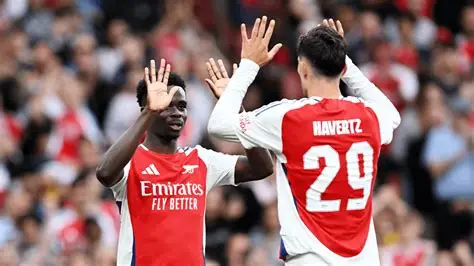
Arsenal FC — The Gunners since 1886
The Arsenal identity: where it actually comes from
Arsenal weren’t born in a marketing meeting. They were formed in 1886 by workers at the Woolwich Arsenal armaments factory, originally under the name Dial Square, and then became Royal Arsenal shortly after.
That origin still explains everything:
And in the modern era, the stadium move mattered too:
Arsenal left Highbury and moved to the Emirates Stadium in 2006, creating the infrastructure of a modern superclub—even when it came with years of competitive trade-offs.
The trophies that built the brand
Arsenal’s trophy profile is unusually “English-core dominant” in the best way:
Domestic
Europe
Arsenal’s European honors are fewer than their domestic haul, but they’re real and recognized:
The “Invincibles” effect
2003/04 — The Unbeaten SeasonIn any serious Arsenal overview, 2003/04 isn’t trivia—it’s identity. That unbeaten Premier League season is the reference point that every modern title push gets measured against.
Managers: the eras that shaped Arsenal
Arsenal’s story is easier to understand as eras rather than seasons.
2025/26 reality check: Arsenal’s current season, verified
Premier League (as of early March 2026)
*City holding a game in hand
A key recent marker: Arsenal’s 1–0 win away at Brighton pushed them further clear and highlighted the team’s ability to grind out results when it’s not pretty.
Champions League: perfect league phase
Arsenal finished the Champions League league phase with a 100% record (8 wins from 8)—a statement season inside the new format.
UEFA’s club stats for Arsenal in this competition underline the profile: 23 goals scored, 4 conceded across the league phase.
The next step: Bayer Leverkusen
Arsenal’s Round of 16 matchup is Bayer Leverkusen, with the first leg March 11, 2026 in Germany and the return leg in London on March 17, 2026.
In elite knockout ties, the storyline isn’t “who’s better on paper.” It’s:

Piero Hincapié — Bayer Leverkusen
Who controls the first 20 minutes of each leg
Who survives the momentum swings
Who can score without overcommitting
Who has the deeper bench when fatigue becomes tactical
If Arsenal keep their defensive stability and avoid injuries in the core spine, they don’t just have “a chance”—they have a path.

Arsenal matchday intensity — the Emirates on a European night
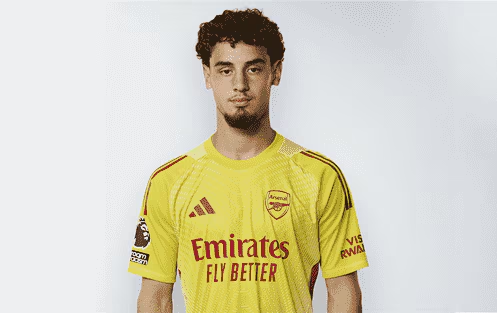
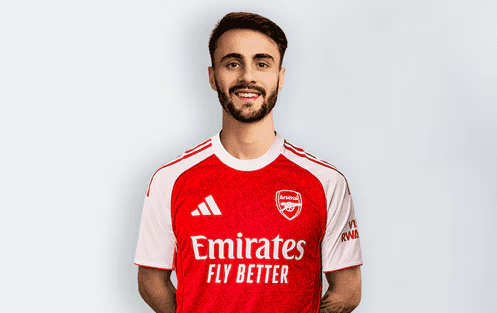
Arsenal Squad 2025/26


























Why Budapest changes the emotional math
The 2026 UEFA Champions League final is scheduled for Saturday, May 30, 2026, at the Puskás Aréna in Budapest.
For us, that’s not a neutral host city. It’s home.
A Champions League final isn’t only a football event—it’s a city-scale operation: arrivals, traffic control, hotel compression, security zones, VIP logistics, and a very specific kind of pressure that only shows up when the world is watching one stadium.
If Arsenal make it here, it won’t just be “another final.” It’ll be one of those nights where Budapest becomes part of the match.
Premium Transfer for Champions League Final 2026
FAQ
Is Arsenal really leading the Premier League right now?
Yes. As of early March 2026 reporting and official table listings, Arsenal are first with 67 points from 30 matches.
Did Arsenal actually win all eight Champions League league-phase matches?
Yes. Arsenal’s official club coverage confirms an 8-for-8 league-phase record, and UEFA’s statistics support the dominance (including goals for/against).
When is the Champions League final in Budapest?
The final is May 30, 2026 at Puskás Aréna, Budapest.
Sources used (for transparency)
Arriving in Budapest for the Champions League?
Premium airport transfers, matchday VIP transport, and city-wide chauffeur service — available for every Champions League fixture in Budapest.