

Formula 1’s New World When Technology, Business & Racing All Reboot at Once
The sport rewrites the engine rules, aero philosophy, car dimensions, and tire strategy — while expanding to 11 teams. Welcome to the most dramatic reset in Formula 1 history.
Formula 1 rarely does a “half revolution.” In 2026, it doesn’t even try: the sport rewrites the engine rules, the aero rules, the car’s dimensions, the tire philosophy, and the cost-cap math — all while expanding the grid to 11 teams. This is the kind of season where last year’s lessons only matter halfway; the real currency is organizational discipline, development cadence, and energy management.
The calendar brings 24 races, with the season returning to Melbourne for the opener and ending in Abu Dhabi. Six Sprint events are locked in: Shanghai, Miami, Montreal, Silverstone, Zandvoort, and Singapore.
Why 2026 Is a True Reset
The real point of the 2026 rules isn’t just that the cars are smaller and lighter (they are). It’s that F1 forces everyone into a rare engineering compromise: more electric power, less internal-combustion “raw shove” — active aero front and rear, meaning your car is effectively changing shape every lap — and the core racing weapon becomes energy at the right moment, not “free overtakes.”
The 2026 combination turns this into a manufacturer-and-operations season. If you draw the wrong energy map, you won’t lose the race in Lap 18 — you’ll lose your weekend in qualifying.
— The New Racing Reality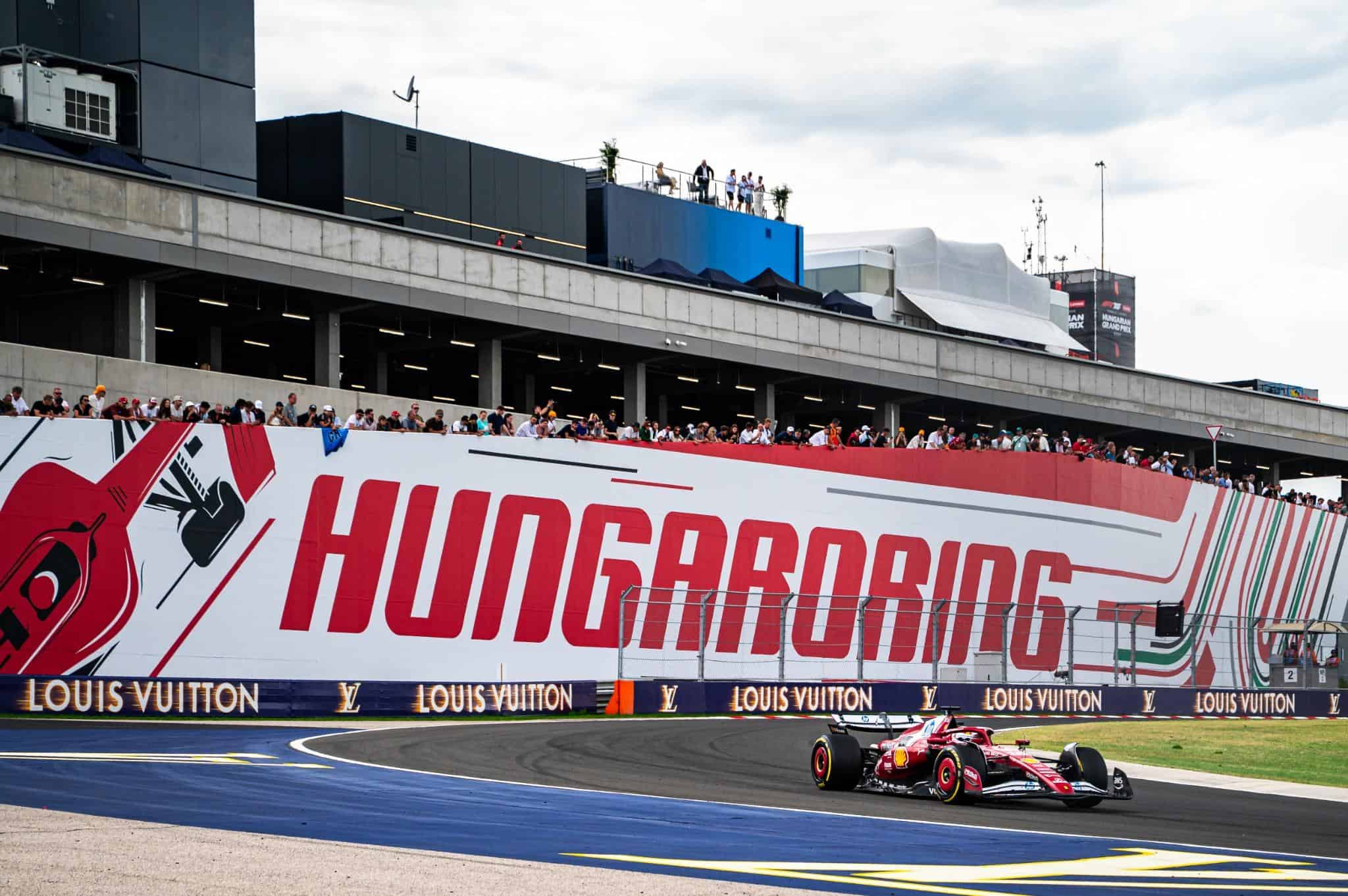
2026 Tech, Explained Clearly
1) The New Power Unit: V6 Stays, Hybrid Split Changes Everything
The 2026 engines keep the 1.6-liter turbo V6 architecture, but the hybrid system’s internal logic is completely new. The MGU-H is removed — it was too complex, costly, and had limited road relevance. Meanwhile, MGU-K output nearly triples from 120 kW to 350 kW. The target is roughly a 50:50 split between combustion and electric power, with 100% advanced sustainable fuel becoming mandatory.
2026 Power Unit Specifications
Engine
1.6L Turbo V6 (MGU-H removed)
MGU-K Output
350 kW (up from 120 kW)
Power Split Target
50% ICE / 50% Electric
Fuel
100% Advanced Sustainable
In this era, the most valuable engineering isn’t “three more kilowatts at the top.” It’s knowing how not to run out of deployable energy at the end of the lap — because attack and defense both come out of the same battery budget.
2) Active Aerodynamics: DRS Is Gone
The most visible change for fans: no DRS. In its place comes active aero plus a more energy-driven overtaking toolset. Z-mode provides higher downforce for corners, while X-mode delivers lower drag with moving elements front and rear for straights. If you’re within 1 second at the detection point, Overtake Mode grants extra electrical deployment potential for the attack phase.

Wheel-to-wheel action — the new aero rules promise closer, more strategic racing.

Ferrari and McLaren — two titans preparing for the 2026 revolution.
Overtaking stops being a single-zone button press. It becomes closer to two-lap chess: you position first, you finish second — if you managed the energy correctly.
— The New Overtaking Logic3) Smaller, Lighter, More Nervous Cars
The philosophy is “nimble car.” Shorter wheelbase, narrower bodywork, lower minimum weight — on paper, more agility. In practice, it often means the car can be more sensitive to aero transitions (X ↔ Z), and the driver’s workload rises. Tires shift with the new era as well: the 2026 approach is engineered around five dry compounds (C1–C5) and active-aero load transitions.
4) Safety: Enhanced Protection
The 2026 package strengthens structural and procedural safety with higher roll hoop load requirements, revised front impact concepts to reduce detachment risk in secondary impacts, enhanced side intrusion protection, and “Heat Hazard” provisions with improved cooling measures. This is not theoretical: the 2020s produced enough high-profile incidents that rule-makers are clearly focused on how structures behave not only in the first hit — but in the second.
2026 Power Unit Map: Who Supplies Whom?
| Manufacturer | Teams Supplied | Implication |
|---|---|---|
| Mercedes | 4 teams | Broad customer footprint; “benchmark” expectation |
| Ferrari | 3 teams | Key role including the new U.S. entry |
| Red Bull Ford Powertrains | 2 teams | First full in-house RB era with Ford partnership |
| Honda | 1 team | Exclusive works pairing |
| Audi | 1 team | New factory program |
11 Teams, 22 Drivers: The Expanded Grid
Grid expansion is a system-level change: more traffic in qualifying, more “dirty air” scenarios at critical moments, more strategic variation with Safety Car windows, energy tradeoffs, and timing gambits.
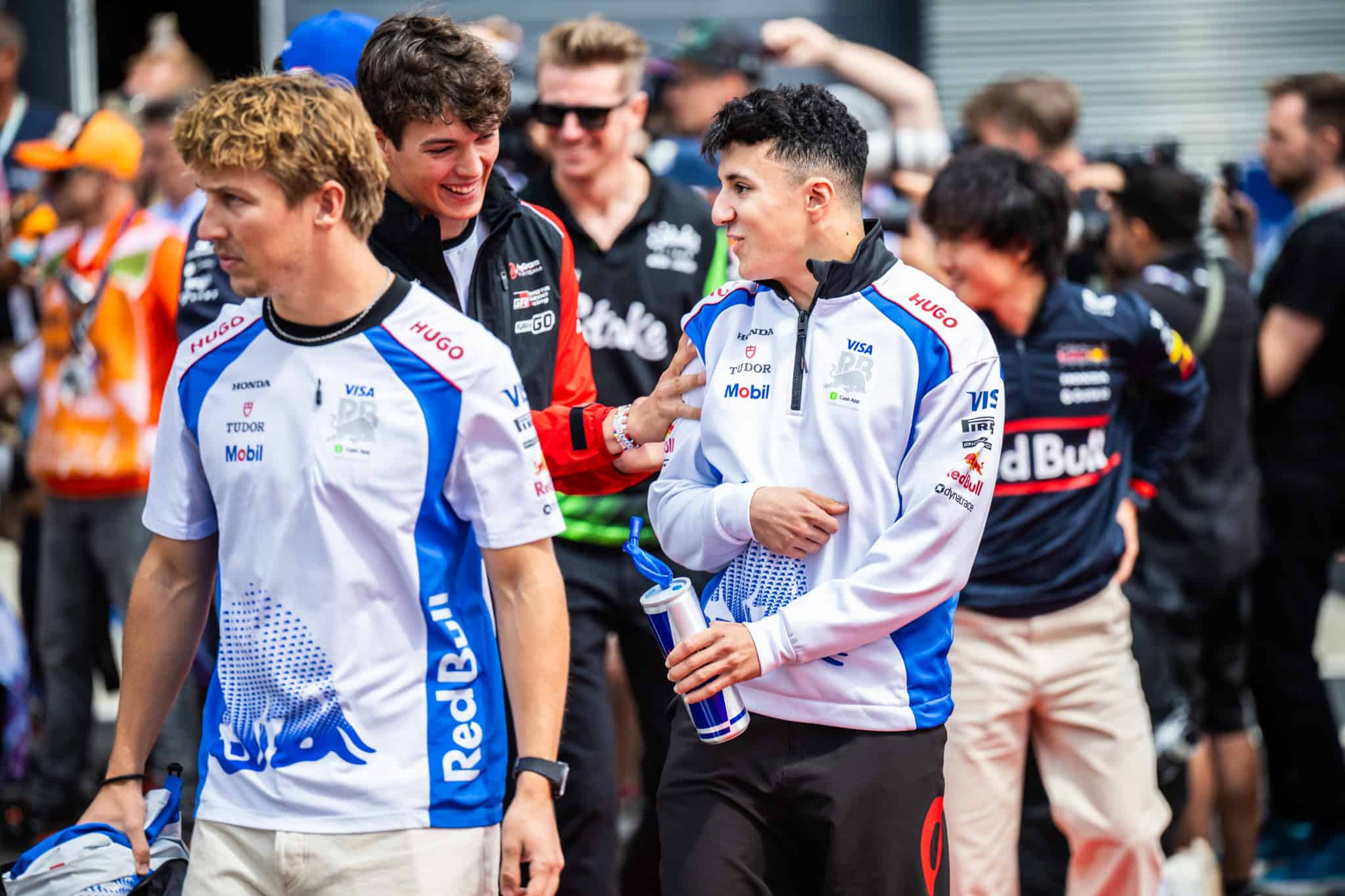
The drivers prepare to take on a new era — 22 competitors, 11 teams, one championship.
2026 Driver Pairings
McLaren
Lando Norris • Oscar Piastri
Mercedes
George Russell • Kimi Antonelli
Red Bull
Max Verstappen • Isack Hadjar
Ferrari
Charles Leclerc • Lewis Hamilton
Aston Martin
Fernando Alonso • Lance Stroll
Alpine
Pierre Gasly • Franco Colapinto
Williams
Alex Albon • Carlos Sainz
Racing Bulls
Liam Lawson • Arvid Lindblad
Haas
Esteban Ocon • Oliver Bearman
Audi
Nico Hülkenberg • Gabriel Bortoleto
Cadillac
Sergio Pérez • Valtteri Bottas
Audi and Cadillac: Two Newcomers, Two Paths
Audi: Factory Entry Built on Patience
Audi’s project is built on Sauber foundations with the classic factory split: chassis operations, power unit development, and cross-site coordination. The key challenge in year one is rarely “podium now” — it’s system integrity: recovery, cooling, software, and correlation between simulation and the track under brand-new regulations.
Cadillac: U.S. Commercial Muscle
The Cadillac entry is framed as the first new team since 2016, built around an anti-dilution payment model. The first seasons of any new team are typically about operational stability: processes, staffing, supplier chains, manufacturing rhythm — while trying to race at the same time.
For a new team, the first true performance metric isn’t “how far from Q3.” It’s “how stable is the weekend.” Under a full regulation reset, stability itself is performance.
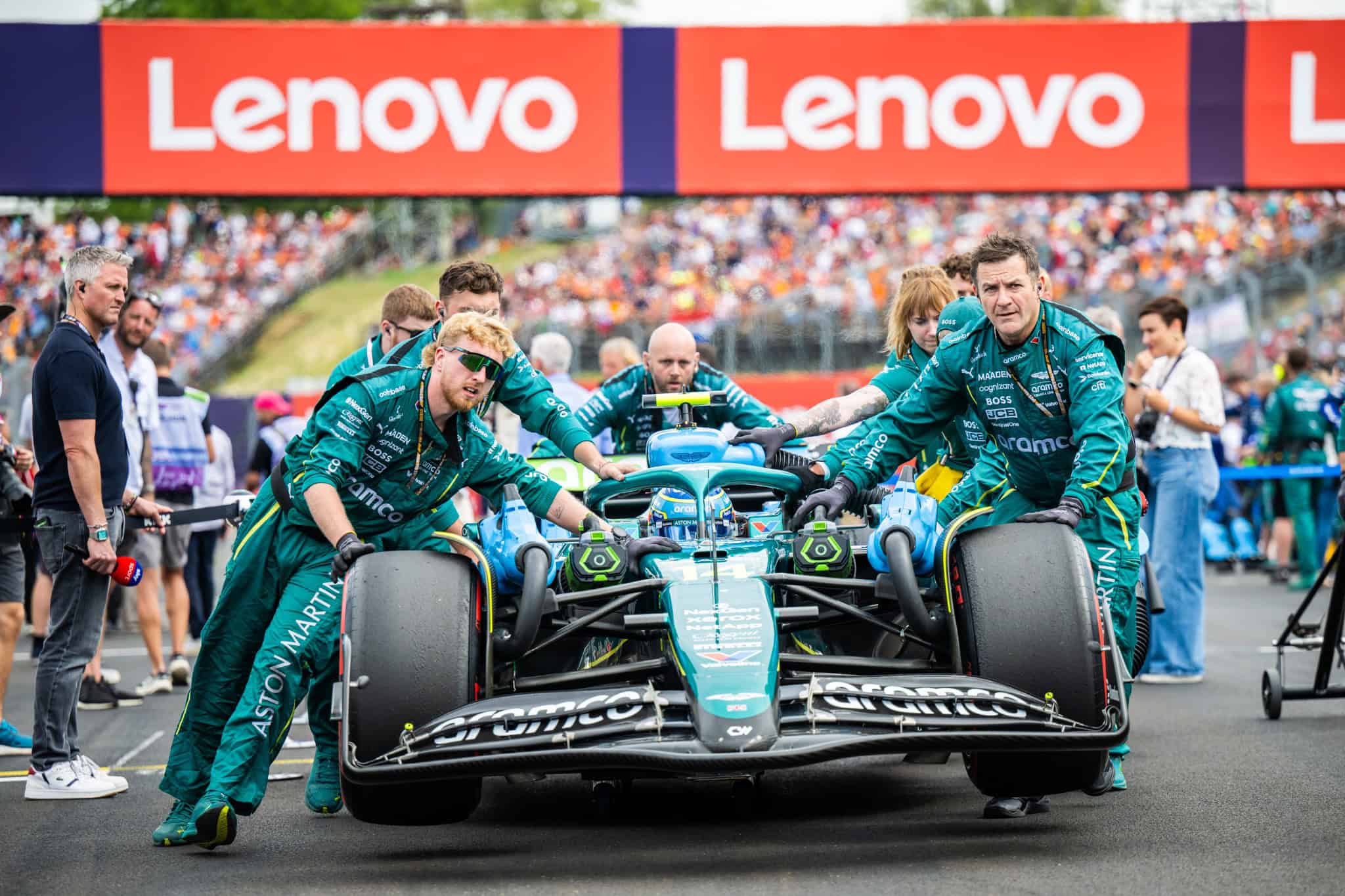
Aston Martin preparing for battle

McLaren team celebration

Lando Norris — victory moment
The 2026 Calendar
The 2026 season spans 24 races across five continents, with six Sprint weekends adding extra championship tension. Notable changes include Bahrain and Saudi Arabia moving to April due to Ramadan timing, the debut of the Madrid GP, and Azerbaijan hosting a Saturday race due to local observance.
| Rd | Grand Prix | Circuit | Date | Sprint |
|---|---|---|---|---|
| 1 | Australian GP | Albert Park, Melbourne | Mar 6–8 | — |
| 2 | Chinese GP | Shanghai International | Mar 13–15 | Sprint |
| 3 | Japanese GP | Suzuka Circuit | Mar 27–29 | — |
| 4 | Bahrain GP | Bahrain International | Apr 10–12 | — |
| 5 | Saudi Arabian GP | Jeddah Corniche | Apr 17–19 | — |
| 6 | Miami GP | Miami Autodrome | May 1–3 | Sprint |
| 7 | Canadian GP | Gilles Villeneuve, Montreal | May 22–24 | Sprint |
| 8 | Monaco GP | Circuit de Monaco | Jun 5–7 | — |
| 9 | Barcelona-Catalunya GP | Circuit de Barcelona | Jun 12–14 | — |
| 10 | Austrian GP | Red Bull Ring | Jun 26–28 | — |
| 11 | British GP | Silverstone Circuit | Jul 3–5 | Sprint |
| 12 | Belgian GP | Spa-Francorchamps | Jul 17–19 | — |
| 13 | 🇭🇺 Hungarian GP | Hungaroring, Budapest | Jul 24–26 | — |
| 14 | Dutch GP | Circuit Zandvoort | Aug 21–23 | Sprint |
| 15 | Italian GP | Monza | Sep 4–6 | — |
| 16 | Madrid GP (NEW) | IFEMA Madrid | Sep 11–13 | — |
| 17 | Azerbaijan GP* | Baku City Circuit | Sep 24–26 | — |
| 18 | Singapore GP | Marina Bay Street | Oct 9–11 | Sprint |
| 19 | United States GP | COTA, Austin | Oct 23–25 | — |
| 20 | Mexico City GP | Autódromo Hermanos | Oct 30–Nov 1 | — |
| 21 | São Paulo GP | Interlagos | Nov 6–8 | — |
| 22 | Las Vegas GP | Las Vegas Strip | Nov 19–21 | — |
| 23 | Qatar GP | Lusail International | Nov 27–29 | — |
| 24 | Abu Dhabi GP | Yas Marina | Dec 4–6 | — |
*Azerbaijan is a Saturday race due to local observance.
Hungaroring: More Than a Renovation Story
For Hungary, this isn’t just cosmetic work — it’s about how an F1 weekend flows at a modern, premium-event standard: entry routes, queue behavior, hospitality capacity, media function, paddock circulation, and the “in-between” time experience.
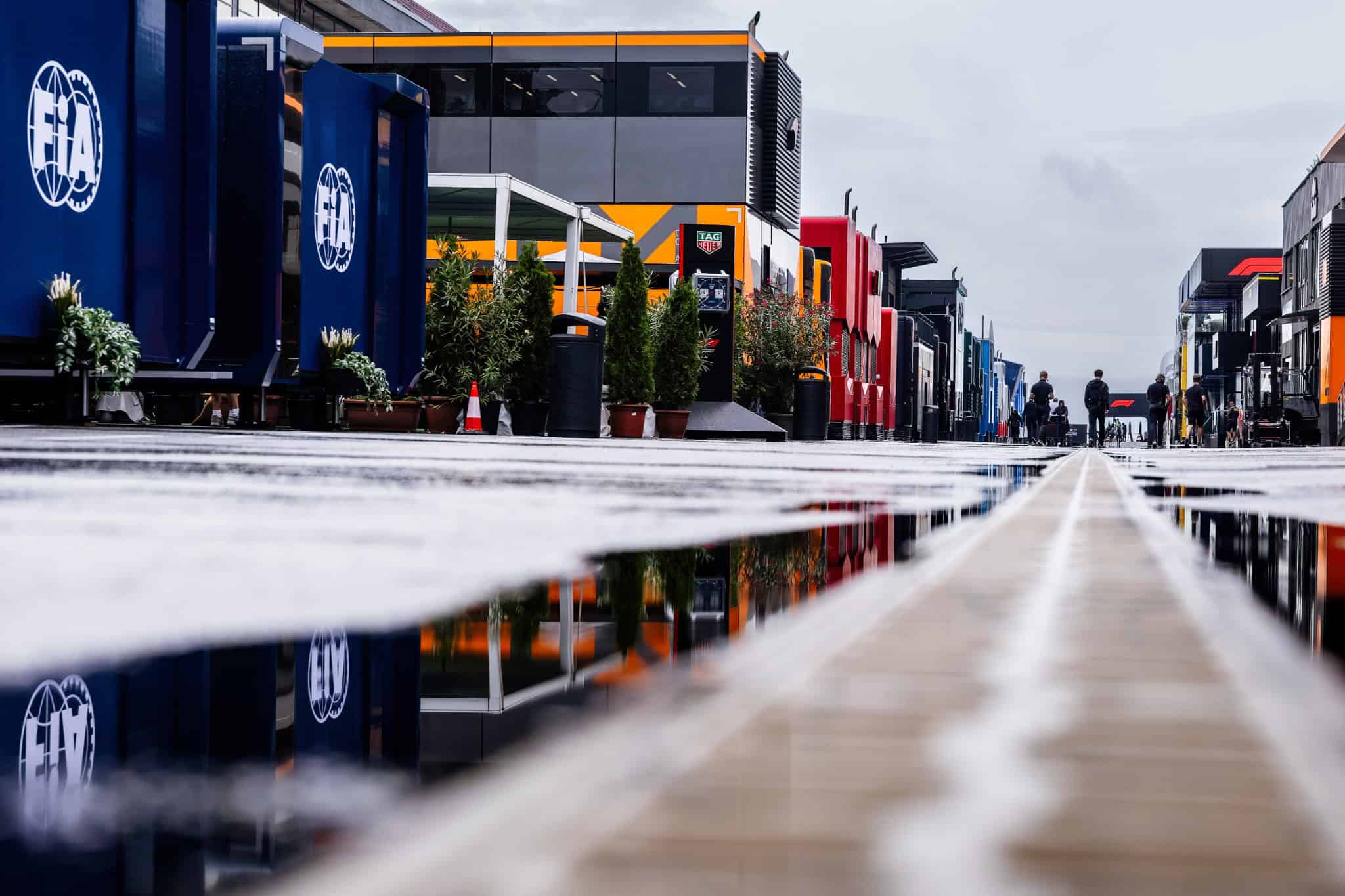
From an event-logistics viewpoint, the Hungarian GP weekend is where Budapest becomes both a tourism peak and a mobility stress test. If someone wants a premium experience, they usually fail in two places: booking late, and having a weak last-mile plan. The pro approach is boring but decisive: fixed pickup windows, contingency routing, and drop-off points that respect how the venue actually operates on race day.
Seven Storylines That Can Decide 2026
- Energy management becomes the championship battlefield. The power split turns strategy into engineering.
- DRS-free racing elevates decision-making. Overtakes become constructed, not gifted.
- Sprint venues signal where F1 expects show and volatility.
- Madrid’s debut and Imola’s exit are a calendar geopolitics signal.
- A new team (Cadillac) is always a system shock — magnified by new regulations.
- Audi’s year one is a patience play: structure first, trophies later.
- Safety changes aren’t a footnote; they’re part of making this reset sustainable.
Key Takeaways
- 2026 is a platform switch, not an evolution: engine + aero + tires + modes all change at once.
- Overtaking becomes active aero + energy warfare, not a single DRS moment.
- The official structure is 24 races and 6 Sprints, with Madrid as the new addition.
- The 11-team grid changes traffic, tactics, and operational pressure across the weekend.
- Early-season value shifts: “who’s stable” can matter more than “who’s quick.”
Frequently Asked Questions
Does DRS end in 2026?
Yes. DRS is replaced by active aerodynamics (X-mode/Z-mode) plus an energy-based overtaking mechanism that rewards strategic energy management over simple button presses.
What’s the single biggest engine change for 2026?
The removal of the MGU-H, the jump of MGU-K output to 350 kW (nearly tripling the electric power), and mandatory 100% advanced sustainable fuel.
How many races and Sprints are there in 2026?
24 races and 6 Sprint weekends (Shanghai, Miami, Montreal, Silverstone, Zandvoort, Singapore).
Why do Bahrain and Saudi Arabia move to April?
Because of Ramadan timing considerations, the Middle Eastern races shift later in the calendar.
Why does the cost cap look higher in 2026?
The $215M headline number is presented as a recalculation (inflation and included-cost perimeter changes), not simply an unrestricted increase in spending allowance.
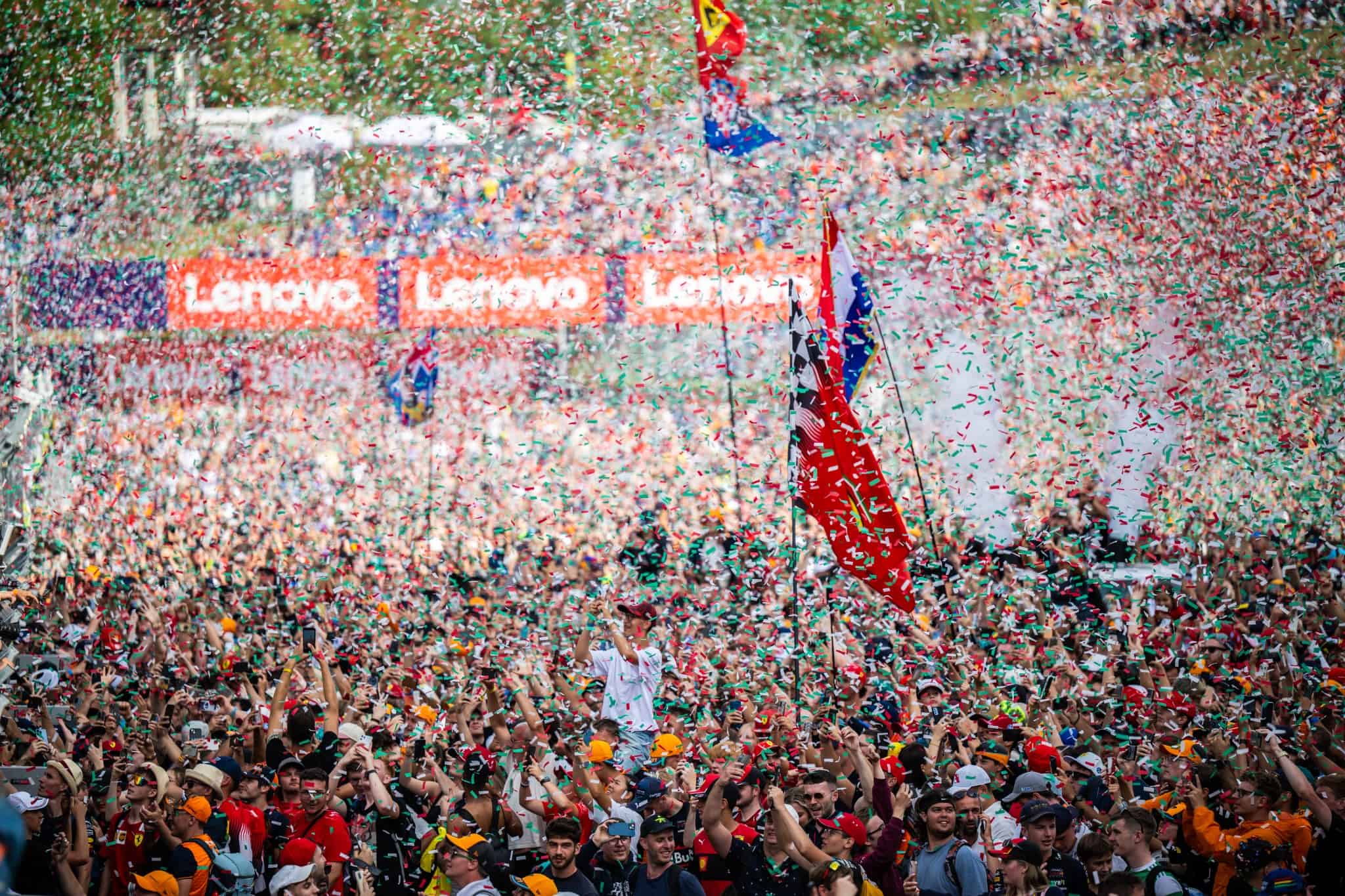
The passionate Hungarian GP crowd celebrates another unforgettable race weekend.

Formula 1 fans create an electrifying atmosphere at the Hungaroring.
Experience Formula 1 in Budapest
Don’t let transportation challenges diminish your race weekend. VanBudapest.com delivers premium transfers with fixed pickup windows, contingency routing, and drop-off points that respect how the Hungaroring actually operates on race day.

The ultimate reward — champagne on the Hungarian Grand Prix podium. Who will spray in 2026?