
Xabi Alonso’s Real Madrid Exit After Seven Months: What Happened — and the Questions No One Can Answer (Yet)
Real Madrid don’t do “quiet.” Not when the badge is the biggest in European club football, not when the expectation is silverware by default, and definitely not when the coach is Xabi Alonso — a former midfield metronome who once looked born to lead the club from the dugout.
And yet, on January 12, 2026 — one day after a painful 3–2 Supercopa final loss to Barcelona — Real Madrid announced that Alonso would leave “by mutual agreement,” ending a tenure that lasted just over seven months.
Europe watched it happen in real time. The rest of the football world refreshed its feeds like it was a breaking-news election night. Because if Real Madrid can’t stabilize, what does that say about the modern super-club era — the era of unstoppable squads, endless money, and “project” coaches who are never actually allowed to build a project?
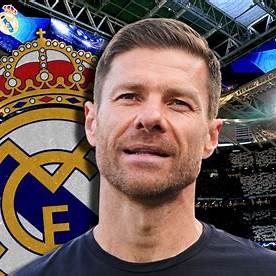


What we know (the clean, factual timeline)
Real Madrid’s statement was short, formal, and warm: mutual agreement, gratitude, “Real Madrid will always be his home.” Within hours, the club also confirmed the immediate appointment of Álvaro Arbeloa as first-team coach.
Alonso’s exit comes after 34 matches in charge, with six losses — numbers that, by normal standards, aren’t catastrophic… but at Madrid, the “normal standards” don’t apply. Multiple outlets report the same pattern: results dipped, performances looked blunt, and internal tension grew loud enough that “mutual agreement” read more like a diplomatic landing than a shared decision.
Arbeloa, a club man through and through, steps up from Castilla and takes over immediately, beginning with a Copa del Rey tie vs. Albacete.
Real Madrid’s official line — and what it doesn’t say
When a club says “mutual agreement,” it’s rarely a confession. It’s a shield: for the coach’s reputation, for the dressing room’s calm, for the board’s control of the narrative. Real Madrid praised Alonso as a legend and framed the exit as respectful and orderly.
But the reporting from major outlets paints a more human picture: pressure built, confidence fell, and relationships inside the building frayed.
So here’s the uncomfortable question: If this was truly mutual, why does it feel like Madrid hit the emergency button?


Why this unraveled: six pressure points that kept stacking up
1) The dressing room: when the message stops landing
Reuters and other reports describe internal tensions, including friction with key figures. And if you’ve covered elite football long enough, you know the rule: once the dressing room decides your voice is optional, the calendar turns against you.
Specific flashpoints were reported around Vinícius Jr.’s reaction to being substituted in El Clásico — an episode that spilled into headlines, statements, and a subtle war of optics.
The question Madrid never answers publicly is always the same: Did the club protect the coach’s authority — or manage the coach around the stars?
2) The “pasillo” moment: Mbappé, Barcelona, and a camera that didn’t blink
The Supercopa final didn’t just end with a defeat. It ended with a viral scene: reports and video-driven coverage describing Kylian Mbappé urging teammates not to give Barcelona the customary gesture of applause/recognition during the trophy presentation.
Whether you view it as competitive fire or bad sportsmanship, the symbolism is brutal: a superstar visibly steering the group’s behavior in the most public moment of the night.
So the question becomes unavoidable: When Real Madrid loses, who sets the tone — the coach, the captains, or the celebrity gravity of the biggest names?
3) The performances: not just losing — losing your identity
Several reports emphasized that Madrid’s football didn’t convince, and that big-match setbacks accelerated the doubt.
Real Madrid can accept a bad night. What it struggles to accept is ambiguity — the sense that the team doesn’t know what it is yet. Alonso was hired with the aura of a modern tactician and a club legend. But when the football looks uncertain, the legend status stops helping and starts hurting.
Was this team building toward something — or just surviving match-to-match?
4) Injuries and physical management: when the season becomes a triage unit
Multiple reports point to an injury-riddled backdrop during Alonso’s spell — the kind of constant disruption that turns tactical planning into crisis management.
And then came the clearest signal that the club wanted a reset in the physical department: Madrid moved to re-elevate Antonio Pintus into a central role under Arbeloa.
This is not a small detail at Real Madrid. Pintus isn’t just a fitness coach; he’s a symbol of standards — feared, respected, and associated with “Madrid-ready” conditioning.
Which raises a sharp, sensitive question: Did the board see physical preparation as a core reason the season drifted — and did Alonso pay the price for that diagnosis?
5) Medical restructuring: the return of Niko Mihic
Madrid also brought Niko Mihic back into a central medical supervisory role, according to reports — another sign that the club believed the injury/availability problem needed structural action, not just better luck.
In plain terms: Real Madrid is changing the backstage architecture. That usually happens when leadership believes the current system isn’t protecting the squad.
So another question hangs in the air: Was Alonso judged on results — or on whether the institution trusted the process behind the results?
6) The Arbeloa pivot: “club man” as crisis management
Arbeloa’s appointment is immediate, internal, and deeply “Madrid.” The official announcement highlights exactly what you’d expect: his years inside the academy structure, his trophies as a player, and his roots at Valdebebas.
In moments like this, Real Madrid often chooses someone who can restore order first — and innovate second.
Which brings us to the biggest unanswered question of all: Is Arbeloa the start of a long-term plan… or the safest short-term stabilizer Madrid could possibly choose?
Real Madrid’s bigger context: why this shocks the sport
Real Madrid are not just any club. They are the record-holders in Europe — the ultimate reference point for Champions League greatness. Even the club itself brands the identity around 15 European Cups.
That’s why the last stretch feels so jarring to outsiders: the names on the team sheet still read like a global all-star ballot, but the harmony hasn’t matched the talent often enough.
And that’s the dramatic core of this story — the part you can’t “press release” away:
How does a club built to win instantly end up looking like a club searching for itself?
Key takeaways
Real Madrid confirmed Xabi Alonso’s departure “by mutual agreement” on Jan. 12, 2026, after the 3–2 Supercopa loss to Barcelona.
Álvaro Arbeloa was appointed immediately, stepping up from Castilla and debuting in the Copa del Rey vs. Albacete.
Reporting points to a convergence of issues: dressing-room tension, uneven performances, and structural concern around fitness/medical management.
The Mbappé “guard of honor” controversy amplified the sense of a squad whose internal hierarchy is complicated — and visible.
What happens next: the Arbeloa test
Arbeloa inherits a classic Madrid paradox: massive talent, microscopic patience.
He also inherits a moment that will define him quickly:
Can he re-establish clear authority without alienating the stars?
Can he turn the club’s physical reset (Pintus + medical restructuring) into fewer absences and more continuity?
Can he give Madrid a recognizable identity fast enough that the noise quiets?
Because at Real Madrid, “time” isn’t measured in months. It’s measured in the next marquee match.
Sources we used (for transparency)
Real Madrid official statements and major reporting on the departure, Arbeloa appointment, and surrounding incidents: https://www.realmadrid.com/es-ES/noticias/club/comunicados/comunicado-oficial-xabi-alonso-12-01-2026?utm_source=chatgpt.com