
Halloween vs. All Souls’ Day — Traditions, Myths & Modern Cultures
From candlelit graveyards in Hungary 🕯️🇭🇺 to pumpkin‑lit porches in the U.S. 🎃🇺🇸 and brilliant marigold altars in Mexico 🌼🇲🇽, here’s how the world remembers.
At the end of October and the beginning of November, cultures worldwide remember the dead in different ways. In Hungary, All Saints’ Day and All Souls’ Day are times of reverence: families visit cemeteries, light candles, and decorate graves with chrysanthemums. In contrast, Halloween—gaining popularity among younger generations—brings costumes, jack‑o’‑lanterns, and candy collecting. Yet the two traditions share common roots: both recognize the thinning boundary between the living and the dead, though they interpret it differently. This article compares Hungarian customs with Halloween and with Spanish‑speaking cultures’ celebratory Day of the Dead, highlighting that remembrance can be solemn as well as joyful.
Christian Roots and Historical Background
In Hungary, November 1—All Saints’ Day—has been an official public holiday since 2000 (officeholidays.com). The Catholic Church dedicates this day to the saints already in heaven. On the following day, November 2, All Souls’ Day is observed to pray for the souls suffering in purgatory. In popular practice, the two days often blend: an Expat‑Press article notes they have “merged in modern culture and are only separated in religious contexts.” All Saints’ Day is a public holiday, while All Souls’ Day is not, though families often visit cemeteries on both. According to Office Holidays, the festival’s roots reach back to 4th‑century Greek Christian traditions honoring martyrs after Pentecost. In 609, Pope Boniface consecrated the Pantheon to all saints on May 13, while Pope Gregory III moved the feast to November 1 in the 9th century, overlapping with the Celtic Samhain. Folklore held that on this night, souls roamed freely—so people wore masks to confuse wandering spirits.
Hungarian Practices of Remembrance
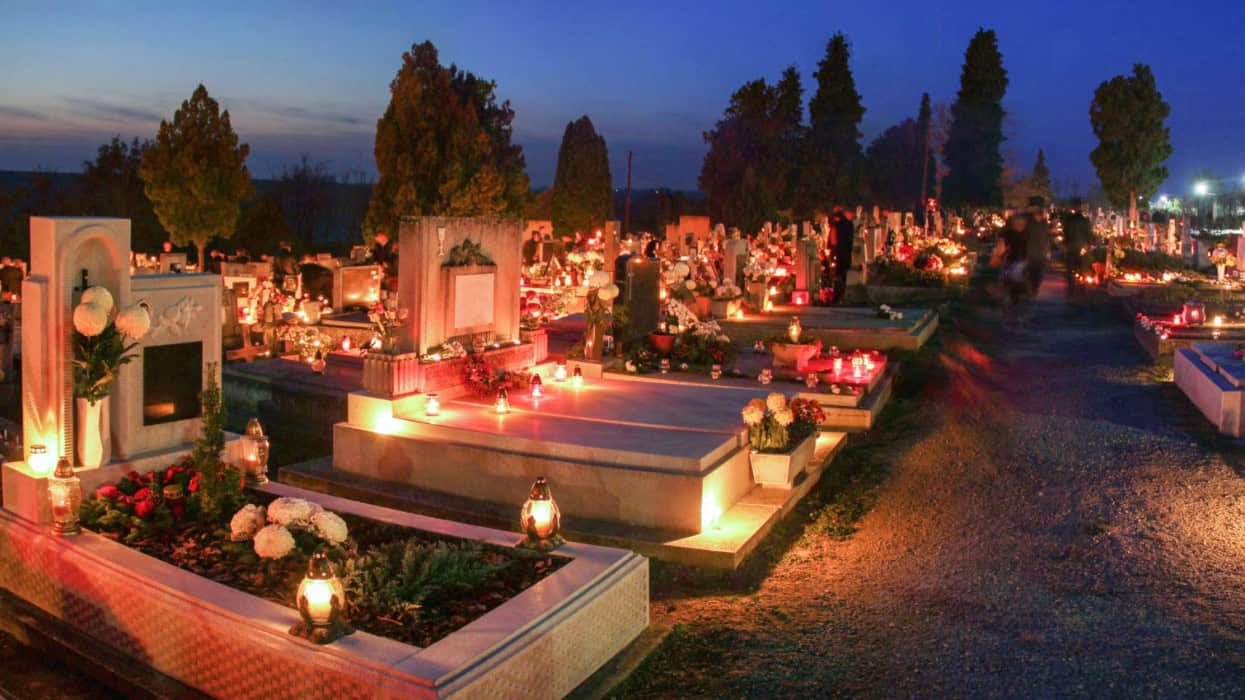
On All Saints’ Day, Hungarian families visit cemeteries, clean and decorate graves, and light candles. Roads near cemeteries fill with vendors; chrysanthemums blanket the scene. Candle lighting is both at graves and at home; lanterns in windows “guide souls home.” Originally, the light comforted souls in purgatory. In some regions, families lit as many candles as they had departed relatives; in certain Ipoly valley villages, home candles even replaced cemetery visits.
Symbolism of Chrysanthemums and Candles
Chrysanthemums bloom in late October and are chosen for endurance and seasonality. Like in France’s Toussaint, they symbolize remembrance and immortality. Markets overflow with flowers and wreaths, while candles represent eternal light. These images define the Hungarian mood: quiet prayer, order, and dignity.
Folklore and Customs
Traditionally, the days were accompanied by fasting and prayer. Some left food on the table or water by the door for returning souls. Though rare today, these beliefs highlight the threshold‑time atmosphere. What remains central: candle‑lighting, grave care, and quiet contemplation.
From Samhain to Street Parties
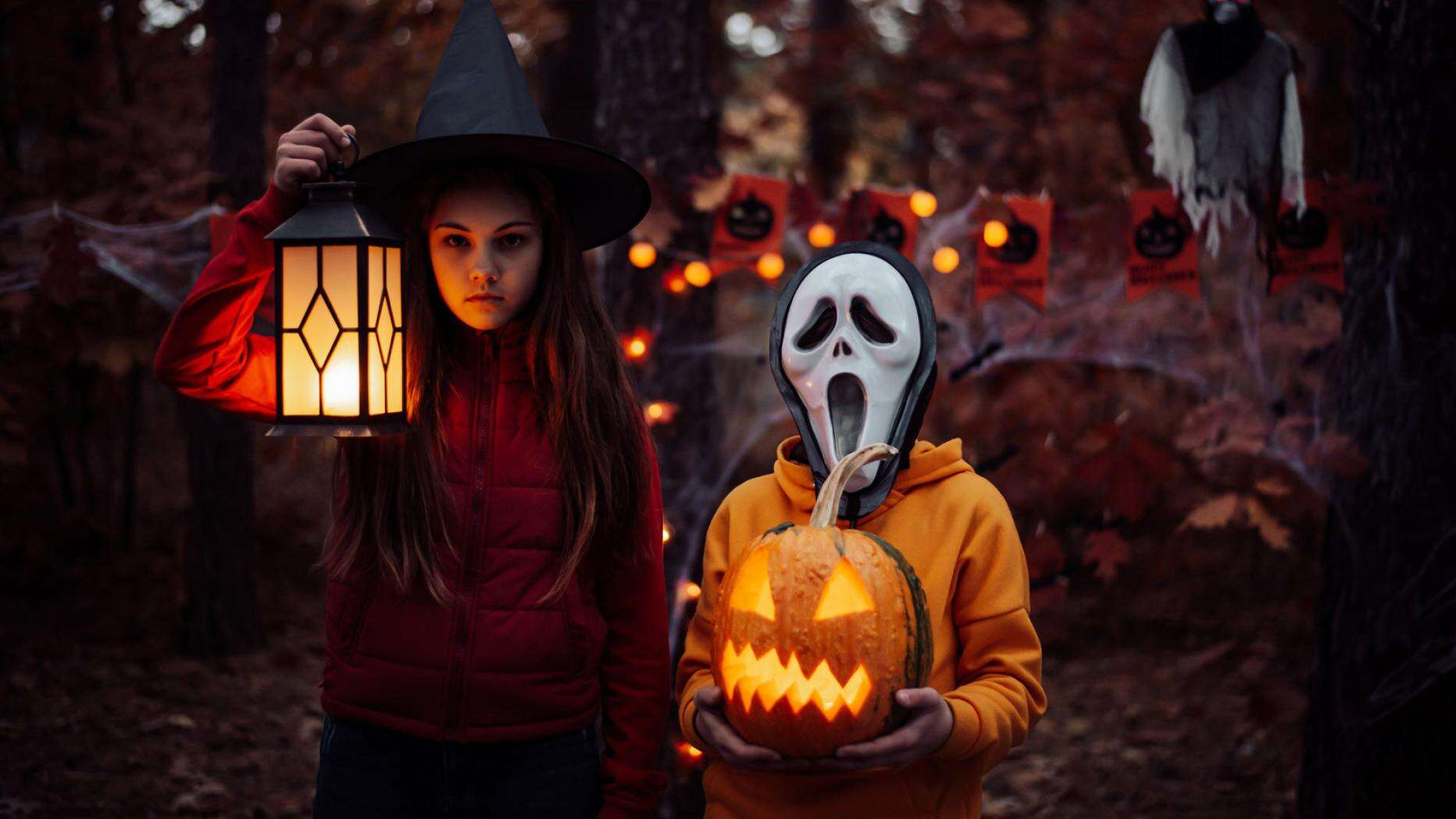
Modern Halloween stems from the ancient Celtic festival of Samhain (pron. “sow‑in”), which marked the boundary between summer’s light and winter’s darkness. The barrier between worlds thinned, inviting ancestors back while threatening harmful spirits—warded off with masks, costumes, and noise. Bonfires glowed; some say animal bones in the flames birthed the word “bonfire.” Food offerings for spirits were distributed to the poor. As Christianity spread, the Church fixed All Saints’ Day on November 1, overlapping Samhain; “Halloween” shortens All Hallows’ Eve. Celtic beliefs about roaming spirits carried forward—people kept disguises to confuse them.
Jack‑o’‑Lantern, Costumes & Trick‑or‑Treat
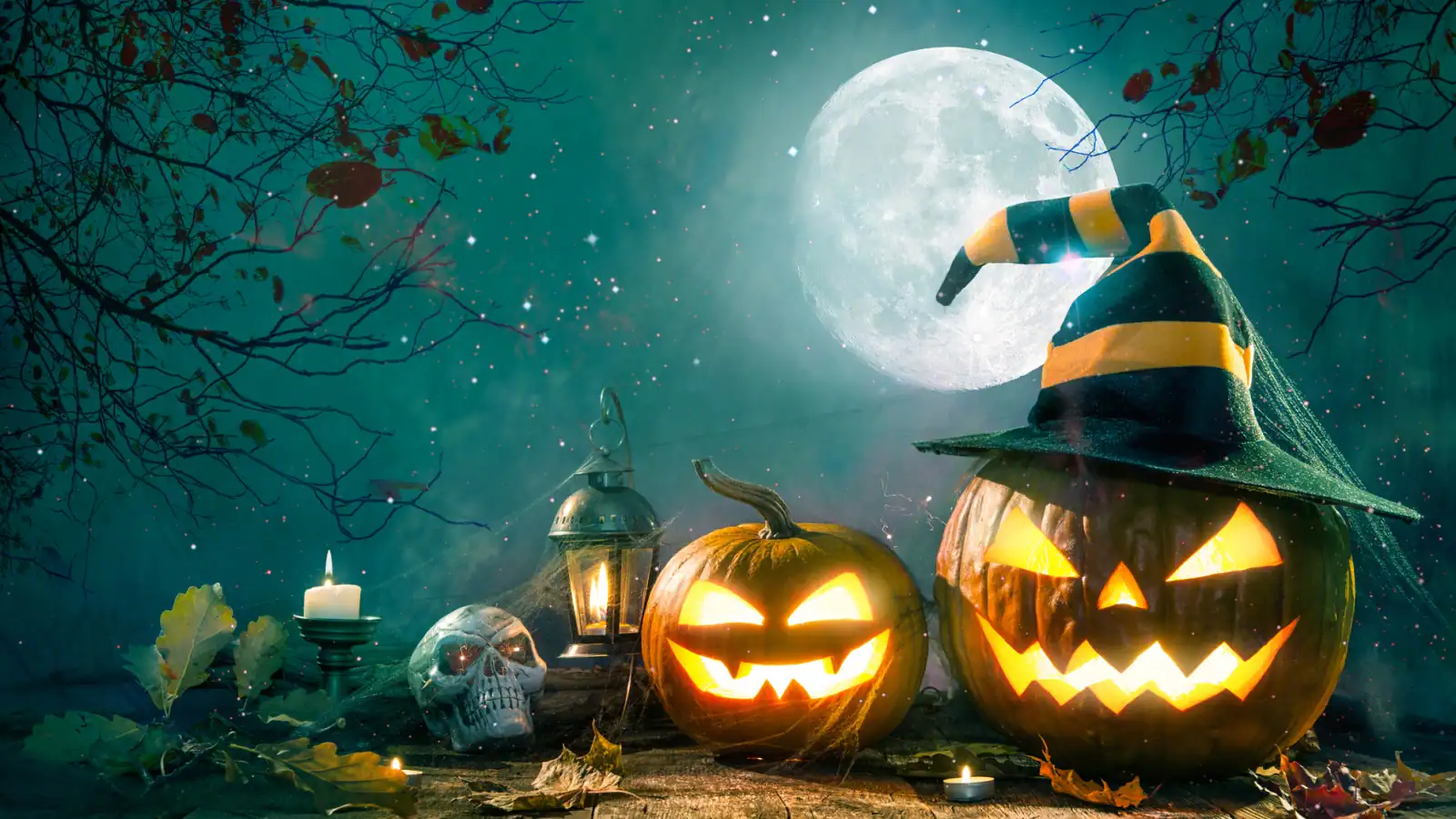
The jack‑o’‑lantern began in Ireland with carved turnips. The Stingy Jack legend tells of a trickster who forced the devil not to claim him; denied heaven, he wandered with a glowing ember in a hollowed root. Irish immigrants brought the custom to America, where pumpkins proved ideal. Costumes trace to Samhain disguises and medieval souling/guising, plus German‑American belsnickeling. These streams merged in the U.S., becoming the modern, kid‑friendly—and adult‑creative—trick‑or‑treat ritual.
From Folklore to a Multi‑Billion Dollar Season
In the U.S., Halloween is a massive consumer and community event. Americans spent an estimated $11.6B in 2024, with 72% participating. Spending spans adult and children’s costumes and even pet outfits. The season now lasts weeks: décor launches in September, pumpkin‑spice saturates cafés, and haunted attractions and film marathons pack the calendar.
Ancient Roots, Catholic Dates — A Living Reunion
Mexico’s Día de los Muertos blends indigenous beliefs and Catholic tradition. As in Nahua cosmology, death is part of life’s cycle; ancestors are welcomed home. The festival spans October 31 (children, Día de los Angelitos), November 1 (All Saints), and November 2 (All Souls). Altars (ofrendas) anchor the celebration with photos of the departed and their favorite foods and drinks; trails of marigold petals (cempasúchil) guide spirits by fragrance and color; copal incense symbolizes purification. Bread of the dead (pan de muerto) and sugar skulls (calaveras) add sweetness to remembrance. In 2008, UNESCO inscribed the festival on the Intangible Cultural Heritage list.
Unlike Hungary’s quiet tone, the Day of the Dead is joyful, musical, and communal. Families picnic in cemeteries, tell stories, and play music. Popular culture—from literature to Pixar’s Coco—echoes the idea: as long as we remember, our loved ones live on.


Quiet Visits, Sweet Traditions, Classic Theatre
Spain’s Todos los Santos on November 1 resembles Hungarian customs but adds distinct flavors. Families travel to visit graves, bring flowers, and attend special masses. Culinary traditions include panellets (almond sweets), huesos de santo (marzipan “saints’ bones”), and buñuelos de viento (cinnamon fritters). Cádiz hosts the lively Tosantos fair with markets, parades, and children’s programs. Across Spain, theaters perform José Zorrilla’s classic Don Juan Tenorio, which ends in a cemetery and explores repentance and redemption. Spain blends reverence with Mediterranean festivity—cemetery visits can feel like communal picnics, balancing sorrow and celebration.
🇭🇺 Hungary
Quiet, contemplative; cemeteries & homes; candles and chrysanthemums symbolize peace and eternal life.
🇺🇸 USA (Halloween)
Playful, spooky, commercial; costumes, parties, candy; multi‑billion‑dollar season and neighborhood fun.
🇲🇽 Mexico (Día de los Muertos)
Festive, family‑oriented; ofrendas, marigolds, sugar skulls; reunion with ancestors and celebration of life’s cycle.
The season reveals how pagan and Christian currents interweave. From Celtic bonfires and Catholic prayers to Mexican altars, Spanish theatre, and Hungarian candlelight, the shared aim is remembrance. Whether lighting a candle, carving a pumpkin, or building a vivid ofrenda, we stay connected to our ancestors, face our fears, and honor the eternal cycle of life and death.